SMM network news: binder is one of the important auxiliary functional materials in lithium-ion battery, is the main source of the mechanical properties of the whole electrode, and has an important impact on the production process of the electrode and the electrochemical performance of the battery. The binder itself has no capacity and accounts for a small proportion of the battery.
In addition to the bonding properties of general binders, lithium ion battery electrode binder materials also need to be able to withstand electrolyte swelling and corrosion, as well as electrochemical corrosion in the process of charge and discharge, and remain stable in the working voltage range of the electrode. Therefore, there are few polymer materials that can be used as electrode binders for lithium ion batteries.
At present, there are three kinds of widely used lithium ion battery binders: polyvinylidene fluoride (PVDF), polyvinylidene fluoride (ben) rubber (SBR) emulsion and carboxymethyl cellulose (CMC),). In addition, water-based binders with polybing enoic acid (PAA), polybing enitrile (PAN) and polybing alkenate as the main components also occupy a certain market.
Four characteristics of Battery Grade CMC
Due to the poor water solubility of carboxymethyl cellulose acid structure, in order to better its application, CMC is a very widely used material in battery production.
As the main adhesive of water-based negative electrode materials, CMC products are widely used by battery manufacturers at home and abroad. The optimal amount of adhesive can obtain larger battery capacity, more cycle life and lower internal resistance.
The four major features of CMC are:
First, CMC can make the product hydrophilic and soluble, completely soluble in water, without free fiber and impurities.
Second, the degree of substitution is uniform and the viscosity is stable, which can provide stable viscosity and adhesion.
Third, the production of high purity products, and belongs to low metal ion content.
Fourth, the product has good compatibility with SBR latex and other materials.
The CMC carboxymethyl cellulose sodium used in the battery not only improves the quality of its use effect, but also provides it with good performance, and has the current use effect.
The role of CMC in Battery
CMC is a carboxymethylated derivative of cellulose, which is usually prepared by the reaction of natural cellulose with caustic soda and yi chloroacetic acid with a molecular weight of several thousand to one million.
CMC is white to yellowish powder, granular or fibrous material, strong hygroscopicity, easy to dissolve in water, in neutral or alkaline, the solution is a high viscosity solution. When heated above 80 ℃ for a long time, the viscosity decreases and is insoluble in water. It was brown when heated to 190-205 ℃ and carbonized at 235-248 ℃.
Because CMC has thickening, bonding, water retention, emulsification and suspension in aqueous solution, it is widely used in ceramics, food, cosmetics, printing and dyeing, papermaking, textile, coating, binder and medicine. High-end ceramics and lithium batteries account for about 7%, commonly known as "industrial monosodium glutamate".
Specific to the battery, the functions of CMC are: to disperse the negative electrode active material and conductive agent; to thicken and prevent the sedimentation of the negative electrode paste; to assist the bonding effect; to stabilize the processing performance of the electrode and to improve the cycle performance of the battery; to improve the peeling strength of the electrode and so on.
Performance and selection of CMC
The addition of CMC, in the preparation of electrode slurry can improve the viscosity of the slurry and prevent the precipitation of the slurry. CMC will decompose sodium ions and anions in aqueous solution, and the viscosity of CMC glue will decrease with the increase of temperature, which is easy to absorb moisture and poor elasticity.
CMC can play a good role in the dispersion of negative graphite. With the increase of the amount of CMC, the decomposition products will be attached to the surface of graphite particles. Due to the electrostatic force, the graphite particles repel each other and achieve a good dispersion effect.
The obvious disadvantage of CMC is that it is brittle. If CMC is used as binder, the collapse of graphite negative electrode will occur in the process of pressing and cutting. At the same time, CMC is greatly affected by the ratio of electrode materials and pH value, and the electrode may crack during charge and discharge, which directly affects the safety of the battery.
At first, the binder used in negative electrode stirring is oil binder such as PVDF, but now the selection of water binder for negative electrode has become the mainstream because of environmental protection and other factors.
The perfect binder does not exist, so try to select the binder that meets the requirements of physical processing and electrochemistry. With the development of lithium technology, as well as cost and environmental protection issues, water-based binders will eventually replace oily binders.
Two major manufacturing processes of CMC
According to the difference of etherification medium, the industrial production of CMC can be divided into two categories: water medium method and solvent method. The method of using water as reaction medium is called water medium method, which is used to produce alkaline medium and low grade CMC. The method of using organic solvent as reaction medium is called solvent method, which is suitable for the production of medium and high grade CMC. These two reactions are carried out in the kneading machine, which belongs to the kneading process, and is the main method of producing CMC at present.
[water medium method] an earlier industrial production process in which alkali cellulose is reacted with etherifying agent under the condition of free alkali and water to prepare middle and low grade CMC products, such as detergent, textile sizing agent and so on. The advantage of water medium method is that the equipment is simple and the cost is low, and the disadvantage is that due to the lack of a large number of liquid media, the heat generated by the reaction increases the temperature, accelerates the speed of side reaction, resulting in low etherification efficiency, poor product quality and so on.
[solvent method] also known as organic solvent method, according to the amount of reaction diluent is divided into kneading method and slurry method, its main characteristic is that the alkalization and etherification reaction is carried out under the condition of organic solvent as reaction medium (diluent). Like the reaction process of water medium method, solvent method is also composed of two stages: alkalinization and etherification, except that the reaction medium of these two stages is different. The advantage of the solvent method is that it omits the inherent processes of soaking, pressing, crushing and aging, and the alkalization and etherification are carried out in the kneading machine, but the disadvantage is that the temperature controllability is relatively poor, the space requirement is high and the cost is high.
First Ultra Pure CMC delivery
Recently, Norion began delivering the first batch of AkuPure batteries, a CMC designed specifically for lithium batteries. AkuPure meets the ultra-high purity requirements of lithium batteries for raw materials (more than 99.5%). It can be used to improve the production process of battery negative electrode coating and improve battery efficiency by maintaining and conveying electricity more effectively.
"customers in the lithium battery market need impurities in ultra-pure CMC,CMC that affect the performance and production efficiency of the battery itself, and some of the characteristics of AkuPure are critical to the battery production process, such as fast dissolution and low insoluble matter content," said Geert-Jan Beijering, director of Norion products. For customers in this field, the most important thing is to be able to charge and discharge frequently at a variety of temperatures without losing performance. "
It is reported that the first batch of AkuPure products delivered by Nuoliang are tailor-made to Chinese customers and supplied to the Chinese market one after another.
At present, there is a demand for cost reduction in all aspects of the power battery industry chain. In order to achieve effective cost reduction, the pre-core production process is becoming more and more important in the lithium battery cell production process.
"Click to sign up:" 2020 (Fifth) China International Nickel Cobalt Lithium Summit Forum "
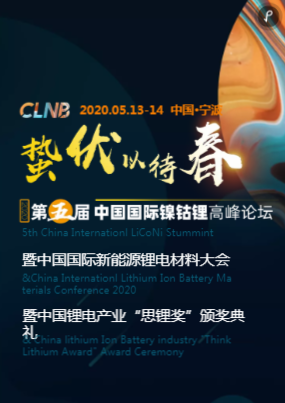
To sign up for the Nickel Cobalt Lithium Summit or apply to enter the industry exchange group, please scan the code:

![[SMM Chrome Flash] La production de concentré de chrome d'Eastplats au T2 recule de 24,5 % en glissement annuel en raison de tonnages traités en baisse](https://imgqn.smm.cn/usercenter/pAOxy20251217171725.jpg)