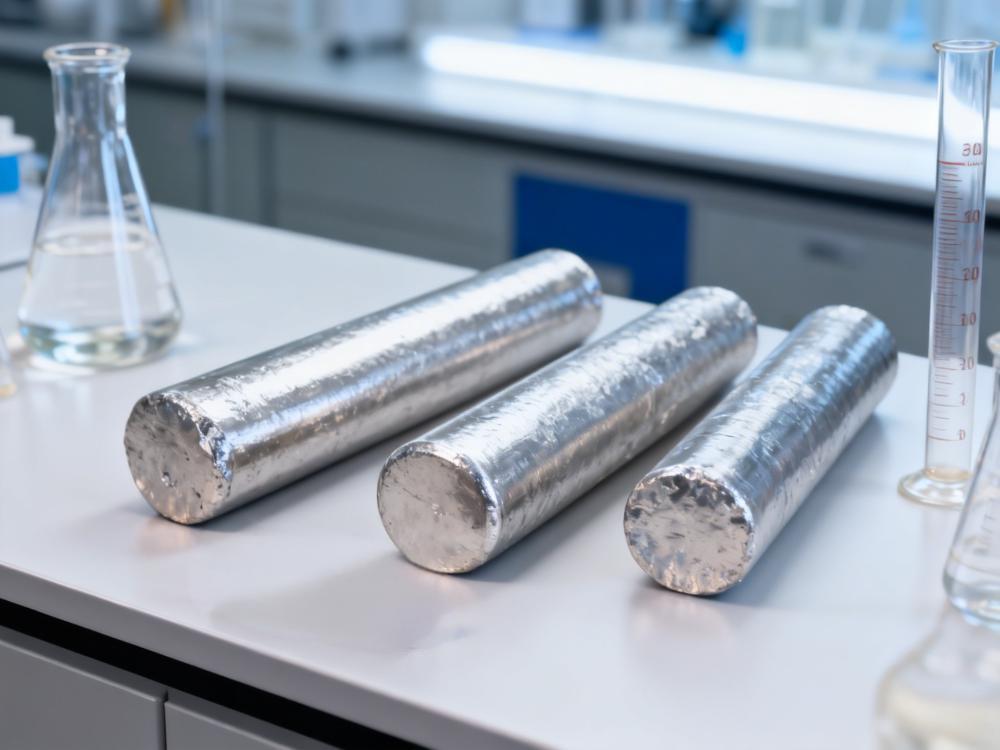
SMM, February 13: In today's era of rapid technological advancement, there is a material that, despite its small "stature," contains immense energy and plays a critical role in numerous fields—NdFeB magnetic materials.
NdFeB (neodymium-iron-boron) is a type of rare earth permanent magnet material primarily composed of neodymium, iron, and boron, with the molecular formula Nd₂Fe₁₄B. Neodymium accounts for 25%–35%, iron for 65%–75%, and boron approximately 1%. Despite its seemingly simple composition, it possesses extraordinary properties and is hailed as the "King of Modern Permanent Magnets," being the strongest permanent magnet material to date. It can lift iron blocks 1,000 times its own weight and boasts advantages such as high residual magnetic density, high coercivity, and high magnetic energy product, while being relatively cost-effective.
The development history of NdFeB magnetic materials is also marked by technological innovation. In the 1970s, scientists began exploring the magnetism of rare earth alloys and discovered some alloys with high coercivity and relatively high magnetic energy products. By the early 1980s, researchers at Japan's Sumitomo Electric Industries discovered NdFeB alloys, whose magnetic energy product far exceeded that of other known magnetic materials at the time. In 1982, Sumitomo Electric Industries successfully manufactured NdFeB magnets and introduced them for commercial use. Subsequently, from the late 1980s to the 1990s, manufacturing technologies were continuously improved, enhancing the performance and cost competitiveness of these magnets. Entering the 21st century, the application scope of NdFeB magnets has continued to expand, excelling in fields such as wind power generation, EVs, power tools, and electronic devices. China's development of NdFeB can be divided into three stages: from 1983–1996, it primarily followed foreign technologies; from 1996–2005, it resolved mass production issues and began industrial-scale production; and from 2005 to the present, it has focused on addressing high-performance magnet magnetic regulation, rare earth balance utilization, and material serviceability issues.
Currently, the manufacturing processes for NdFeB magnets mainly include sintering, bonding, and injection molding. NdFeB magnets produced using the sintering process exhibit extremely high coercivity and maximum magnetic energy product, with stable magnetic properties and lighter weight compared to ordinary magnets. Those made using the bonding process are formed in one step, eliminating the need for additional cutting operations, and can be processed into various shapes of NdFeB permanent magnets through grinding, slicing, wire cutting, hollowing, and drilling.
In terms of application fields, NdFeB magnetic materials have achieved "multi-faceted success." In the NEV sector, they are key materials for drive motors, significantly improving motor efficiency and driving range. The demand for NdFeB in the NEV industry surged from 8,000 mt in 2015 to 35,000 mt in 2022, with a compound annual growth rate of 23%. In the wind power sector, each direct-drive permanent magnet wind turbine consumes approximately 1 mt of NdFeB, making it the preferred material for permanent magnet generators due to its high magnetic energy product and excellent temperature stability. In consumer electronics, products like TWS earphones and micro-motors require ultra-thin magnets, driving the R&D of nanocrystalline NdFeB. It is also widely used in components such as speakers, vibration motors, and hard disk drives in smartphones, tablets, and laptops. In the industrial robotics sector, NdFeB magnetic materials are used in motors, sensors, and other components, enhancing the precision and reliability of robots. With the rapid growth of the global industrial robotics market, the demand for high-performance NdFeB continues to rise. In the medical field, NdFeB magnets are used in MRI equipment to generate strong magnetic fields, assisting doctors in disease diagnosis, and are also applied in medical robots and magnetic therapy devices. Additionally, NdFeB magnetic materials effectively improve the energy efficiency and performance of equipment in fields such as variable frequency air conditioners, energy-saving elevators, servo motors, and machine tools.
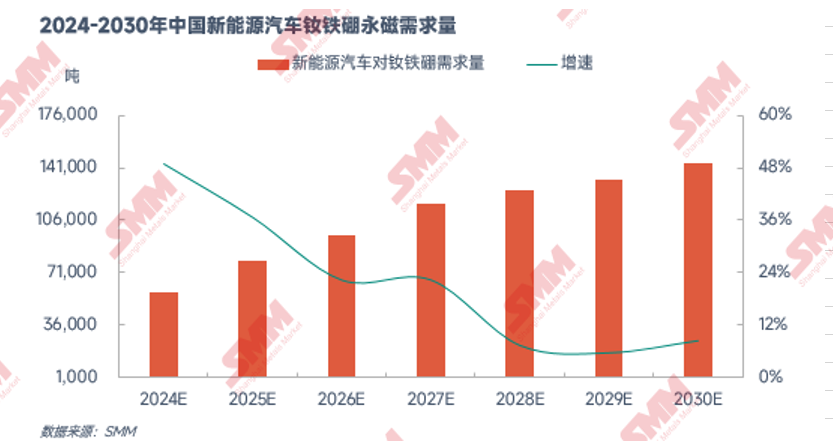 From an industry development perspective, the global push for carbon neutrality is driving the continuous expansion of the new energy sector. The International Energy Agency predicts that by 2030, the global penetration rate of NEVs will reach 60%, corresponding to NdFeB demand potentially exceeding 100,000 mt per year. Offshore wind power installed capacity is expected to grow at an annual rate of 15%. Meanwhile, with the development of intelligent manufacturing and industrial internet technologies, the NdFeB industry is gradually achieving intelligent production and digital transformation. China's "14th Five-Year Plan" has designated rare earths as strategic resources, and the government has introduced a series of policy measures to support the R&D and production of new materials like NdFeB.
» Apply for a Free Trial of the SMM Metal Industry Chain Database
However, the rare earth permanent magnet materials market also faces some challenges. The scarcity and price volatility of rare earth resources are significant factors affecting market development. Rare earth elements have limited reserves on Earth, and the supply of certain rare earth elements faces bottlenecks. Additionally, the significant price fluctuations of rare earths pose challenges for cost control in rare earth permanent magnet material production. In the future, with continuous technological advancements, developing new-type rare earth permanent magnet materials, reducing reliance on scarce rare earth elements, and improving resource recycling rates will be key to addressing these challenges.
![Los precios de las tierras raras muestran un comportamiento mixto; el sentimiento de espera en la cadena downstream es fuerte [Revisión diaria de tierras raras de SMM]](https://imgqn.smm.cn/usercenter/rqOXm20251217171744.jpeg)