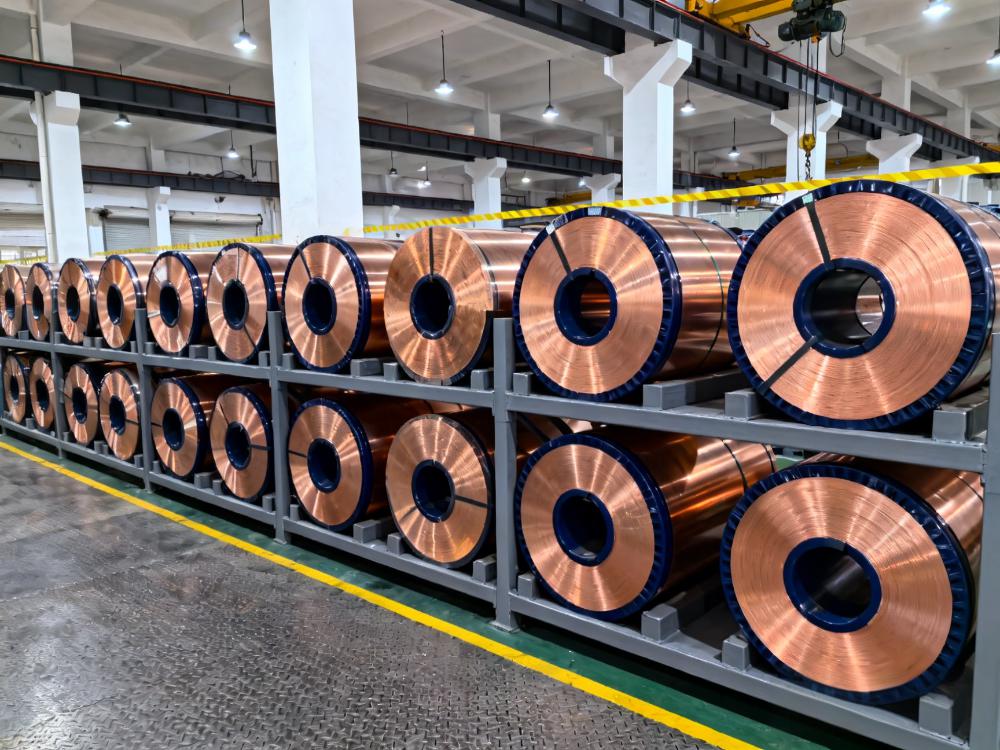
In April, the State Taxation Administration issued the "Notice Concerning Issues Related to "Reverse Invoicing" by Resource Recycling Enterprises to Natural Persons Selling Scrap Products," clarifying that from April 29, 2024, individual scrap product sellers can be invoiced by qualified resource recycling enterprises when selling scrap products. This aims to create a favorable tax environment for the accelerated development of the entire industry chain in the resource recycling sector, thereby enhancing the quality and level of the national economic cycle. Following the announcement, it garnered significant attention within the industry, with varying opinions and implementation progress across different regions. Recently, SMM conducted field visits to relevant enterprises in Linyi, Tianjin, and Hebei.
The State Taxation Administration recently issued the "Notice Concerning Issues Related to "Reverse Invoicing" by Resource Recycling Enterprises to Natural Persons Selling Scrap Products." Following the announcement, the implementation progress of the policy varied across major distribution areas for copper scrap and copper rods made from copper scrap, including Jiangxi, Guangdong, Anhui, Hebei, Henan, and Hubei. Enterprises also held different views.
East China Nonferrous Metals City
Last year, the trade volume of copper scrap in the East China Nonferrous Metals City was 450,000 mt, with the farthest shipments reaching Xinjiang and the three northeastern provinces. Currently, there are low-cost dedicated transport lines from Linyi to across China. The trade volume of nonferrous metals accounts for about 5%-10% of the national total.
Opinions and implementation status of "reverse invoicing":
The policy itself is very good and can regulate the industry in the long run. It can reduce risks for raw material recycling parks. However, the specific operational path is not yet very smooth for downstream enterprises. The obstacles include: firstly, the need for clearer operational procedures and interpretations; secondly, the involvement of many industries and platform companies, and improper operations may involve individual income tax, making execution difficult; thirdly, the limit of 5 million yuan for commodities like copper, aluminum, and stainless steel needs to be increased for feasibility, as it is easy to exceed the limit. Currently, the East China Nonferrous Metals City has applied to the government for reverse invoicing and is awaiting approval. Operations are still being conducted according to previous methods.
Copper rod plant A using copper scrap in Tianjin
As one of the first enterprises to implement reverse invoicing, the current business involves scrap recycling and dismantling, copper rod made from copper scrap production, copper rod made from copper scrap trading, and new high-purity copper rod production lines. Currently, reverse invoicing is conducted according to laws and regulations, with no significant impact. The main issue is the widespread delay in upstream orders of copper rod made from copper scrap, affecting normal trade operations.
In terms of scrap, the main business is automobile dismantling, as well as shared bicycles, magnesium, aluminum, ferrous metals, and copper. The yard can dismantle 300-500 vehicles per day, with a maximum simultaneous storage capacity of 400 vehicles. The dismantling process includes oil and water drainage, exterior dismantling, interior dismantling, chassis dismantling, compression, and crushing. Car glass can also be used for copper purification in their own copper plant.
Copper rod plant B using copper scrap in Tianjin
Regarding "reverse invoicing": we believed that if reverse invoicing is officially implemented, the overall production cost will increase by about 1.6%-1.7%. The final reasonable solution should trace back to the source recycling station.
The main issue now is production stagnation. The original plan to switch to copper anode production has been paused due to a significant drop in processing fees. Currently, production is scheduled based on sales, but the biggest problem is the shortage of copper scrap from upstream, causing production disruptions and increased energy consumption.
Copper rod plant C using copper scrap in Hebei
Regarding "reverse invoicing": there is no significant impact on policy implementation at present. The main issue is the shortage of copper scrap and increased difficulty in procurement, with serious problems in copper scrap raw material contracts and a lack of binding force in verbal agreements. But the sales of copper rod made from copper scraps are good, and the raw material inventory is sufficient, so normal production will not be affected in the short term.
Copper rod plant D using copper scrap in Hebei
Regarding "reverse invoicing": we believed that once implemented, it will invisibly narrow the price spread between taxed and untaxed products, which may be unfavorable for traders but ultimately beneficial for the industry.
Currently, production is normal, and raw material and finished product inventories are at normal levels. There is some conversion to blister copper production, but considering the equipment cost of over one million yuan for copper anode production, along with additional equipment and site modifications, the cost-effectiveness is low. Given the RCs/processing fees and costs of blister copper and copper anodes, blister copper production is relatively advantageous, so there are no plans to switch to copper anode production.
In summary, "reverse invoicing" is currently in the process of being refined. Enterprises generally hold a positive view of the policy's role, but there are still uncertainties in its implementation. Future developments need to be closely monitored. Currently, the more pressing issue for enterprises is the widespread overselling and delivery delays in the industries of secondary copper and copper rod made from copper scrap due to volatile copper prices, leading to order fulfillment issues and financial losses, and thus affecting normal operations. Improving contracts in the copper scrap industry may be a more urgent issue for the industry.
SMM will continue to monitor and report on the progress of "reverse invoicing" and the future status of relevant enterprises.
![Los inventarios sociales de cobre caen a 88.900 t, Guangdong alcanza un nuevo mínimo anual [datos semanales de SMM]](https://imgqn.smm.cn/usercenter/gCNEi20251217171715.jpeg)
![La divergencia de inventarios en el este de China es evidente; las primas del cobre al contado en la SHFE podrían consolidarse en mínimos [Cobre al contado de Shanghái SMM]](https://imgqn.smm.cn/usercenter/JopQJ20251217171712.jpg)