

SHANGHAI, January 22 (SMM) –
Copper
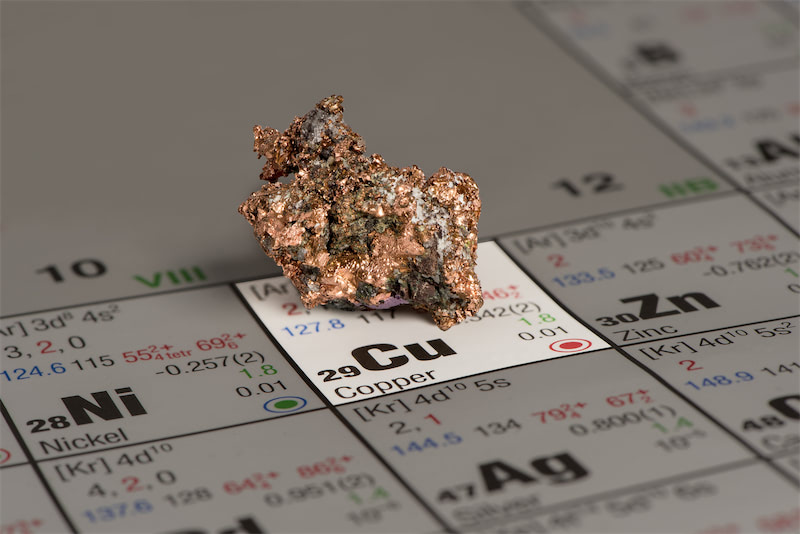
LME copper prices opened at $8326/mt and closed at $8380/mt in last Friday evening trading, a rise of 0.82%, with the low-end of $8301.5/mt and the high-end of $8391.5/mt. Trading volume was 18,000 lots, and open interest stood at 277,000 lots. The most active SHFE 2403 copper contract prices opened at 68000 yuan/mt and closed at 67900 yuan/mt last Friday evening, up 0.4%, with the high-end of 68080 yuan/mt and the low-end of 67810 yuan/mt. Trading volumes stood at 20,000 lots and open interest stood at 149,000 lots. On the macro front, the one-year U.S. inflation rate in January is expected to be 2.9%. Interest rate swap contracts show that the Federal Reserve's expectations for an interest rate cut in March have further dropped to 40%. The hawkish speeches of Federal Reserve officials will also hit copper prices. On the fundamentals, as of January 19, SMM copper inventories in major Chinese markets decreased 2,300 mt to 75,400 mt from last Monday, up 3,400 mt from the two Fridays ago. In terms of consumption, the downstream buyers replenished cargoes at lows in the off-season. It is expected that the downstream will gradually start pre-holiday stockpiling this week, and the oversupply situation may improve. The premium will rise slightly. The copper prices will meet resistance due to depressed expectations over Fed rate cuts.
Aluminum
Last Friday’s night session, the most-traded SHFE 2403 aluminum contract opened at 18,690 yuan/mt, with its lowest and highest at 18,630 yuan/mt and 18,715 yuan/mt before closing at 18,665 yuan/mt, up 5 yuan/mt or 0.03%. LME aluminum opened at $2,172/mt last Friday, with high and low at $2,182/mt and $2,158.5/mt respectively before closing at $2,172.5/mt, an increase of $4.5/mt or 0.21%.
From a macro perspective, MoM surge in US retail sales in December exceeded market expectations and stood at 0.6% (0.40% expected). Sales of motor vehicles, personal health care and catering still maintained high YoY growth. Residential consumption were resilient. The market's expectations for Fed’s interest rate cut in first quarter fell back, the US dollar index rebounded, and commodities were under pressure. Domestically, China’s GDP grew by 5.2% in 2023. In December, total retail sales increased by 7.4% YoY, and the growth rate of added value in industries above the designated size hit a 22-month high. Real estate remained weak, manufacturing investment rebounded, and the overall macroeconomic atmosphere at home and abroad was weak. In terms of fundamentals, domestic aluminium supply has entered a stable period, overseas primary aluminium import windows continue to open, and the net import volume of primary aluminium remains at a high level, impacting domestic primary aluminium to a certain extent. Domestic primary aluminium social inventories may enter a seasonal inventory accumulation cycle at the end of the month, but considering the industry's aluminium liquid conversion rate of around 70%, it is expected that the total inventory before the holidays this year will be far lower than the same period last year. In the short term, the macroeconomic data at home and abroad perform poorly amid market pessimism, and domestic aluminium downstream industries are entering the off-season, which will put pressure on aluminium prices.
Lead
LME lead opened at $2075/mt and rose during the Asian trading hours last Friday. During the European trading hours, LME lead briefly hit the highest point at $2110/mt, closing up 1.47% at $2108/mt.
The most active SHFE 2403 lead contract prices opened at 16455 yuan/mt last evening, and closed at 16535 yuan/mt, an increase of 1.07%, with the high-end of 16545 yuan/mt and the low-end of 16410 yuan/mt.
Zinc
Last Friday, LME zinc prices opened at US$2,469.5/ton. During the European trading session, LME zinc prices trended rapidly downward and tested as low as US$2,454/ton and reached a high of US$2,485/ton, finally closing at US$2,473/ton, up US$7/ton, or 0.28%. Trading volume decreased by 2362 lots to 8048 lots, open interest increased by 2033 lots to 209,000 lots. LME zinc inventory decreased by 2075 tons to 202050 tons, a decrease of 1.02%. The one-year U.S. inflation rate is expected to be 2.9% lower than the forecast value, which is superimposed on the initial value of the University of Michigan Consumer Confidence Index in January of 78.8. The Fed officials' hawkish speech once again suppressed the market's interest rate cut expectations.
The most interest-traded SHFE 2403 zinc contract opened at 20700 yuan/mt last Friday before rallying to a peak of 20825 yuan/mt. It eventually settled at 20740 yuan/mt, up 25 yuan/mt or 0.12%. Trading volume decreased 55809 to 36907 lots, and open interest gained by 457 lots to 90224 lots. The decline in domestic inventories and pre-holiday stockpiling supported SHFE zinc prices.
Tin
SHFE 2402 tin contract fell to 213,200 yuan/mt at last Friday’s night session. The contract closed at 213,790 yuan/mt, up 0.18%. Last Friday, spot premiums and discounts in domestic spot market for various tin ingot brands did not change much. Small brand tin ingots were offered at discounts of 500 yuan/mt and premiums of 100 yuan/mt over SHFE 2402 tin contract, versus spot discounts of 200 yuan/mt and premiums of 700 yuan/mt for delivery brands, premiums of 600-1000 yuan/mt for Yunxi brand, and discounts of 1000 yuan/mt imported brand tin ingots. Tin prices remained high last Friday, and downstream companies still maintained a wait-and-see attitude. Purchasing sentiment was relatively sluggish.
Nickel
SHFE nickel showed a relatively strong performance, reaching a peak of 129,730 yuan/mt. Nickel prices saw a slight widening compared to nickel sulphate prices last week, with the price difference maintained around 5,000 yuan/mt. Under the current price difference, the production of electrowinning nickel from externally sourced nickel sulphate remains in a loss-making state. Additionally, nickel sulphate is impacted by downstream inventory replenishment and production reduction. The coefficient of spot goods rose, and it is expected that the price difference between these two will narrow slightly in the future. On a macro level, the number of US weekly initial jobless claims dropped to a new low. This implies that there might be strong job growth in January, which could cause financial markets to reduce their expectations of a rate cut in March. The conflict in the Red Sea region continues to escalate, but considering the trade flow of nickel products, the Red Sea route is not the primary pathway for nickel transportation. Therefore, the impact on nickel prices is actually limited. From a fundamental perspective, firstly, on the raw material side, the reduction in production at First Quantum Minerals, coupled with the partial resumption of the Huafei project, has led the market to anticipate a rebound in nickel prices. Looking at inventory, both LME and domestic inventory are still in an accumulation phase last week, but the rate of accumulation slowed compared to before. The global total inventory is 748 mt, with the main accumulation in Asian. In terms of demand, looking at different industries, the electroplating industry saw a small increase in orders due to the peak season and pre-holiday inventory preparations. Additionally, there is a higher demand for nickel plates. In the alloy industry, due to pre-Spring Festival stockpiling, alloy factories experienced sporadic transactions last week. The trading atmosphere worsened compared to the start of the month. High nickel prices are causing a decrease in buying interest from downstream. Due to reduced production in 300 series stainless steel in January, steel mills decreased their demand for nickel raw materials. Therefore, the support for nickel demand is limited.
SMM Morning Comment For SHFE Base Metals January 22
LME copper prices opened at $8326/mt and closed at $8380/mt in last Friday evening trading, a rise of 0.82%, with the low-end of $8301.5/mt and the high-end of $8391.5/mt.
Declaración de Fuente de Datos: Excepto la información disponible públicamente, todos los demás datos son procesados por SMM basándose en información pública, comunicación de mercado y confiando en el modelo de base de datos interna de SMM. Son solo para referencia y no constituyen recomendaciones para la toma de decisiones.
Para cualquier consulta o para obtener más información, por favor contacte: lemonzhao@smm.cn
Para más información sobre cómo acceder a nuestros informes de investigación, contacte con:service.en@smm.cn
Noticias relacionadas

hace 4 horas
【Flash | Los envíos de molibdeno de EE. UU. en julio superan la producción mientras la producción aumenta interanualmente】
Leer más
【Flash | Los envíos de molibdeno de EE. UU. en julio superan la producción mientras la producción aumenta interanualmente】
El USGS informó de una producción estadounidense de concentrado de molibdeno de 3.390 toneladas de molibdeno contenido en julio de 2026, un 2,6 % menos intermensual pero un 6,3 % más interanual. La producción de enero a julio totalizó 24.330 toneladas, un aumento de alrededor del 4,2 % según los datos mensuales. Los envíos de julio alcanzaron 3.730 toneladas, un 4,8 % más intermensual y un 17,7 % más interanual, mientras que los envíos acumulados en lo que va de año aumentaron alrededor del 5,7 %, hasta 24.600 toneladas. Los envíos superaron la producción mensual en unas 340 toneladas. El USGS señala que los envíos incluyen las ventas nacionales, las exportaciones y las transferencias a plantas de la empresa, mientras que algunos datos de los productores son estimaciones mensuales derivadas de divulgaciones trimestrales o anuales.
hace 4 horas

hace 5 horas
Panamá: panel respalda reapertura condicionada de Cobre Panamá para financiar su eventual cierre
Leer más
Panamá: panel respalda reapertura condicionada de Cobre Panamá para financiar su eventual cierre
Una comisión ministerial panameña ha recomendado iniciar negociaciones formales con First Quantum Minerals sobre una posible reanudación de Cobre Panamá. Según la propuesta, la mina podría reanudar sus operaciones sin ampliar su huella, y los ingresos operativos financiarían la rehabilitación, el monitoreo a largo plazo y un eventual cierre ordenado sin costo para el Estado. Cualquier acuerdo requeriría la terminación de todas las reclamaciones de arbitraje internacional pendientes y no podría prorrogarse. El informe no especificó la escala ni la duración de una reanudación. Cobre Panamá representaba anteriormente alrededor del 1% de la producción mundial de cobre. Hasta que se confirmen un acuerdo y un calendario, el impacto a corto plazo en el suministro de concentrado de cobre sigue siendo limitado.
hace 5 horas
hace 5 horas
Supervisores de Escondida votan 95% a favor de autorizar huelga; las negociaciones entran en mediación obligatoria
Leer más
Supervisores de Escondida votan 95% a favor de autorizar huelga; las negociaciones entran en mediación obligatoria
El Sindicato N°2 de Supervisores y Staff de la mina Escondida de BHP en Chile rechazó la oferta salarial final de la empresa, con un 95% votando a favor de autorizar una huelga. El sindicato, de unos 1.020 supervisores, objetó las mejoras salariales limitadas, los requisitos de multitarea y una rotación de turnos 14x14 propuesta. La ley chilena exige ahora al menos cinco días de mediación gubernamental, prorrogables por cinco más, antes de cualquier paro legal. La mina produjo 1,26 millones de toneladas en el año fiscal 2026, un 3% menos interanual, con una proyección para el año fiscal 2027 de 1,0-1,1 millones de toneladas. La producción no se ve afectada actualmente, pero la votación agrava el riesgo de suministro después de que un accidente fatal detuviera las operaciones a fines de septiembre.
hace 5 horas
Noticias relacionadas
【Flash | Los envíos de molibdeno de EE. UU. en julio superan la producción mientras la producción aumenta interanualmente】
Oct 01, 2026 10:49 (GMT+8)
Panamá: panel respalda reapertura condicionada de Cobre Panamá para financiar su eventual cierre
Oct 01, 2026 09:46 (GMT+8)
Supervisores de Escondida votan 95% a favor de autorizar huelga; las negociaciones entran en mediación obligatoria
Oct 01, 2026 09:45 (GMT+8)
India aún no ha decidido sobre la eliminación de las inspecciones previas al embarque para las importaciones de chatarra metálica
Oct 01, 2026 09:17 (GMT+8)