[nickel-cobalt-lithium summit] New energy vehicles enter the accelerated development stage of lithium battery development for a long time to improve the lithium-ion battery industry will not change the long-term high growth trend

Publicado: Jul 14, 2020 14:35 (GMT+8)

SMM7: at the 2020 (Fifth) China International Nickel-Cobalt-Lithium Summit Forum and China International Conference on New Energy Lithium Materials held by SMM, Liu Bowen, head of the Research and Development Department of Shandong Haike Chemical Group Co., Ltd., said that the development and opportunities of the industry were analyzed from the perspective of lithium battery electrolyte solvents.

New energy vehicles enter the stage of accelerated development

Mr Liu said the epidemic affected European and domestic markets; demand for Q2 bottomed out in 2020, but sales of electric cars rose sharply in the second half of the year under incremental indicators and subsidies in first-tier cities such as Beijing.

"with a low opening and a high rise in 2020, the epidemic affected sales of 450000 units, with an estimated global sales of 2.7 million units, an increase of 20 percent; a domestic forecast of 1.28 million units, an increase of 6 percent, and an increase of 1.42 million units abroad, an increase of 35 percent.

In 2021, with double credits and carbon emissions policy, global sales are expected to be 4 million units, an increase of 47%, domestic units are expected to be 1.82 million units, an increase of 42%, and 2.15 million units abroad, an increase of 43%.

In 2025, global sales of electric vehicles are expected to be 13.78 million, with a domestic electrification rate of 6.23 million and a domestic electrification rate of 20 per cent, while 7.55 million abroad and a European motorization rate of 22 per cent.

Lithium battery has been improving for a long time.
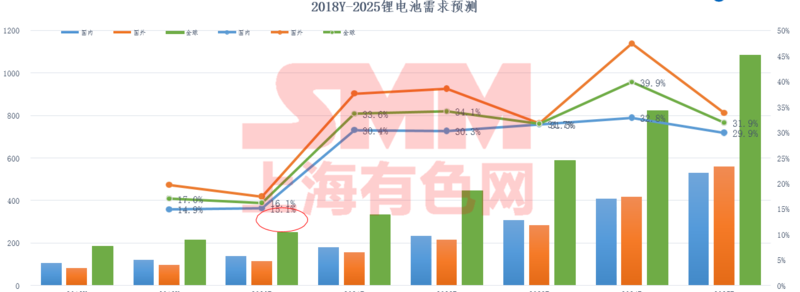
2020 A bad start in the short term: the power battery affected by the COVID-19 epidemic is expected to increase by 16%, and the 3C mobile phone battery is expected to increase by about 20%.

2020 growth highlights: energy storage ESS, is expected to be supported by 5G energy storage 9GWH, side electricity and optoelectronic storage, and UPS, with a compound growth rate of 20%.

On the eve of the outbreak of electrolyte demand
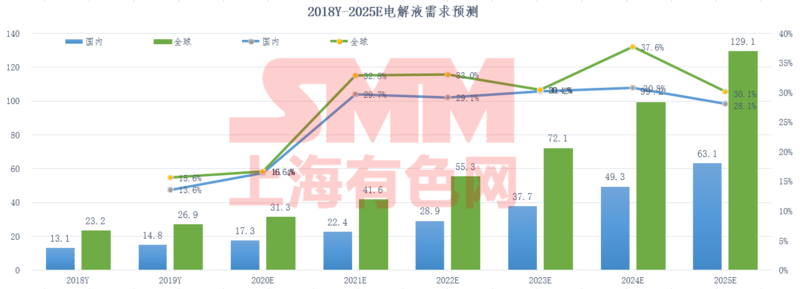
Liu Bowen said that in 2020, the global demand for electrolyte is about 313000 tons, a growth rate of about 16.7 percent; domestic demand is 173000 tons, a growth rate of 16.4 percent; from 2021 to 2022, the demand for lithium batteries is growing rapidly, with a domestic growth rate of more than 30 percent and about 533000 tons in 2023. The demand for lithium batteries abroad is expected to grow by more than 33 percent, and the demand is expected to be concentrated in Europe, with an estimated 180000 tons.

From 2019 to 2025, the average annual compound growth rate of lithium batteries is about 30% at home and about 33% abroad, and the market potential in Europe and the United States is huge.

The demand for solvents is growing steadily.

In 2020, solvent demand is affected by the slowdown of electric vehicles and the weakening demand for digital batteries, which is expected to grow by only 15.7%; but the demand for LFP batteries and energy storage will grow rapidly by 25%; it is estimated that the demand for solvents in 2023 will be 560000 tons, and the demand for electronic EMC, electronic EC and electronic DMC will increase by more than 30%. In 2025, the demand for solvents will be 1 million tons. Tesla-Panasonic, CATL, LG, SKI, and SDI industry chains lead the demand for electrolyte solvents.

Analysis of electrolyte and solvent industry

The concentration of the global lithium battery industry is 71%, and the concentration of the electrolyte industry is 73%. LG Chem is developing rapidly; the oligopoly competition pattern of the electrolyte industry is leading the development of the industry by Tianji, New Zebang and Cathay Pacific; the development of electrolyte benefits from overseas markets, and the overseas market increases by more than 30%.

2020 A bad start in the short term: the power battery affected by the COVID-19 epidemic is expected to increase by 16%, and the 3C mobile phone battery is expected to increase by about 20%.

2020 growth highlights: energy storage ESS, is expected to be supported by 5G energy storage 9GWH, side electricity and optoelectronic storage, and UPS, with a compound growth rate of 20%.

In 2020, the domestic demand for lithium batteries is about 137GWH, driven by small power and 5G energy storage, with a growth rate of about 15%; foreign demand for lithium batteries is about 113GWH, with a growth rate of about 17%; and the global demand for lithium batteries is about 249GWH, with a growth rate of about 16%.

Conclusion

Liu Bowen said that since the beginning of this year, affected by the epidemic, the growth of the electric vehicle and lithium-ion battery industry has lagged to some extent, but does not change the long-term high growth trend. Lithium-ion battery is still the most feasible way of energy storage at present, and the market life cycle of carbonate as a mainstream solvent can be expected to be 8 Mel 10 years. Although it has been 30 years since the commercialization of lithium batteries, it is still a new thing to be used in electric vehicles, including a lot to be improved.
Scan the code to apply to join the SMM Cobalt and Lithium Industry Exchange Group
Declaración de Fuente de Datos: Excepto la información disponible públicamente, todos los demás datos son procesados por SMM basándose en información pública, comunicación de mercado y confiando en el modelo de base de datos interna de SMM. Son solo para referencia y no constituyen recomendaciones para la toma de decisiones.

Para cualquier consulta o para obtener más información, por favor contacte: lemonzhao@smm.cn
Para más información sobre cómo acceder a nuestros informes de investigación, contacte con:service.en@smm.cn
Noticias relacionadas
【Noticias SMM】Glencore anuncia la fecha de cotización secundaria en la ASX y eleva su guía de resultados para el negocio de marketing del año completo
hace 2 horas
【Noticias SMM】Glencore anuncia la fecha de cotización secundaria en la ASX y eleva su guía de resultados para el negocio de marketing del año completo
Leer más
【Noticias SMM】Glencore anuncia la fecha de cotización secundaria en la ASX y eleva su guía de resultados para el negocio de marketing del año completo
【Glencore anuncia la fecha de cotización secundaria en la Bolsa de Valores de Australia y eleva su guía de resultados para el negocio de comercialización del año completo】Glencore anunció que se espera que su cotización secundaria en la Bolsa de Valores de Australia comience a negociarse el miércoles 14 de octubre de 2026, con el código de valores GLC, listada en forma de certificados de depósito, donde cada certificado de depósito corresponde a una acción ordinaria. La compañía también elevó su guía de resultados, esperando que el EBIT ajustado del negocio de comercialización para todo el año 2026 supere los 5.000 millones de dólares, por encima de la estimación anterior de aproximadamente 4.900 millones de dólares proporcionada junto con los resultados semestrales. La compañía también restableció su guía a largo plazo para el negocio de comercialización a través de ciclos a partir de 2027, ajustando el rango de 2.300 a 3.500 millones de dólares a aproximadamente 2.800 a 4.200 millones de dólares, con una mediana de alrededor de 3.500 millones de dólares, basada en el supuesto de un inventario disponible de 32.200 millones de dólares y un costo de financiamiento de aproximadamente el 5%. Glencore posee importantes activos de cobalto en la República Democrática del Congo y es uno de los principales productores mundiales de cobalto.
hace 2 horas
Serie sobre baterías de estado sólido para la próxima década, parte 7 de 9: panorama competitivo global: la "guerra de patentes en la sombra" y la carrera por la industrialización entre China, Japón y Corea del Sur [Análisis de SMM]
hace 2 horas
Serie sobre baterías de estado sólido para la próxima década, parte 7 de 9: panorama competitivo global: la "guerra de patentes en la sombra" y la carrera por la industrialización entre China, Japón y Corea del Sur [Análisis de SMM]
Leer más
Serie sobre baterías de estado sólido para la próxima década, parte 7 de 9: panorama competitivo global: la "guerra de patentes en la sombra" y la carrera por la industrialización entre China, Japón y Corea del Sur [Análisis de SMM]
[SMM Analysis: Solid-State Battery Next Decade Series, 7 of 9: Global Competitive Landscape—The "Patent Shadow War" and Industrialisation Race Among China, Japan, and South Korea] ¿Se mide el desarrollo de las baterías de estado sólido a nivel mundial por patentes, determinando el punto final de la ruta tecnológica de cada país? Actualmente, la competencia global presenta a China liderando en cantidad, mientras que Japón y Corea del Sur ocupan posiciones clave en patentes. China está siguiendo un enfoque de doble vía, con baterías sólido-líquido ya en producción en masa y baterías totalmente de estado sólido alcanzando terreno; Japón está apostando por el sulfuro, Corea del Sur apunta a mercados duales, y Europa y Estados Unidos están adoptando importación de tecnología más fabricación local. 2027-2028 es una ventana crítica, con patentes, velocidad de industrialización y capacidad de sulfuro de litio decidiendo el resultado.
hace 2 horas
Las gafas inteligentes Ray-Ban Meta de tercera generación llegan a la India y se adelanta un modelo de audio sin cámara
02 Oct 2026 14:04 (GMT+8)
Las gafas inteligentes Ray-Ban Meta de tercera generación llegan a la India y se adelanta un modelo de audio sin cámara
Leer más
Las gafas inteligentes Ray-Ban Meta de tercera generación llegan a la India y se adelanta un modelo de audio sin cámara
【Las gafas inteligentes Ray-Ban Meta de tercera generación se lanzan en India y se adelanta un modelo de audio para su entrada al mercado】Meta anunció que las gafas inteligentes Ray-Ban Meta de tercera generación ya están a la venta en India, desde 44.300 rupias, disponibles a través de su sitio web oficial, el sitio oficial de Ray-Ban India y minoristas locales de electrónica de consumo y ópticas. El modelo ofrece hasta 9 horas de autonomía por carga —una hora más que su predecesor— junto con una cámara de 12 megapíxeles compatible con grabación de vídeo en ultra alta definición 3K y un conjunto de seis micrófonos capaz de eliminar más del 90 % del ruido de fondo, con 27 combinaciones de montura y lentes disponibles. Meta también adelantó el próximo lanzamiento en India de las Ray-Ban Meta Audio, sin cámara, que pesan 43 g y ofrecen hasta 12 horas de autonomía por carga, con 48 horas adicionales mediante el estuche de carga; no se revelaron el precio ni la fecha de lanzamiento para India.
02 Oct 2026 14:04 (GMT+8)