[SMM Analysis] further extension of Action Control, revelation of the status quo of Copper scrap recovery in Malaysia

Publicado: Apr 24, 2020 14:51 (GMT+8)

SMM4, 24th:

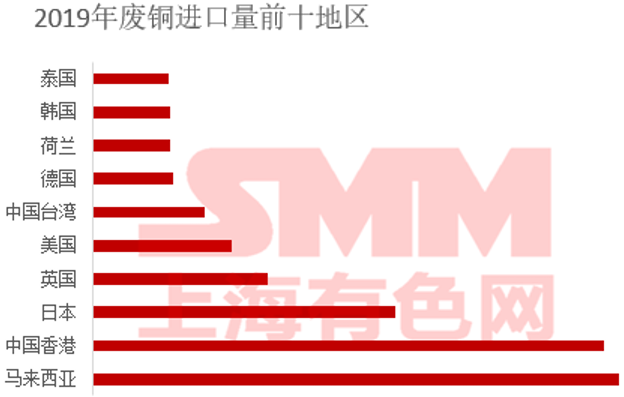
On the evening of April 23, Malaysian Prime Minister Muyuddin announced in a televised message of Ramadan that Malaysian copper scrap exports would continue to be affected by the further extension of the operation control order in Malaysia until 12 May. SMM data show that in 2019, China imported a total of 1.193 million tons of scrap copper, accounting for 61.39% of the total domestic scrap copper, and Malaysia accounted for about 16.54% of the total scrap copper imports. At present, China is the largest source of scrap copper import, and the recovery of its copper scrap industry has an important impact on the supply of China's scrap copper market.
Although the action control measures continue to be extended, the Malaysian Government has previously announced the gradual opening of eight areas, including the machinery and equipment industry, the aviation industry, the construction industry and construction-related services, the automotive industry and maintenance, legal-related services, oil and gas-related services, crown disease-related R & D activities, laboratories operating in specific areas, traditional and auxiliary medicine and Chinese medicine services. Scrap copper dismantling enterprises are not included for the time being, production is still strictly controlled, but the overall control measures have a trend of gradual liberalization.

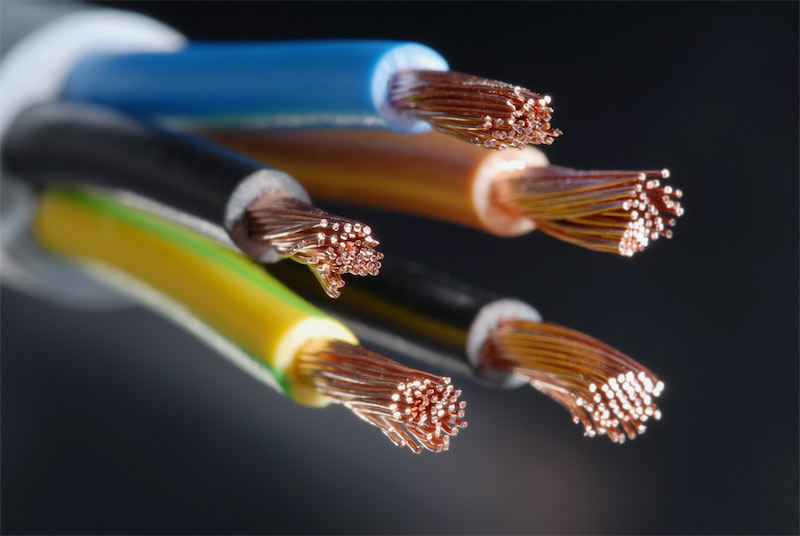
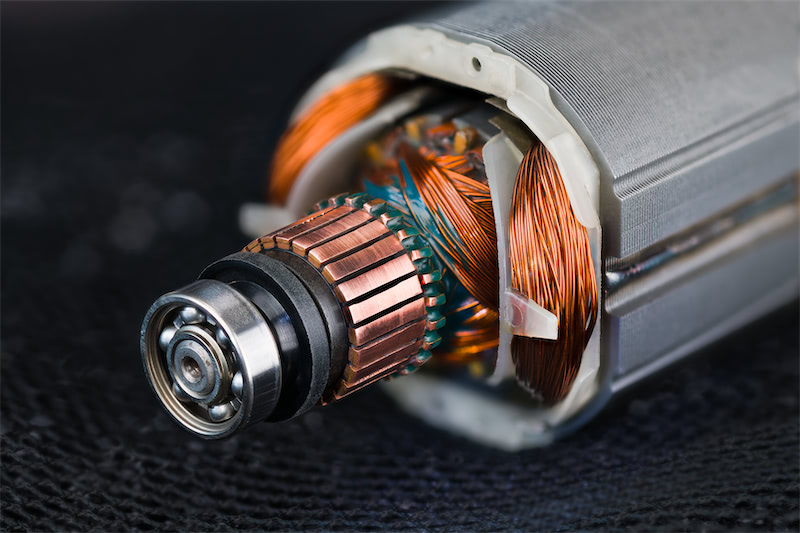
According to SMM research, some factory areas have workers, and far from the urban area, relatively loose control of copper scrap dismantling enterprises have avoided supervision of private small-scale resumption of production, it is still impossible to large-scale resumption of production, once the resumption of production will face heavier fines. Under the order, most copper scrap enterprises are still in a state of shutdown. In addition, due to the reduction of waste copper exports from Europe and the United States, there is also a shortage of local waste wires, waste motors and other dismantling raw materials.

In addition to being affected by the national regulatory policy, the arrival of enterprise personnel also has a great impact on the resumption of work in copper scrap enterprises. In the process of tightening domestic copper import policy in the past two years, Southeast Asia, represented by Malaysia, has become a new concentration of waste in the world. More and more Chinese enterprises have invested and built factories in the region, and have a very important market share in the local market, including dismantling, smelting, smelting and copper processing enterprises. At present, in addition to the arrival of grass-roots workers in Malaysia's local copper scrap plants, the arrival rate of middle-level Chinese managers is also very low. In the context of countries focused on strictly preventing the import of the epidemic, it is expected that the Malay government's measures to restrict the entry of foreigners will not be lifted for quite some time, the lack of decision-making arrangements for managers, and to a certain extent obstacles to the resumption of production.

According to relevant sources, at present, Malaysia's local scrap copper dismantling enterprises have a backlog of scrap copper finished products, occupying a relatively high level of funds, and enterprises are speeding up exports to China in order to alleviate the pressure, but due to port logistics problems, it is expected that goods will arrive one after another in mid-May, when the supply of imported scrap copper is expected to gradually improve. However, in the short term, the domestic import supply is still relatively tight, the shortage of domestic supply is difficult to alleviate, and the production of waste enterprises continues to be disturbed, which is good for the consumption of refined copper.
Declaración de Fuente de Datos: Excepto la información disponible públicamente, todos los demás datos son procesados por SMM basándose en información pública, comunicación de mercado y confiando en el modelo de base de datos interna de SMM. Son solo para referencia y no constituyen recomendaciones para la toma de decisiones.

Para cualquier consulta o para obtener más información, por favor contacte: lemonzhao@smm.cn
Para más información sobre cómo acceder a nuestros informes de investigación, contacte con:service.en@smm.cn
Noticias relacionadas
【Flash | NAS sube el precio base del acero inoxidable laminado en frío tipo 316】
hace 11 minutos
【Flash | NAS sube el precio base del acero inoxidable laminado en frío tipo 316】
Leer más
【Flash | NAS sube el precio base del acero inoxidable laminado en frío tipo 316】
North American Stainless (NAS), parte de Acerinox, anunció que los productos laminados en frío de tipo 316 enviados a partir del 1 de octubre tendrán un precio base más alto mediante una reducción de dos puntos en el descuento funcional. Todas las solicitudes de cotización activas están sujetas a este ajuste. Se trata de un cambio en el mecanismo del precio base, no de un recargo mensual por aleación.
hace 11 minutos
【Flash | Industeel reduce los recargos de octubre en los grados inoxidables con molibdeno】
hace 13 minutos
【Flash | Industeel reduce los recargos de octubre en los grados inoxidables con molibdeno】
Leer más
【Flash | Industeel reduce los recargos de octubre en los grados inoxidables con molibdeno】
Industeel, parte de ArcelorMittal, actualizó recientemente sus recargos de octubre para aleaciones inoxidables. El 316L/316LN cayó un 0,9 % intermensual hasta 3.684 €/t, el 316LMo un 0,7 % hasta 4.115 €/t, el 317L un 0,7 % hasta 4.758 €/t y el 904L un 1,0 % hasta 6.768 €/t. El 2205+ y el 2507 se mantuvieron prácticamente estables en 3.724 €/t y 4.389 €/t, mientras que el UR 254 bajó hasta 7.147 €/t. La lista excluye el recargo energético.
hace 13 minutos
El proyecto de cobre MARA (Agua Rica–Alumbrera) de Glencore en Argentina obtiene la aprobación del RIGI
hace 17 minutos
El proyecto de cobre MARA (Agua Rica–Alumbrera) de Glencore en Argentina obtiene la aprobación del RIGI
Leer más
El proyecto de cobre MARA (Agua Rica–Alumbrera) de Glencore en Argentina obtiene la aprobación del RIGI
Glencore ha anunciado que su proyecto Minera Agua Rica-Alumbrera (MARA) en Catamarca, Argentina, ha recibido la aprobación bajo el Régimen de Incentivo para Grandes Inversiones (RIGI), con una inversión prevista de unos 4.000 millones de dólares y estabilidad fiscal, aduanera y cambiaria a largo plazo, incluida una tasa del impuesto a las ganancias del 25%. Agua Rica alberga recursos medidos e indicados de aproximadamente 1.200 millones de toneladas con 0,47% de cobre, 0,20 g/t de oro, 3,40 g/t de plata y 0,03% de molibdeno. El mineral se procesará en la planta existente de Alumbrera, a 35 km de distancia, con potencial de promediar más de 200.000 toneladas anuales de cobre en concentrado durante los primeros diez años. La reactivación de Alumbrera se adelanta al segundo semestre de 2027, con cerca de 2.000 trabajadores en el sitio. El gobierno prevé la construcción a partir de noviembre de 2027 y la producción desde octubre de 2031; la evaluación de impacto ambiental de la fase de explotación se presentó el mes pasado y la aprobación no constituye una decisión final de construcción.
hace 17 minutos