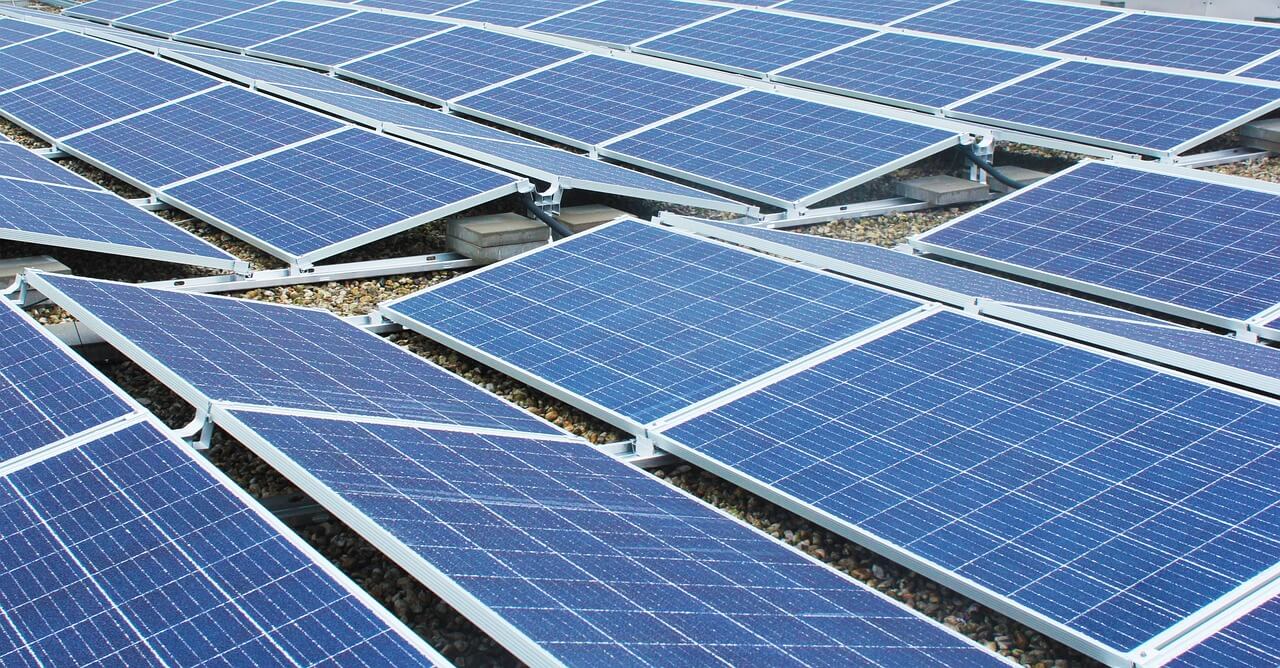
[state Council: extend the policy of subsidies for the purchase of new energy vehicles and exemption from purchase tax for two years] in order to promote vehicle consumption, the meeting decided that, first, the policy on subsidies for the purchase of new energy vehicles and exemption from vehicle purchase tax, which expires at the end of the year, will be extended for two years. Second, the central government has adopted the method of replacing subsidies with awards to support the elimination of diesel trucks with emission standards of country III and below in key areas such as Beijing, Tianjin and Hebei. Third, VAT will be levied on the sale of used cars by used car dealers from May 1 to the end of 2023 on the basis of 0.5% reduction in sales.
[the first share of Funeng Science and Technology was born] on March 31, the Shanghai Municipal Committee considered the issuance and listing applications of two companies, Funeng Technology and Shenzhou Cell, both of which were approved. The financing amount of Funeng Technology is 3.437 billion yuan, and the sponsor is Huatai United Securities. Its main new energy vehicle lithium-ion power battery and vehicle battery system R & D, production and sales, if successfully listed, will become the "first share of power battery". According to the prospectus submitted by Funeng Science and Technology, the company plans to raise 3.437 billion yuan, mainly for the annual production of 8GWh lithium-ion power battery project (Funeng Zhenjiang Phase III project) and supplementary working capital projects. Among them, the annual production of 8GWh lithium-ion power battery project is the third phase of Zhenjiang project implemented by the company in order to further expand the production scale.
[new energy battery business in 2019 generated operating income of about 627 million yuan] recently, Tianeng Power announced that the company's operating income in 2019 was 40.614 billion yuan (RMB, the same below), an increase of 16.9% over the same period last year; gross profit was 4.688 billion yuan, an increase of 16% over the same period last year; and profit attributable to shareholders was 1.682 billion yuan, an increase of 41.5% over the same period last year. The announcement shows that, as one of the main businesses of the Group, it provides the Group with sound cash flow. During the period, high-end environmentally friendly battery sales revenue of about 28.22 billion yuan. During the period, the Group's new energy battery business generated operating income of about 627 million yuan. During the period, the increase in gross profit was mainly due to an increase in sales and an increase in gross battery profit margin. Overall gross margin fell 0.09 percentage points to 11.54% from 11.63% in 2018. Among them: the gross profit margin of the manufacturing industry was 15.39%, an increase of 2.70 percentage points over 2018, but the overall gross profit margin decreased due to the low gross profit margin of new trading operations in 2019.
[Guangzhou Auto Group: revenue in 2019 was 59.234 billion yuan net profit down 39.30% from the same period last year] on March 31, Guangzhou Automobile Group released its 2019 annual report. During the reporting period, Guangzhou Auto Group realized revenue of 59.234 billion yuan, down 17.17% from the same period last year, and the net profit attributed to shareholders of listed companies was 6.618 billion yuan, down 39.30% from the same period last year. The net cash flow from operating activities was-381 million yuan, an increase of 69.99 percent over the same period last year. Production and sales situation, in 2019, Guangzhou Automobile Group produced 53700 cars and sold 58400 cars, an increase of 4.40 percent over the previous year, and inventory decreased by 73.07 percent over the previous year; SUVs produced 268200 vehicles and sold 267500 vehicles, with an increase of 3.55 percent over the previous year; and MPVs produced 57400 cars and sold 58800 vehicles, down 28.05 percent from the previous year.
[multiple disadvantages in the new energy car market dragged down BYD's net profit in 2019 by 42 per cent] on March 31, BYD reported 2019 results, with the company generating 127.739 billion yuan in operating income and 1.612 billion yuan in net profit attributed to shareholders of listed companies. Both operating income and net profit were down from the previous year. In 2018, BYD achieved operating income of 130.055 billion yuan and a net profit of 2.78 billion yuan for shareholders of listed companies. As for the reasons for the decline in net profit, BYD said it was mainly due to industry, policy changes and the impact of rising R & D costs in the current period.
[Weichai Power 20,000 hydrogen fuel Cell engine Factory put into production] on March 31, Weichai Group Chairman Tan Xuguang announced that Weichai 20,000 hydrogen fuel cell engine plant was officially put into production. Weichai officials said the new plant is the support for the global commercialization of Weichai's hydrogen fuel cell business and will provide an industrial basis for Shandong Province to build a "hydrogen energy city". It is reported that the hydrogen fuel cell engine produced by the new factory will first be aimed at domestic bus enterprises, and then will be centralized in the Shandong Weifang bus market, and will seek larger-scale application and promotion in the future.
[Weilai reorganization of Sandian and vehicle business responsible for VP will leave] 31 news, Weilai senior vice president Huang Chendong will leave, its responsible electric power engineering department is facing restructuring, more than 200 employees have been diverted to different business lines.
SMM Cobalt Lithium small Metal Research team
Hu Yan 021-51666809
Qin Jingjing 021-51666828
Mei Wangqin 021-51666759
Huo Yuan 021-51666898
Wuyang 021-51666818

Scan QR code, apply to join SMM metal communication group, please indicate company + name + main business
![[Análisis de SMM] Recortando la serie 6, alejándose de CATL: Detrás del revuelo en el mercado automotriz de agosto, el ternario se está revalorizando](https://imgqn.smm.cn/usercenter/DdWJZ20251217171731.jpg)
![[Batería de estado sólido: ProLogium Technology produce en serie la batería totalmente de estado sólido de alta densidad energética Gen3.5, alcanzando 381 Wh/kg y 903 Wh/L]](https://imgqn.smm.cn/usercenter/nVnLo20251217171728.jpg)