[SMM exclusive] the amount of waste used at the processing end continues to decline, and the decline in copper consumption is difficult to change.

Publicado: Jul 2, 2019 19:10
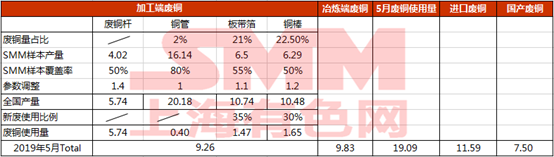
According to the SMM survey, the national scrap copper consumption of SMM in May was 190900 tons, an increase of 2100 tons, or 1.09 percentage points, from the previous month. Copper scrap flows to the processing end of 92600 tons, accounting for about 48.52%, to the smelting end of 98300 tons, accounting for about 51.48%. Among them, the consumption of imported scrap copper is 115900 tons, accounting for about 60.70%, and the consumption of domestic scrap copper is 75000 tons, accounting for about 39.30%.
News from SMM7 on the 2nd of June:

According to the SMM survey, the national scrap copper consumption of SMM in May was 190900 tons, an increase of 2100 tons, or 1.09 percentage points, from the previous month. Copper scrap flows to the processing end of 92600 tons, accounting for about 48.52%, to the smelting end of 98300 tons, accounting for about 51.48%. Among them, the consumption of imported scrap copper is 115900 tons, accounting for about 60.70%, and the consumption of domestic scrap copper is 75000 tons, accounting for about 39.30%.

In May, the total amount of waste used at the processing end was 92600 tons, a decrease of 14600 tons compared with the previous month. The average price difference for refined waste in May was 831 yuan per ton, a decrease of 257 yuan per ton compared with the previous month. In May, trade friction between China and the United States escalated again, and copper prices fell continuously, with the center of gravity falling from 49000 yuan per ton to 46000 yuan per ton, down nearly 3000 yuan. The price difference between fine and waste has also narrowed to less than a thousand yuan. Domestic scrap copper goods are sold sparingly, and the outflow of goods is reduced. On the other hand, the narrowing of refined copper price difference also makes scrap copper lose its price advantage compared with refined copper, which is manifested in the effect of refined copper extruding copper on the consumer side. In April, as the tax price gap narrowed to about 1,000 yuan, proficiency and scrap copper could not be replaced. Scrap copper in May provided some support for refined copper consumption, accelerating the seasonal removal of domestic stocks. The consumption of copper scrap rod accounts for more than 60% of the consumption of copper scrap processing end. In May, the starting rate of copper scrap rod making enterprises is only 54.44%, which is 12.54% lower than that of the previous month.

At the beginning of the year, due to the warming of the market, some scrap copper rod-making enterprises that stopped production last year due to environmental protection benefits and other problems resumed production. While the demand increased, the supply of domestic scrap copper was not abundant. Together, the two intensified the tense pattern of domestic scrap copper supply this year, resulting in high scrap copper prices this year, and traders' sentiment of cherishing sales at low prices is even more obvious. Whether early tax cuts or problems in China and the United States in May led to a drop in copper prices, the weakening of scrap copper consumption advantage has also put further pressure on this year's scrap copper rod makers.

As for the import of scrap copper, according to SMM statistics, in May 2019, China imported a total of 184952 tons of scrap copper, a decrease of 24.37 percent over the same period last year, with an average copper grade of 84.34 percent, equivalent to 155981 tons of metal, an increase of 31.76 percent over the same period last year. From January to May 2019, China imported 581558 scrap copper metals, an increase of 12.94 percent over the same period last year, to about 67000 metal tons. In April and May, due to the import effect, the import of scrap copper increased greatly, and it is expected that the amount of imported scrap copper can maintain a slight increase in the first half of the year before the implementation of the restrictive policy.

Starting from July 1, import of scrap copper requires approval before it can be imported. At present, the approval documents in Zhejiang and Anhui have been issued, and the quantity is basically the same as that of the six categories of imports scrapped in the same period last year. It is reported that the second batch of approvals will be released on July 10. It is expected that the amount of scrap copper and metal imported in the third quarter of last year will be basically the same as that of the six categories of scrap metal imported in the same period last year, with a decrease of only seven categories imported in the third quarter of last year, equivalent to about 60,000 tons of metal. In the case of a slight increase in imported scrap copper in the first half of the year, the supply of imported scrap copper remained basically stable in the third quarter. However, it has been reported that the number of approvals issued in the fourth quarter will be reduced.

As a result of the turnaround in Sino-US trade, the price of copper in Shanghai has rebounded sharply, and the gap between refined and scrap prices has also widened to more than 1,000 yuan. However, due to the decline in early prices too much, scrap copper traders still show the sentiment to cherish the sale, scrap copper prices of the small rise in the market is not obvious, scrap copper market is still weak supply and demand.

(SMM Wei Xue)
 

Declaración de Fuente de Datos: Excepto la información disponible públicamente, todos los demás datos son procesados por SMM basándose en información pública, comunicación de mercado y confiando en el modelo de base de datos interna de SMM. Son solo para referencia y no constituyen recomendaciones para la toma de decisiones.

Para cualquier consulta o para obtener más información, por favor contacte: lemonzhao@smm.cn
Para más información sobre cómo acceder a nuestros informes de investigación, contacte con:service.en@smm.cn
Noticias relacionadas
India y Rusia buscan ampliar su asociación en minería y minerales críticos
hace 2 horas
India y Rusia buscan ampliar su asociación en minería y minerales críticos
Leer más
India y Rusia buscan ampliar su asociación en minería y minerales críticos
Nueva Delhi y Moscú buscan ampliar la cooperación desde la exploración de minerales hasta los materiales avanzados.
hace 2 horas
Datos: Movimiento del mercado SHFE, DCE (9 de septiembre)
hace 5 horas
Datos: Movimiento del mercado SHFE, DCE (9 de septiembre)
Leer más
Datos: Movimiento del mercado SHFE, DCE (9 de septiembre)
La siguiente tabla muestra el movimiento de metales ferrosos y no ferrosos en la SHFE y la DCE el 9 de septiembre de 2026.
hace 5 horas
Cobre asegura suministro de mineral de terceros para añadir 300 t/mes de cátodo de cobre en Sierra Atacama
hace 5 horas
Cobre asegura suministro de mineral de terceros para añadir 300 t/mes de cátodo de cobre en Sierra Atacama
Leer más
Cobre asegura suministro de mineral de terceros para añadir 300 t/mes de cátodo de cobre en Sierra Atacama
Cobre Limited anunció el 9 de septiembre que su operación Sierra Atacama en Chile ha firmado acuerdos de compra de mineral con dos mineros terceros de óxido de cobre en la región de Antofagasta, y se espera que las entregas aumenten a partir del cuarto trimestre de 2026. Se espera que los acuerdos suministren aproximadamente entre 50.000 y 75.000 toneladas de mineral de óxido al mes con una ley de cobre total del 1,0–1,5%, lo que añadirá alrededor de 300 toneladas mensuales de producción de cátodos de cobre. La producción adicional se procesará a través de la planta SX-EW existente de Sierra Atacama, que tiene una capacidad instalada de cátodos de cobre de aproximadamente 20.000 toneladas anuales y actualmente opera por debajo de su capacidad nominal. Dado que el mineral comprado no requiere que Cobre incurra en sus propios costos de minería y desarrollo, la compañía señaló que los costos incrementales comprenderán principalmente el precio de compra del mineral y los costos variables de procesamiento, incluidos ácido, energía y reactivos. También se espera que un mayor rendimiento distribuya los costos fijos de la planta sobre una base de producción más amplia. Las aproximadamente 300 toneladas mensuales de cátodo adicional serán incrementales a los objetivos de producción previamente anunciados por Cobre, que permanecen sin cambios. La compañía continúa estabilizando la producción subterránea mientras se prepara para la transición hacia una operación a cielo abierto de mayor escala a partir de 2027. Cobre indicó que también están en curso negociaciones con proveedores regionales adicionales de mineral, lo que podría proporcionar más alimentación para la instalación SX-EW subutilizada. Los acuerdos representan un aumento a corto plazo en el suministro de cátodos de cobre de Sierra Atacama sin requerir desarrollo minero adicional ni nueva capacidad de procesamiento. A la tasa inicial esperada, el mineral de terceros podría contribuir aproximadamente 3.600 toneladas de cátodo adicional sobre una base anualizada. Más importante aún, debería elevar la utilización de la planta SX-EW existente antes de la transición planificada de Cobre hacia una producción a cielo abierto ampliada en 2027. Acuerdos adicionales de suministro de mineral proporcionarían un mayor potencial de aumento en la utilización de la planta y en la producción de cátodos.
hace 5 horas