On November 5, at the , hosted by Changzhou Tongtai High-Conductivity New Materials Co., Ltd., SMM Information & Technology Co., Ltd. (SMM), and Shandong Aisi Information Technology Co., Ltd., supported by Shandong Xinghui Copper-Based New Materials Technology Co., Ltd., and with special invited support from the Wire and Cable Enterprise Federation of Yixing Entrepreneurs Association, Suzhou Optoelectronic Industry Chamber of Commerce, Anhui Wuwei Special Cable Association, and Ningbo Wire and Cable Chamber of Commerce, Sun Chen, Senior Solution Expert at Hangzhou Hikvision Digital Technology Co., Ltd., shared the theme "Intelligent IoT, Building a New Perspective on Smart Wire and Cable Manufacturing."
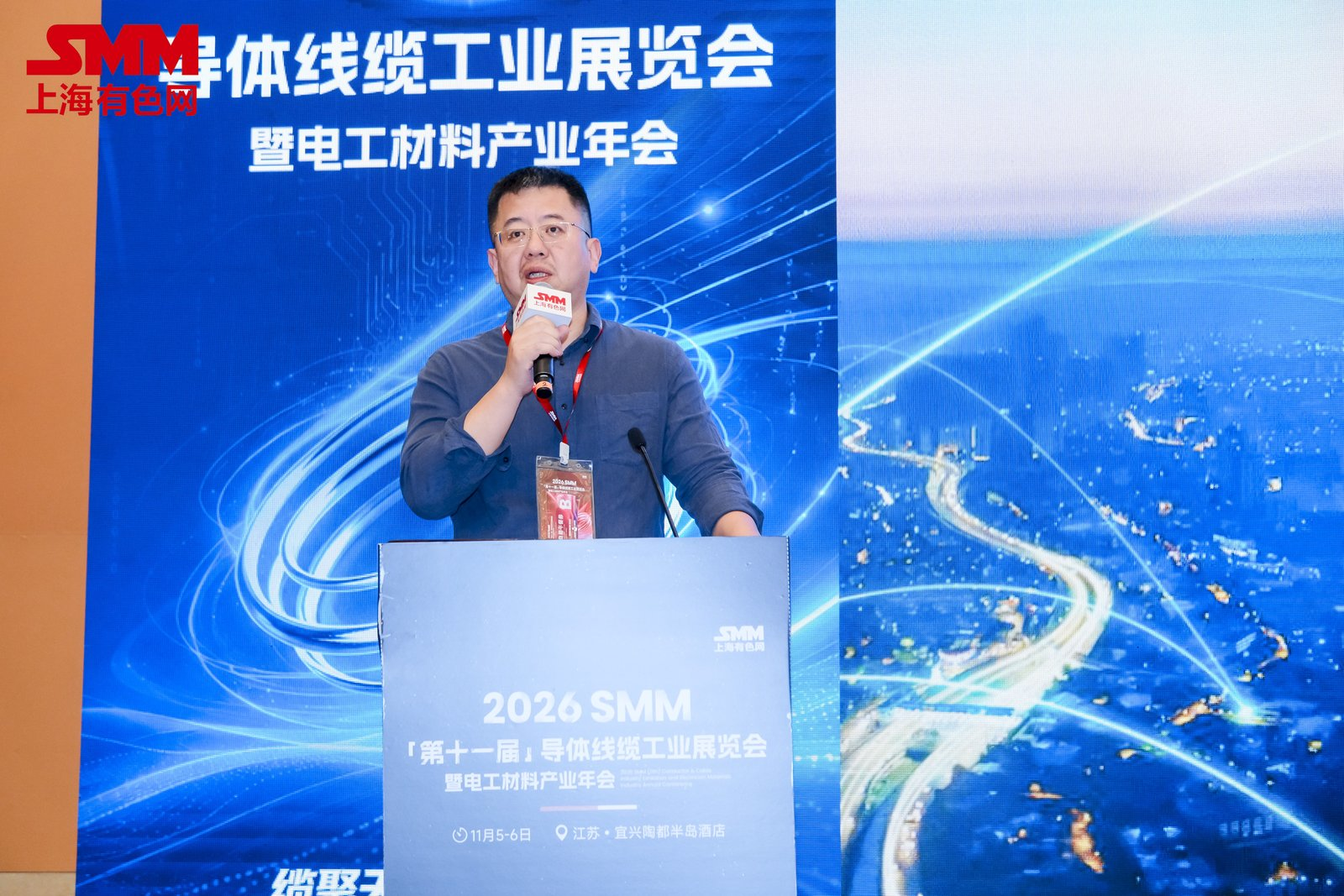
He began by asking, "Everyone says management is difficult—where exactly does the difficulty lie?" and then introduced closing the management distance as an effective path to quickly shore up capability gaps.
Building digital twins through IoT and perceiving changes through intelligence rapidly extends the management radius
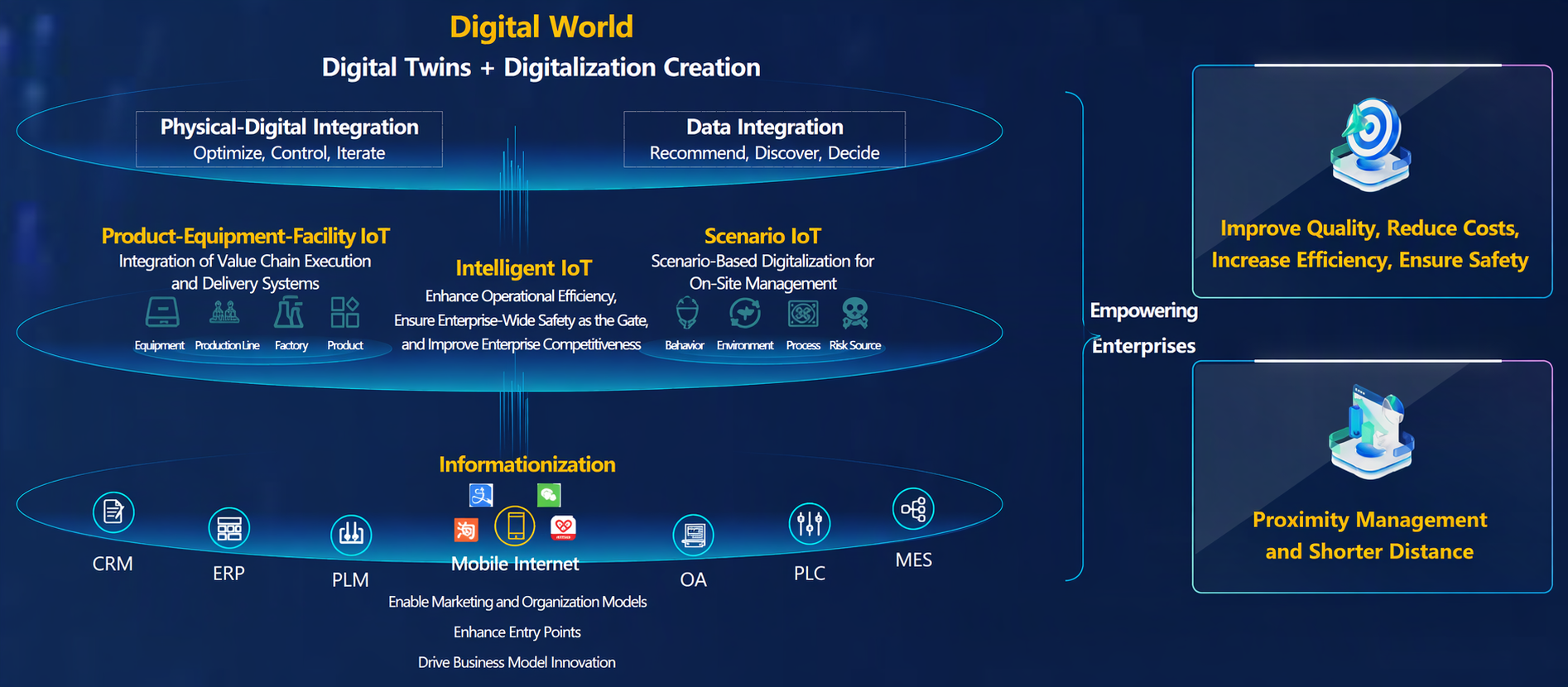
. He elaborated on the need for "clairvoyant eyes" and "wind-following ears" to manage well.
What is even more necessary is a well-trained "digital manager"
. Under the "optimal cost-performance" principle, computing power is deployed at the edge, on the device, or in the cloud according to application needs, replacing repetitive labor.
Safety, quality control, and equipment are the three main management directions
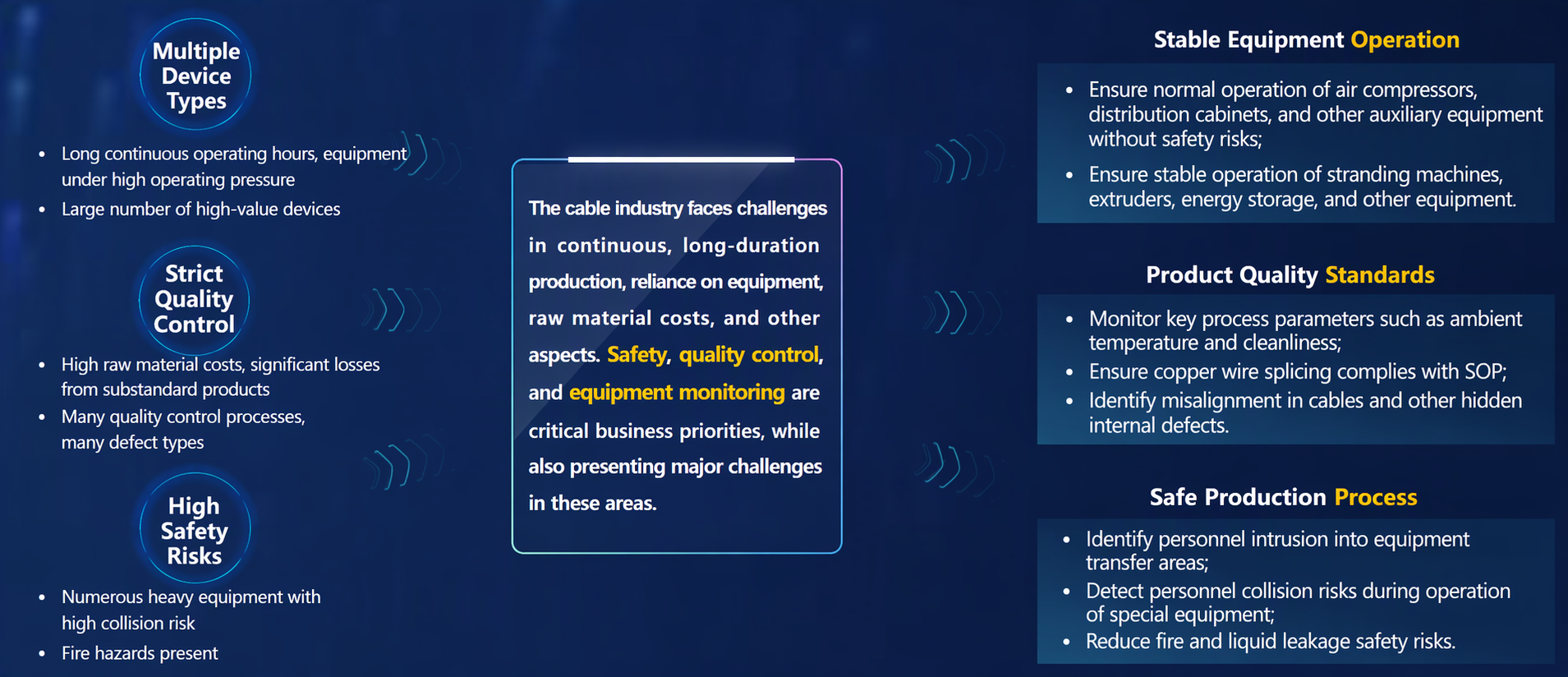
. Different product categories in the wire and cable industry share certain similarities in production processes, and the production management challenges they face are relatively concentrated. Therefore, focusing on key areas such as safety, quality control, and equipment supervision enables management capability improvement in high-value business scenarios.
He explained from the perspectives of digital-intelligent support for management improvement, AI empowerment for core applications, business logic built around needs, IoT devices collecting key data, and scenario-based analysis of major requirements, how intelligent IoT helps wire and cable enterprises achieve high-quality development starting from real-world scenarios.
Quality Supervision | Visual AI Identifies Abnormal Copper Wire Conditions
Stranding is a common process in wire and cable production, primarily using multiple drawn copper wires twisted in multiple stages into a cable core conductor. As production proceeds, copper wires installed on the stranding machine may experience loose strands, wire jamming, insufficient remaining length, and other issues. The stranding equipment must be stopped, and the copper wires straightened or replenished before production can continue.
Solution:
① Deploy surveillance cameras on the guardrails on both sides of the stranding equipment to record the equipment's operation process from a downward angle;
② Feed the surveillance video deployed across multiple stranding machines into a large-model super brain, and develop algorithms for detecting loose strands, wire jamming, and remaining length to identify the above abnormal copper wire conditions;
③ Abnormal condition event data can be pushed back to the surveillance cameras. If management requires, devices such as andon lights and alarms can also be deployed to warn of abnormal conditions and remind on-site production personnel to intervene promptly.
Quality Supervision | Monitoring of Exhaust Gas from Cable Core
After the three-layer co-extrusion process (in a catenary or vertical tower), the cable core is essentially formed, and the polyethylene insulation layer has solidified in shape, but it must undergo a heating stage to complete cross-linking, ensuring the cable core meets the electrical performance required by the process. Production personnel need to monitor the cross-linking progress of the cable core at all times to avoid energy waste caused by excessive heating time.
Pain Points:The traditional production method involves immersing the tail end of the cable core into an oil drum to monitor the emitted exhaust gas (mainly methane), which has poor real-time performance, consumes labour, and relies heavily on subjective judgement, introducing additional quality risks.
Solution:Methane gas concentration sensors are deployed to automatically identify the methane concentration at the tail end of the cable core and automatically issue an alarm when exhaust emission ends.
It also introduces quality supervision | monitoring of heating uniformity of the cable core, safety supervision | whole-process management of special operations, safety supervision | compliance supervision of on-site operational behaviour, safety supervision | prohibition of personnel entry into rotating equipment areas, safety supervision | anti-collision for robotic arms, and safety supervision | compliance of crane lifting and transport operations.
Safety Supervision | Temperature Measurement of Power Distribution Cabinets
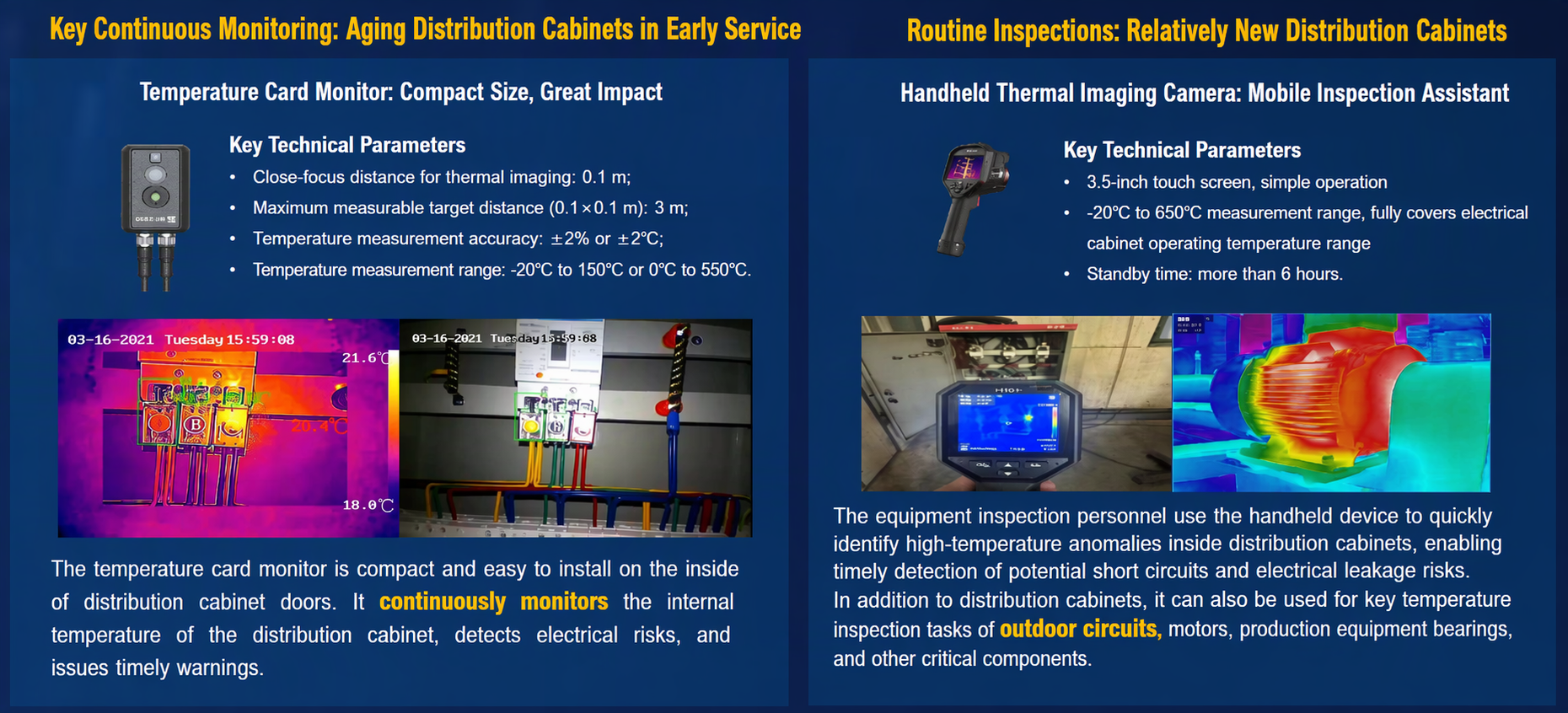
Power distribution cabinets are the single-category equipment deployed in the largest quantity in wire and cable enterprises, and they are of great significance for achieving smooth and continuous production processes. An efficient inspection and monitoring mechanism for power distribution cabinets needs to be established to effectively reduce the workload of manual inspections while increasing the effective monitoring duration of power distribution cabinets and avoiding electrical faults.
In addition, it also elaborates on safety supervision | identification of personnel lingering in irradiation rooms, safety supervision | large-model-assisted fire risk management and control in factory areas, safety supervision | large-model-empowered high-precision security inspection to prevent the loss of precious metals, and the safety and environmental intelligent agent cluster improving inspection efficiency.
Equipment Supervision | Acoustic-Vibration-Temperature Sensors for Monitoring Air Compressor Motor Operating Conditions
Air compressors are key auxiliary production equipment for wire and cable producers. As the core component of an air compressor, the motor is of high value and difficult to repair, so it is necessary to grasp the motor's health status in real time and continuously optimize the air compressor rotation strategy.
Multi-dimensional sensors are deployed at the drive end and non-drive end of the equipment under test (such as a motor) to acquire operational data including sound, vibration, and temperature. Intelligent algorithms based on mechanism models are then used to estimate possible fault types and assess their severity.
Equipment Supervision | Handheld Acoustic Imager for Visual Detection of Air Leakage Points in Plant Air Systems
Air compressors mainly provide compressed air as a power source for pneumatic equipment and pneumatic tools in wire and cable factories, and their pipelines run throughout the plant. If pipeline leakage occurs, it will inevitably increase the enterprise's energy consumption. The handheld acoustic imaging device combines acoustic wave detection technology with visible light technology, helping equipment supervisors accurately locate gas leak points through inspections without disrupting production, enabling timely repairs.
Finally, the sharing also covered building a visual and intuitive management interface for equipment supervision; equipment management agents improving equipment availability and reducing downtime; AR workshops providing multi-dimensional workshop management perspectives; a smart management platform covering all scenarios across the park; and cross-park chain management (based on headquarters-branch park video networking, precisely reaching the front line and making the site accessible at your fingertips).
In addition, it introduced Hikvision.