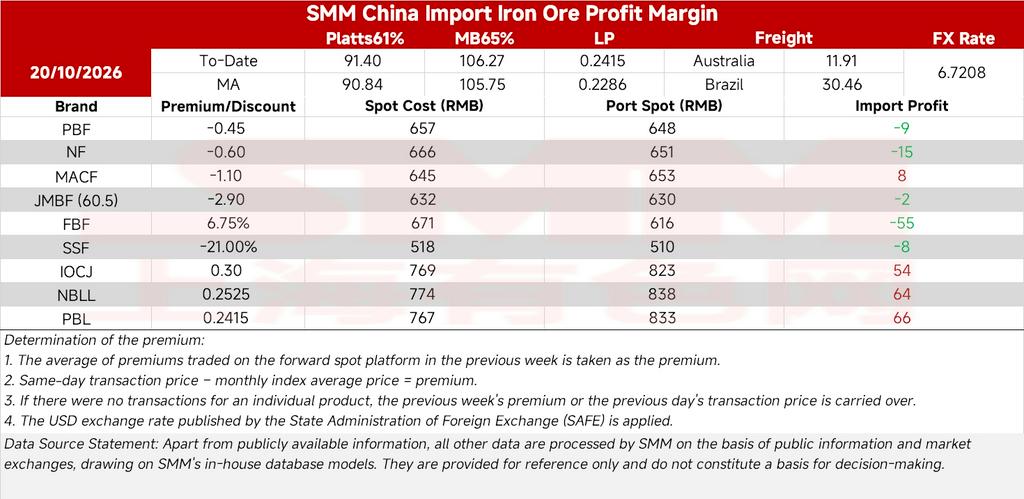
The average imported iron ore margin widened from 6.38 yuan/mt to 11.52 yuan/mt this period. Higher port spot prices were the main driver.
On the supply side, SMM shipping data showed global iron ore shipments fell 4.7% week on week to 32.5276 million mt in the week ended 16 October, with the decline mainly from non-mainstream origins. Australian shipments fell 4.5% to 18.6396 million mt, while Brazilian shipments rose 13.3% to 7.9581 million mt. Shipments to China rose 7.0% to 20.7771 million mt. Arrivals at major Chinese ports fell 12.1% week on week to 24.5464 million mt over the same period. Despite the sharp drop in arrivals, inventories at 35 major ports rose 2.85 million mt week on week. Port outbound volumes fell 50,000 mt to 3.185 million mt, and port stocks were clearing slowly. SMM survey data showed domestic iron ore concentrate output rose 30,000 mt to 900,000 mt.
On the demand side, daily pig iron output at key steel mills rose 1.4% in early October from the previous ten-day period. Mills remained loss-making, however, and continued to buy on a just-in-time basis. Futures rebounded today, but spot trading volumes did not pick up and fundamentals offer little sustained support. Shipments to China have recovered, so arrivals are likely to rise again. Iron ore prices are likely to stay range-bound in the near term, with limited upside. Port spot prices are likely to hold within a range, and the average imported iron ore margin is likely to stay at a small profit.