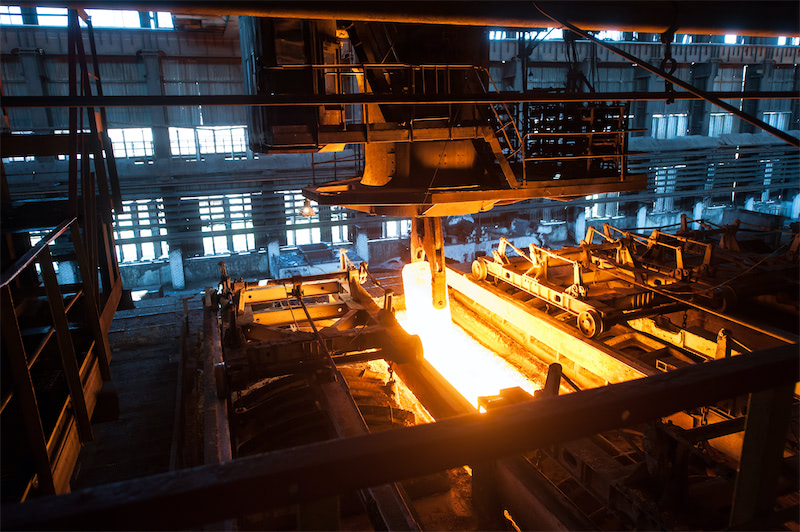
Key Summary
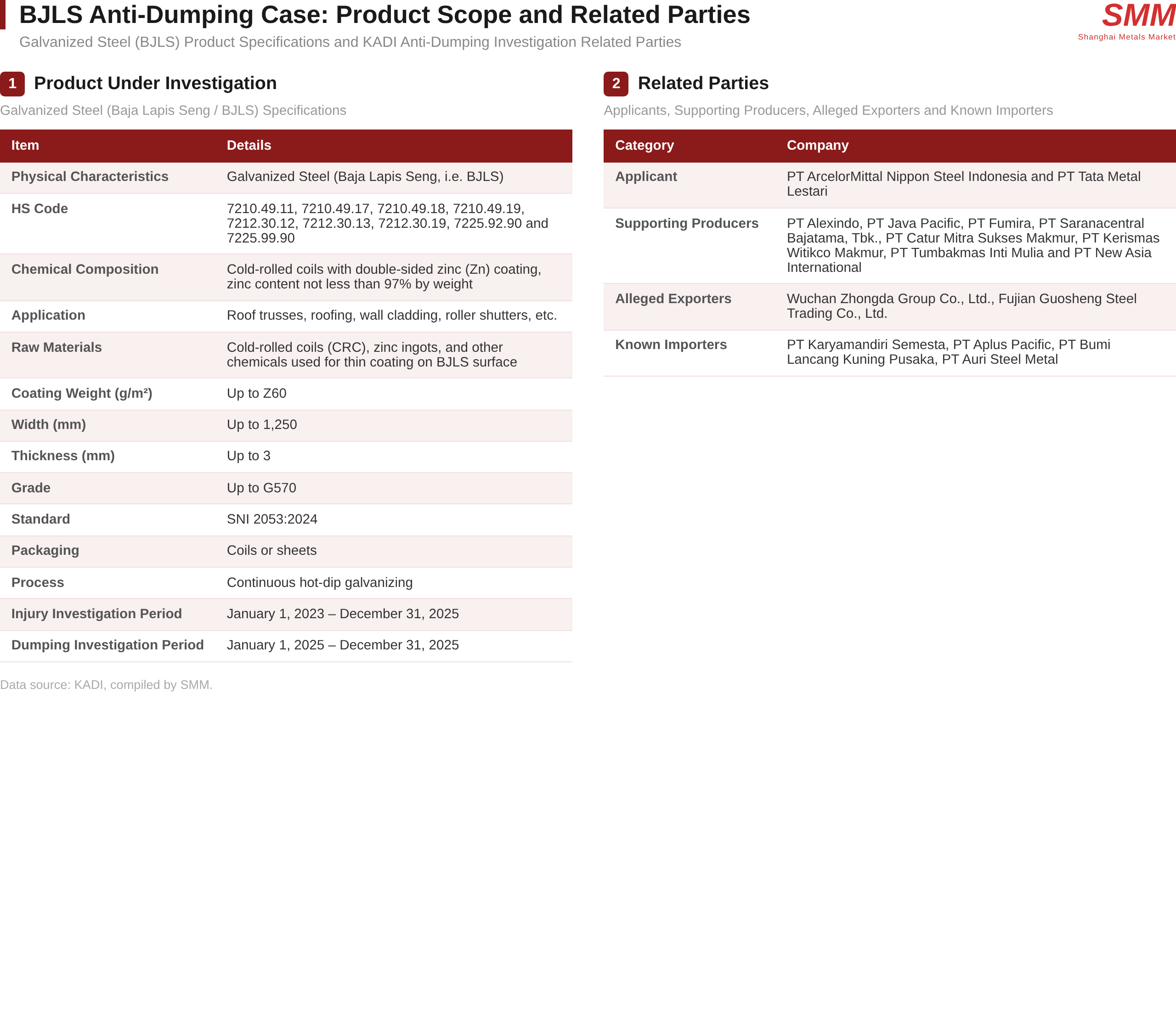
- Case Overview: On September 15, 2026, the Indonesian Anti-Dumping Committee (Komite Anti-Dumping Indonesia, KADI), pursuant to Notice No. AD.02/591/KADI/09/2026, initiated an anti-dumping investigation into imports of galvanized steel (Baja Lapis Seng, BJLS) originating in China. The investigation covers 9 HS codes. The petition was filed by PT Tata Metal Lestari and PT ArcelorMittal Nippon Steel Indonesia on behalf of the domestic industry.
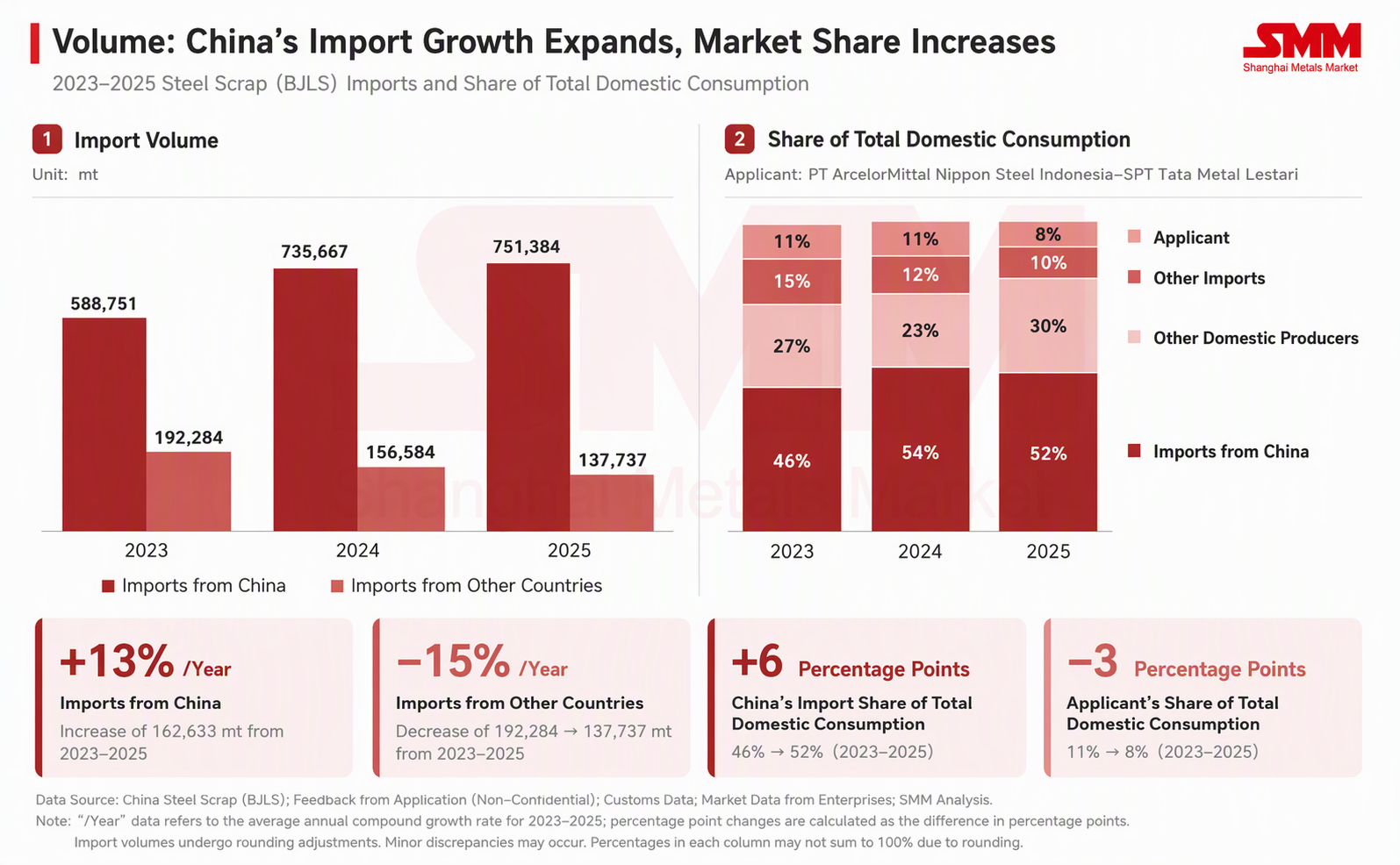
- Import Dominance: From 2023 to 2025, China accounted for approximately 81% of Indonesia's total BJLS imports (2.08 million mt out of 2.56 million mt). By 2025, Chinese products had accounted for approximately 52% of Indonesia's domestic consumption.
- Cost-Price Squeeze: From 2023 to 2025, the petitioners' domestic selling prices fell by a cumulative 21%, while cost of goods sold declined by only 14%. If this trend continues, the petitioners' profit margins will continue to be eroded.
- Price Undercutting: Throughout the entire review period, Chinese product prices were lower than the petitioners' products in every year.
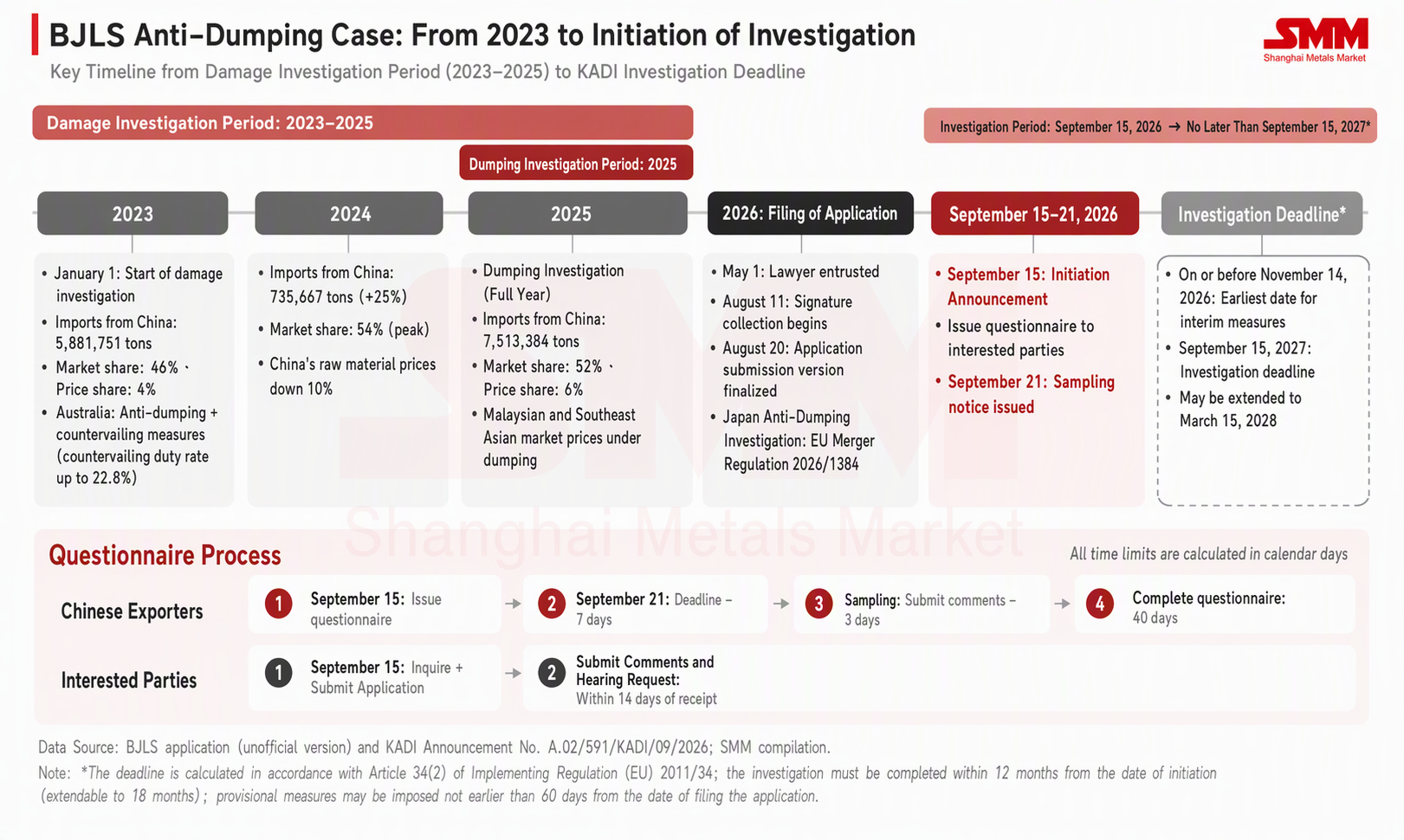
- Current Status: No duties have been imposed at this stage. The investigation period is up to 12 months, extendable to 18 months; provisional measures may be implemented no earlier than around November 14, 2026.
I. Product Background: What Is Galvanized Steel (BJLS)?
Definition and Applications: A Versatile Corrosion-Resistant Steel
Galvanized steel, known in Indonesia as Baja Lapis Seng (BJLS), is steel coated with a layer of zinc (Zn) on the surface of carbon steel to prevent corrosion. The zinc layer protects the steel in the following two ways:
- Barrier Protection: When exposed to the atmosphere, a dense protective layer composed of zinc oxide, zinc hydroxide, and basic zinc carbonate forms on the surface of the zinc layer, thereby slowing further corrosion.
- Sacrificial Anode (Cathodic) Protection: Zinc is more electrochemically active than iron, so it corrodes preferentially at scratches and cut edges, thereby protecting the exposed steel substrate beneath.
Depending on coating weight and service environment, the corrosion resistance of galvanized steel typically ranges from 10 to 50 years. In addition, the material is clean and easy to form and process, making it a standard material in the construction sector. It is widely used in roof trusses (including light steel trusses, baja ringan), roofing, wall cladding, and similar applications, as well as in home appliances, ventilation ducts, and general manufacturing.
Production Process: Hot-Dip Galvanizing Is the Most Widely Used Process
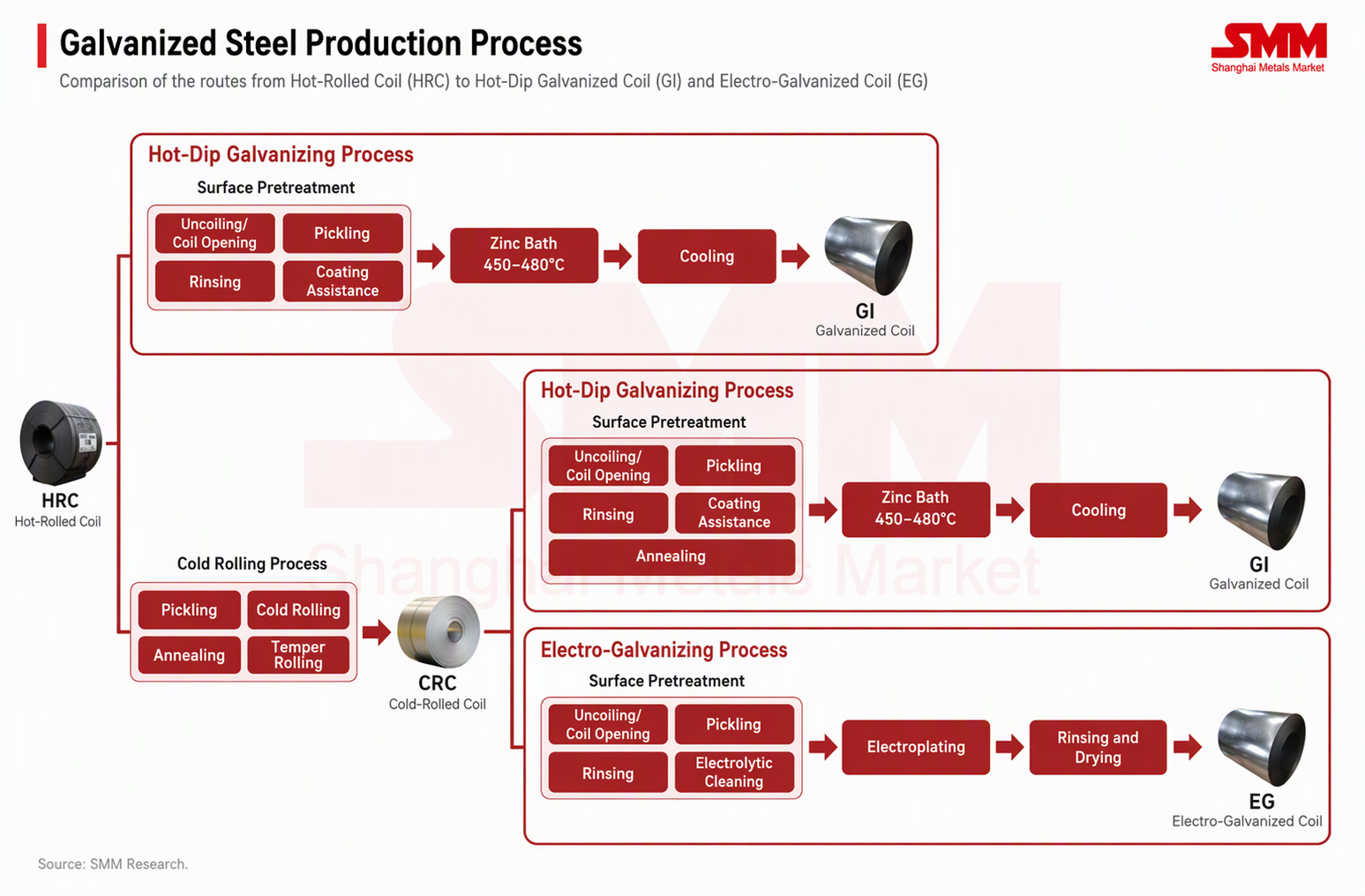
The term "galvanizing" derives from the Italian physician and physicist Luigi Galvani, while the hot-dip galvanizing process itself was patented by French engineer Stanislas Sorel in 1837. Currently, galvanizing of sheets & plates mainly adopts the following two continuous processes:
- Hot-dip galvanizing (HDG): The most widely used process route, with a thicker coating and lower cost per mt, suitable for the construction sector.
- Electrogalvanization (EG): The coating is thin and uniform, with better surface quality, mainly used for exposed automotive panels and home appliances.
The figure below shows the two production process routes.
II. Legal framework: WTO rules and the anti-dumping mechanism under PP 34/2011
According to the definition of the World Trade Organization (WTO), dumping refers to an enterprise exporting products at prices lower than their normal value, which is usually the selling price of the product in the Chinese market of the exporting country. Dumped products may flood into the market of the importing country in large quantities and harm the interests of local producers. Article VI of the General Agreement on Tariffs and Trade 1994 and the WTO Anti-Dumping Agreement allow members, including Indonesia, to impose tariffs to offset the dumping margin when dumped imports cause material injury to the domestic industry.
In Indonesia, the above rules are implemented through Government Regulation No. 34 of 2011 (PP 34/2011, concerning anti-dumping, countervailing and safeguard measures). When the application provides sufficient evidence to prove the following matters, KADI may initiate an investigation:
- the imported products are dumped;
- the domestic industry suffers material injury;
- there is a causal link between the dumped imports and such injury.
Not all producers are eligible to file an application. The application must be filed by or on behalf of the "domestic industry" (Industri Dalam Negeri). Such eligibility must be examined against the two thresholds stipulated in Article 4(3)(b) and Article 6(1)(a) of PP 34/2011 and Article 5.4 of the WTO Anti-Dumping Agreement, and KADI will examine the two thresholds one by one before deciding whether to initiate a case.
If the investigation determines that dumping exists, KADI will submit a recommendation to the Minister of Trade, and the final anti-dumping duty (Bea Masuk Anti-Dumping, BMAD) will subsequently be imposed through a Minister of Finance Regulation (PMK). Provisional anti-dumping duties (BMADS) may also be imposed after an affirmative preliminary determination.
III. Case overview: 9 HS codes included in the review, with a three-year injury investigation period
Pursuant to Announcement No. AD.02/591/KADI/09/2026, the Indonesian government, through KADI, initiated an anti-dumping investigation into galvanized steel imported from China. This case was filed by Indonesian galvanized steel producers, and KADI decided to initiate the case after finding evidence that the dumping practices caused injury to domestic producers. The table below sets out the product scope, the nine HS codes, and the enterprises involved.
The figure below shows the timeline of this investigation.
Principal grounds for initiation: industry representativeness, and causation as evidenced by price and volume data
KADI initiated the investigation on two main grounds: first, the applicant qualified as representing the domestic industry; and second, there was evidence of a causal link between Chinese imports and injury to the domestic industry.
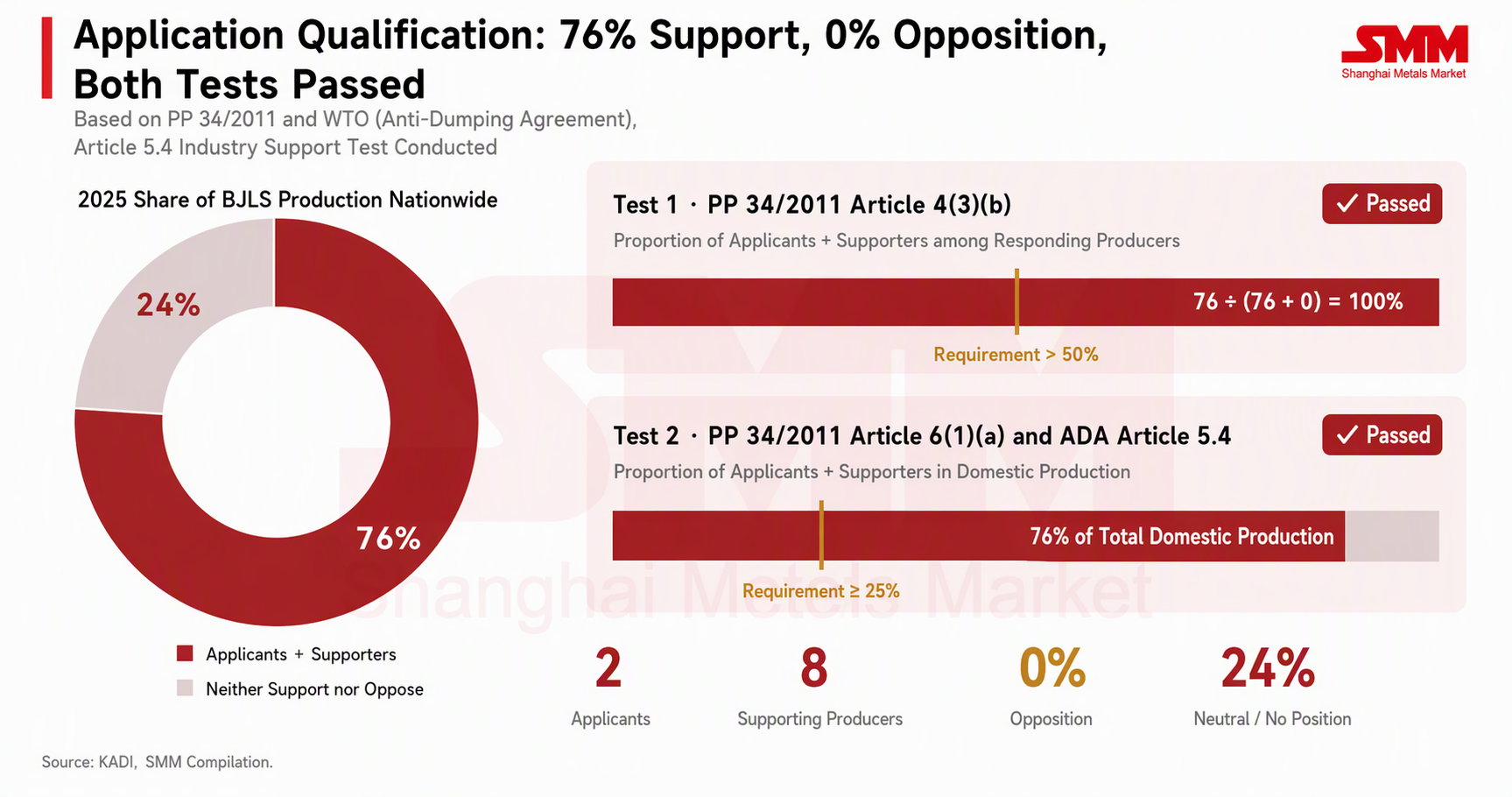
Industry representativeness: the applicant and supporting enterprises together account for approximately 76% of domestic production
PT Tata Metal Lestari and PT ArcelorMittal Nippon Steel Indonesia are the major galvanizing steel producers in Indonesia, and the supporting enterprises are also established players in the industry. As shown in the figure below, no producer opposed the application, and the group therefore satisfied both industry representativeness thresholds under Article 4(3)(b) and Article 6(1)(a) of PP 34/2011, on which basis KADI proceeded with the investigation.
Causation as evidenced by price and volume data
Price evidence: persistent price undercutting and cost-price squeeze
Price is the primary consideration in purchasing commercial-grade galvanizing steel. To remain competitive in the Chinese market, the applicant continuously lowered its selling prices. As shown in the figure below, the decline in its selling prices exceeded the decline in its cost of sales, causing per-mt profit to narrow year by year. Even so, Chinese products remained below the applicant's prices in every year throughout the period.
The largest price undercutting occurred in 2024. In that year, China's property downturn deepened and domestic steel demand weakened, prompting Chinese steel mills to sell surplus production into export markets at low prices. As a result, the applicant's domestic business profits fell sharply, with an average annual trend decline of approximately 55% over 2023-2025.
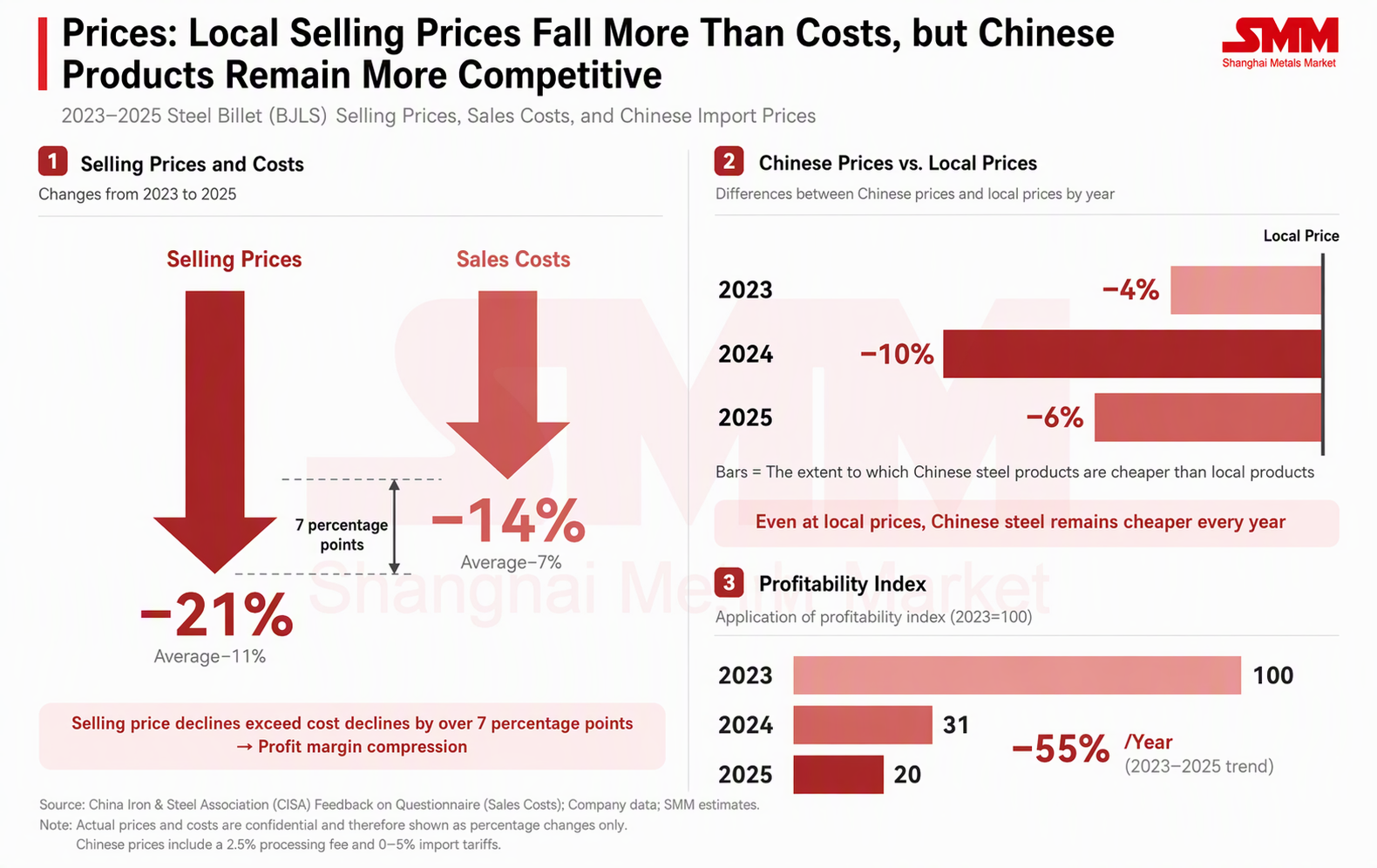
SMM considers this phenomenon to be price suppression rather than a price decline driven solely by falling costs. This distinction is significant under Article 3.2 of the WTO Anti-Dumping Agreement. If the price decline had resulted solely from lower costs, profit margins should have remained stable; instead, prices fell by more than costs, indicating that the applicant had lost pricing power. Article 3.2 treats such circumstances as evidence of injury.
Volume evidence: Chinese products' share of consumption rose to 52%, while the applicant's share fell to 8%
The figure below shows imports and market share movements over 2023-2025. Two points merit particular attention:
- Chinese products absorbed the demand growth: Over the same period, apparent consumption increased by approximately 165,000 mt, roughly equivalent to the growth in Chinese imports. In other words, Chinese products captured the market growth and squeezed out other import sources, while the applicant's share declined.
- Other exporting countries likewise lost share to Chinese products: This indicates that the pressure stems primarily from the pricing of Chinese products, rather than from import competition in general. However, since other domestic producers' shares rose, the decline in the applicant's share may partly stem from internal competition within the domestic industry, a factor that KADI needs to disentangle when conducting its non-attribution analysis under Article 3.5 of the Anti-Dumping Agreement.
Causation: Price suppression constitutes the core basis of this case
On the whole, the causation reflected in the available evidence centers on price. Even though the applicant has already lowered its prices to a level that compresses its own profits, Chinese product prices have remained persistently below those of the applicant's products. The volume data corroborate this: Chinese imports absorbed the demand growth and displaced other supply sources. Since other domestic producers' shares rose over the same period, the strongest part of the injury argument in this case lies in price and profit suppression, rather than in the loss of the domestic industry's overall market share. Based on the above preliminary evidence, this case satisfies the requirements for initiation.
IV. Impact: No direct impact in the short term, but trade flows may shift in the long term
As the investigation is still in its early stages, no direct market impact has materialized at this stage; the main periods are detailed in the timeline above. Under WTO rules, provisional measures may not be imposed earlier than 60 days after initiation, so provisional anti-dumping duties can be levied no earlier than around November 14, 2026.
Given that approximately 52% of Indonesia's galvanized steel consumption comes from China, the relevant impact is expected to emerge gradually:
- Initial stage: Chinese galvanized steel is expected to remain normally available in the market.
- In the long term: If dumping is established and anti-dumping duties are imposed, Chinese galvanized steel entering Indonesia is expected to decline, and domestic producers will correspondingly raise production. This will alter trade flows, and Chinese galvanized steel will need to find new markets.
V. SMM view
SMM believes that this investigation is a positive development for Indonesia's galvanized steel industry. The above price and volume evidence, especially the 52% share of Chinese products in consumption and the persistent price undercutting, provides a clear basis for this review.
In the Chinese market, demand for galvanised coil is already very weak. With Indonesia potentially imposing anti-dumping duties on hot-dip galvanised coil, Chinese sellers may need to find new markets or other countermeasures. At present, the FOB price of galvanised coil at Tianjin port is around $571/mt, already at a relatively low level. As demand remains persistently weak, inventory is expected to continue accumulating and may peak in the second week after the National Day holiday. Meanwhile, steel mills are keeping production high to maintain market share. According to market sources, the average capacity utilization rate of galvanised coil enterprises nationwide in H1 2026 was 64.78%. As a result, sellers face considerable uncertainty in product sales, and potential anti-dumping measures by Indonesia will further narrow their market space.
In addition to anti-dumping, the most direct protective instrument, the competitiveness of the galvanized steel industry and even the entire steel industry can be enhanced through the following approaches:
- Trade remedies: Indonesia is one of the largest steel markets in Southeast Asia, and trade remedy measures such as this investigation can play an important role in supporting domestic producers.
- Import quotas: Further attention to how import quotas are issued and clearer information on permitted import volumes will help support KADI's work. As a result, protection will come from both anti-dumping measures and prudent quota allocation.
- Steel prices and zinc prices: Galvanized steel prices depend on both steel and zinc, and zinc prices have risen recently. Coordinated monitoring of steel and zinc prices will help maintain the price competitiveness of domestic galvanized steel.
Data source statement: Except for public information, all other data are processed by SMM based on public information, market communication, and SMM's internal database models, and are for reference only and do not constitute decision-making advice.
![[SMM Analysis] Indonesia Probes Chinese GI Coil for Dumping: Cheap Imports Take 52% of Demand, Eroding Local Prices](https://imgqn.smm.cn/usercenter/JdqON20251217171718.png)
![[Nucor Reports Record Shipments as West Virginia Sheet Mill Nears Commercial Start]](https://imgqn.smm.cn/usercenter/FGavQ20251217171717.jpg)
![[India targets 600 million tonnes steelmaking capacity by 2047 under new policy]](https://imgqn.smm.cn/usercenter/LMnqz20251217171717.jpg)