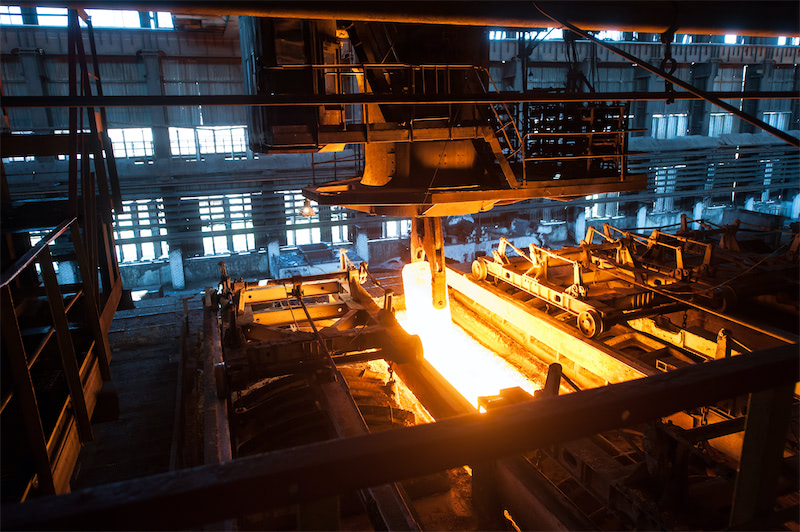
Strip the 28 September White House release down to what is actually new and you are left with two things: a DRI-EAF steel mill and a DR-grade pellet mine. Everything else is a scorecard for two years of tariff and permitting policy. Our reading is that the US steel market has already become a fortress, but until 2028 the rest of the world feels it through prices and diverted trade rather than through new tonnes. The years 2029 to 2031 are when US capacity actually lands, and the Iowa mill is both the biggest piece and the one most likely to slip. For Chinese and other Asian exporters the direct exposure is small. What matters is the third-country steel pushed out of the US, the barriers now being copied elsewhere, and a three-tier price structure between the US, Europe and Asia that is hardening.
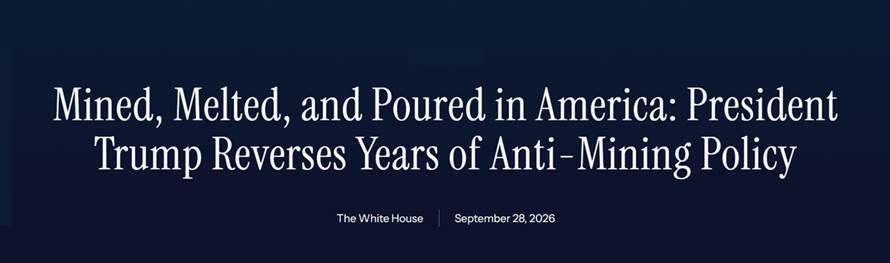
What is actually new: one mill and one mine
Set the politics aside and the substance fits in one table.
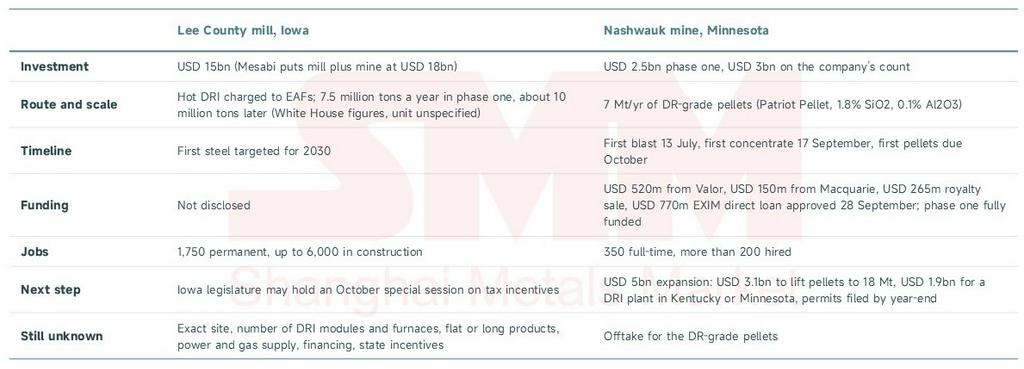
One caveat before going further. The claim of the first new US iron ore mine in 50 years holds only for Minnesota taconite. Nashwauk sits on the Butler Taconite site that closed in 1985; India’s Essar Group proposed the project about 20 years ago, its predecessor Essar Steel Minnesota went bankrupt in 2016, the state pulled its mineral leases in 2021, part of the ground went to Cleveland-Cliffs in 2023, and Mesabi’s antitrust suit against Cliffs is still open. This is an old project that restarted before the 2025 tariff increase. The tariff made the numbers work better; it did not remove the execution risk.
Which parts of the scorecard survive a fact-check?
We checked each figure in the release. Output and import share hold up; orders and jobs need a discount.
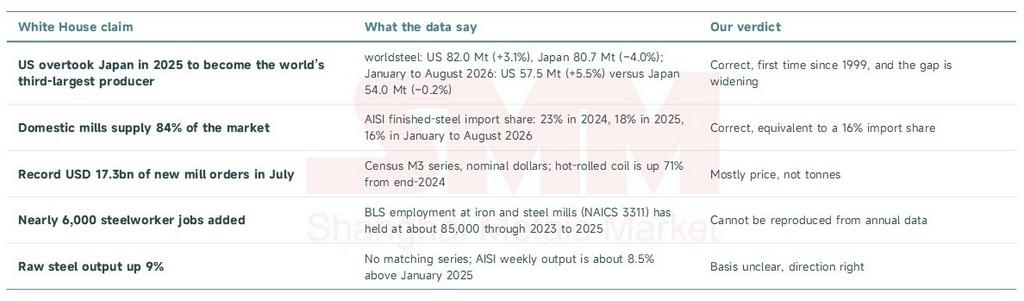
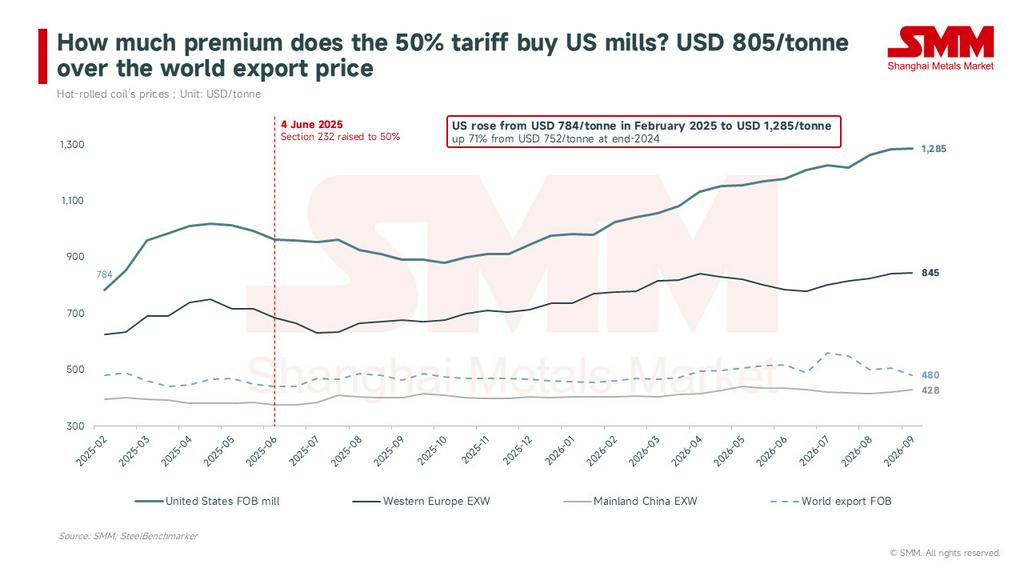
The number that really matters is price. SteelBenchmarker’s US hot-rolled band price, FOB mill, was USD 1,285/tonne (USD 1,166/short ton) on 14 September, 71% above end-2024 and 32% above end-2025; Nucor’s published price reached USD 1,210/short ton (about USD 1,334/tonne) in late September. On the same day Western Europe stood at USD 845/tonne ex-works, China at USD 428/tonne ex-works and the world export price at USD 480/tonne FOB port of export. The US sits USD 805/tonne above the world export price. That is the premium the 50% tariff buys US mills, and it is where the “record” order value comes from.
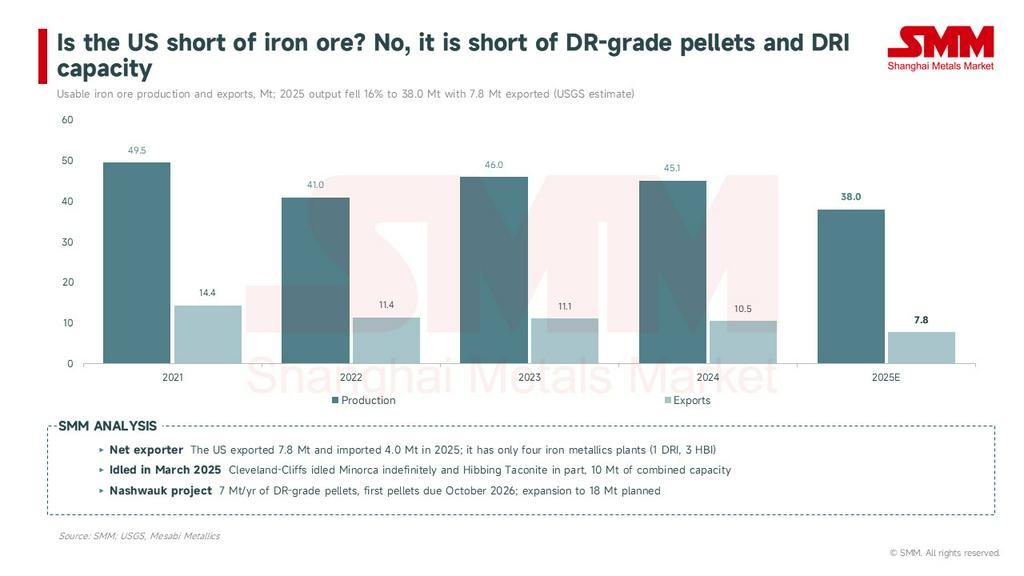
The US is not short of ore; it is short of DR-grade pellets and DRI
Seven-tenths of US crude steel comes from electric arc furnaces, so the constraint on onshoring has never been melting capacity. It is iron units. On scrap, US exports fell to 11.7 million tonnes in 2025, the lowest since 2016, while imports rose to 4.1 million tonnes; with EAFs expanding and blast furnaces idling, prime scrap has stayed tight, yet September scrap settled only modestly higher and mills themselves call the gap between finished steel and scrap exceptional. On ore, USGS data put 2025 usable production down 16% at 38 million tonnes after Cleveland-Cliffs idled Minorca indefinitely and Hibbing Taconite in part from March, taking 10 million tonnes of capacity out, and the country still exported 7.8 million tonnes. The US is a net exporter of iron ore. What it lacks is pellets that can go straight into a DRI shaft and the capacity to turn them into DRI: there are only four iron metallics plants in the country, one DRI plant in Louisiana and HBI plants in Indiana, Ohio and Texas.
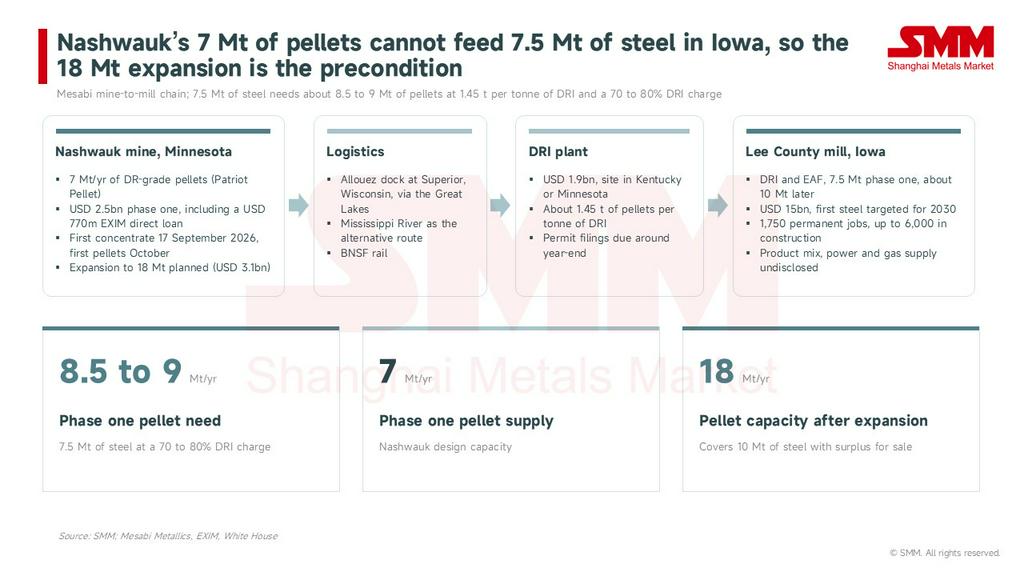
That gap is exactly where the new money is going. U.S. Steel announced a USD 1.9bn DRI plant at Big River in April, fed by DR-grade pellets from Keetac; the USD 5.8bn Hyundai Steel and POSCO DRI-EAF project in Louisiana broke ground in September for start-up in 2029; and Mesabi wants to run the whole chain from mine to mill. A quick calculation is worth doing here. At about 1.45 tonnes of pellets per tonne of DRI and a 70 to 80% DRI charge, the 7.5 million tonne first phase in Iowa would consume 8.5 to 9 million tonnes of DR-grade pellets a year, more than Nashwauk’s 7 million tonnes. That is why the 18 million tonne pellet expansion had to be announced alongside the mill. Coal is the weakest link in the story: the DRI-EAF route uses no coke, the domestic blast furnace fleet keeps shrinking, and metallurgical coal “mined in America” is mostly for export, while total US coal exports fell to 93 million short tons (about 84 million tonnes) in 2025 with met coal down 11%.
How much capacity is really coming?
Sort the disclosed projects by status and the answer is roughly this: about 8.9 million tonnes is committed, and the 10.5 million tonnes only announced arrives after 2030.
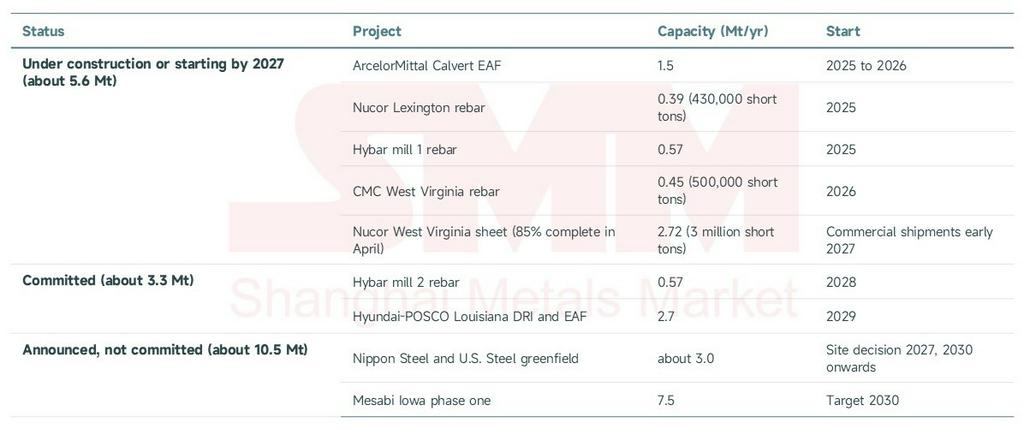
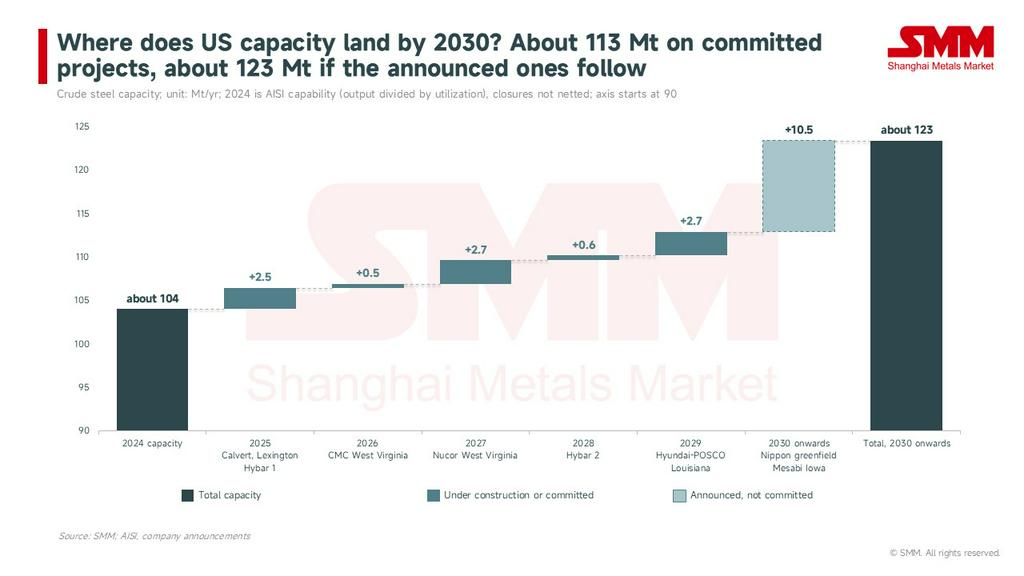
The three layers add up to nearly 20 million tonnes, more than 80% of total US steel imports of 22.9 million tonnes in 2025 on Census data. Seen as stock rather than flow: starting from 2024 AISI capability of about 104 million tonnes (output divided by utilization), the projects that are certain by 2030 lift capacity to about 113 million tonnes, and if the Nippon greenfield mill and Mesabi are delivered too it approaches 123 million tonnes, before netting closures such as Cleveland-Cliffs’ Steelton. Against that, worldsteel’s April outlook gives US demand growth of only 1.7% in 2026 and 2.0% in 2027. So the logic of the new capacity is import substitution, not demand, and slab is first in line: the US imported 5.96 million tonnes of semi-finished steel in 2025, mostly for rerollers in California and Alabama, and once domestic DRI-EAF slab ramps up, Brazilian slab is the first to be displaced.
For prices this cuts both ways. New capacity from 2027 will gradually grind down the USD 800/tonne premium, but as long as the 50% tariff stands, import parity is pinned at about 1.5 times the world export price plus freight, or USD 800 to 850/tonne. The US price centre will come down from USD 1,285/tonne; it will not return to world levels. We see three scenarios:

Spillover one: whom did the 50% tariff keep out?
The answer is a little counter-intuitive: Canada, Brazil and Mexico, not Korea and Japan. The 50% tariff in force since June 2025 ended every country exemption and quota, and Census data for the first half of 2026 show US imports from Canada, Brazil, Mexico and Germany all down by about 40%, while imports from South Korea rose 37.4% and from Japan 9.8%; the volumes for both periods are in Chart 6. On AISI’s 12-month count to August, Korea shipped 3.32 million tonnes (3.66 million short tons, +32%) and Vietnam 1.19 million tonnes (+22%).
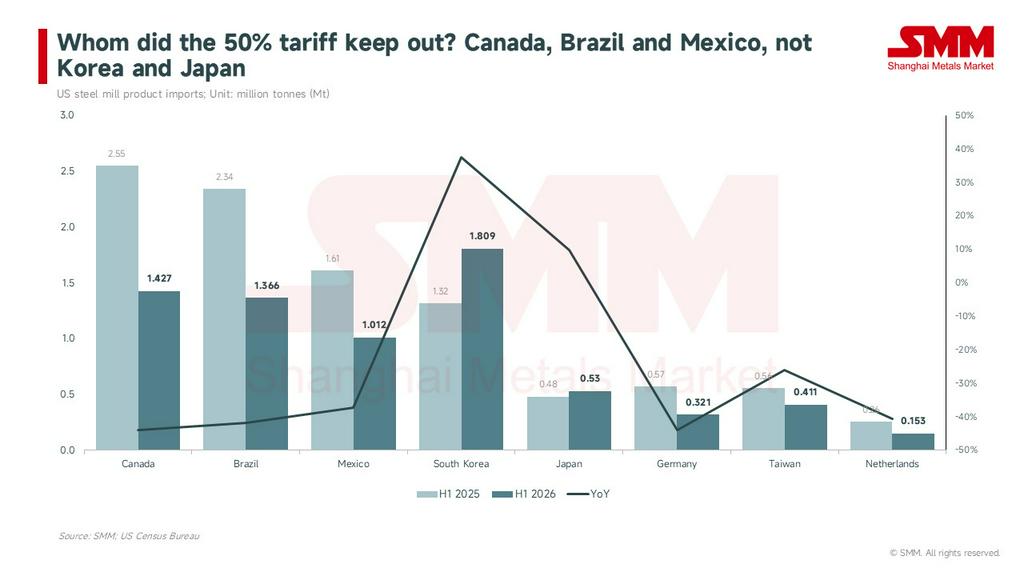
The mechanism is simple. With one flat rate, the lowest FOB cost clears the 50% hurdle. Asian hot-rolled coil at around USD 500/tonne FOB still lands below the US domestic price after duty, while Canadian and Mexican mills that relied on USMCA access and high-cost European mills lose out. AISI wrote to the Commerce Department and USTR on 28 September asking for action on the Korean surge (145,300 tonnes of Korean long products in July, 6.6 times the July 2024 level), and targeted anti-dumping cases or quotas are the likely next step.
North American neighbours are already adjusting. Stelco said on 28 September it would idle its Hamilton finishing lines indefinitely and cut 350 jobs, concentrating output at Lake Erie Works; Algoma posted a CAD 96 million net loss in the second quarter after 1,000 layoffs in March and has gone Canada-first and plate-first; the Bank of Canada estimates Canadian steel exports to the US have halved. Brazilian slab exports of 4.435 million tonnes in January to August were flat on last year, but the destinations have spread, with ArcelorMittal moving slab to its European plants and starting sales to Türkiye.
Spillover two: a chain of barriers and a three-tier price
Steel pushed out of the US went to the EU first, where imports took a record 29% of the market in the third quarter of 2025, and that is what produced the EU Steel Overcapacity Regulation (EU) 2026/1384, in force since 1 July. Since then the major markets have raised barriers almost in relay:
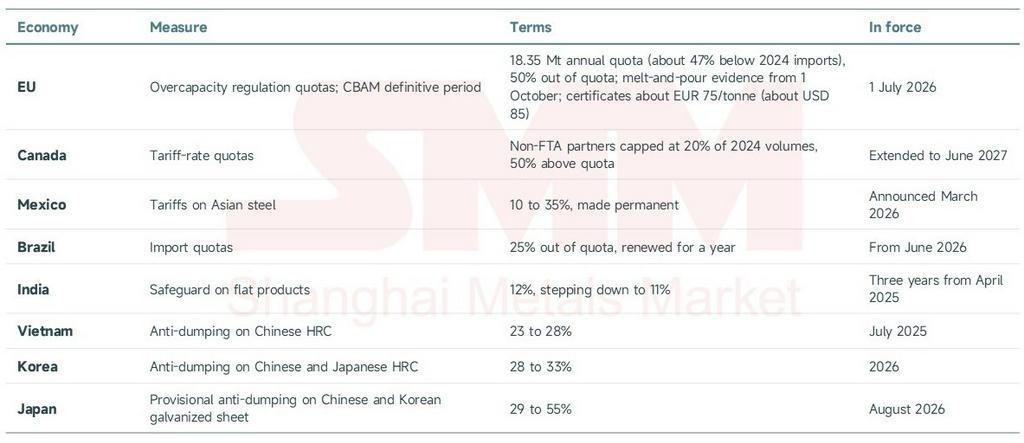
World steel trade is being walled off on the US template while the OECD puts global excess capacity at 640 million tonnes in 2025, rising to 745 million tonnes by 2028. The result is a three-tier price: US hot-rolled coil at USD 1,285/tonne FOB mill, Western Europe at USD 845/tonne ex-works and the world export price at USD 480/tonne FOB, and as each region’s barriers become permanent the structure gets harder to break.
For Chinese exporters the direct effect is small, at 0.41 million tonnes shipped to the US in 2025. The indirect effects run along three lines:
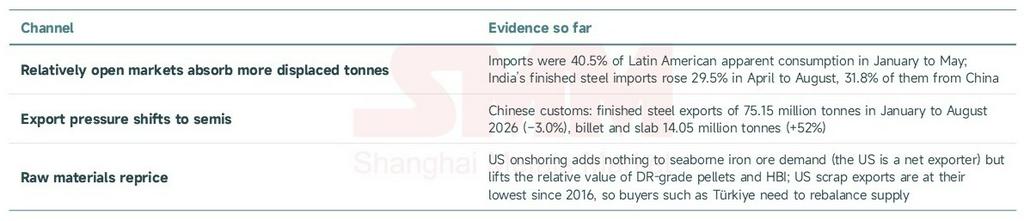
Outlook
“Mined, melted and poured in America” is a direction, not an event. The dividend of the US fortress has already shown up in full in price: the USD 805/tonne premium is the return on the policy and the bill for US downstream users, and ISM’s August survey listed steel as rising in price for a tenth straight month and in short supply for a second. From 2026 to 2028 the global effect is trade diversion and a chain of barriers. From 2029, as Hyundai-POSCO, the Big River DRI plant and possibly the Mesabi and Nippon greenfield mills start up, US dependence on imported slab and sheet falls for real; Brazil, Korea, Canada and Mexico are the first suppliers hit, and Asian markets are left digesting more surplus locked into the region.
Whether the Iowa project is delivered is the biggest variable from here. We are watching five markers:
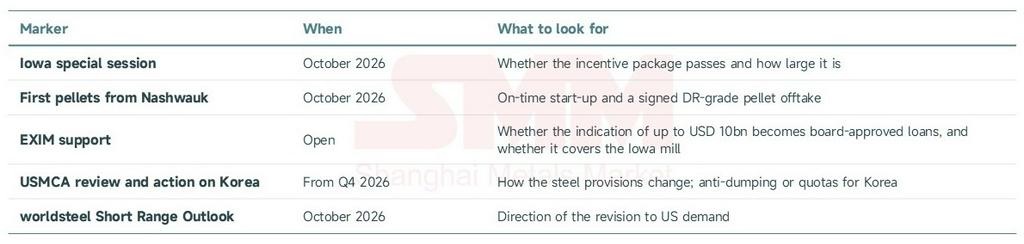
Sources: White House, Mesabi Metallics, EXIM, worldsteel, AISI, US Census Bureau, USGS, BLS, ISM, EUROFER, European Commission, OECD, SteelBenchmarker, China customs; SMM compilation.
![[SMM Analysis] Indonesia Probes Chinese GI Coil for Dumping: Cheap Imports Take 52% of Demand, Eroding Local Prices](https://imgqn.smm.cn/usercenter/JdqON20251217171718.png)
![[Nucor Reports Record Shipments as West Virginia Sheet Mill Nears Commercial Start]](https://imgqn.smm.cn/usercenter/FGavQ20251217171717.jpg)
![[India targets 600 million tonnes steelmaking capacity by 2047 under new policy]](https://imgqn.smm.cn/usercenter/LMnqz20251217171717.jpg)