Entering September, the magnesium market embarked on a near roller-coaster ride. The first half and second half of the month presented a stark contrast — hot versus cold, optimism versus pessimism — as market sentiment underwent a rapid switch from euphoria to freezing point within just thirty days. At the start of the month, the surging coal prices ignited the market; cost support combined with speculative capital speculation drove magnesium prices sharply higher, leading many to believe a new upward cycle had begun. However, the heavy drag from fundamentals soon surfaced: the rally, lacking support from real demand, proved unsustainable. Magnesium prices then trended steadily lower, ultimately breaking below the yearly low, with 9990 primary magnesium ingot prices dipping to 15,650 yuan/mt. The month ended on a sharply divergent note, rising first before falling back.
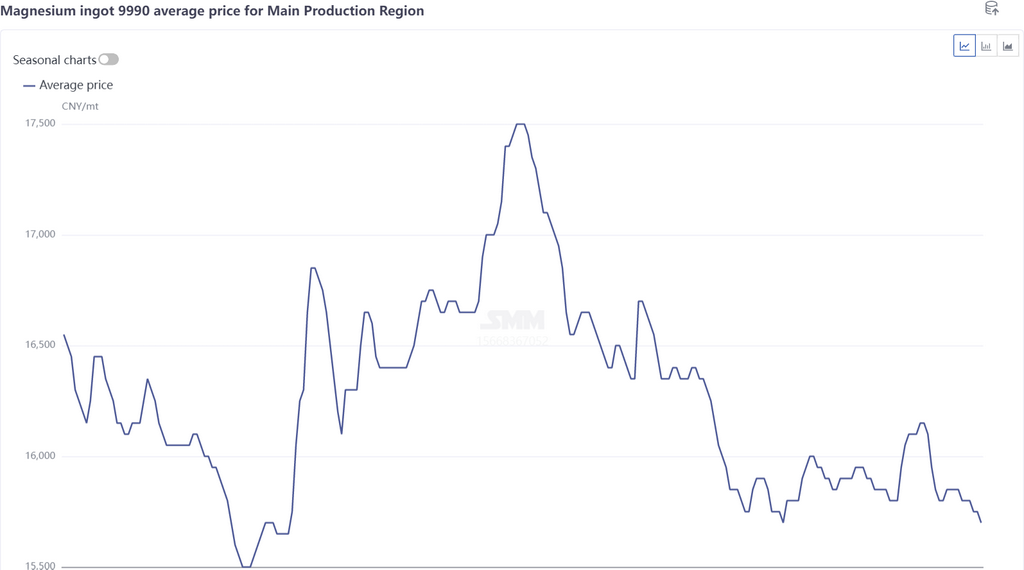
Peeling back the layers of the timeline, the behavioral logic behind magnesium producers' "on-off" operations this month is far from the simple surface narrative of "cost rises → production cuts → costs fall → resumption." Tracing the transmission chain: coal prices had already started their upward cycle back in August, but the downward transmission to downstream was insufficient, and blue coke price hikes were severely lagging. This caused the immediate production costs of primary magnesium smelters to spike abruptly, prompting multiple smelters to announce maintenance and production cuts in a concentrated manner. Yet the loss-making situation quietly reversed. The coal surge subsequently ignited market sentiment across the board, with blue coke, coal tar, and even magnesium ingot prices rising in tandem. Price adjustments in auxiliary materials largely offset the surge in raw material costs. As magnesium prices climbed, smelters' immediate costs quickly retreated, briefly entering a comfortable profit zone. The collective maintenance plans had limited impact on overall primary magnesium output and failed to effectively reverse the prior pattern of oversupply and weak demand. However, the good times did not last long. With the supply-demand imbalance compounded by later weakening on the cost side, magnesium prices turned around and fell rapidly, and producers' profits were quickly eroded once again. Approaching the end of September, the triple pressures of cost, inventory, and cash flow converged simultaneously, leaving magnesium producers once again standing at a crossroads.
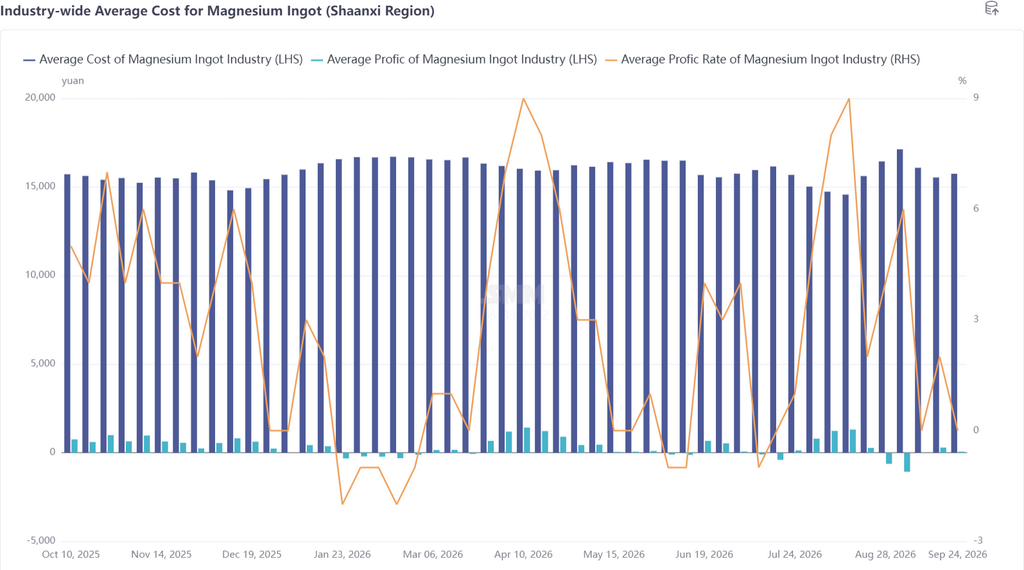
Turning to output data, national primary magnesium output in September was approximately 95,300 mt, down 0.96% month-on-month and continuing its downward trend. It is worth noting that the production impact of this wave of maintenance — triggered by the coal price surge in late August — was relatively limited. The period of cost losses was brief, producers' maintenance windows were generally short, and no sustained supply contraction materialized. However, history is repeating itself. As September draws to a close, the same set of challenges has once again landed before magnesium producers. According to SMM research, multiple primary magnesium smelters have already reported concrete shutdown plans. If this new round of production cuts is truly implemented, the long-anticipated profound shift in the magnesium supply-demand balance may officially begin.
![First Rise Then Fall, Breaking Below the Year's Low: The Real Logic Behind Magnesium Plants' "Stop-Start" Operations [SMM Analysis]](https://imgqn.smm.cn/usercenter/OGmeJ20251217171722.jpeg)
![Magnesium Prices Consolidate Near Bottom: Producers Sell at Low Prices to Promote Shipments, Downstream Purchases Cautiously on Rigid Demand [SMM Magnesium Weekly Review]](https://imgqn.smm.cn/usercenter/gKDYO20251217171723.jpeg)
![Resource Exploration and Capacity Expansion Advance in Tandem, Yet European Mine Projects Face Hurdles in Implementation [SMM Survey]](https://imgqn.smm.cn/usercenter/mLwgx20251217171723.jpeg)