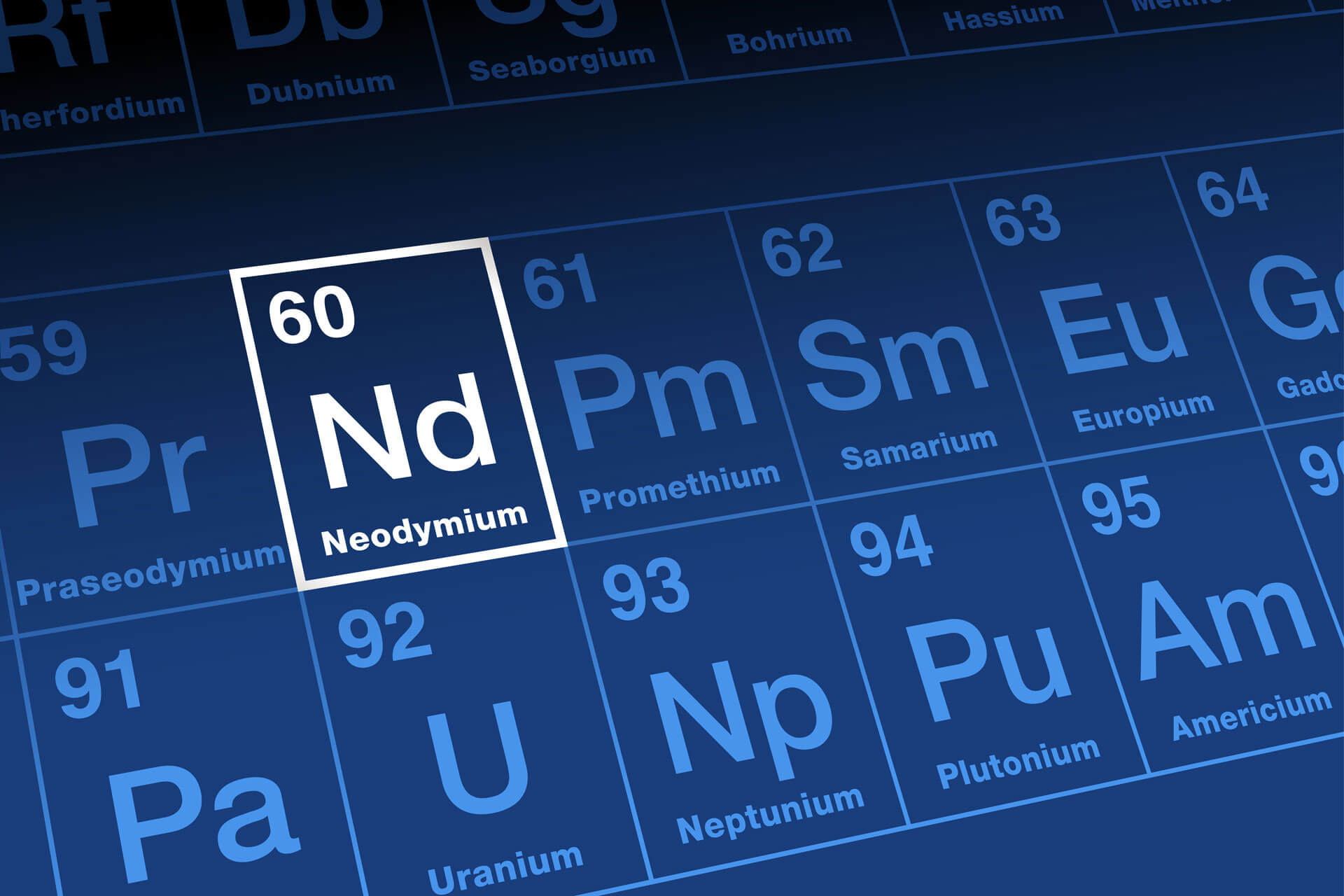
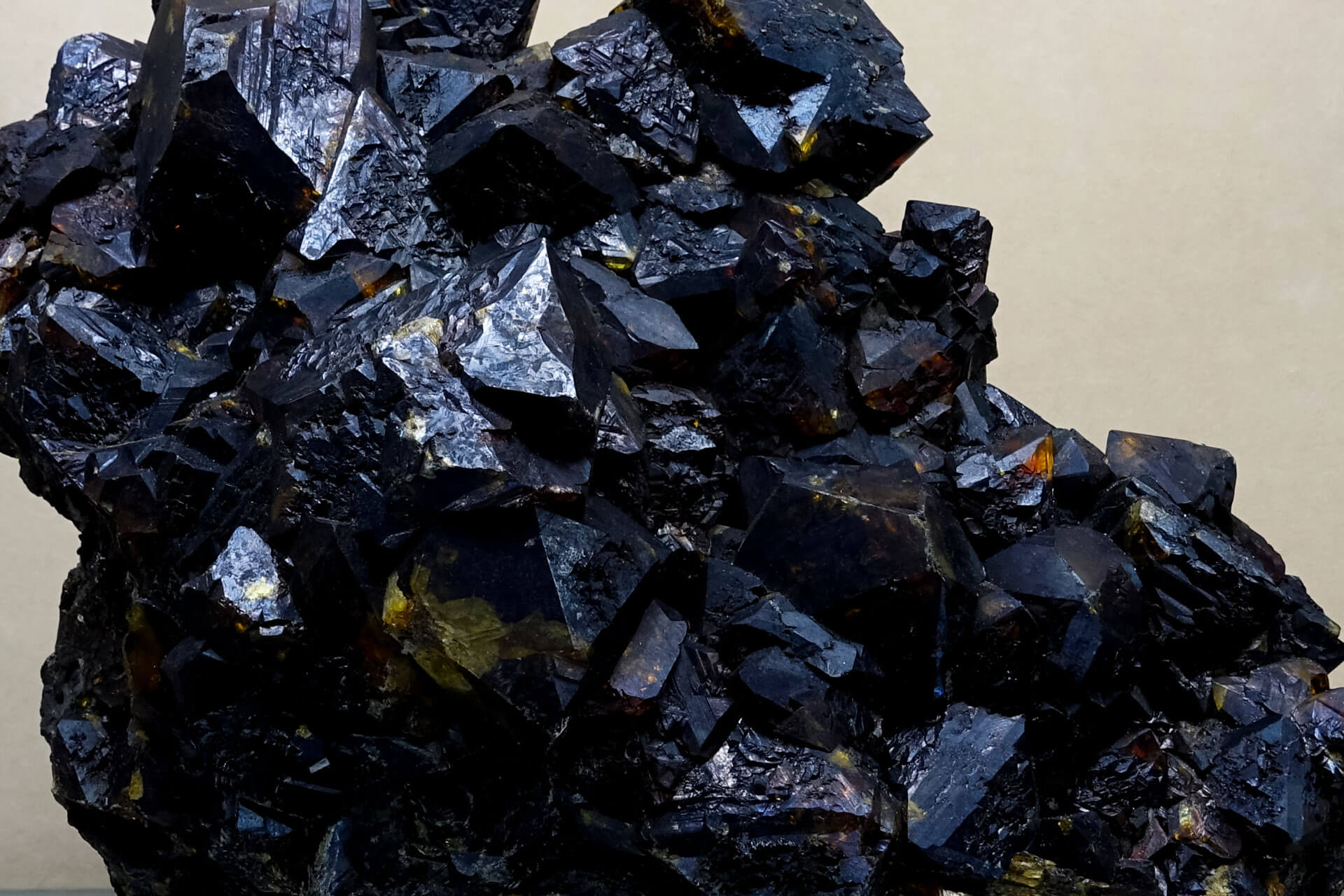
In September 2026, Neo Performance Materials announced that its Narva, Estonia sintered NdFeB magnet plant had commenced commercial production, with the first batch of magnets delivered to an electric vehicle traction motor customer. The facility was inaugurated in September 2025; Phase 1 is rated at 2,000 t/a, Phase 1B expansion to ~5,000 t/a is in the design stage, and the long‑term global target is 20,000 t/a. Backed by a supply agreement with Carester for dysprosium and terbium oxides, the plant's significance extends far beyond the addition of "another 2,000‑tonne factory." Rather, it throws into sharp relief the existing footprint, pipeline capacity, and raw material bottlenecks of non‑Chinese magnet production all at once.
Existing Capacity: Japan, US, Europe, and Korea Lead, Totalling ~13–15 kt/a
Operational or already‑delivering sintered NdFeB capacity outside China is concentrated among a handful of established players:
Japan / Vietnam: Shinsei Chemical's SMMV plant in Vietnam has a nameplate of 2,200 t/a; combined Japan + Vietnam estimated output is ~3,400 t/a. Proterial (formerly Hitachi Metals) NEOMAX series is estimated at 2,500–3,000 t/a, primarily supplying automotive e‑drives, EPS, and compressors. TDK, Daido Electronics, and Aichi Steel possess alloy / hot‑deformation / heavy‑REE‑free technologies, but sintered blank tonnages are not separately disclosed.
United States: Noveon Magnetics operates a full‑specification sintering line in Texas, planned at ~2,000 t/a. MP Materials' Fort Worth plant came online in 2024 at ~1,000 t/a and is expanding toward 3,000 t/a. VAC (e‑VAC) in Sumter, South Carolina, runs at ~2,000 t/a with expandability to 4,000 t/a.
Europe (ex‑Neo): VAC's Germany / Finland / Slovakia operations serve automotive‑grade and industrial clients, with individual blank nameplates typically consolidated under "magnet systems." Recycling routes such as France's MagREEsource (50–80 t/a) and UK's HyProMag (25–30 t/a起步) provide closed‑loop references but are not primary suppliers of automotive‑grade high‑performance magnets.
South Korea / Southeast Asia: JS Link's Yesan plant in South Korea is at ~1,000 t/a and in commercial readiness. Shinsei Vietnam is noted above.
Aggregating the above, commercially operational / delivering nameplate capacity outside China stands at approximately 13–15 kt/a. However, automotive qualification, heavy rare earth ratios, and yield ramp‑up mean effective output is materially lower than nameplate figures.
Under Construction / Planned Capacity: US Scales Up, Europe Closes Loops, Asia‑Pacific Builds the Periphery
1. United States: Defence and EV Dual Drive
MP Materials' "10X" North Hills project, with investment exceeding USD 1.25 billion, targets ~10,000 t/a combined with Fort Worth, with commissioning planned for 2028. USA Rare Earth Stillwater's public target is Phase 1a at ~1,200 t/a, four lines near 3,600 t/a (alternatively cited as 1a 600 t/a, long‑term 4,800–5,000 t/a). VAC/Sumter expansion to 4,000 t/a, with a long‑term vision of 12,000 t/a; note that Energy Fuels' proposed ~USD 1.9 billion acquisition of VAC has not yet closed. POSCO Intl / ReElement framework targets 3,000 → 6,000 t/a.
2. Europe: Circularity Prioritised Over Tonnes
Neo Estonia Phase 1B will expand from 2,000 to 5,000 t/a. GKN Powder Metallurgy, following pilot in Germany, plans total US‑EU capacity of 4,000 t/a. HyProMag is replicating its Birmingham model in Pforzheim, Germany (~100 t/a) and the DFW area, USA (recycling 750 t/a). Europe's logic is to leverage CBAM and automotive supply chain regulations to lock in "small tonnage, high value‑add, fully traceable" production.
3. Asia‑Pacific (ex‑China): Australian Ore — Malaysian Plant — Korean Tech
Lynas and JS Link are building a 3,000 t/a sintered NdFeB plant in Kuantan, Malaysia. Lynas is investing AUD 50 million and will be the exclusive feedstock supplier until 2038, targeting 2027–2028 production. JS Link Georgia targets 3,000 t/a by late 2027. Proterial plans 1,200 t/a in Andhra Pradesh, India. India's REPM policy targets 6,000 t/a, but IREL currently produces only ~400 t/a NdPr oxide plus ~500 t/a inventory; the separation segment remains the weak link.
The Hard Constraints Behind the Numbers
New announced non‑Chinese primary blank capacity totals ~20–25 kt/a, with recycling adding a further 2–3 kt/a long‑term and policy‑driven targets at ~6 kt/a pending realisation. Yet three factors determine that "nameplate ≠ deliverable":
Heavy rare earth separation: Neo Sillamäe's Dy/Tb line commenced in April 2026; Carester Lacq's Caremag at ~1,600 t/a REO (including recycling and heavy REEs); MP plans mid‑2026 Dy/Tb separation; Lynas Malaysia heavy REE line — supply remains tight.
Metal / alloy: NdPr metal relies on MP Mountain Pass — Fort Worth, ASM Korea, and Lynas Kuantan. Intermediate product yield directly affects magnet ramp‑up.
Automotive qualification: Sampling to volume production takes 18–24 months. Neo has already secured projects with three Tier‑1 motor manufacturers; most new entrants have yet to clear this hurdle.
Conclusion
Neo's Estonia commercial production is not a "Western replaces China" inflection point. Instead, it marks the transition of the non‑Chinese magnet network from intensive planning to staggered realisation: Japan defends the high‑end, the US pursues scale, Europe builds circular loops, and Korea‑Australia‑Malaysia construct the periphery. What truly determines deliverable non‑Chinese sintered NdFeB capacity before 2030 is not who announces the next 10,000‑tonne project, but rather: when several heavy rare earth separation lines achieve stable Dy/Tb output, when a few metal producers improve yields, and how many automotive qualification programmes are completed. The furnaces in Estonia are lit, but the entire network still needs time to tighten.
![South Africa Rare Earths: An Underrated African Hub in the “Non-China Supply Chain” [SMM Analysis]](https://imgqn.smm.cn/usercenter/rqOXm20251217171744.jpeg)