At 12:00 Beijing time on September 29, the market viewed this as a key observation period for US refined copper tariffs. The market's calculation was based on the US Commerce Department submitting a copper market update on June 30; if the 90-day deadline under Section 232 were applied, the president's decision window would end on September 28 US time. However, this document is a market update required under the original tariff announcement and was not explicitly defined as a new formal Section 232 investigation report; after the president makes a decision, a written explanation could also be released later. Therefore, no news at noon does not mean the tariff has been canceled.
The US previously considered imposing a 15% tariff on copper cathode imports in 2027, rising to 30% in 2028. If the White House continues to maintain this escalating tariff expectation but delays releasing final details, the US may continue siphoning global copper resources in 2027.
To lock in future COMEX-LME price spreads, traders will continue shipping copper cathode to the US and placing it into exchange warehouses, bonded warehouses, and commercial inventories. The US government does not need to directly allocate funds to build a national reserve; it only needs to maintain the expectation of future 15%-30% tariffs, and traders will bear the procurement, financing, and storage costs themselves, continuously moving global copper resources to the US. Tariff expectations have effectively converted private inventories into a "quasi-strategic reserve" for the US.
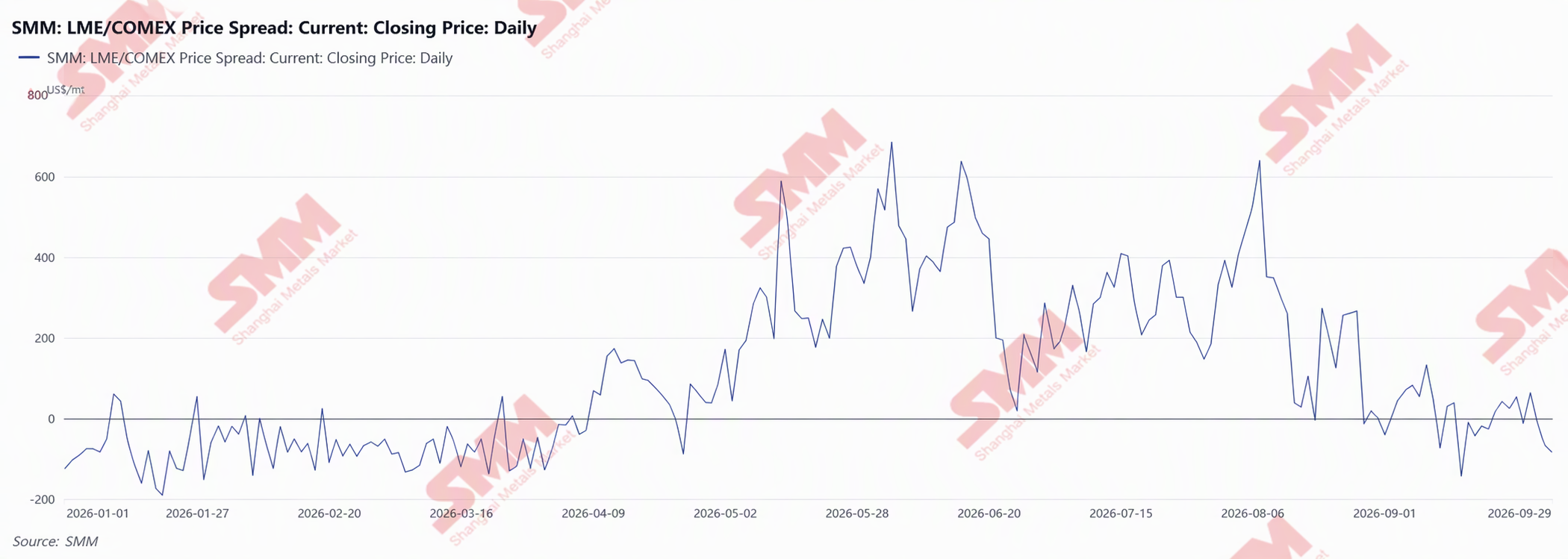
From a cross-market structure perspective, COMEX remains in contango, reflecting relatively ample near-term US inventories; LME remains in backwardation, indicating tight spot supply in non-US markets. Since late August, the LME/COMEX price spread has continued to narrow: the COMEX 2610 contract is at a discount of $46.94/mt to LME 3M, and the 2611 contract premium is only $38.99/mt, both not enough to cover transportation, financing, warehousing, and delivery conversion costs, leaving the arbitrage window for shipping new physical cargo to the US essentially closed. If the market receives a clear signal that tariffs are about to take effect, COMEX far-month premiums should widen rapidly; however, the current price spread has not shown such a change, indicating that the US siphon effect on global copper resources is weakening, and the market remains largely in a wait-and-see stance toward the end-September period.
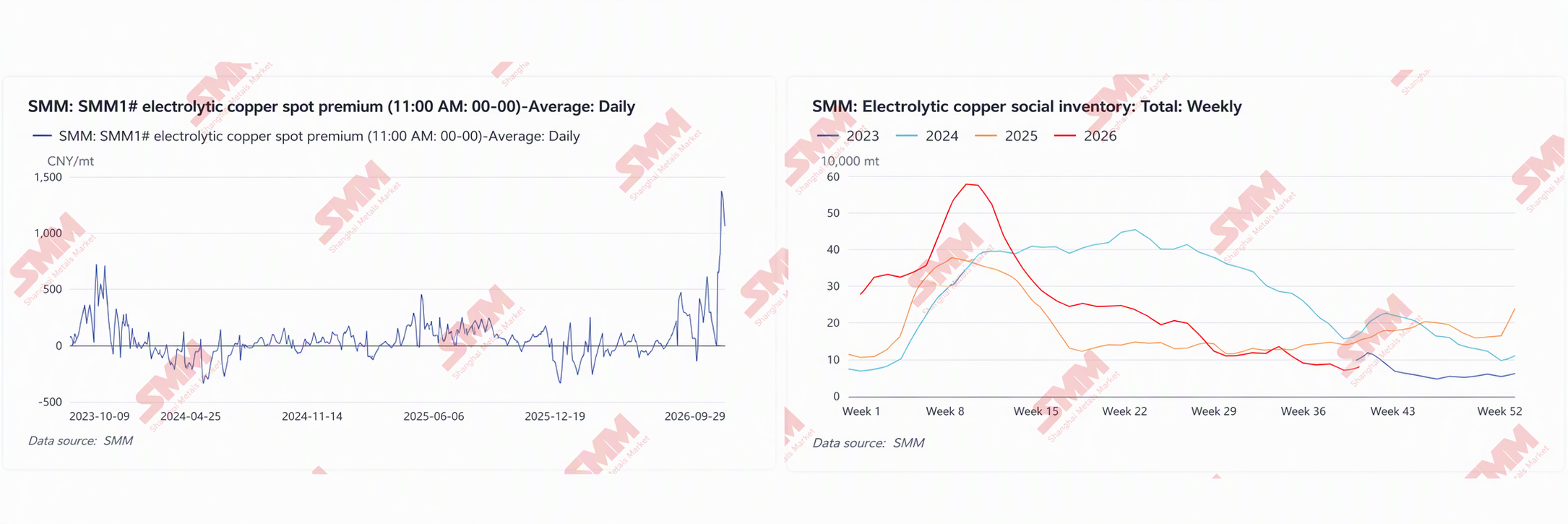
For China, resource misallocation is already reflected in the spot market. SMM #1 copper cathode premiums recently approached 1,400 yuan/mt, reaching their highest level since October 2023. This high premium was not entirely driven by stronger consumption: US Section 232 tariff expectations continued to attract copper resources to the US, reducing LME Asian inventories and import cargoes available to flow into China, tightening domestic spot supply and bringing total social inventory to a recent low of 78,300 mt. In addition, domestically available copper scrap was also tight, weakening the substitution and supplementary role of secondary copper relative to copper cathode. Meanwhile, in September, downstream users concentrated their stockpiling ahead of the Mid-Autumn Festival and National Day holidays, and just-in-time procurement and restocking demand further amplified the supply tightness. The global resource misallocation caused by US copper absorption constitutes the core backdrop for the rise in premiums, while stockpiling ahead of the dual festivals served as the direct catalyst for the rapid increase in premiums this round.
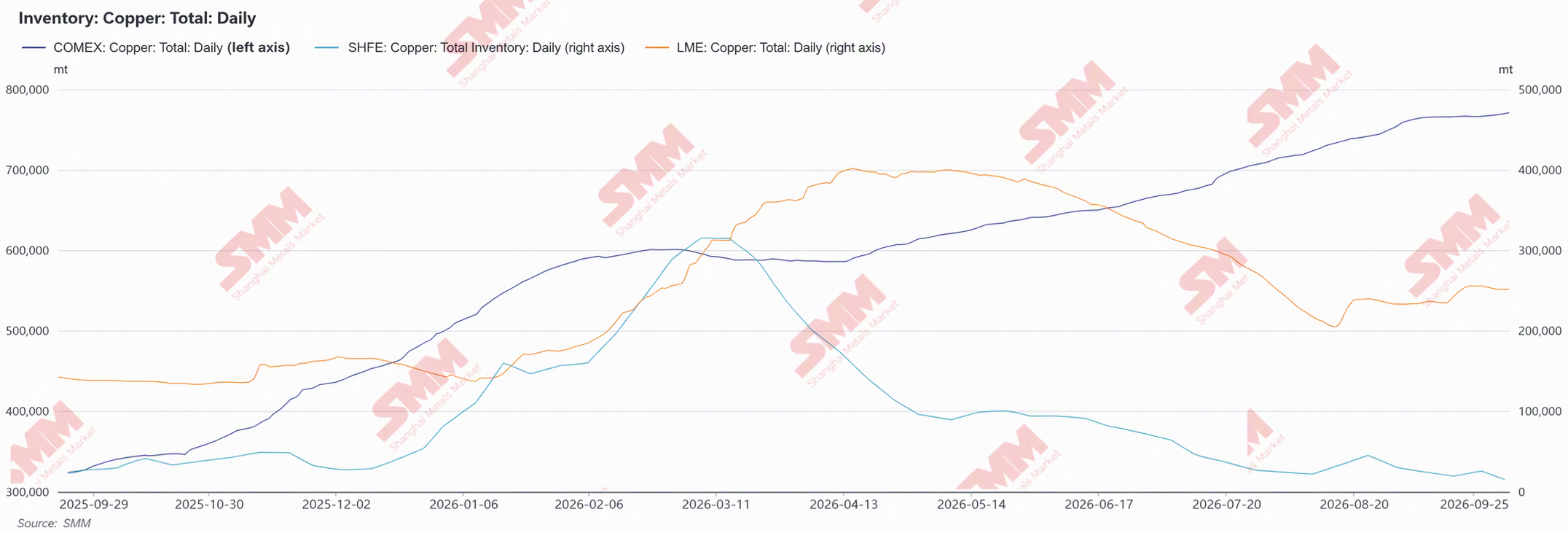
From September 2025 to September 2026, COMEX copper inventories rose from around 320,000 short tons to near 770,000 short tons, more than doubling; over the same period, LME inventories retreated from a phase high of around 400,000 mt in April 2026 to about 250,000 mt, while SHFE inventories fell from 359,100 mt announced at end-March to 47,100 mt on September 24. The overall flow is clear: tariff expectations and COMEX premiums continued to attract copper cathode from South America, Africa, and other regions into the US, while available inventories in non-US markets declined in tandem. The continued inventory buildup in the US and ongoing destocking in China and Asian markets are the key backdrop for the rapid climb in domestic spot premiums recently.
For the global copper market, prolonged tariff uncertainty will extend regional misallocation. US inventories continue to increase, available copper in non-US markets keeps tightening, and LME Asian inventories and Chinese import supply will come under pressure. Until the White House explicitly downplays tariffs on copper cathode, policy uncertainty itself will continue to support US copper absorption and underpin global copper prices.

![Imported arrivals combined with pre-holiday stockpiling winding down, Shanghai spot copper premiums continue to pull back [SMM Shanghai spot copper weekly review]](https://imgqn.smm.cn/usercenter/kvwSZ20251217171710.jpg)