SMM, September 29:
Metals market:
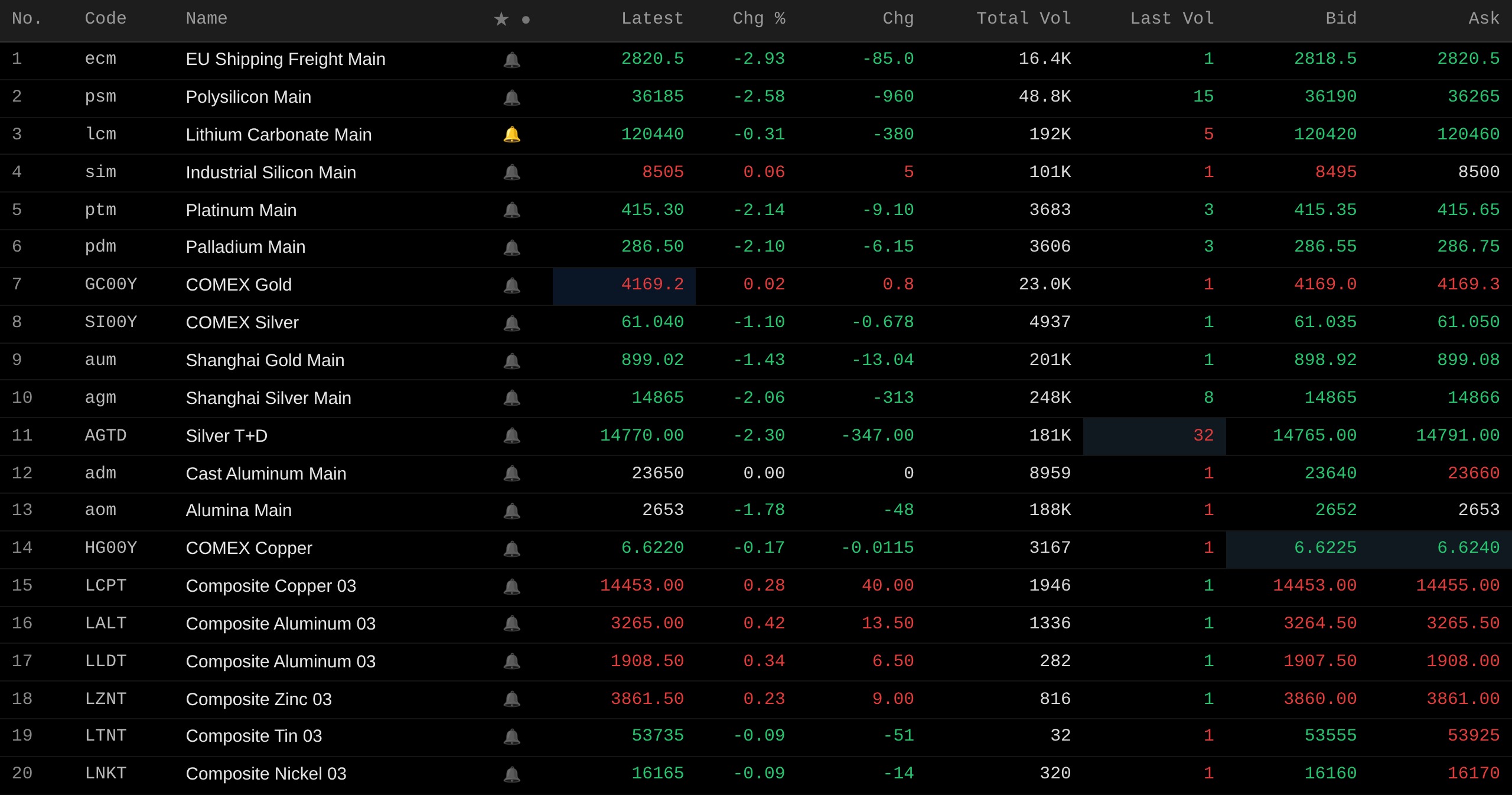
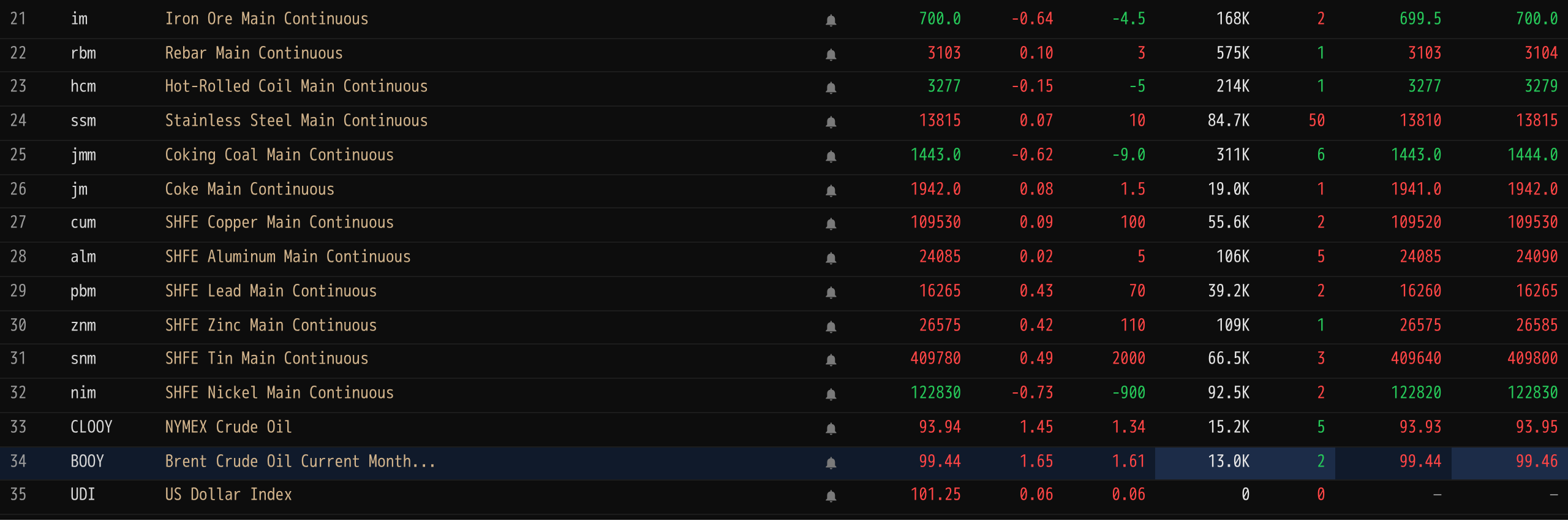
As of the midday close, base metals on the domestic market were almost all higher. SHFE copper and SHFE aluminum edged up. SHFE lead rose 0.43%. SHFE zinc gained 0.42%. SHFE tin rose 0.49%, while SHFE nickel fell 0.73%.
In addition, the most-traded cast aluminum futures contract was flat at 23,650 yuan/mt, while the most-traded alumina contract fell 1.78%. The most-traded lithium carbonate contract fell 0.31%. The most-traded silicon metal contract edged up. The most-traded polysilicon futures contract fell 2.58%.
Ferrous metals showed mixed performance. Iron ore fell 0.64%, rebar rose 0.1%, and hot-rolled coil fell 0.15%. Stainless steel edged up. In coking coal and coke, the most-traded coking coal contract fell 0.62%, while the most-traded coke contract edged up 0.07%.
In overseas base metals, as of 11:47, LME metals were mostly higher. LME copper rose 0.28%, and LME aluminum gained 0.42%. LME lead rose 0.34%, and LME zinc gained 0.23%. LME tin and LME nickel both edged down 0.09%.
In precious metals, as of 11:47, COMEX gold rose 0.02%, while COMEX silver fell 1.1%. In domestic precious metals, SHFE gold fell 1.43%, and the most-traded SHFE silver contract fell 2.06%.
In addition, as of the midday close, the most-traded platinum futures contract fell 2.14%, and the most-traded palladium futures contract fell 2.1%.
As of the midday close, the most-traded European container shipping futures contract fell 2.93% to 2,820.5 points.
As of 11:47 on September 29, selected futures midday quotes:
Spot and fundamentals
Aluminum: Aluminum prices continued to edge lower today, and the spot market remained weak. Selling cargoes promptly before the month-end and long holiday to realize cash and recoup funds remained the dominant theme...
Macro front
China:
[NDRC: Services sector contributed 66.1% to economic growth in H1 this year] The National Development and Reform Commission (NDRC) held a special press conference today to brief on progress in expanding and upgrading the services sector. A relevant official said that in H1 this year, the services sector contributed 66.1% to economic growth, up 5.9 percentage points from the same period last year. Since April, the services business activity expectations index has remained in a relatively high prosperity range above 55% for five consecutive months. The services sector has shown a positive trend of "policy expectations, market confidence, consumption resilience, and opening-up vitality." (CCTV News)
[CCPIT: Global economic and trade friction index remained elevated in July] This morning, the China Council for the Promotion of International Trade (CCPIT) released its latest global economic and trade friction index, with data showing that the index remained elevated in July. Based on the composite index, the global economic and trade friction index stood at 101 in July 2026, staying high. The amount involved in global economic and trade friction measures fell 18.7% YoY and 2.2% MoM, mainly because the US, EU, and India intensively issued import and export tariff measures in the same period last year, pushing up the index; 68 trade remedy investigations were launched globally in June this year, while the number pulled back to 17 in July. (CCTV News)
[PBOC reverse repo operations achieve a net injection of 93 billion yuan on the day]The PBOC conducted 90.5 billion yuan of 7-day reverse repo operations and 698.5 billion yuan of overnight reverse repo operations today. With 35 billion yuan of 7-day reverse repos and 661 billion yuan of overnight reverse repos maturing today, the day saw a net injection of 93 billion yuan. (Jin10 Data APP)
US dollar:
As of 11:47, the US dollar index rose 0.06% to 101.25. The US-Iran standoff kept oil prices high, intensifying inflation concerns and boosting market bets on further interest rate hikes by the US Fed.
According to CME "FedWatch": the probability of the US Fed keeping rates unchanged at 3.75%-4.00% at its October meeting was 29.1%, while the probability of a 25bp hike was 70.9%. The probability of the US Fed keeping rates unchanged at 3.75%-4.00% by December was 5.0%, with a 36.3% probability of cumulative hikes of 25bp and a 58.7% probability of cumulative hikes of 50bp.
US Fed Governor Lisa Cook said US inflation will continue to face pressure in the coming months, mainly from AI-related demand growth, rising oil prices, and supply chain disruptions caused by the Middle East conflict, but she did not explicitly indicate the need for further rate hikes. Cook said the labour market currently "has the capacity to withstand higher interest rates," and the magnitude and frequency of future monetary policy adjustments will depend on how the economy responds to policy actions, as well as inflation and employment data in the coming months. She said that as of August, the 12-month headline inflation rate in the US was around 3.8%, still well above the US Fed's 2% target. Cook noted that demand from AI infrastructure buildout will continue to add to inflation pressure in the near term, and although AI-driven productivity gains may have some disinflationary effect in the medium term, it will not be fast enough this year to offset current inflation pressure. She said there is no clear evidence yet that AI is reshaping the labour market, but the US Fed is closely monitoring the risk that it could lead to a phased rise in the unemployment rate. Cook also said that if the job market is hit by AI in the future, the US Fed's room to respond would be limited, because cutting interest rates to support employment could further push up inflation. (Jin10 Data APP)
In other currency news:
[RBA hikes rates by 25bp to 4.35% as expected, warns of emerging upside inflation risks and does not rule out further tightening] The Reserve Bank of Australia raised its benchmark rate by 25 basis points to 4.35% on Tuesday, in line with market expectations, with the decision passed unanimously by the committee. The key backdrop to this hike was stronger-than-expected inflationary pressure. The RBA said Australia's recent inflation data came in above the expectations held at the previous meeting, and some of the upside risks flagged since August are gradually materialising. The committee judged it necessary to tighten financial conditions further to support inflation returning to the target range within a reasonable timeframe. On forward guidance, the RBA struck a hawkish tone, explicitly stating it "will continue to take whatever action it deems necessary" and will raise the cash rate target further if needed, signalling that the hiking cycle is not yet over and keeping markets on alert over the future path.
Japanese Finance Minister Satsuki Katayama said persistent yen weakness remains a concern for Japan. Japan and the US will maintain close communication to preserve orderly functioning of the foreign exchange market. Katayama said on Tuesday: "As Takaichi Sanae stated at the recent Japan-US summit in New York, I also believe that, on the whole, the undervaluation of the yen is a problem." She added: "Japanese and US financial authorities will continue to maintain close communication and work together to preserve an orderly state in the foreign exchange market." Previously, Katayama held a telephone meeting with US Treasury Secretary Bessent on Friday evening. During the call, the two sides reaffirmed their shared concern over the yen's undervaluation and agreed to further strengthen cooperation. Katayama said that during her call with Bessent, she mentioned that Japanese Prime Minister Takaichi Sanae had said she was not a "reflationist," a remark that appeared intended to signal to Bessent that the Japanese government is not seeking unlimited expansionary policies. (Jin10 Data APP)
On the data front:
Today will bring the Reserve Bank of Australia's rate decision for September 29, Switzerland's September KOF Economic Barometer, UK August mortgage approvals from the Bank of England, Eurozone September industrial confidence, Eurozone September economic confidence, Canada July monthly GDP, US July FHFA house price index monthly rate, US July S&P/CS 20-City non-seasonally adjusted house price index annual rate, US August JOLTs job openings, and US September Conference Board consumer confidence, among other data.
In addition, watch for: US Fed Governor Lisa Cook speaking; 2027 FOMC voter and Richmond Fed President Barkin speaking; the RBA's rate decision announcement; RBA Governor Bullock's monetary policy press conference; and US President Trump, House Speaker Johnson, and CEOs of several technology companies holding a meeting on artificial intelligence.
Crude oil:
As of 11:47, oil prices in both markets extended gains from the previous trading session, with WTI up 1.45% and Brent up 1.65%. Repeated shifts in the US-Iran situation have supported prices amid supply concerns.
According to a person familiar with the matter, Saudi Arabia has completed repairs to a key cross-country oil pipeline after a drone attack earlier this month and has begun exporting oil through it. Last week, Saudi Aramco, the state-owned oil giant, had been testing and pressurizing the East-West Pipeline with the goal of resuming substantial oil flows before the weekend. The person said overseas exports have now resumed. The restart will give Saudi Arabia back an alternative export route previously used during the war with Iran. Meanwhile, Saudi Arabia also increased the volume of oil shipments through the Strait of Hormuz this month. This development will ease supply pressure on buyers. Previously, due to tight supply, some European clients had been told they would receive no crude allocations next month under long-term supply contracts. (Jin10 Data APP)
OPEC Secretary General Haitham Al Ghais said on the 28th in Algiers, the capital of Algeria, that the Algiers Accord reached 10 years ago remains highly significant for oil market stability and embodies the value of solidarity and cooperation. According to the Algerian presidency, Al Ghais, who is on a working visit to Algeria, said after meeting with President Tebboune that market stability is built not only on data but also on confidence, the mechanisms adopted, and the willingness of countries to stand united at critical moments. Al Ghais stressed that investment, supply security, and economic stability are closely linked to the stability brought by consensus among OPEC+ members, and that the need for dialogue has not diminished but is more important than ever. (CCTV News)
In addition, according to five people familiar with the matter, Saudi Aramco is considering lowering the official selling price (OSP) of crude loaded off the coast of Oman to compensate buyers for higher costs caused by surging freight rates. The move could help Saudi Aramco regain some of the market share lost due to hindered transportation of oil through the Strait of Hormuz. The people said Saudi Aramco is in talks with some Asian refiners about possible OSP discount options to make its crude more attractive amid soaring freight rates. The discounts could apply to cargoes offered this week, which are planned to be loaded in the second half of October and sold via ship-to-ship transfers near the coast of Oman. One of the sources said the discount under discussion is about $9 per barrel. In recent weeks, as Saudi Arabia increased crude exports from fields within the Gulf, Saudi Aramco sold crude loaded outside the Strait of Hormuz (i.e., in Omani waters) to Asian buyers at premiums of $10 to $20 per barrel over the monthly official selling price (OSP). (Jin10 Data APP)
Spot market overview:
►
►
►
►
►
►
►
►
►
►
►
►
►
![Crude oil pulled back, metals showed mixed changes, LME aluminum, LME nickel, and SHFE nickel led the declines, gold rebounded [Overnight Market]](https://imgqn.smm.cn/usercenter/LVqfJ20251217171736.jpg)
![[SMM Oil & Gas Flash] Criterium Energy Targets October Gas Start as Pipeline Nears Completion](https://imgqn.smm.cn/usercenter/obeMy20251217171735.jpg)
![[SMM Nickel Flash] Eramet Says EU Carbon Costs Shut Market for Indonesian NPI](https://imgqn.smm.cn/usercenter/fNuSg20251217171735.jpg)