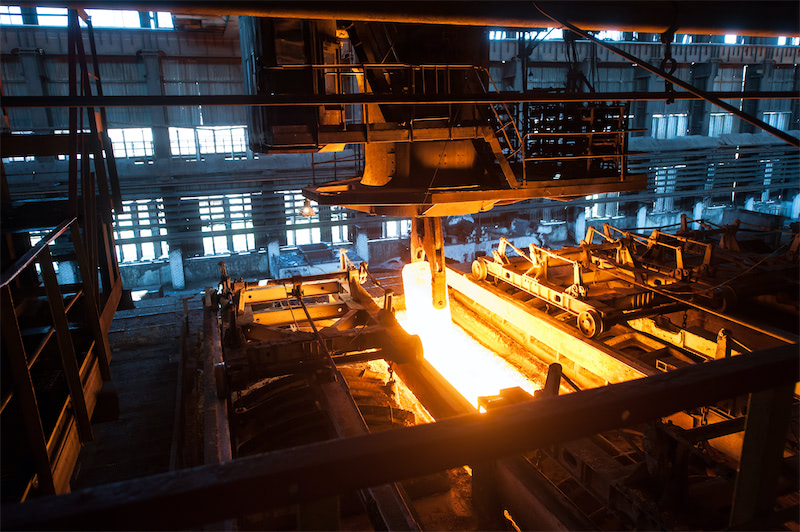
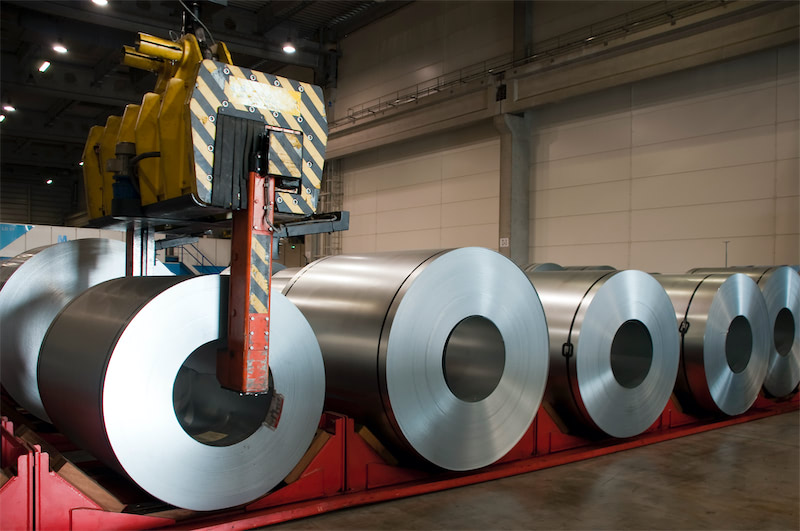
An Indonesian integrated steel mill operating on Blast Furnace–Basic Oxygen Furnace (BF-BOF) technology is preparing for a routine hot blast stove shutdown at its BF-BOF complex, expected to run for approximately 10 days from late September into early October, with September 22 the earliest possible start date. Because the maintenance was flagged well in advance and falls into the planned/preventive category, it assesses the direct production and supply impact as minimal: the mill has had time to build safe inventory levels and communicate the schedule to customers. Billet prices have nonetheless risen & attributes this primarily to other factors, such as rising prices of Chinese products, higher coking coal costs, and logistics risks caused by El Niño. The maintenance itself is not a strong enough factor to explain the price change, since it is predictable, whereas the other factors are not.
Looking ahead, SMM expects the mill's ability to leverage the maintenance narrative into further price increases to be constrained by two factors: Chinese export prices, which anchor the wider Southeast Asian market and are not rising, and weak Indonesian domestic demand, which leaves buyers with little incentive to chase price. The overall market posture into the maintenance window is best described as buyers are resistant at current price levels.
I. Maintenance Classification and Equipment Criticality: BF-BOF Sits at the Top of the Risk Hierarchy
Types of Maintenance: Planned Preparation vs. Unplanned Risk
Steel mill maintenance differs from other industrial maintenance primarily because of the extreme heat involved — a Blast Furnace (BF) operates at an average around 1,500°C to 1,650°C for hearth temperature and the Basic Oxygen Furnace (BOF) deals with comparably extreme thermal loads, reaches 1,650°C to 1,700°C in average. This drives more rigorous cooling-system and refractory inspection requirements than most other heavy industries. In terms of category, however, steel mill maintenance follows the same general framework as other process industries:
-
Unplanned Maintenance
The higher-risk category: failures that occur without warning, typically from undetected mechanical issues, & can halt production entirely. Here is the possible failure that happened time by time.
-
Planned Maintenance
The lower-risk category, since the operator has advance knowledge and time to prepare. This includes:
-
Preventive — scheduled maintenance carried out on a time basis to pre-empt failure.
-
Predictive — maintenance triggered by sensor data and detected abnormalities rather than a fixed calendar date; more data-driven and generally more effective at heading off larger failures.
-
Corrective — maintenance carried out after a major breakdown, to restore equipment to normal function.
Equipment Criticality: Why BF-BOF Outranks Casting and Rolling
Temperature exposure is the common thread across steel mill equipment criticality. BF-BOF ranks as the most critical asset class, as it sits at the most heat-intensive stage of the process and forms the upstream base of the entire steel value chain — without it, no downstream unit can produce anything to sell. Continuous casters and hot/cold rolling mills rank as high-impact but secondary. These units convert semi-finished steel into sellable finished or semi-finished product, but a mill with BF-BOF running and casting/rolling offline can still produce a saleable output (e.g., billets or slabs); the reverse is not true. If BF-BOF goes offline, casting and rolling have nothing to process.
II. The Confirmed Schedule: A Routine, Pre-Announced Shutdown
According to the market communications, the maintenance in question was flagged well ahead of the shutdown date itself, and the mill has signaled that it is prepared and does not expect the maintenance to materially disrupt its ability to fill normal order volumes. This is consistent with planned/preventive maintenance rather than a reactive response to a known fault.
-
Scope: the BF-BOF complex will be shut down.
-
Duration: approximately 10 days.
-
Window: late September through early October 2026.
-
Earliest possible start: September 22, 2026.
III. Production Base: Technology and Product Mix
BF-BOF Technology: Iron Ore to Crude Steel in Two Upstream Stages
The mill uses BF-BOF technology across its full production chain: the Blast Furnace converts iron ore into pig iron (ironmaking), and the BOF converts pig iron into crude steel (steelmaking). Both stages are essential upstream inputs — if BF-BOF output stops, downstream semi-finished production stops with it.
Product Mix: Construction Steel Leads the Number of Production
Steel mills tend to be flexible in production, shifting output toward whichever product has stronger demand rather than sticking to fixed quotas. The crude steel capacity sits at roughly 7 mtpa — the ceiling for raw steel output, however it's allocated downstream. Within that, billets can reach up to ~4.5 mtpa and slabs up to ~2.5 mtpa. Further downstream, the mill also produces wire rod (~0.5 mtpa), HRC (2–4.5 mtpa depending on allocation), rebar (~1 mtpa), and other variants. Most of this output ultimately serves the construction sector, still one of Indonesia's largest sources of steel demand.
IV. Price Movements: Billets — Up 15 USD/tonne, but Not Mainly Because of the Maintenance
Billet prices have risen by up to 15 USD following news of maintenance, ranging from 470 USD/metric ton EXW (as of August 27, 2026) to a maximum of 485 USD/metric ton EXW (as of September 14, 2026).
The assessment is that this increase is only marginally connected to the maintenance news itself. The more significant drivers are:
-
Rising Chinese product prices, which anchor regional Southeast Asian pricing. The chinese billet itself increased from 468 USD/metric ton FOB (as of August 27, 2026) to a maximum of 477 USD/metric ton EXW (as of September 10, 2026).
-
Higher coking coal costs, raising input costs across BF-BOF producers. The coking coal from Lvliang increased from 1980 USD/metric ton spot price (as of August 26, 2026) to a 2490 USD/metric ton spot price (as of September 10, 2026); and
-
El Niño-related risk. According to Indonesia's Meteorology, Climatology, and Geophysics Agency (BMKG), during September represents the anticipated peak of the current El Niño episode, with the rainfall rate around 0-150 mm. According to NOAA, El Niño strengthened further over the past month, with sea surface temperature anomalies exceeding +3.0°C in the eastern equatorial Pacific. Enhanced convection and rainfall persisted from the central to the eastern Pacific, while anomalies remained suppressed over Indonesia.
The key difference highlighted lies in predictability: maintenance activities are known and foreseeable, whereas factors such as rising chinese products, higher coking coal costs, and El Niño are dynamic and difficult to predict—making them more reasonable explanations for recent price movements.
V. Supply Effects in Indonesia: Inventory and Advance Notice Do the Work, Not Price.
Any maintenance event carries some risk of domestic supply disruption. Mills typically have three levers available to manage that risk: (1) draw down safe inventory levels to avoid a supply gap, (2) notify customers early enough that they can adjust logistics planning, and (3) raise prices to manage demand against tighter available supply.
The assessment is that this production halt will have effects similar to those described in points (1) and (2), for two reasons. First, because this maintenance is routine and was planned in advance, the factory has had time to build up adequate inventory reserves. Second, current demand is already weak—prices are considered high, buyers are showing minimal interest in stockpiling, and the slack in the order book effectively creates its own supply buffer. Overall, the actual supply risk resulting from this production halts as low.
VI. Market Sentiment and Outlook: Minimal Production Impact, Muted Market Sentiment
The effect of this maintenance event to the market considered as minimal to negligible: the mill expects to continue filling normal order volumes through the shutdown window, and the broader market has not reacted as though a meaningful supply disruption is imminent. The production might delay because it affect around 190-195 kilo tons of product (if we take crude steel production is around 7 mtpa), but since the demand is also very small, so not really affecting the market.
This is proven, even with the small demand, beside the possible effect might be influenced by other, the delivery already moved into December 2026 even January 2027 as the order at November considered "full". That said, it does not rule out the mill using the maintenance narrative as cover to attempt further price increases, layering it on top of other bullish cost narratives (coal costs, logistics risk from water/drought conditions, etc.). The more binding constraint on that strategy is structural: China, as the primary price-setter for the wider Southeast Asia region, is not raising its own export prices, which limits how far a single Indonesian mill can move independently. Compounding this, buyers have grown resistant after a period of unusually large price swings over the preceding two weeks, and the negotiating gap between mill offers and buyer bids currently sits around 5–10 USD/tonne.
Overall, the current market sentiment is relatively as muted: demand—from both government and private projects in Indonesia—remains weak; buyers do not feel particularly pressured to make transactions given the lack of underlying demand pressure; and current price levels are already considered high. Even if mills attempt to use the maintenance period as a tool to set prices, without a tangible increase in demand or a corresponding response from China, there will be limited room for such price increases to hold.
Key Metrics to Watch
-
Whether the mill confirms the September 22 start date or the window slips into October.
-
Any offer revision during the maintenance window exceeds the 5–10 USD per metric ton spread, which buyers are currently rejecting.
-
Movement in Chinese export offer prices, which will determine how much pricing room the mill actually has.
-
Coking coal price trends and any incremental El Niño-driven logistics disruption, which are the more likely near-term price drivers independent of this maintenance event.

![[Domestic Iron Ore Brief] Iron ore concentrate prices in the Tangshan area are likely to remain in the doldrums](https://imgqn.smm.cn/usercenter/LSkpO20251217171720.jpg)