Recently, the Ministry of Industry and Information Technology (MIIT) and eight other departments jointly issued the “15th Five-Year Plan for the Development of the Intelligent Connected New Energy Vehicle Industry” (MIIT Joint Regulation Letter [2026] No. 305), making systematic arrangements for the development of the intelligent connected NEV industry during the “15th Five-Year Plan” period. The plan explicitly proposes promoting the coordinated development of NEVs with green electricity and green hydrogen, and strengthening the promotion and application of new energy heavy-duty trucks in scenarios such as trunk logistics and short-haul transport in specific locations.
Development goals: Enter the ranks of the world’s automotive powers by 2030
The plan proposes that by 2030, China’s advantages across the entire industry chain of intelligent connected NEVs will be further consolidated, and the country will enter the ranks of the world’s automotive powers.In the Chinese market, passenger NEVs and commercial NEVs will account for 70% and 40% of total new vehicle sales in their respective segments, and vehicles with autonomous driving functions will achieve large-scale application. Key technology levels will be effectively improved, with average fuel consumption of passenger vehicles reaching 3.3 litres per 100 km and average electric energy consumption of battery electric passenger vehicles reaching around 11.5 kWh per 100 km. The industrial structure will be continuously optimized, the industry’s digital and intelligent development will reach a relatively high level, and overall labour productivity will increase by 15% compared with 2025.
Technology breakthroughs: Fuel cell stacks and engines included as key directions
In terms of improving technological innovation capabilities, the plan strengthens basic research in key areas such as energy and power, intelligent chassis, and intelligent connectivity, and carries out strategic, forward-looking, and leading-edge research layouts. In the EV sector, it explicitly proposes todevelop high-temperature-resistant, large-power, long-life fuel cell stacks and engines, continuously improve the safety, charge rate, low-temperature applicability, and cycle life of power batteries, study application requirements in extreme environments, and achieve breakthroughs in key technologies for next-generation low-carbon and zero-carbon fuel internal combustion engines.
The plan also proposes improving the resilience and security of the industry chain, rolling out high-quality development actions for the industry chain, overcoming shortcomings in key basic materials, operating systems, industrial software, automotive chips, and components, and coordinating the mining and recycling of critical mineral resources such as lithium, cobalt, and nickel.
Industrial upgrading: Promote digital, intelligent, green, and low-carbon transformation across the entire industry chain
In terms of promoting the optimization and upgrading of the industrial system, the plan proposes promoting digital and intelligent transformation across the entire industry chain, grasping the trends of digitalization, networking, and intelligence, and accelerating the comprehensive empowerment and deep integration of artificial intelligence in all aspects of automotive R&D, production, supply, sales, and services. It also aims to improve green and low-carbon development, strengthen green and low-carbon technology innovation and promotion for automotive products, coordinate the green and low-carbon development of the entire life cycle including energy supply and material supply, establish a digital identity system for automotive power batteries, and advance carbon footprint management in an orderly manner.
The plan also proposes building world-class enterprises, continuing the “Chinese Auto Brand Upward Development” series of activities, intensifying efforts to cultivate leading parts enterprises, and supporting regions with the necessary conditions to accelerate the construction of world-class advanced manufacturing clusters for intelligent connected NEVs.
Cross-sector integration: Strengthen coordination between automobiles and energy, and promote large-scale application of hydrogen-powered heavy-duty trucks
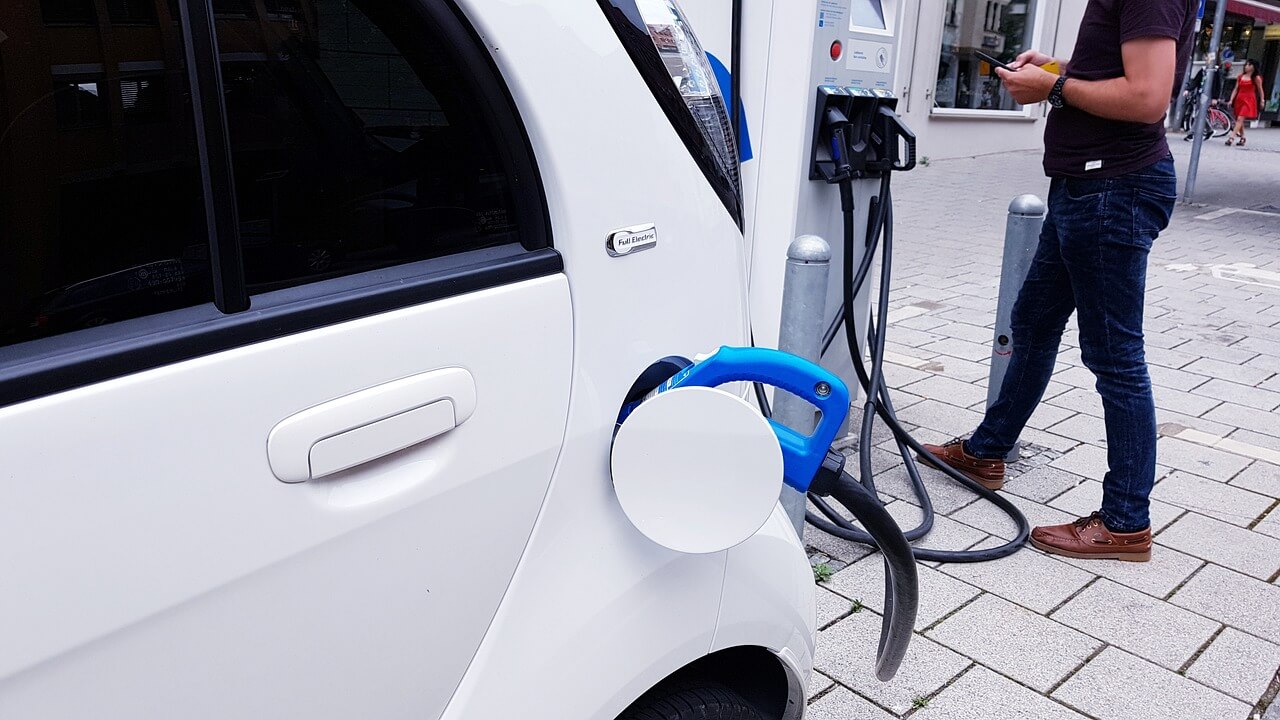
In terms of promoting cross-sector integrated development, the plan makes arrangements in three dimensions: automobiles and information and communications, automobiles and transportation and cities, and automobiles and energy. Among these, the section onstrengthening the integrated development of automobiles and energyexplicitly proposes: accelerating the improvement of charging and battery swapping infrastructure, scientifically and rationally laying out large-power charging facilities, addressing shortcomings in rural charging facility construction, and continuously improving the efficiency of charging and battery swapping services; accelerating the large-scale application of vehicle-to-grid interaction and exploring sustainable business models;promoting the coordinated development of NEVs with green electricity and green hydrogen, and strengthening the promotion and application of new energy heavy-duty trucks in scenarios such as trunk logistics and short-haul transport in specific locations.
In Column 4, “Action for the Promotion and Application of Intelligent Connected NEVs,” the plan further clarifies the promotion of large-scale application of new energy heavy-duty trucks, focusing on typical scenarios such as trunk logistics and short-haul transport, actively advancing the large-scale application of new energy heavy-duty trucks, improving the layout of energy replenishment facility networks, promoting the construction of cross-regional zero-carbon road transport corridors for new energy heavy-duty trucks, exploring demonstration applications of autonomous driving for heavy-duty trucks, and advancing zero-emission freight pilot projects.
Industry governance and global cooperation
In terms of building a scientific and efficient industry governance system, the plan proposes strengthening the construction of standards and evaluation systems, improving access and usage management systems, strengthening capacity early warning and regulation, and maintaining a healthy and orderly market environment. In terms of creating a new situation in global industrial cooperation, it proposes leading the construction of global industry and supply chains, improving service capabilities for development outside China, and deepening investment cooperation in China.
The plan concludes by emphasizing the need to leverage the inter-ministerial coordination mechanism for the development of the energy-saving and NEV industry, coordinate the implementation of the plan, ensure that all regions and relevant departments implement it in light of actual conditions, implement preferential tax policies for NEVs, and support activities such as automobile “trade-in” and NEV campaigns in rural areas.
![[SMM Hydrogen Policy Express] Ningxia issues the "15th Five-Year" plan for building a Beautiful Ningxia, specifying the launch of a regional hydrogen energy pilot in the energy sector of Ningdong](https://imgqn.smm.cn/usercenter/gcOsy20251217171726.jpg)