According to the latest data from the General Administration of Customs of China, China imported 42.092 million tonnes of coal and lignite in August 2026. Cumulative imports from January to August reached 310.188 million tonnes, up 3.4% year on year. Compared with 42.728 million tonnes in July, August imports decreased by 636,000 tonnes, representing a month-on-month decline of 1.49%.
Reviewing August, China’s coal imports edged lower from the previous month but remained above 42 million tonnes. From the perspective of the earlier supply-demand backdrop, raw coal production by China’s industrial enterprises above designated size fell 2.9% year on year during January–July, and the contraction in domestic supply may have supported demand for imported coal as a supplementary source. However, thermal power generation increased by 1.8% year on year over the same period, with the growth rate slowing by 1.1 percentage points compared with the first half of the year. Meanwhile, crude steel and cement production declined by 3.1% and 8.6% year on year, respectively. In the steel sector, narrowing profit margins prompted steel mills to proactively control output, weighing on crude steel production. At the same time, the property market remained weak, with fewer construction projects reducing demand for construction steel and cement, thereby limiting production and coal consumption growth in related industries. This indicates that downstream demand did not strengthen across the board.
Looking ahead to September, as the peak summer power-demand season draws to an end, demand for thermal coal faces seasonal downward pressure. However, safety supervision in major coal-producing regions and the pace of mine restarts may continue to constrain growth in domestic supply. If high temperatures gradually ease, lower cooling-related electricity demand may reduce coal consumption and procurement by power plants. If high temperatures persist or domestic supply recovers more slowly than expected, imported coal could still have room to supplement domestic supply. Meanwhile, whether the traditional “Golden September” peak season can drive higher coal consumption in the steel and construction materials sectors will still depend on end-user orders and actual construction activity. Based on these factors, coal imports in September are expected to remain influenced by both seasonal changes in demand and the pace of domestic supply recovery. If thermal coal demand declines while domestic supply recovers at the same time, coal imports could fall further.
China Coal Imports (Unit: 10,000 tonnes)
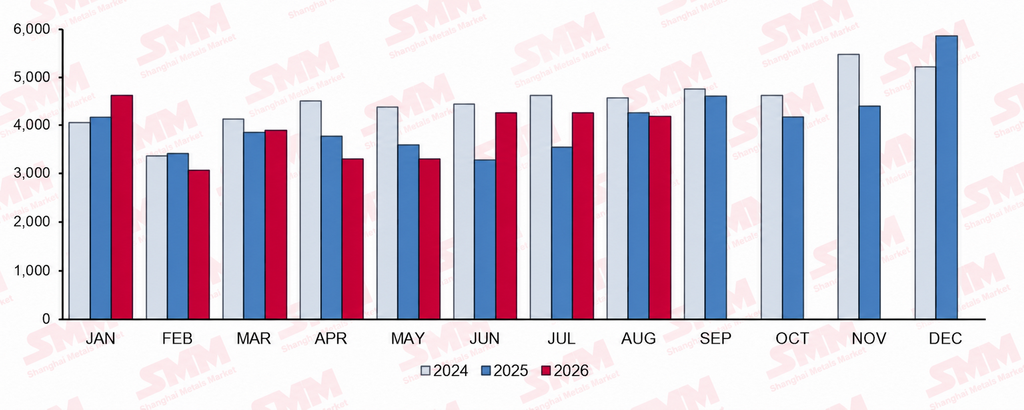
Source: General Administration of Customs of China; 2026 data through August