SMM, September 9:
In the metals market:
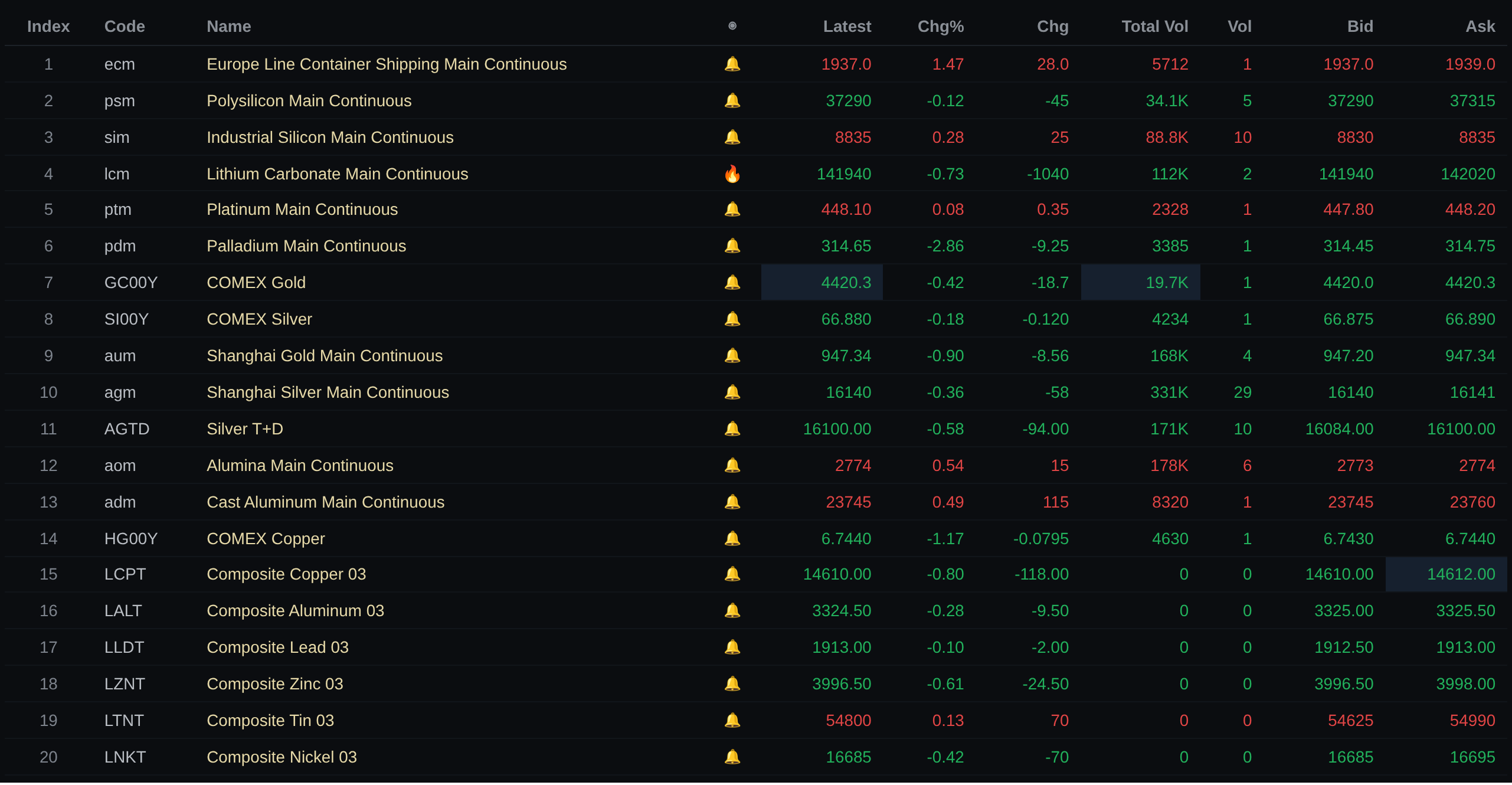
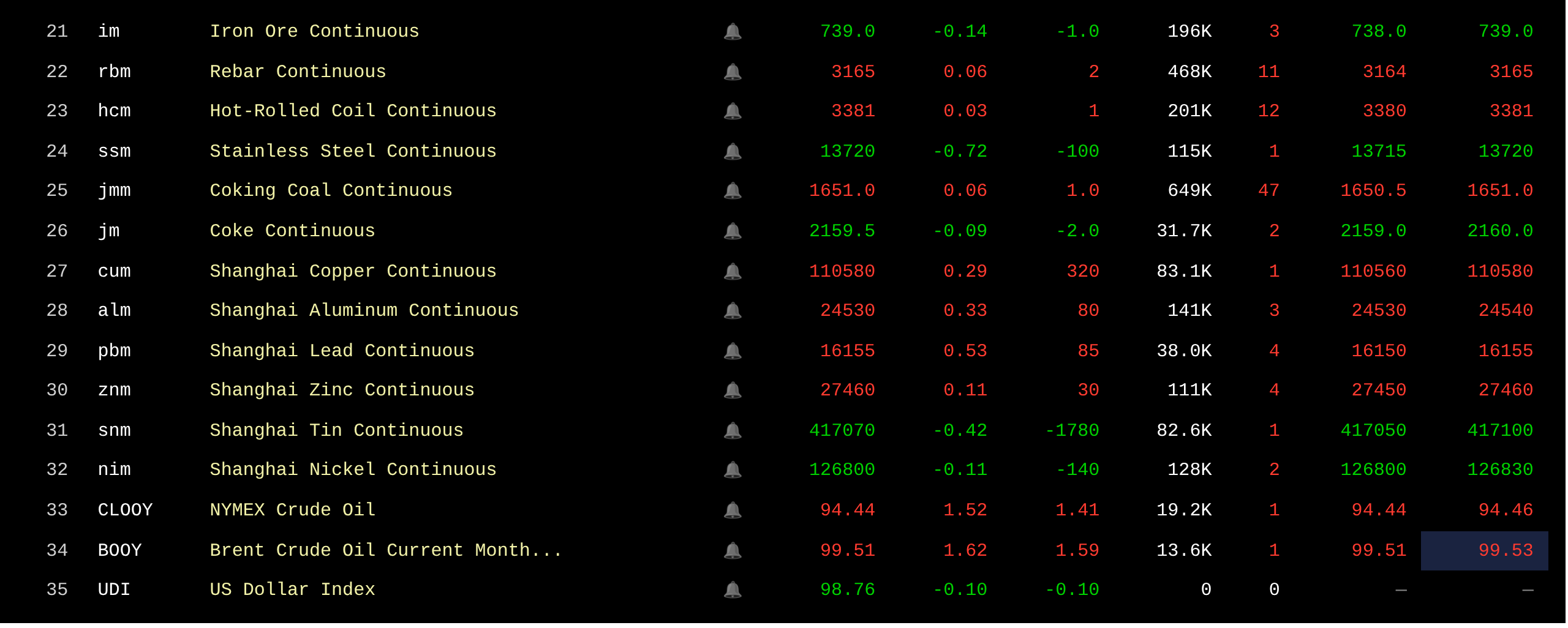
As of the midday close, base metals on the domestic market mostly rose. SHFE copper edged up 0.29%, hitting a new high since January this year at 111,720 yuan/mt. SHFE aluminum rose 0.33%. SHFE lead gained 0.53%. SHFE zinc rose 0.11%. SHFE tin fell 0.42%, and SHFE nickel dipped 0.11%.
In addition, the most-traded foundry aluminum futures contract rose 0.49%, and the most-traded alumina contract gained 0.54%. The most-traded lithium carbonate contract fell 0.73%. The most-traded silicon metal contract rose 0.28%. The most-traded polysilicon futures contract dipped 0.12%.
Ferrous metals showed mixed performance. Iron ore fell 0.14%, while rebar and hot-rolled coil edged up. Stainless steel dropped 0.72%. In coking coal and coke: the most-traded coking coal contract rose 0.06%, and the most-traded coke contract fell 0.09%.
In overseas base metals, as of 11:42, LME metals were nearly all down. LME copper fell 0.8%. LME aluminum rose 0.28%. LME lead dipped 0.1%. LME zinc fell 0.61%. LME tin gained 0.13%. LME nickel dropped 0.42%.
In precious metals, as of 11:42, COMEX gold fell 0.42%, and COMEX silver dipped 0.18%. In domestic precious metals: SHFE gold fell 0.9%, and the most-traded SHFE silver contract dropped 0.36%.
In addition, as of the midday close, the most-traded platinum futures contract rose 0.08%, and the most-traded palladium futures contract fell 2.86%.
As of the midday close, the most-traded European shipping route containerized freight index futures contract rose 1.47% to 1,937 points.
As of 11:42 on September 9, some futures midday quotes:
Spot and Fundamentals
Copper: Today, spot #1 copper cathode in Guangdong against the front-month contract: high-quality copper was quoted at a premium of 250 yuan/mt, flat from the previous trading day; standard-quality copper was quoted at a premium of 150 yuan/mt, flat from the previous trading day; SX-EW copper was quoted at a premium of 90 yuan/mt, flat from the previous trading day. The average price of #1 copper cathode in Guangdong was 111,660 yuan/mt, up 350 yuan/mt from the previous trading day, and the average price of SX-EW copper was 111,550 yuan/mt, up 350 yuan/mt from the previous trading day. Spot market: After two days of significant inventory buildup, arrivals dropped noticeably today, causing Guangdong inventory to decline again...
Macro Front
Domestic:
[NBS: August CPI up 0.8% YoY, PPI YoY growth widened to 3.8%] NBS data showed that in August, affected by changes in international market prices, seasonal rises in food prices, and other factors, the Consumer Price Index (CPI) shifted from a 0.1% MoM decline in the previous month to a 0.4% MoM rise, with YoY growth rebounding to 0.8%; core CPI excluding food and energy prices saw YoY growth rebound to 1.0%. In August, driven by the transmission of rising international commodity prices and increased demand in some industries amid China's industrial transformation and upgrading, the Producer Price Index (PPI) rose 0.4% MoM, reversing a 0.7% decline in the previous month, while the YoY increase widened to 3.8%. The National Bureau of Statistics (NBS) said that on a YoY basis, China's PPI rose 3.8%, with the increase 0.3 percentage points wider than the previous month. By major industry, among industries with rising prices, coal mining and washing rose 26.6%, non-ferrous metal smelting and rolling rose 20.8%, oil and natural gas extraction, oil, coal and other fuel processing, and chemical raw materials and chemical products manufacturing rose 10.5%, 11.1% and 9.1%, respectively, electrical machinery and equipment manufacturing rose 5.9%, and computer, communications and other electronic equipment manufacturing rose 5.3%. These seven industries together contributed about 4.24 percentage points to the YoY PPI increase, with the upward contribution 0.37 percentage points higher than the previous month. The six industries with the largest downward pull on prices were: electricity and heat production and supply, automobile manufacturing, non-metallic mineral products, pharmaceutical manufacturing, wine, beverages and refined tea manufacturing, and agricultural and sideline food processing, with declines ranging from 1.7% to 5.3%, together contributing about 0.74 percentage points to the YoY PPI decline.
PBOC: Based on the demand of primary dealers in open market operations, the volume of 7-day reverse repo operations on September 9, 2026 was zero. (Jin10 Data APP)
[New breakthrough achieved in efficient and green separation technology for rubidium and cesium resources associated with China's specialty lithium ore]Recently, the world's first continuous tower extraction and separation demonstration line with an annual capacity of 500 mt for low-grade rubidium and cesium associated with specialty lithium ore, jointly built by the Institute of Process Engineering of the Chinese Academy of Sciences and Ganfeng Lithium, achieved stable full-capacity operation across the entire process. The purity of cesium carbonate and rubidium carbonate products both exceeded 99.9%, and the products have been launched for sale. The full-capacity operation of this demonstration line marks an important breakthrough in China's efficient and green separation technology for low-grade associated rubidium and cesium resources, providing a solid guarantee for the efficient and green utilization of China's rubidium and cesium resources. (CCTV News)
US dollar:
As of 11:42, the US dollar index extended its decline from the previous two trading sessions, falling another 0.1% to 98.76. US Treasury Secretary Bessent said that the expansion of the US Treasury buyback program last month was aimed at calming the "frenzy" sentiment forming in the bond market and pushing market prices back toward equilibrium. Bessent said he cannot change the market equilibrium price, but hopes to reduce excessive market speculation. He stated that if investors were truly concerned about US debt creditworthiness, they should sell US Treasuries and buy German bunds, but current market performance does not reflect that. Bessent denied that the Treasury's bond buybacks are equivalent to Fed quantitative easing, saying the measure is more similar to the Fed's past "Operation Twist." The backdrop for this expanded buyback plan is that the yield on the 30-year US Treasury bond has risen to its highest level since 2007.
US Treasury yields moved higher, affected by rising oil prices and the increased likelihood of a rate hike next week after last week's employment data beat expectations. Analysts at Danske Bank said in a report that even if they do not expect a rate hike next week, they still believe the current pricing (with the probability of a hike and a hold nearly evenly split) is reasonable. However, Danske Bank still expects the Fed to hike rates twice, in December and March. But as the yen strengthened further, the US dollar softened against a basket of currencies. (Jin10 Data APP)
According to CME "FedWatch": The probability of the Fed keeping rates unchanged through September is 40.6%, and the probability of a cumulative 25 bp hike is 59.4%. The probability of the Fed keeping rates unchanged through October is 29.8%, the probability of a cumulative 25 bp hike is 54.4%, and the probability of a cumulative 50 bp hike is 15.8%. (Jin10 Data APP)
On the data front:
Today will see the release of US ADP employment change for the week ending August 22, France's July industrial output m/m, and other data. In addition, the US Treasury will announce the maximum amount of planned buybacks of 10- to 20-year US Treasuries.
On the crude oil front:
As of 11:42, oil prices in both markets extended gains, with WTI up 1.52% and Brent up 1.62%. Concerns over disruptions to Middle East energy supplies intensified, supporting oil prices.
On Tuesday, a total of 6 commodity carriers passed through the Strait of Hormuz, down from 9 the previous day and below the average of about 12 over the past 10 days. Preliminary data from shipping data tracker Kpler showed that as of 10:00 Beijing time on Wednesday, 5 of the 6 vessels were entering the Strait of Hormuz and 1 was exiting. They included 1 Panamax vessel and 1 medium-range tanker. Meanwhile, on Tuesday, a total of 25 commodity carriers passed through the Bab el-Mandeb Strait, another key maritime chokepoint in the Middle East, with 11 entering and 14 exiting. By comparison, the average number of vessels passing through the Bab el-Mandeb Strait over the past 10 days was about 27. The vessels transiting the strait included 2 Suezmax tankers, 8 Aframax tankers, and 1 very large crude carrier (VLCC). (Jin10 Data APP)
Spot Market Overview:
►
►
►
►
►
►
►
►
►
►