According to SMM's observations, since July, copper cathode prices have risen from 103,000 yuan/mt to 108,600 yuan/mt, an increase of over 6,400 yuan/mt, but the price of domestic bare bright copper wire (excluding tax) only rose from 90,000 yuan/mt to 91,700 yuan/mt, an increase of less than 1,800 yuan/mt. Historical data indicates that a rise in copper prices inevitably prompts copper scrap suppliers to actively sell, leading to a short-term increase in copper scrap supply. However, the increase in copper scrap prices will inevitably lag behind that of copper cathode. The widening price difference between primary metal and scrap will attract downstream scrap utilization enterprises to purchase and produce. As a result, the brief supply increase is quickly absorbed by the vast downstream consumption demand, leading to a rapid reduction in the circulation of copper scrap in the market, a fast rise in copper scrap prices, and a narrowing of the price difference between primary metal and scrap, returning to normal levels.
However, the recent surge in copper prices has indeed increased the supply of copper scrap in the market, but the price increase has remained limited. After communicating with copper scrap traders, secondary copper rod enterprises, and copper anode plate enterprises using scrap, SMM reached the following conclusions:
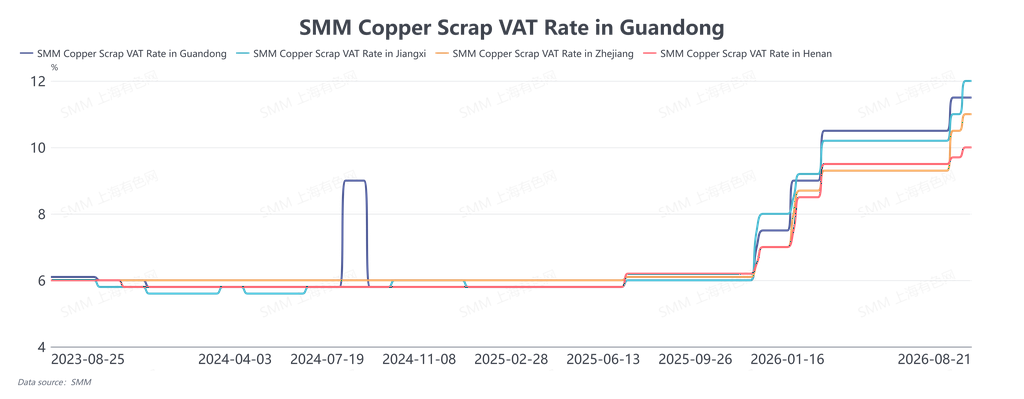
1. With the implementation of the "reverse invoicing" policy, an increasing number of enterprises have been subject to varying degrees of restrictions and have been forced to purchase copper scrap with tax invoices. Since the "reverse invoicing" policy was promulgated in May 2024, used as a transition period in 2025, and officially implemented in 2026, many enterprises have been limited by the rule that each calendar year's invoice quota is 5 million yuan, significantly reducing their raw material procurement volume. However, to maintain continuous production, these enterprises have had to purchase imported or domestically tax-inclusive copper scrap. As a result, the market has seen a sharp decline in demand for tax-exclusive copper scrap, while tax-inclusive supplies have been snapped up. The invoice tax rate for scrap utilization enterprises to obtain tax-inclusive copper scrap has risen sharply, from 6.5% all the way up to 11.5%, and even reaching 12% in the Guangdong region. With such high invoice tax rates, many scrap utilization enterprises have had to start trying to lower the tax-exclusive price of copper scrap to offset the additional procurement costs caused by the increase in invoice tax rates.
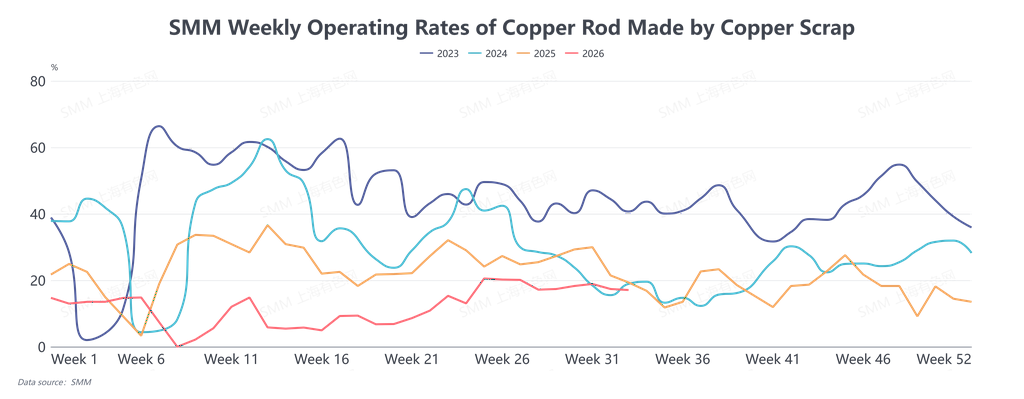
2. In August 2024, Document No. 770 addressed the removal of rewards and subsidies arising from illegal investment attraction, aiming to fundamentally resolve the "tax depressions" issue. Although this regulation requires local governments to complete the cleanup of illegal subsidies and tax rebates by August 2027 at the latest, an increasing number of scrap utilization enterprises have been informed by relevant authorities this year that such rewards and subsidies will be cancelled. Currently, enterprises in Jiangxi, Anhui, Hubei, Henan and other regions have been notified of the subsidy cancellations. In the past, although scrap utilization enterprises enjoyed local subsidies, they almost entirely passed on these benefits to the copper scrap market. Due to the chronic undersupply of copper scrap, these enterprises had to raise prices to procure sufficient raw materials for production. With future subsidy cancellations, the increased operating costs will inevitably prevent them from outbidding for copper scrap; they will have to shift this cost burden onto upstream copper scrap suppliers. Moreover, since the cancellation of subsidies is not implemented nationwide simultaneously, enterprises in regions where it has been implemented first are forced to halt operations and wait. This year, the operating rate of secondary copper rod enterprises has already approached historical lows.
3. During the historical off-season, under the impact of high copper prices, the purchase willingness of terminal wire and cable enterprises was sluggish. As copper prices rose, the discount of secondary copper rod against copper futures in various regions stood at 1,200-1,700 yuan/mt, while the discount of tax-included bare bright copper wire against futures was only 1,200-1,300 yuan/mt. By calculating the production cost of secondary copper rod:
The raw material melting loss was calculated at 0.5% of the copper cathode price, approximately 500-600 yuan/mt, and the production cost was about 550-650 yuan/mt, meaning the cost of secondary copper rod per mt ranged from 1,050 to 1,250 yuan/mt, excluding other operating costs of the enterprise. Given that the current selling price of secondary copper rod was even lower than its cost price, the weak terminal consumption demand could not support secondary copper rod enterprises in sustaining high-priced copper scrap. Therefore, secondary copper rod enterprises had to start lowering the price of tax-excluded copper scrap. Whether through "directional invoicing" or tax-included procurement, both measures aimed to alleviate the pressure of procurement costs.
Looking ahead, a "unified" market is ultimately expected to be realized, and "reverse invoicing" will similarly regulate the invoice shortage issue in the scrap utilization industry. As the dividend period for scrap utilization enterprises fades, to maintain market competitiveness, these enterprises need to enhance their bargaining power in purchasing copper scrap and the competitiveness of their products. In summary, this round of copper price increases has widened the price difference between primary metal and scrap. Due to the growing pains of implementing "reverse invoicing", the exit of dividends in the scrap utilization industry, and the weak demand from end-user wire and cable enterprises during the off-season, more and more secondary copper rod enterprises are no longer able to concede profits to copper scrap traders. The gradually increasing operating costs of scrap utilization enterprises can only be passed on to upstream copper scrap traders.