Since last year, influenced by multiple intersecting factors, the price spreads between iron ore varieties have continued to widen, with some grades diverging from market trends and forming independent movements, particularly evident in lump premiums, pellet premiums, and high-grade fines. Specifically:
1.1 Lump Premium: From Historical Lows to a Seven-Year High in a "V-Shaped" Reversal
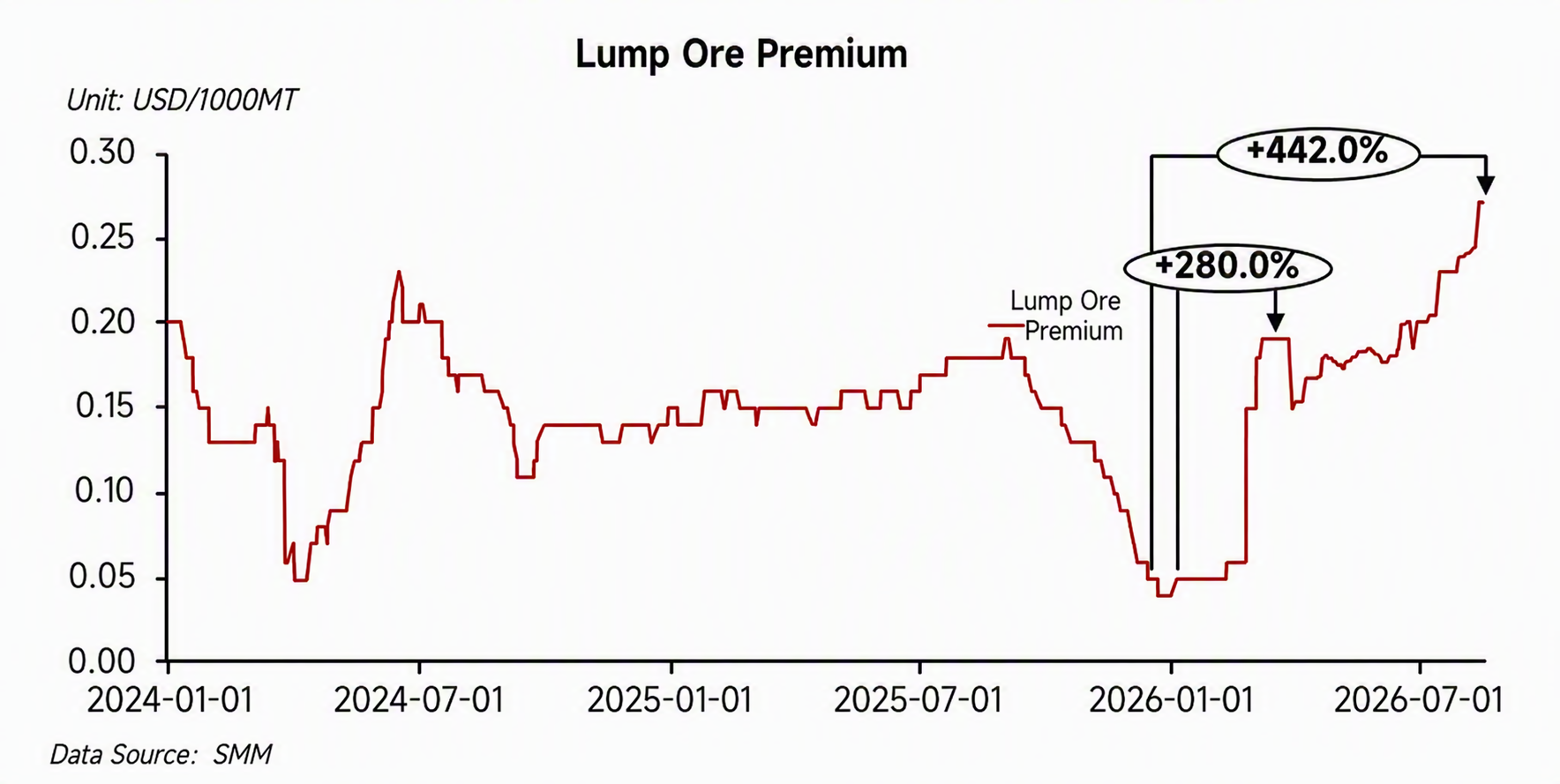
At the beginning of 2026, the iron ore lump premium hit a year-low of $0.04/dmtu, while the price spread between PB lumps and PB fines narrowed to 65 yuan/mt, both at historically extreme lows. This extreme scenario was primarily driven by two overlapping factors: first, the sustained decline in premiums since H2 2024 prompted major mines to proactively reduce lump production; second, steel mill profits remained under pressure, lowering their usage ratio of lumps. The simultaneous contraction in both supply and demand jointly depressed the premium level.
However, entering 2026, the market landscape reversed, and the lump premium began a rapid rebound. As of March 9, the US dollar lump premium had rebounded to $0.2/dmtu, up 280% from the year's low; by August 18, the 62.5% grade lump premium further climbed to $0.271/dmtu, surging 442% from the early-year low, forming a sharp "V-shaped" reversal.
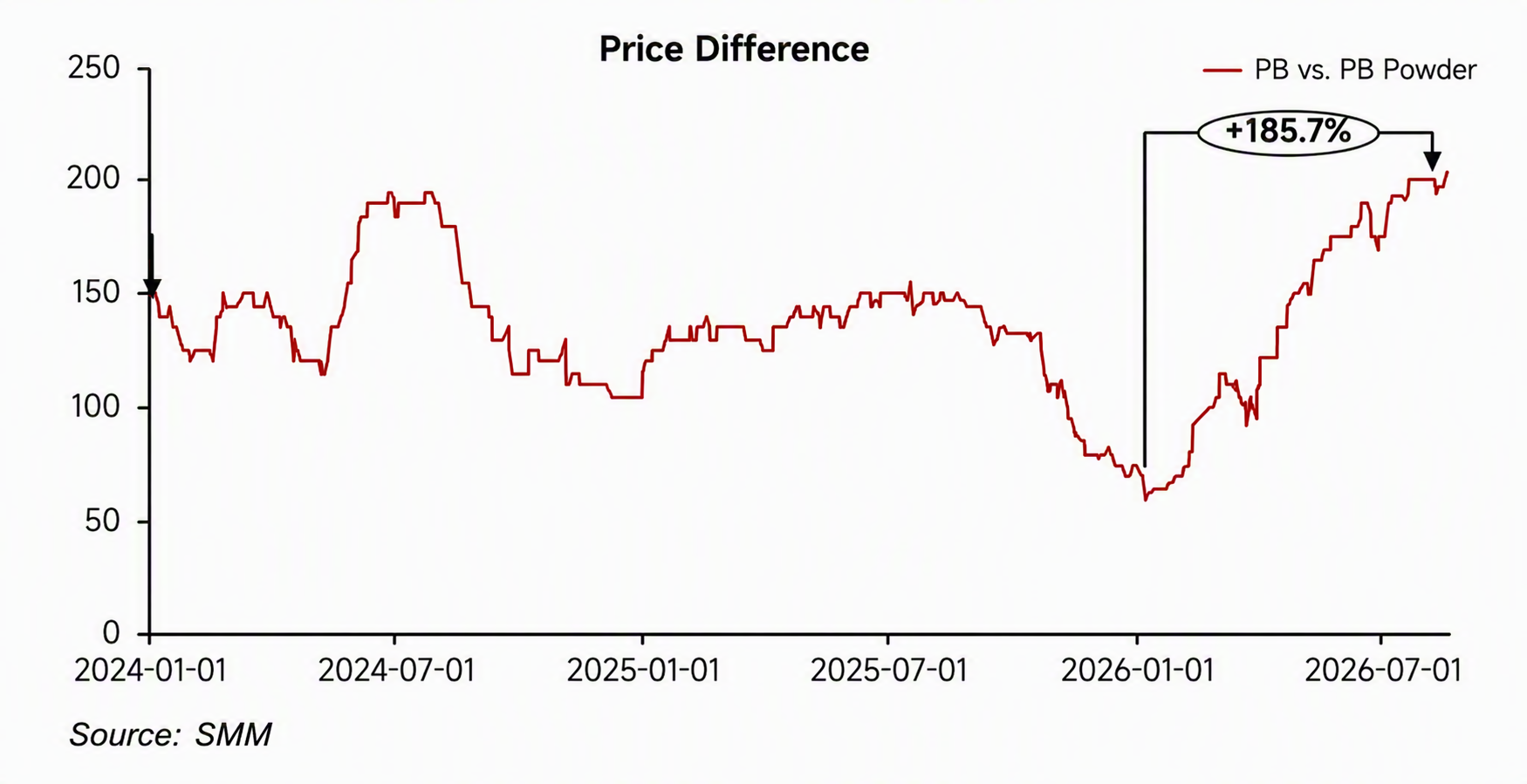
The price spread between PB lumps and PB fines is the most direct spot indicator for measuring the relative lump premium. Historically, this spread has operated within a range of approximately 80-500 yuan/mt: in H1 2021, when steel mill profits were high, the spread once approached a historical extreme of 500 yuan/mt; in 2025, it pulled back to a range of 70-220 yuan/mt, with a full-year average of around 128 yuan/mt.
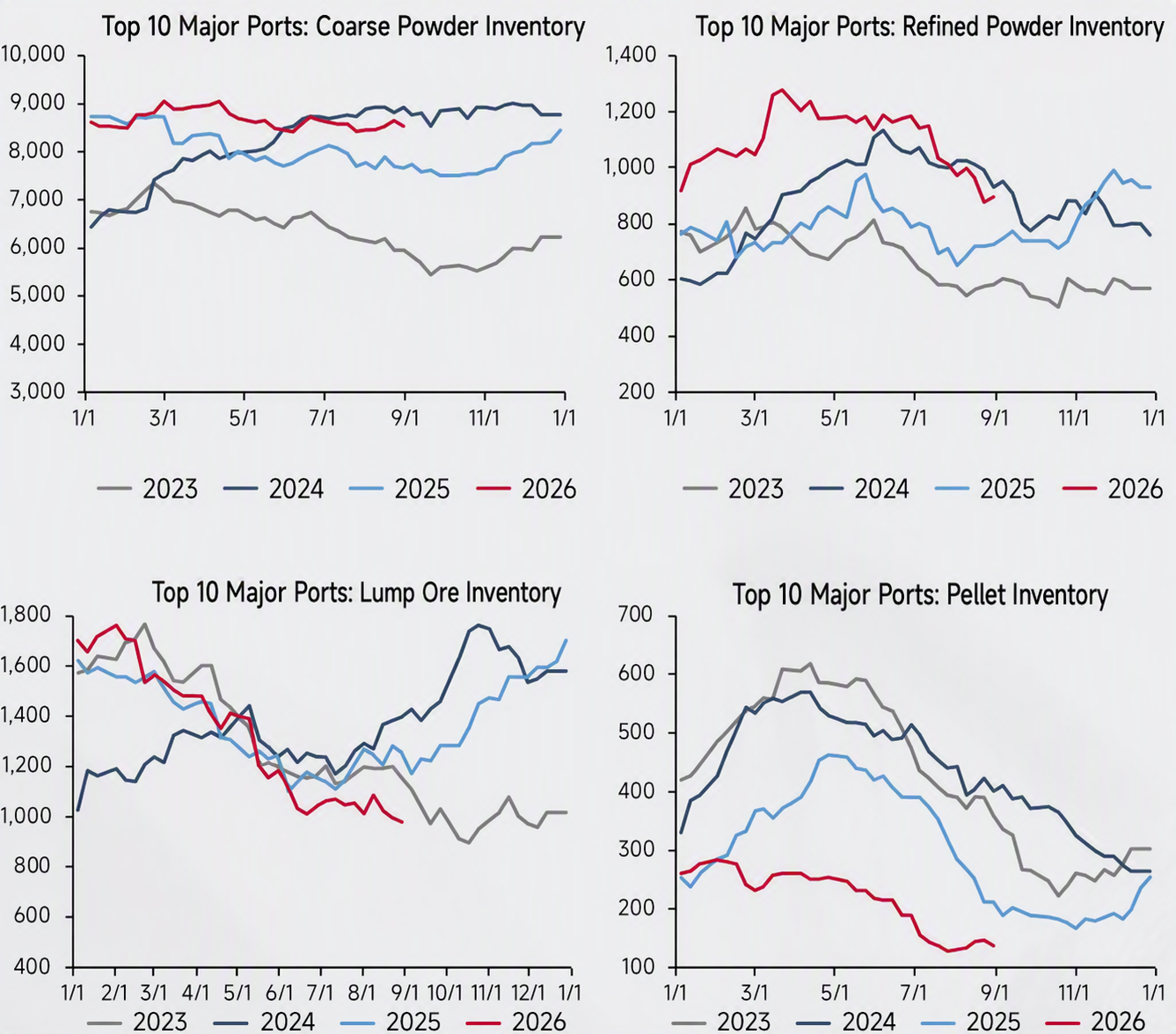
Entering 2026, port inventory of PB lumps climbed to a multi-year high at the beginning of the year, coupled with poor profitability at steel mills, the Qingdao Port PB lump-PB fines spread once dipped to a historical low of 65 yuan/mt. Thereafter, as steel mills gradually resumed production and hot metal output rebounded, lumps—benefiting from higher cost-effectiveness—saw a significant increase in demand. Meanwhile, adverse weather conditions in Australia during Q1 disrupted shipments, leading to a continuous drawdown in port lump inventory. Both supply and demand factors jointly drove lump premiums higher, and the lump-fines spread continued to widen. As of June 26, the PB lump-PB fines spread had expanded to 171 yuan/mt, up 105 yuan/mt from the year's low, an increase of 159%; by mid-August, the spread remained at a high range above 150 yuan/mt.
1.2 Pellet Premium: Second-Highest Increase, Remaining Strong
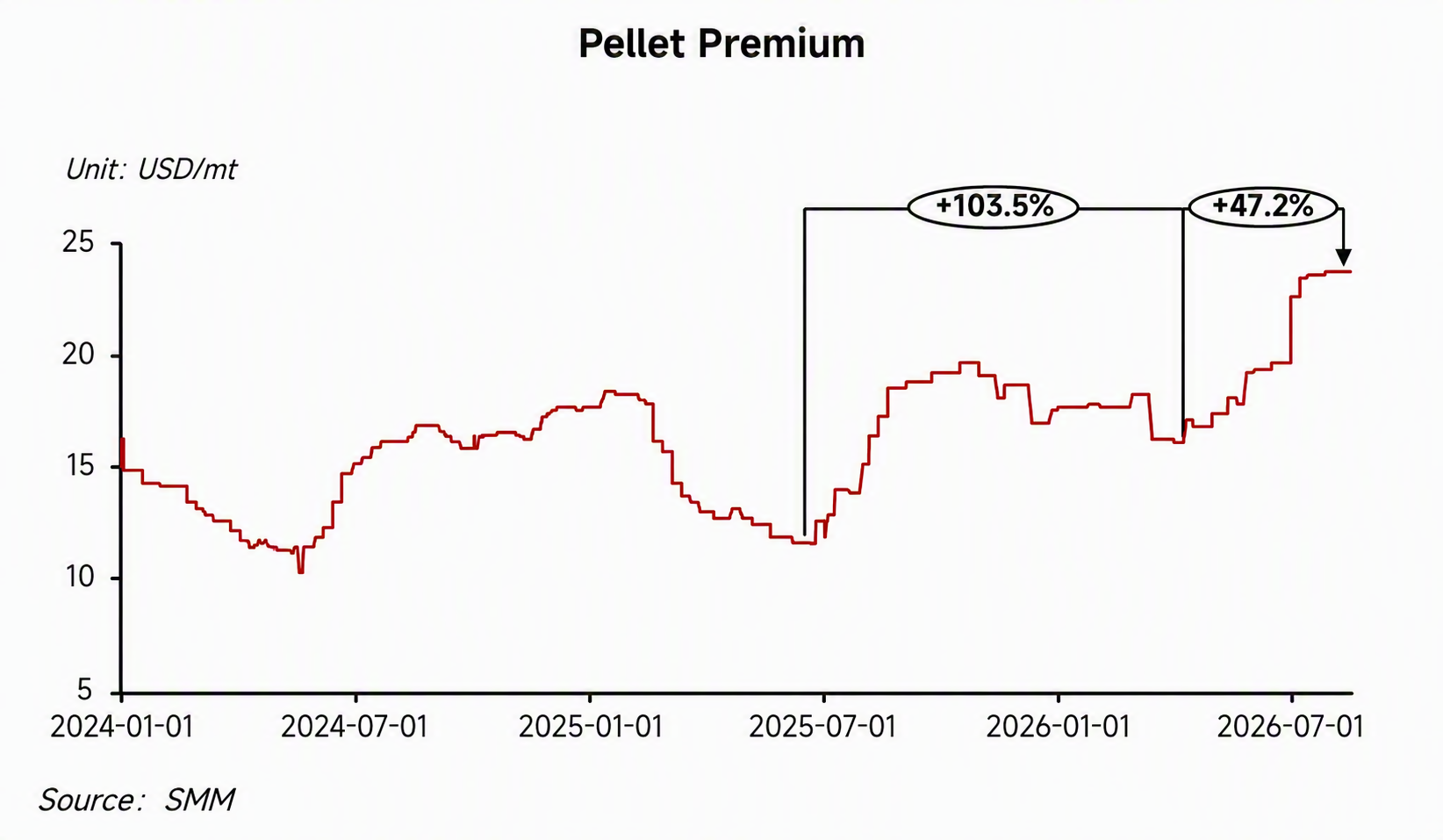
Similar to the lump premium, the pellet premium has also shown strong performance since H2 2025, with a notably steeper upward slope especially after March 2026, though its increase was slightly less pronounced than that of the lump premium. Based on the low point of $11.64/mt in mid-2025, pellet premiums have continued to rebound driven by structural supply contraction, rising to around $23.8/mt by August, up about 35% from the beginning of the year and 104% from the 2025 low.
The core driving force behind this round of premium rise stems from the deep resonance of triple supply shocks and low inventory patterns. On the supply side: ① The Middle East geopolitical conflict has caused the export volume of Middle East pellets to basically stagnate; ② Ukraine's Ferrexpo still operates only one production line, with H1 pellet production down 36% YoY; ③ India's pellet exports to China fell 33% YoY. Meanwhile, on the inventory side, pellet inventory at 47 ports was at the lowest level for the same period in nearly five years (3.78 million mt, down 700,000 mt YoY), providing solid bottom support for the premium center.
1.3 Concentrate Prices: Price Spread Between Domestic and Imported Ore Widens, Domestic Concentrate Remains Firm
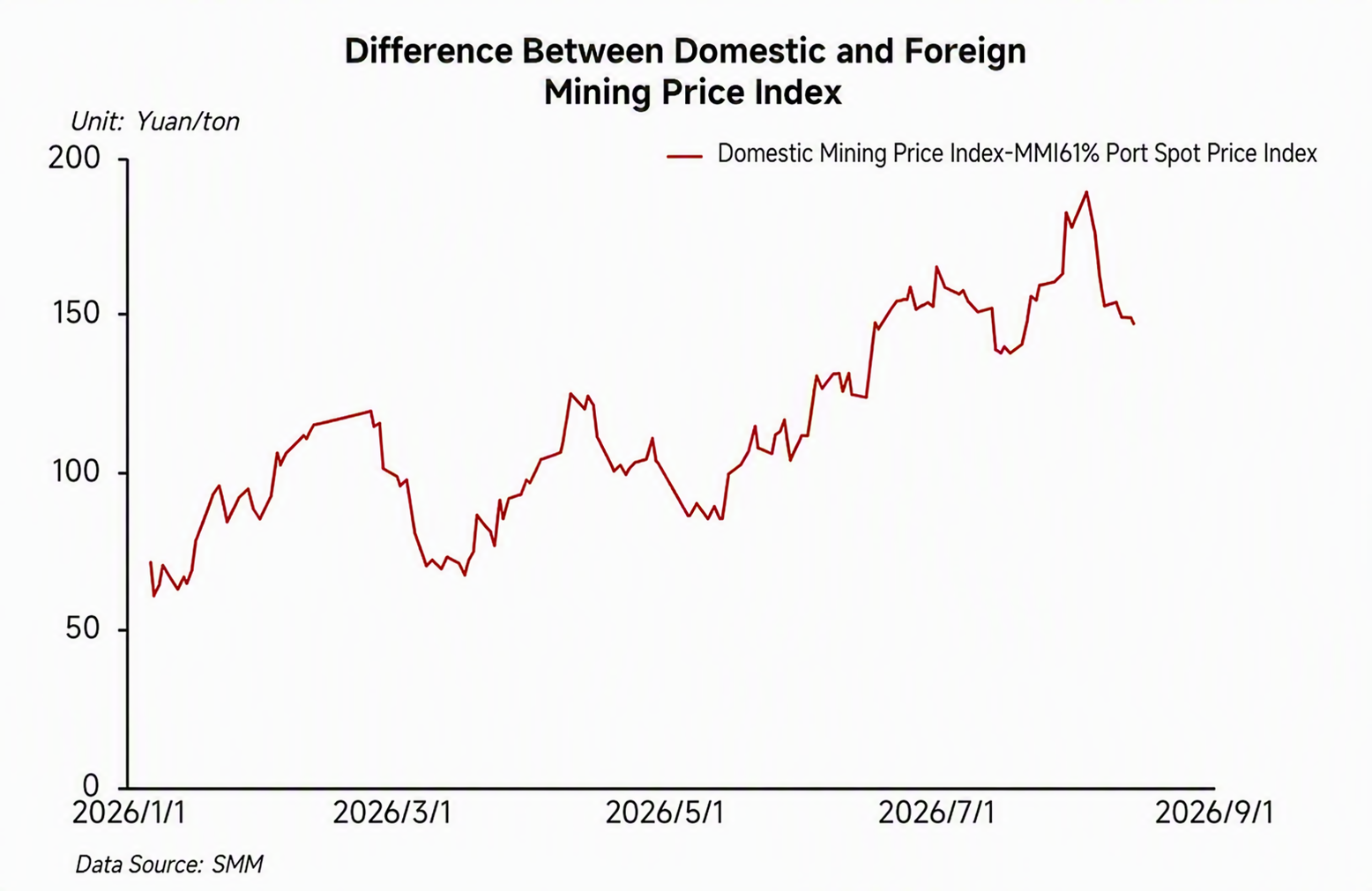
High-grade concentrate is the third variety with firm price performance, and its strength is mainly reflected in the simultaneous widening of the price spread between domestic and imported ore and the price difference between high and medium-grade ore. The price spread between the SMM domestic ore price index and the imported ore price index continuously expanded from 60 yuan/mt at the beginning of the year to 189 yuan/mt, and currently remains at around 150 yuan/mt; the price spread between Ukrainian concentrate and PB fines also widened from about 80 yuan/mt at the beginning of the year, reaching a maximum of 190 yuan/mt.
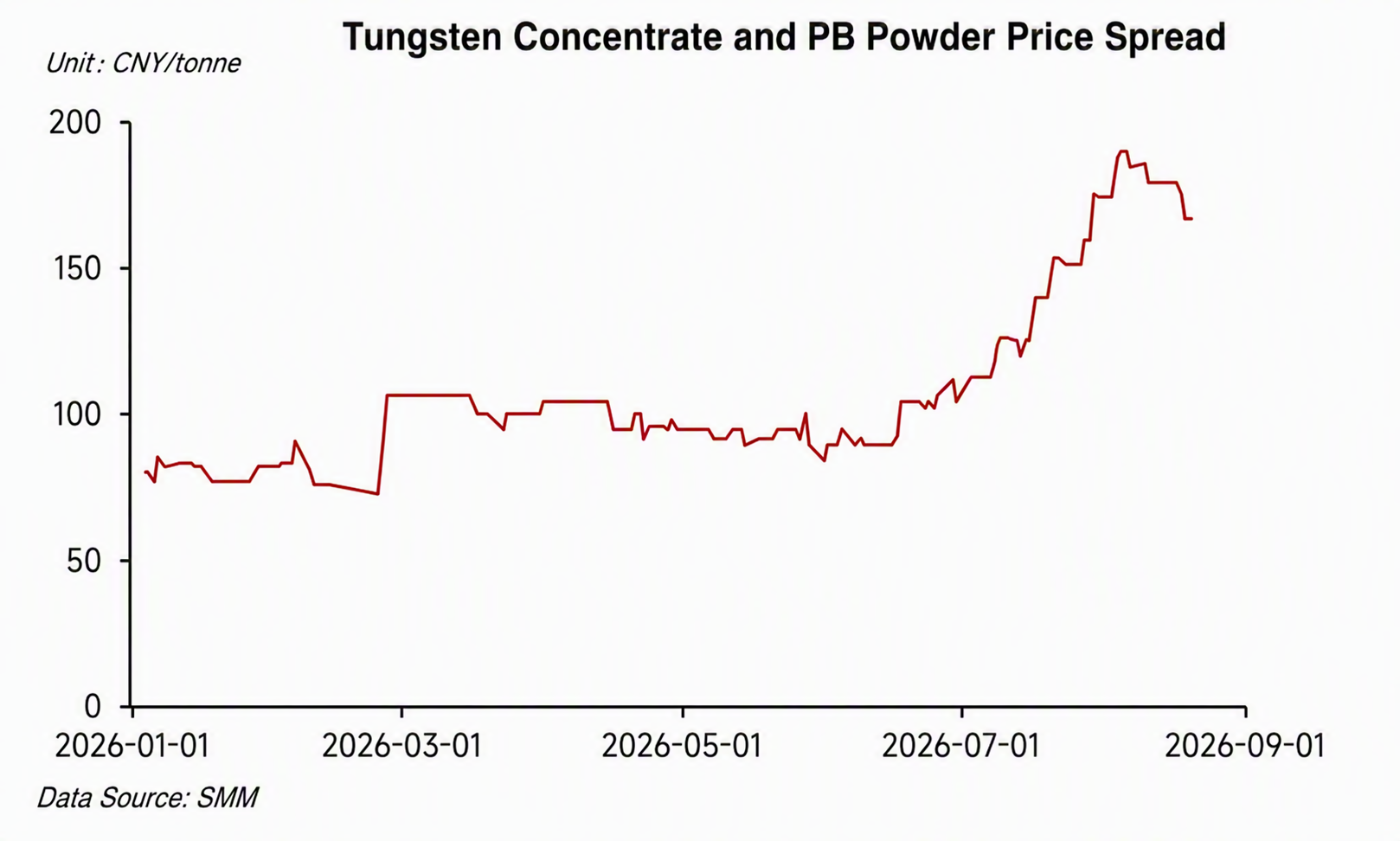
The core driver of the upward shift in the price center of high-grade concentrate lies in the multiple contractions on the supply side. Specifically:
① Disruption of Middle East concentrate supply. Affected by the Middle East geopolitical conflict, the Strait of Hormuz was closed, and Middle East concentrate exports to China basically stalled.
② Phase tightening of domestic ore supply. After the Shanxi coal mine accident in late May, the national emergency management efforts were tightened, coupled with the nationwide environmental protection checks, some regions with concentrated small private mines (such as Liaoning, Hebei and parts of Shandong) saw significant production suspensions and reductions. In July, heavy rain and strict overloading checks further suppressed domestic ore production.
③ Simultaneous contraction of Ukrainian concentrate supply. In July, the Russia-Ukraine conflict intensified, and shipments of Ukrainian concentrate were also significantly affected.
Under the resonance of triple supply shocks, both domestic and imported concentrate supply declined significantly, and port concentrate inventory continued to decrease to low levels, providing strong support for concentrate prices.
Outlook for the Next Four Months and Supporting Views
1. High Probability of Peak in Lump Ore and Pellet Premiums, but Resilience Divergence
In the short term,port inventories of lump ore and pellets are at low levels for the same period in nearly three years, and the supply side is unlikely to improve significantly in the short term; on the demand side, it is in the transition from off-season to peak season for end-users, and steel mills have expectations of growth in overall iron ore demand. Under the dual support of supply and demand, the premiums for lump ore and pellets still have strong bottom support in the short term.
However, both premiums have already climbed to historically high percentiles, significantly weakening their cost-effectiveness. If the fundamentals marginally weaken, further upside room will be constrained.Looking ahead to Q4, supply side is expected to see marginal growth. Starting from September, mines outside China will enter the push-for-target-at-quarter-end cycle, with shipments expected to rebound significantly. Coupled with the conclusion of annual long-term contract negotiations, lump ore supply is likely to become looser. On the demand side, it faces seasonal pullback pressure. Although there will be phased environmental protection-driven production restrictions in north China in November, end-use demand is also expected to weaken simultaneously, and hot metal production is expected to decline notably. The boost from environmental protection production restrictions to prices is expected to be limited.In summary, lump ore and pellet premiums still have some room to edge up in the short term, but the risk of retreating from highs in Q4 cannot be ignored.
2. Concentrate Prices: Supply Rigidity Persists, Medium and Long-Term Price Spread Under Pressure
On the supply side, due to the continued impact of policies such as stricter emergency management, safety and environmental protection inspections, and severe crackdowns on overloading, domestic concentrate production is unlikely to see significant growth in the short term and is expected to remain stable over the next four months. For imported concentrate, the geopolitical conflicts in the Middle East and Russia-Ukraine are unlikely to ease in the short term, keeping imported concentrate supply in a tight pattern. With both domestic and outside China supply constrained, concentrate prices still have bottom support. However, the upside room is limited. On one hand, coke prices are about to increase, squeezing steel mill profits and potentially weakening their purchase willingness for high-grade concentrate under cost control pressure. On the other hand, with the gradual release of high-grade iron ore supply from Simandou, the price spread between domestic and imported ore faces a retreat risk over the medium and long term. In summary,concentrate prices are expected to consolidate on a subdued note at highs in Q4, with the price spread between domestic and imported ore likely to narrow gradually.
![[SMM Brief Analysis] With Support Below and Resistance Above, Iron Ore Prices Face a Dilemma](https://imgqn.smm.cn/usercenter/GfiYT20251217171720.jpg)
![[SMM Analysis] Amorphous Alloys Open Window for Replacing New Energy Silicon Steel](https://imgqn.smm.cn/usercenter/bkAyC20251217171720.jpg)