SMM News on August 14:
Metals market:
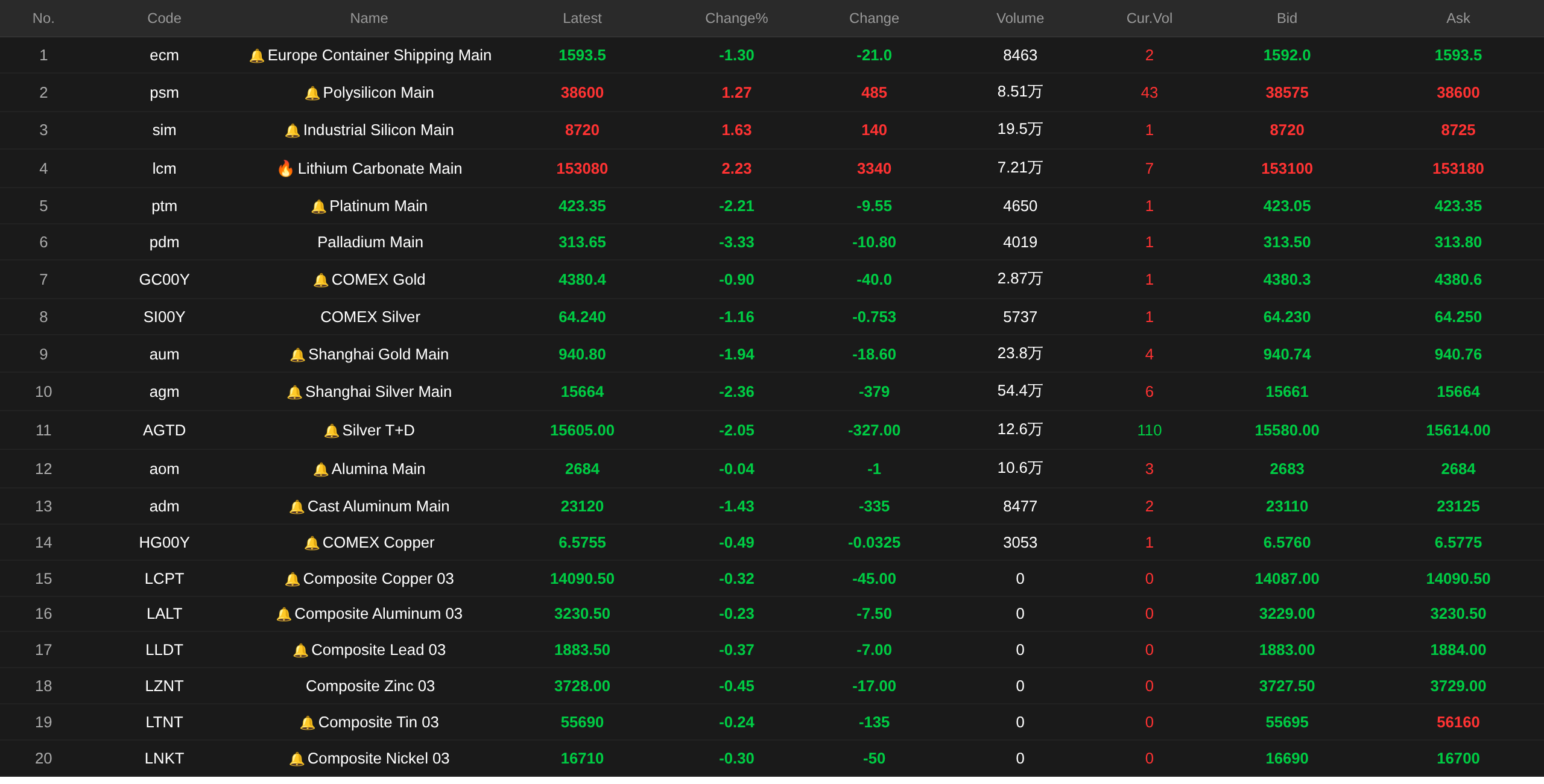
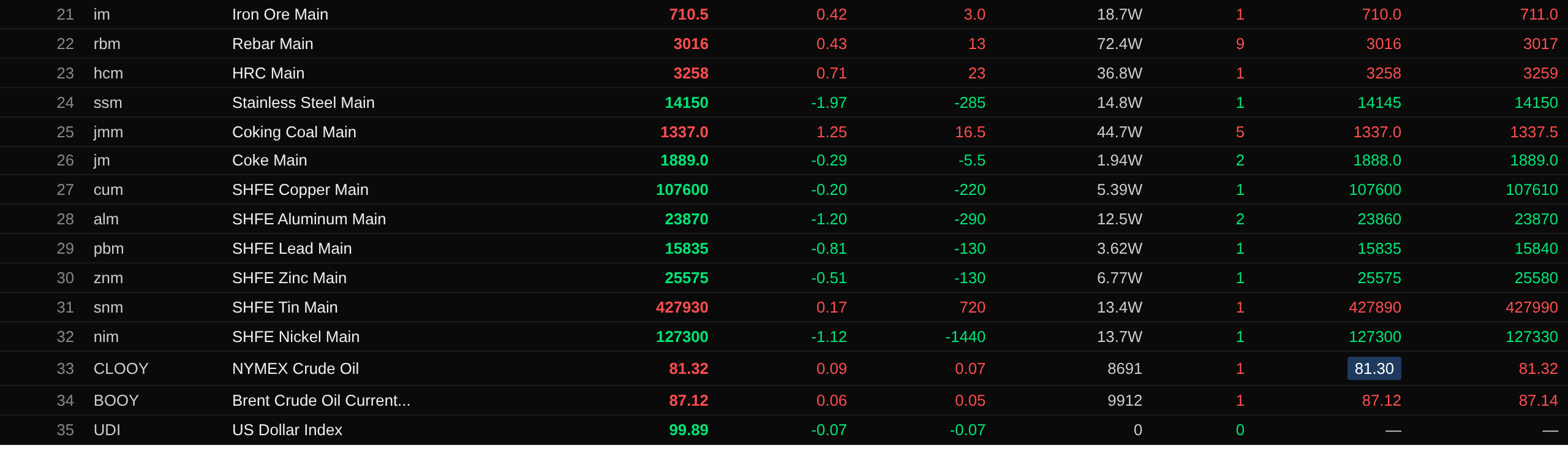
As of the midday close, most base metals in the domestic market declined. SHFE copper fell 0.2%, and SHFE aluminum fell 1.2%. SHFE lead fell 0.81%. SHFE zinc fell 0.51%. SHFE tin rose 0.17%. SHFE nickel fell 1.12%.
In addition, the most-traded cast aluminum futures contract fell 1.43%, while the most-traded alumina contract edged down slightly. The most-traded lithium carbonate contract rose 2.23%. The most-traded silicon metal contract rose 1.63%. The most-traded polysilicon futures contract rose 1.27%.
Most ferrous metals rose. Iron ore rose 0.42%, rebar rose 0.43%, and hot-rolled coil rose 0.71%. Stainless steel fell 1.97%. Coking coal and coke: the most-traded coking coal contract rose 1.25%, while the most-traded coke contract fell 0.29%.
Overseas base metals: as of 11:39, LME metals fell across the board. LME copper fell 0.32%, LME aluminum fell 0.23%, and LME lead fell 0.37%. LME zinc fell 0.45%. LME tin fell 0.24%. LME nickel fell 0.3%.
Precious metals: as of 11:39, COMEX gold fell 0.9%, and COMEX silver fell 1.16%. Domestic precious metals: SHFE gold fell 1.94%, and the most-traded SHFE silver contract fell 2.36%.
In addition, as of the midday close, the most-traded platinum futures contract fell 2.21%, and the most-traded palladium futures contract fell 3.33%.
As of the midday close, the most-traded European container shipping contract fell 1.3% to 1,593.5 points.
As of 11:39 on August 14, midday moves in some futures:
Spot and Fundamentals
Platinum:Spot: mainstream quotations for platinum were a discount of 3-2 yuan/g against the PT2610 contract, alongside the exit the market of some large-discount cargoes and a narrowing import price spread...
Macro front
China:
[PBOC reverse repo operations recorded net injections of 348 billion yuan on the day; net injections of 250.5 billion yuan for the week]The PBOC conducted 349 billion yuan in overnight reverse repos and 1,000 billion yuan in outright reverse repos today. As 1 billion yuan of 7-day reverse repos and 1,000 billion yuan of outright reverse repos matured today, it recorded net injections of 348 billion yuan on the day. This week, the PBOC conducted 18 billion yuan of 7-day reverse repos, 349 billion yuan of overnight reverse repos, and 1,000 billion yuan of outright reverse repos. As 116.5 billion yuan of 7-day reverse repos and 1,000 billion yuan of outright reverse repos matured this week, it recorded net injections of 250.5 billion yuan for the week. (Jinshi Data APP)
US dollar:
As of 11:39, the US dollar index fell 0.07% to 99.89. The US July PPI data showed inflation was cooling, and coupled with falling oil prices, the market further bet that the US Fed would not raise rates next month. (Wallstreetcn)
The US July PPI came in below expectations, helped by further declines in energy and food costs. The PPI report followed the consumer price data, which showed inflation was slowing down, further confirming signs that the early-war energy shock continued to fade. However, the recent renewed escalation in the Middle East raised concerns about sticky inflation. Before the next policy decision in mid-September, US Fed officials will receive additional consumer and producer price data as well as another labour market report. At present, policymakers need to balance persistent inflation pressures against the recent slowdown in hiring. The PPI also includes several components that the US Fed watches closely because they feed into its preferred inflation gauge—the Personal Consumption Expenditures (PCE) Price Index. Signals from these components were mixed. Portfolio management fees posted the biggest increase in more than a year, and hospital outpatient care costs also rose sharply, while prices for physician services and hospital inpatient care were mild. (Jin10 Data APP)
According to CME “FedWatch”: the probability that the US Fed keeps rates unchanged through September was 65.2%, while the probability of a cumulative 25-bp hike was 34.8%. The probability that the US Fed keeps rates unchanged through October was 50.1%, while the probability of a cumulative 25-bp hike was 41.8% and a cumulative 50-bp hike was 8.1%. (Jin10 Data APP)
Other currencies:
Speculative investors increasingly bet that the RBA will raise rates again in November, as inflation remains above the central bank’s target. Swap market pricing currently implied about a 45% probability of a 25-bp hike by November, up from 38% before Tuesday’s RBA rate decision. November 2026 interbank cash rate futures traded on the ASX derivatives market saw activity rise to the highest level in more than three months on the day, indicating stronger speculative interest. These bets suggested the market was increasingly skeptical that the RBA’s tightening cycle has ended. Although policymakers kept rates unchanged this week, with inflation still above the RBA’s 2%–3% target range, traders will continue to watch upcoming price and labour market data for clues on whether another rate hike is needed this year. (Jin10 Data APP)
Data:
Today, the following data were due to be released: China’s July total electricity consumption (YoY; TBD) and China’s July total electricity consumption (TBD); the US July retail sales (MoM), the preliminary US August 1-year inflation expectations, the US June business inventories (MoM), and the preliminary US August University of Michigan Consumer Sentiment Index; France’s final July CPI (MoM); the eurozone revised Q2 GDP (YoY), the final Q2 seasonally adjusted employment (QoQ), and the eurozone June seasonally adjusted trade balance; Canada’s June wholesale sales (MoM), among others.
In addition, China’s refined oil products will enter a new pricing adjustment window (TBD), and the National Energy Administration will release nationwide electricity consumption data around the 15th of each month (TBD).
Crude oil:
As of 11:39, oil prices in both markets edged up, with WTI up 0.09% and Brent up 0.06%.
The IEA and OPEC successively lowered their demand expectations, while tensions around Iran remained elevated but did not further escalate, capping oil price gains. Pressure in the refined products market was more severe, with the US diesel crack spread nearing $100 per barrel, close to the peak seen in early March when the US-Iran conflict first erupted. US Energy Secretary Chris Wright said on Tuesday that over the past week, the daily average crude oil flow through the Strait of Hormuz was about 9 million barrels, higher than most industry estimates, and the market faced significant uncertainty in assessing the actual size of the supply shortfall. Francisco Blanch, Head of Global Research at Bank of America, said in an interview with Bloomberg TV: Unless the geopolitical situation improves, it is hard for me to see oil prices pulling back quickly. If inventory is depleted, price fluctuations are bound to amplify sharply, and demand will then be forced to contract. (Wallstreetcn)
Spot Market Snapshot:
►
►
►
►
►
►
►
►
►
►
►
►
![Mild PPI Reduced the Probability of a September Rate Hike to 32% 430,000 Round Number Marked the First Breakthrough Attempt This Week [SMM Tin Morning News]](https://imgqn.smm.cn/usercenter/nyMyJ20251217171751.jpg)
![Macro sentiment repeatedly fluctuated, compounded by a tight supply gap on the ore side, keeping tin prices swinging wildly at highs [SMM Tin Morning Meeting Minutes]](https://imgqn.smm.cn/usercenter/reOma20251217171751.jpg)
![US Dollar Fell; Metals Rose Broadly, with LME Copper Up for Seven Straight Weeks; Coke Rose Nearly 2%; Gold Up for Four Straight Weeks; Crude Oil Posted a Sharp Weekly Gain [Overnight Market]](https://imgqn.smm.cn/usercenter/LVqfJ20251217171736.jpg)