SMM August 11 News:
In July, the domestic primary aluminum alloy sector exhibited a pattern of "short-term uptick followed by moderation." Production reached 309,000 tonnes, up 6.1% month-on-month, with the industry operating rate moving in tandem. However, this output increase was not driven by end-user demand, but rather reflected a tactical inventory adjustment along the supply chain.
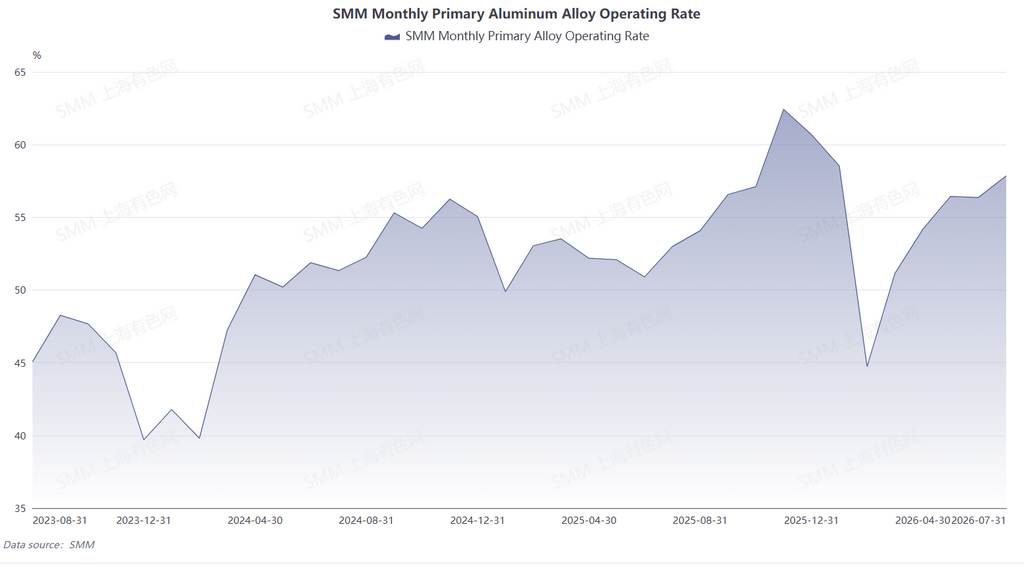
On the demand side, the automotive sector had already entered its traditional off-season, with weak actual procurement appetite. Primary alloy producers continued to fulfil long-term contracts, while new order inflows remained limited. In mid-July, when aluminum prices dropped to a cyclical low, downstream buyers took the opportunity to restock at lower levels, aiming to manage working capital costs. This buying activity temporarily eased the selling pressure on alloy producers and prompted them to raise operating rates. By month-end, however, aluminum prices had rebounded steadily, dampening buyers' enthusiasm. Market transactions turned subdued as downstream players showed little tolerance for higher-priced raw materials.
Looking ahead to August, primary alloy output is expected to retreat. The concentrated restocking in July has largely satisfied near-term raw material requirements. Coupled with sustained firm aluminum prices, downstream purchasers are likely to remain cautious, constrained by rising financing costs. Alloy producers, facing weakening new order visibility, may proactively cut production schedules.
In contrast, the aluminum alloy wheel segment demonstrated notable external demand resilience. In June, China's aluminum wheel exports surged 17.7% month-on-month, and the year-on-year growth widened to 20.5%. The low base in May provided room for the rebound, but more importantly, overseas new-energy vehicle demand continued to expand, with major destination markets placing significantly larger orders. In addition, the narrowing spread between domestic and international aluminum prices alleviated the previous drag on exports. Overall, June exports recorded both volume and price gains, underscoring the sustained reliance of overseas markets on China's wheel supply chain.
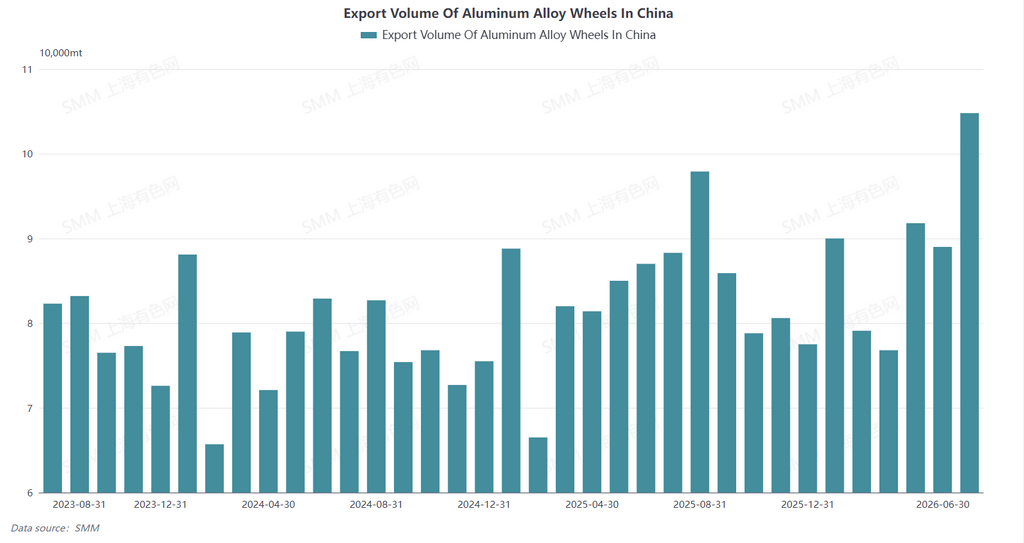
Taken together, the current aluminum fabrication sector is marked by a "weak domestic demand vs. resilient exports" dynamic. Primary alloy production, constrained by the seasonal slowdown and downstream price sensitivity, is unlikely to sustain its July rebound, with a contraction highly probable in August. Meanwhile, aluminum wheel exports are poised to maintain momentum, supported by robust overseas NEV demand, making it one of the few bright spots in the downstream aluminum market. In the near term, key factors to watch include the trajectory of aluminum prices and its impact on procurement timing, as well as any shifts in foreign trade policies that could affect wheel shipments.
![[Automotive Conference] Dexin Technology Invites You to Join the SMM ASCC2026 (8th) Automotive Supply Chain Conference](https://imgqn.smm.cn/usercenter/uoPaX20251217171651.jpg)