SMM August 11:
In July, China's primary aluminum alloy industry exhibited a pattern characterized by a short-term surge followed by a slowdown. In terms of production data, production that month posted 309,000 mt, up 6.1% MoM, with the industry's operating rate moving up in tandem. However, this production rebound was not driven by end-use demand, but rather reflected a phase of behavioral adjustments along the industry chain.
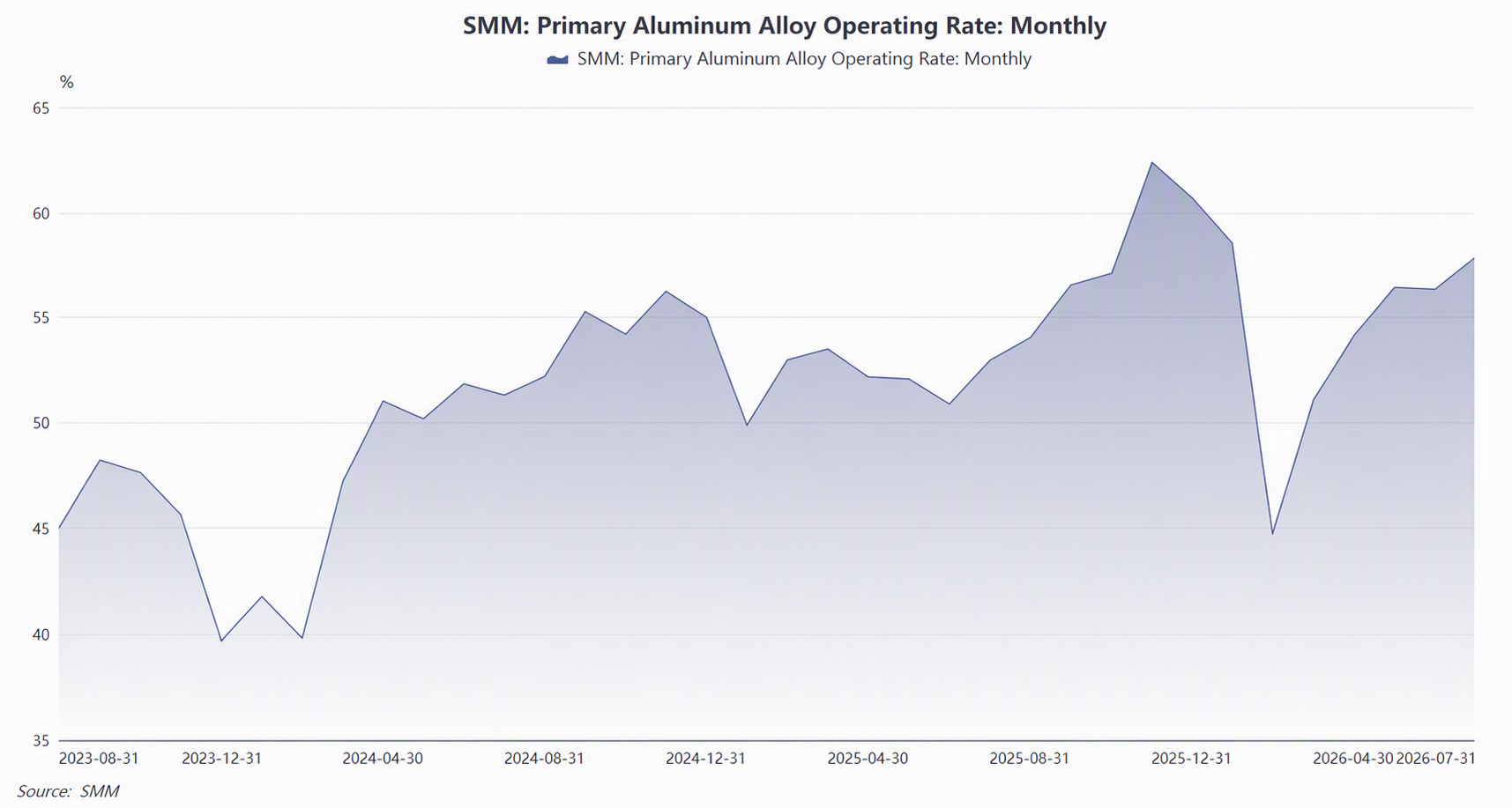
Demand transmission side, the automotive industry has entered the traditional consumption off-season, end-user purchasing willingness remains relatively weak, and primary aluminum alloy enterprises continue to focus on fulfilling long-term contracts, with limited growth in new orders. When aluminum prices dipped to relatively low levels in mid-month, downstream enterprises, motivated by cost management considerations, engaged in concentrated bargain-hunting restocking activity, easing shipment pressures for alloy enterprises to a certain extent and prompting them to raise production loads. However, towards month-end, as aluminum prices rebounded into elevated ranges, buying interest from downstream sectors contracted sharply, with significantly reduced capacity to absorb high-priced raw materials, and market transactions turned sluggish.
Looking ahead, primary aluminum alloy production in August is expected to face downward pressure, as earlier concentrated bargain-hunting restocking activity has partially exhausted near-term raw material demand, coupled with aluminum prices currently consolidating on a strong note. Rising financial pressures on downstream enterprises will further dampen procurement sentiment, while the outlook for new orders at alloy enterprises remains pessimistic, potentially leading them to proactively scale back output levels.
Unlike the domestic demand fluctuations in the primary alloy market, the aluminum wheel hub segment has demonstrated strong resilience in external demand. In June, China's exports of aluminum wheels rose 17.7% MoM, with the YoY increase widening to 20.5%. On one hand, a low export base in May provided room for this MoM growth; on the other hand, the release of demand for NEVs in overseas markets, with significant new orders for procurement from key export destinations, directly boosted total exports. At the same time, the price spread between domestic and overseas aluminum prices has been stabilizing, and the earlier drag on exports is easing. Overall, exports strengthened in both volume and price in June, reflecting the continued reliance of markets outside China on the country's wheel supply chain.
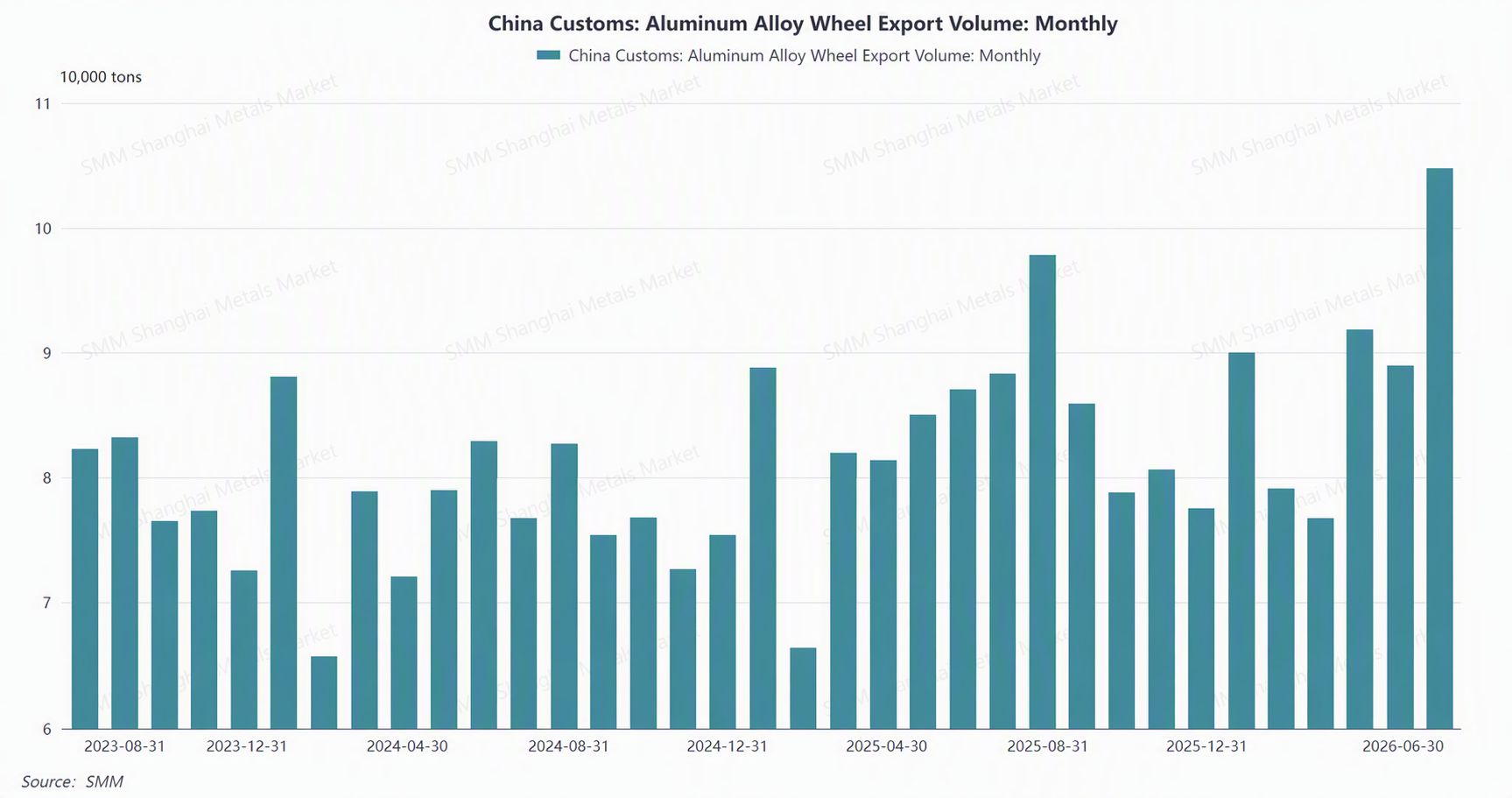
Looking at the bigger picture, the aluminum processing industry is currently in a state where 'domestic sales are under pressure, and exports are filling the gap.' Primary aluminum alloy is constrained by the off-season in end-use demand and downstream fear of high prices, so the sustainability of the production rebound is questionable, with a strong expectation of contraction in August; meanwhile, supported by overseas demand for NEVs, the momentum in exports is expected to be sustained, making it one of the few bright spots in current aluminum downstream consumption. In the near term, key attention should be paid to how aluminum price trends will further steer downstream procurement pace, and the potential disruptions from overseas trade policies on wheel exports.
(The information above is based on market data and a comprehensive assessment by the SMM research team, and is provided for reference only. This article does not constitute direct investment research advice, clients should make decisions prudently and not replace their independent judgment with this. Any decisions made by clients are unrelated to SMM.)
Data source: SMM
![[Automotive Conference] Dexin Technology Invites You to Join the SMM ASCC2026 (8th) Automotive Supply Chain Conference](https://imgqn.smm.cn/usercenter/uoPaX20251217171651.jpg)