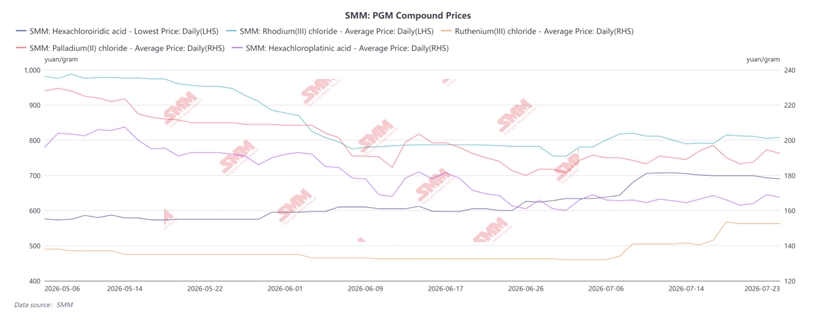
Over the past three weeks, the domestic spot market for platinum group metal (PGM) compounds has exhibited the following pattern: raw materials fluctuate sharply in tandem with macro sentiment, compound quotations passively rise and fall accordingly, while trading volume remains sluggish and dominated by rigid demand.
Platinum and palladium raw materials have been pulled back and forth by Federal Reserve interest rate expectations and geopolitical conflicts in the Middle East, triggering wide swings on the Guangzhou Futures Exchange platinum and palladium futures market. Mainstream compounds including chloroplatinic acid, chloropalladic acid and rhodium nitrate adjust in line with primary metal feedstocks. However, processing margins for compounds remain thin, resulting in weaker price volatility compared with primary platinum and palladium ingots.
The market features low inventory levels, slow shipments and batch-based purchasing. Midstream manufacturers avoid exposure risks to raw material prices, while downstream end-users adopt production-based procurement strategies. The signing of long-term contracts slows down, spot bulk orders account for a higher share, and widespread market caution prevails. Divergence across PGM compound varieties persists: platinum-based compounds receive incremental demand support from hydrogen energy and semiconductor sectors; palladium-based compounds remain under pressure; minor varieties including rhodium, ruthenium and iridium show greater independent price swings subject to fluctuations in segmented orders.
Platinum-based Compounds
Stable rigid demand stems from capacity expansion of electronic glass fibre fabrics, catalytic precursors for hydrogen fuel cells, and catalysts for nitric acid chemical production. Demand for diesel vehicle exhaust aftertreatment stays steady. Diversified demand offsets headwinds from the automotive catalyst segment.
Palladium-based Compounds
Output of internal combustion engine vehicles faces downward pressure, while July and August mark the seasonal low for automobile manufacturing. Several automakers conventionally arrange high-temperature production shutdowns and maintenance from late July to August, dragging down shipment momentum.
Rhodium-based Compounds
Rhodium raw material prices have trended higher over the past month amid divergent market expectations between buyers and sellers. Downstream clients prioritise inventory drawdown and procure only as needed. Holders are reluctant to cut prices substantially to offload stocks, extending negotiation cycles for spot orders and leading to generally slow shipment speeds.
Ruthenium & Iridium-based Compounds
Ruthenium raw material prices have surged significantly and traded at elevated levels in mid-to-late July. Trading merchants and smelters hold back supply out of reluctance to sell. They prioritise fulfilling existing long-term contracts and delay releasing spot supplies. The spot market sees quoted prices paired with limited available material, with abundant enquiries but limited concluded trades.
![[SMM Analysis] China's Platinum and Palladium Imports Show Divergent Trends, Driven by arbitrage opportunities](https://imgqn.smm.cn/usercenter/BVoXk20251217171736.jpg)
![2026 H1 Platinum and Palladium Import and Export Data Review: Collective Surge in Platinum and Palladium Imports, China's Physical Supply Ushers in a Window of Looseness [SMM Analysis]](https://imgqn.smm.cn/usercenter/obeMy20251217171735.jpg)
![Platinum and Palladium Dip Then Rebound and Rise; Keep a Close Watch on Late-July FOMC and Geopolitical Developments [SMM Platinum and Palladium Weekly Review]](https://imgqn.smm.cn/usercenter/fNuSg20251217171735.jpg)