SMM July 22 News:
According to customs data, cumulative imports of lead concentrates from January to June reached 703,900 mt (in physical content), up 8.79% YoY on a cumulative basis. In H1 2026, China's lead concentrate imports maintained overall positive YoY growth, but showed a high-then-low trend on a monthly basis. The core drivers were support from premium purchases of high-silver associated lead ore and insufficient domestic lead concentrate output growth (from January to June, domestically produced lead concentrates amounted to 776,500 mt in metal content, down 1.3% YoY, amid delays in new domestic lead mine project commissioning, year-by-year grade decline of existing mines, and safety and environmental protection inspections, etc.); meanwhile, geopolitical conflicts, overseas mine disruptions, and persistently deep negative TCs for imported lead concentrates combined to limit any significant surge in imports.
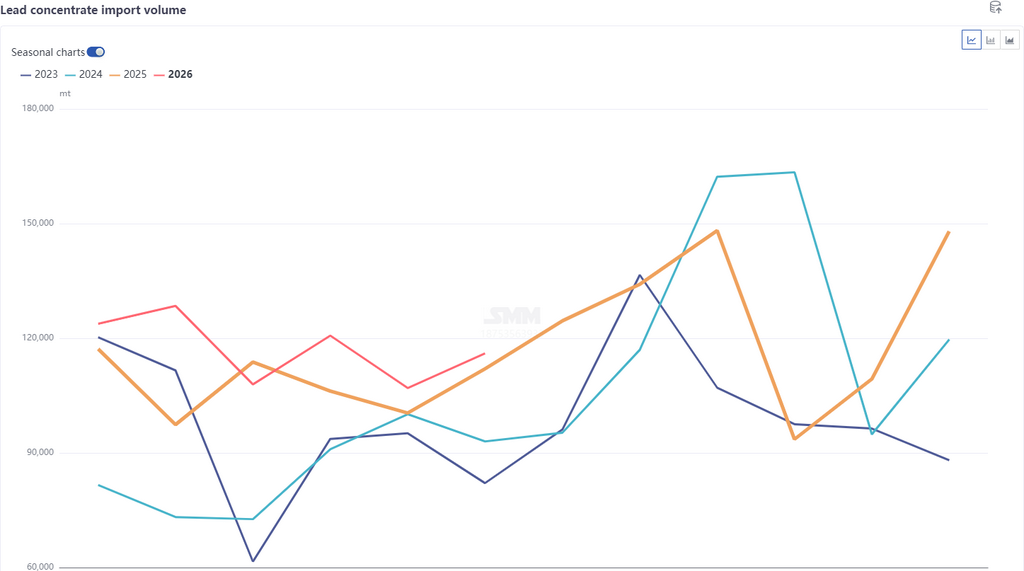
In detail, the structure of trade sources has undergone a significant shift. Supplies from Russia, Bolivia, the US, and Iran have contracted, while Myanmar, Oman, Australia, and Peru have become key sources of incremental growth. Among them, Russia’s supply contracted due to unstable mine production and fluctuations in seaborne transportation channels; Bolivia experienced ongoing strike disruptions from May onward, impeding ore shipments outside China; affected by tariffs, US cumulative imports shrank by 35,000 mt to 9,800 mt, January-June; and impacts from geopolitical pressures reduced Iranian imports to 0 mt, January-June.
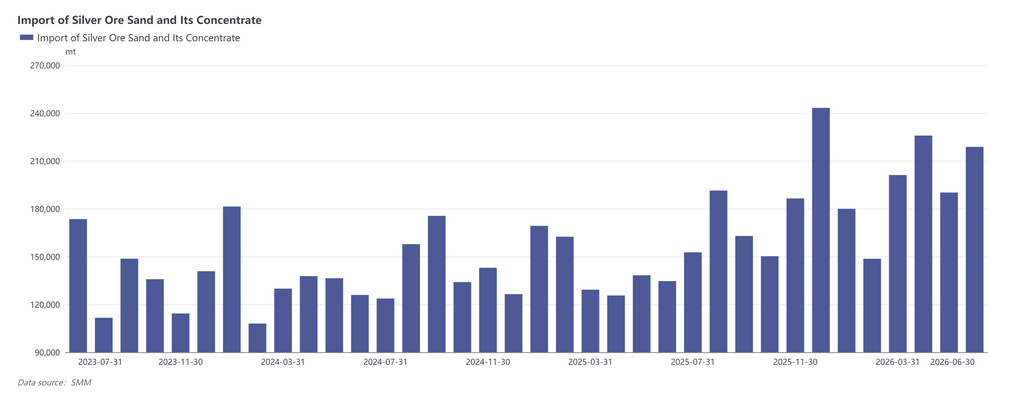
Additionally, silver prices were strong in H1, and the structure of imported ore changed, with high-silver associated lead concentrates becoming mainstream in procurement. According to customs data, cumulative imports of silver ore and concentrates totaled 1.164 million mt from January to June, up over 35% YoY. Smelters' procurement preference tilted significantly toward high-silver lead concentrates, the core logic being that silver by-product contributed the main smelting profits, indirectly offsetting the raw material supply gap.
In H2, the slowdown in global lead ore supply growth, Peru's energy constraints, China's smelter winter stockpiling expectations, and silver price fluctuations will collectively dictate the import pace. Q3 imports are expected to experience a temporary pullback, while Q4 restocking should drive a recovery in arrivals. Full-year physical import content is projected to edge up YoY.
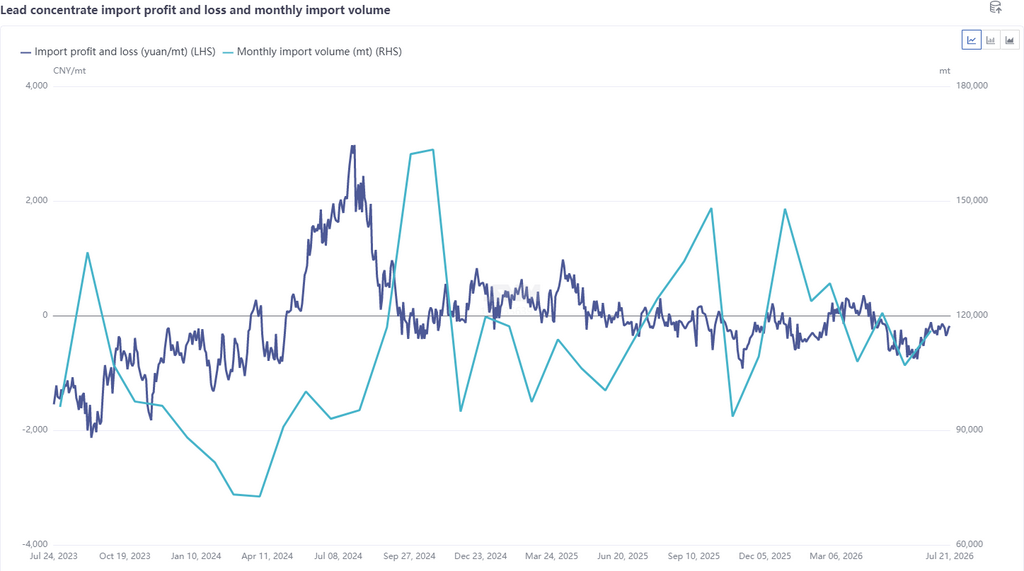
Core Risk Variables for H2 (Key Factors Disrupting the Pace of Imported Ore)
1、Peru's energy policy enforcement: If mines undergo large-scale power rationing and production halts, overseas supply will contract significantly in Q4, and total imports will be revised downward; if mines are exempted from production restrictions, shipments will exceed expectations, boosting imports;
2、Wild swings in silver prices: Silver price declines will directly weaken the purchase willingness for high-silver-content ores, leading to a recovery in import TCs and a corresponding contraction in imports;
3、Maintenance scale at domestic smelters: If primary lead smelters in China undertake concentrated and prolonged maintenance in Q3, raw material purchasing demand will plummet, and ports will continue destocking;
4、Global macro and overseas smelting demand: Recovering battery consumption in Europe and the US will drive overseas smelters to compete for ore, diverting shipments away from China; if overseas economies weaken, ore supply will shift toward China;
5、Shipping and geopolitical logistics disruptions: Rising freight rates on Red Sea and Pacific routes and customs clearance delays will compress import arbitrage margins, temporarily suppressing port arrivals.

![High-Silver Ore Dominance, Supply Pattern Reshaping: Review of Lead Concentrate Imports in H1 2026 and H2 Outlook [SMM Analysis]](https://imgqn.smm.cn/usercenter/EhsCj20251217171721.jpeg)