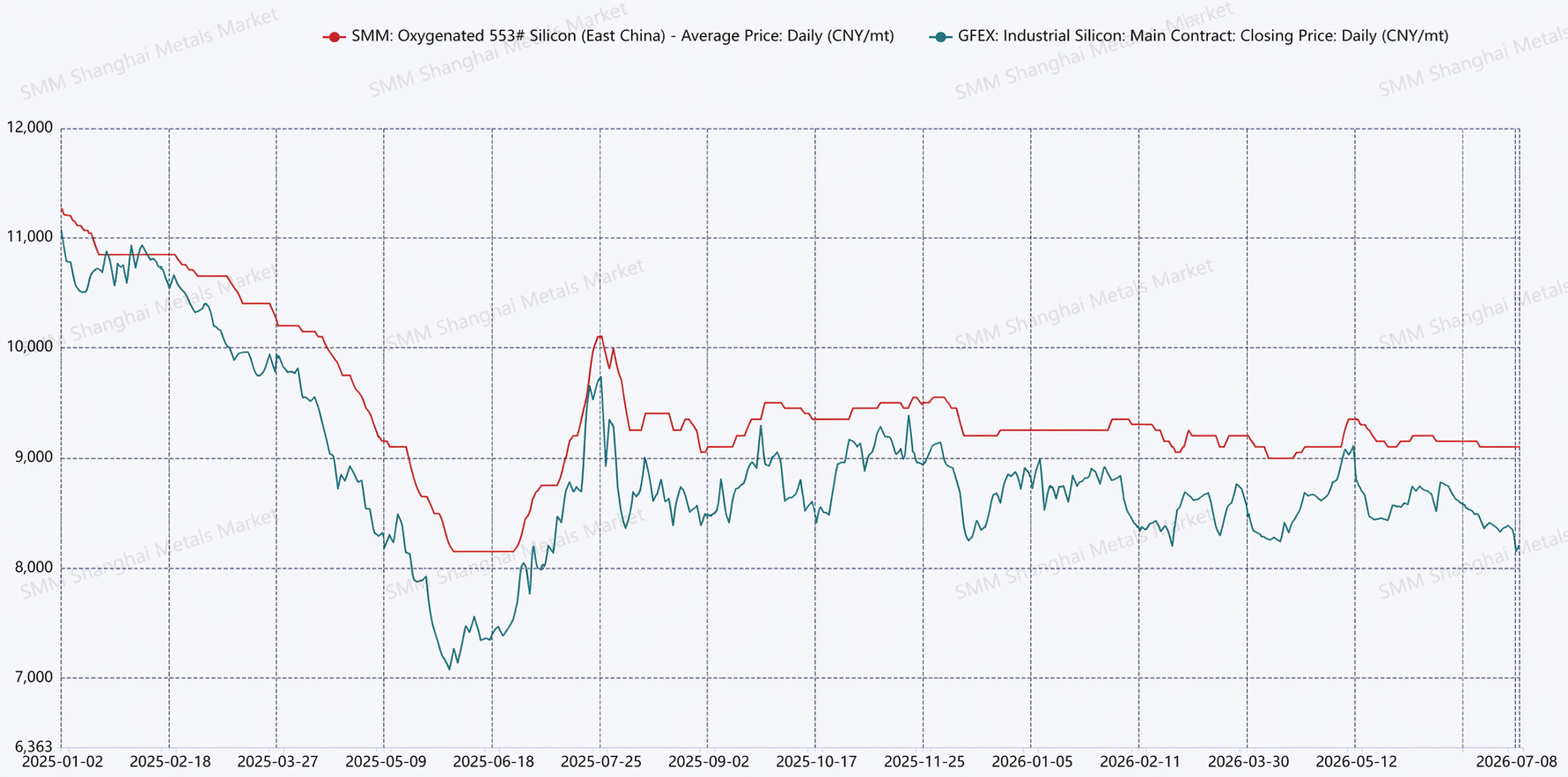
SMM, July 9: Price review: In H1 2026, constrained by a low silicon metal capacity utilization rate and limited demand growth, together with prices already at low levels, silicon metal spot price fluctuations narrowed significantly, capped by cost support from below and restricted demand from above. According to SMM data, the fluctuation range of silicon metal spot prices was 38% in 2025, narrowing to within 5% in H1 2026. For futures prices, the fluctuation range of the most-traded silicon metal futures contract was 59% in 2025, narrowing to 14% in H1 2026.
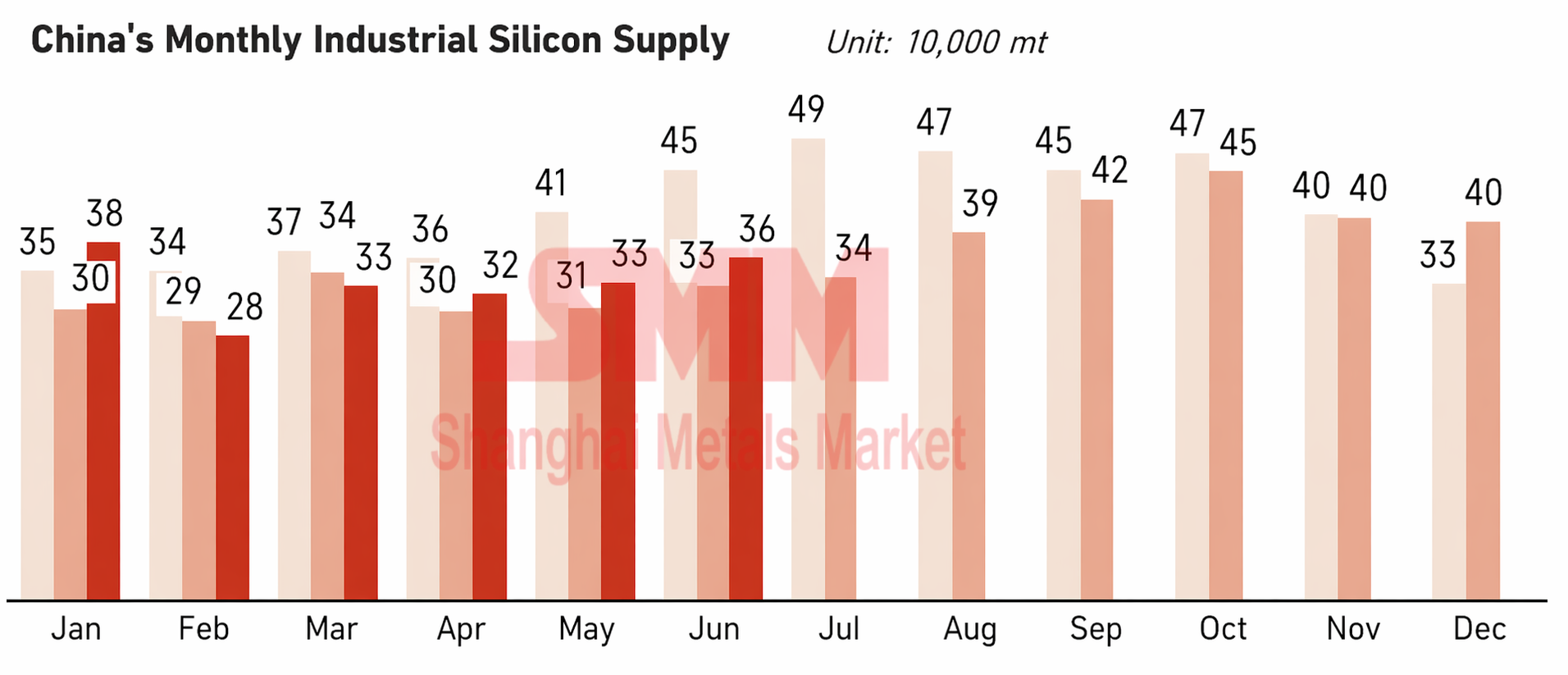
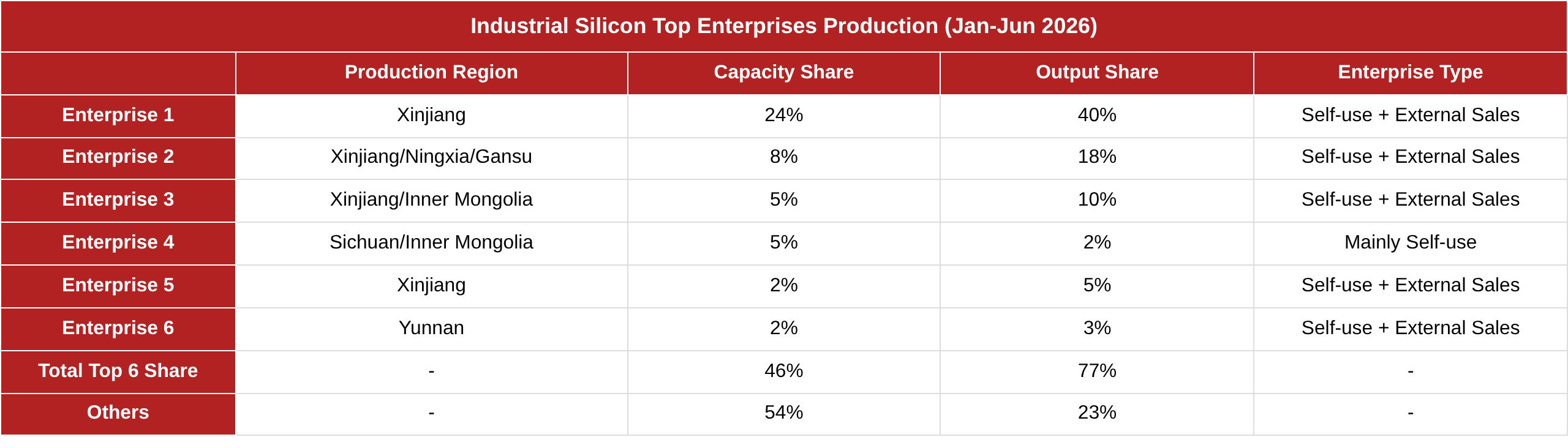
Supply side: According to SMM data, H1 2026 silicon metal production reached 1.99 million mt, up 6% YoY. The silicon metal supply is highly concentrated regionally. From January to June, Xinjiang accounted for 65% of silicon metal supply, Inner Mongolia around 11%, Gansu around 9%, Ningxia around 9%, with Sichuan and Yunnan contributing a smaller share due to the dry season. In June, the onset of the rainy season in Sichuan and Yunnan prompted production resumptions at some silicon enterprises, but total output in these two provinces was lower than the same period last year, with Sichuan's production down around 40% YoY. From a corporate distribution perspective, the number of active enterprises declined year by year, but the industry concentration effect was evident as top-tier players' supply share increased. In H1 2026, the top six enterprises accounted for 77% of production supply, while the market share and competitiveness of small and medium-sized plants declined, squeezing their survival space.
Demand side: Overall end-use consumption of silicon metal was weak in H1. Looking at subsectors: In the polysilicon segment, polysilicon prices remained sluggish, corporate profits were under pressure, and the operating rate was below 30%. June and the expected Q3 production resumptions by top-tier polysilicon enterprises are anticipated to drive a rise in silicon metal consumption in H2. In the silicone segment, the industry continued its joint production reduction strategy in H1, with operating rates maintained at a low level of 60-66%. During this period, DMC was in the range of 13,000-14,900 yuan/mt, and silicone monomer enterprises showed relatively good profitability. In the aluminum alloy segment, the operating rate of primary aluminum alloy was basically stable, while starting in May, secondary aluminum alloy saw notable production cuts due to the invoice economy, with a marked shortage of compliant aluminum scrap supply.
Inventory side: SMM social inventory data showed that in H1 2026, inventory remained persistently in the 550,000-570,000 mt range, indicating significant destocking pressure (incomplete statistics, data excludes upstream and downstream in-factory inventory). Viewing the inventory structure, in-factory inventory at silicon enterprises declined compared to last year's levels, while intermediate link inventory accounted for a relatively high proportion.
Trade side, cumulative exports of silicon metal from January to May 2026 reached 325,600 mt, up 16% YoY, showing strong export performance.
Overall, in H1 this year, silicon metal prices remained persistently low and moved sideways. In H2, production resumptions and growth during the rainy season in Sichuan and Yunnan will push supply growth above demand growth, and the annual supply-demand balance for silicon metal is expected to remain loose. The silicon metal market in June operated at low levels amid the transition from weakness to growth in both supply and demand. The short-term tug-of-war between sellers and buyers hinges on the balance between supply growth from the Sichuan-Yunnan rainy season and demand growth from polysilicon production resumptions. Currently, with supply concentrated among top-tier players and certain regions, downside price support is relatively strong from the lower-cost Xinjiang production area. On the upside, price movement depends on demand drivers and the hedging-based selling positions of producers. Additionally, monitor disruptions from liquidity and macro sentiment.
![[SMM Chromium Flash] Zimbabwe's Ferrochrome Smelters Race Against 2026 Captive Power Deadline Amid Beneficiation Push](https://imgqn.smm.cn/usercenter/uSadJ20251217171723.jpeg)
![[SMM Chromium Flash] Southern Palladium Shares Sharply Higher, PGM-Chrome Project Clears Its Biggest Regulatory Hurdle](https://imgqn.smm.cn/usercenter/gKDYO20251217171723.jpeg)
![[SMM Manganese Ore Weekly Review] Port Spot Cargoes Stay High, Manganese Ore Market Consolidates at Lows](https://imgqn.smm.cn/usercenter/yunIW20251217171723.jpeg)