[SMM Analysis] US-Iran War: What It Means for Global Copper Concentrate Market?

Published: Mar 2, 2026 13:42
[SMM Analysis: How does the Iran-Israel conflict affect copper concentrate?]

On February 28, 2026, Israel and the United States launched a joint military strike against Iran, causing geopolitical risks to rapidly spill over and drawing attention from the global commodity markets.

From the perspective of global supply patterns, Iran is not a core producer of copper concentrate. Data shows that although Iran's copper concentrate output has steadily increased in recent years, rising from 315,000 metric tons (metal tons) in 2017 to 410,000 metric tons in 2025, its share of global production has long hovered between 1.8% and 2.0%. Amidst expectations of a tight global copper concentrate supply-demand balance, any regional conflict and increase in the disruption rate could exacerbate the anticipated supply tightness.

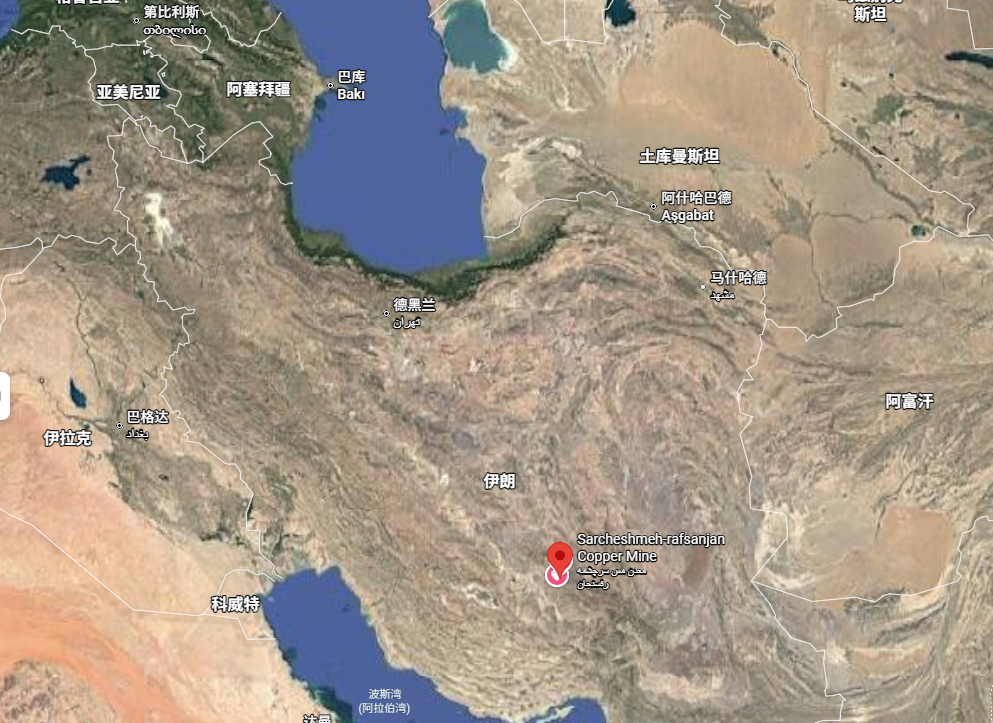
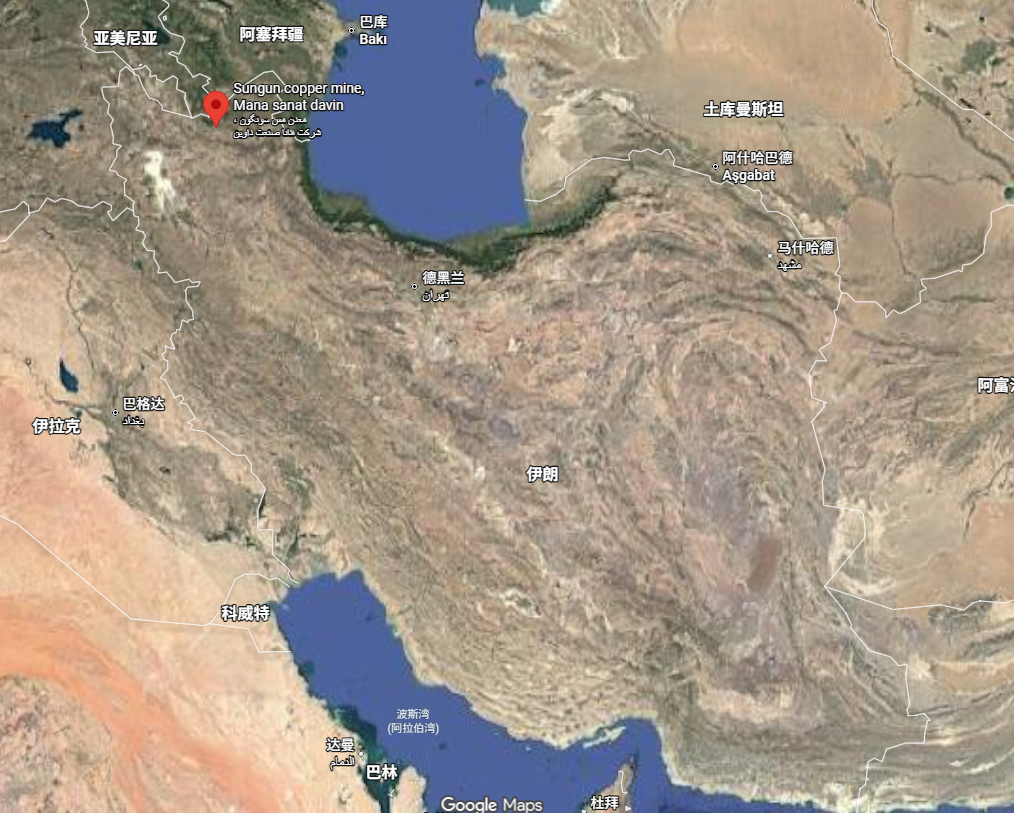
According to SMM, Iran's major copper mines are the Sarcheshmeh Copper Mine and the Sungun Copper Mine. In recent years, Iran's copper concentrate production has ranged between 350,000 and 400,000 metal tons. Moreover, both the Sarcheshmeh and Sungun mines are located far from the targeted Iranian capital, Tehran, meaning the current impact of this conflict on Iran's copper industry is relatively minor.

Focusing on the impact on the Chinese market, Iran also holds a marginal position in China's copper concentrate import structure. According to recent data from Chinese Customs, the volume of copper concentrate imported by China from Iran is only in the range of tens of thousands of physical tons per year, accounting for a very low proportion of China's total imports—consistently hovering around 0.1%. In 2025, copper concentrate imports from Iran accounted for only 0.1% of China's total.

Of course, the market sentiment fluctuations and potential increases in freight and insurance rates triggered by military actions warrant attention. However, these are more likely to be short-term sentiment disturbances and minor increases on the cost side, rather than a fundamental reversal in supply and demand fundamentals. China's copper concentrate import sources are highly diversified, relying primarily on regions such as South America and Asia. This diversified procurement channel provides a solid barrier for safeguarding national resource security.

Overall, the impact of this conflict on the copper industry is expected to be limited. SMM will continue to monitor subsequent developments.
Data Source Statement: Except for publicly available information, all other data are processed by SMM based on publicly available information, market communication, and relying on SMM's internal database model. They are for reference only and do not constitute decision-making recommendations.

For any inquiries or for more information, please contact: lemonzhao@smm.cn
For more information on how to access our research reports, please contact:service.en@smm.cn
Related News
Copper Scrap Market Sees Supply Tightness and High Premiums Amid Regulatory Challenges
13 hours ago
Copper Scrap Market Sees Supply Tightness and High Premiums Amid Regulatory Challenges
Read More
Copper Scrap Market Sees Supply Tightness and High Premiums Amid Regulatory Challenges
During the week of July 20-23, the copper scrap market operated under a threefold backdrop: low copper cathode inventory and high premiums, continued compliance restrictions from reverse invoicing, and a deepening high-temperature off-season. The SHFE copper closing price at 11:30 surged from 104,180 yuan/mt to 106,340 yuan/mt, then pulled back slightly to 106,170 yuan/mt by the end of the week
13 hours ago
Copper Price Surge Widens Price Difference Between Copper Cathode and Copper Scrap; Supply-Side Point-Price Shipments Increase, Arbitrage Purchases Dominate Transactions [SMM Analysis]
14 hours ago
Copper Price Surge Widens Price Difference Between Copper Cathode and Copper Scrap; Supply-Side Point-Price Shipments Increase, Arbitrage Purchases Dominate Transactions [SMM Analysis]
Read More
Copper Price Surge Widens Price Difference Between Copper Cathode and Copper Scrap; Supply-Side Point-Price Shipments Increase, Arbitrage Purchases Dominate Transactions [SMM Analysis]
[SMM Analysis: Soaring Copper Prices Widen Price Difference Between Copper Cathode and Copper Scrap; Increased Spot Shipments from Suppliers, Arbitrage Purchases Dominate Transactions] This week (7/20-7/23), the copper scrap market operated under a triple framework of low copper cathode inventory and high premiums, ongoing compliance constraints from reverse invoicing, and a deepening high-temperature off-season. The SHFE copper closing price at 11:30 surged from 104,180 yuan/mt to 106,340 yuan/mt, before pulling back slightly to 106,170 yuan/mt at the end of the week, with a weekly gain of over 2,000 yuan/mt. Driven by the unilateral rise in copper cathode prices and the resilience of copper scrap in holding prices firm, the price difference between copper cathode and copper scrap expanded from 3,218 yuan/mt to 4,545 yuan/mt, briefly reaching a high of 4,800 yuan/mt during the week. The inherent price resilience of copper scrap was the core feature of the supply side this week.....
14 hours ago
Midea Air Conditioning Abandons Traditional Cold Year Opening for Retail-Focused Strategy in 2027
Jul 25, 2026 21:39
Midea Air Conditioning Abandons Traditional Cold Year Opening for Retail-Focused Strategy in 2027
Read More
Midea Air Conditioning Abandons Traditional Cold Year Opening for Retail-Focused Strategy in 2027
According to Yingketong, Midea Air Conditioning officially announced in July 2026 that it will no longer initiate the traditional Cold Year Opening for the 2027 new cooling year, instead fully committing to a new strategy of “battling for retail and competing for end-users.” This decision marks a temporary halt to the near three-decade-old model of “collecting payments in the off-season and chasing volume in the peak season” within the air conditioning industry. The “Cold Year Opening” is a unique business rhythm in the air conditioning sector. Typically, starting from H2 (from July/August to October/November), producers hold openings in batches through policy incentives to attract channel merchants to make advance payments and stockpile goods. Then, in H1 of the following year, they concentrate shipments through various large-scale sales promotions, creating a cycle of “pushing inventory in the off-season and chasing volume in the peak season.” The specific measures for Midea Air Conditioning’s cancellation of the new Cold Year Opening include: no longer holding opening meetings that involve centralized channel payments, policy lock-in, and large-scale stockpiling; abolishing the practice of “mandatory advance payments to lock in annual policies”; and shifting to terminal replenishment based on actual demand, with full-cycle normalized policies implemented.
Jul 25, 2026 21:39