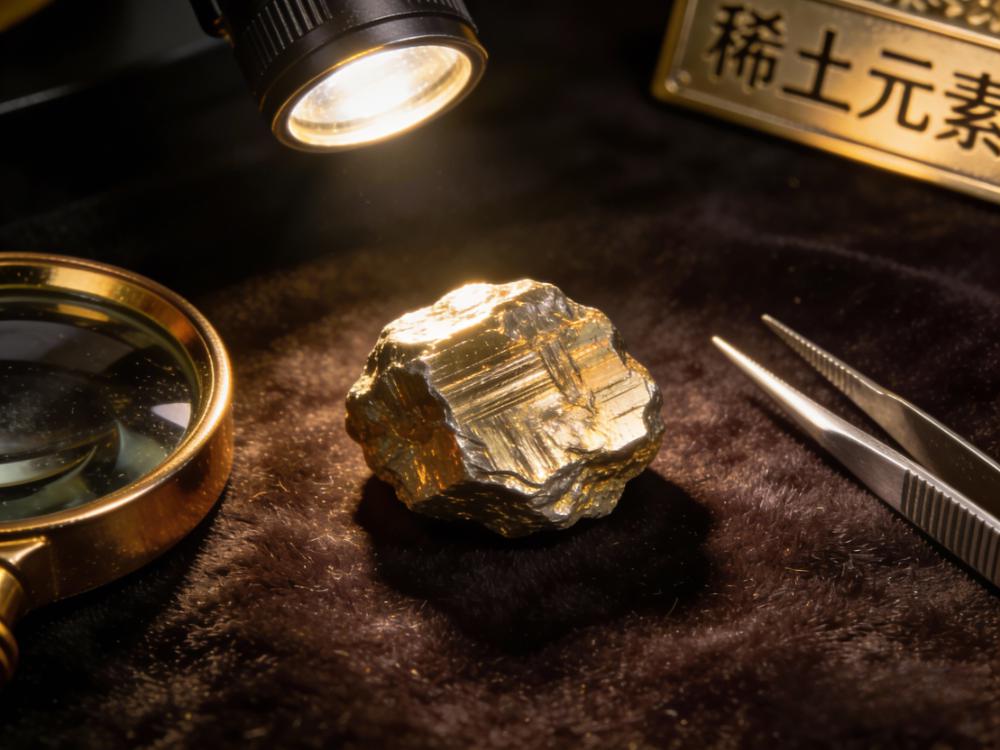
At the end of October 2025, the US-China trade rivalry took a dramatic turn. China's Ministry of Commerce announced a one-year suspension of new regulations on rare earth export controls, putting on hold strict measures that would have required foreign companies to obtain export licenses even if their products contained trace amounts of Chinese rare earths.
This decision gave US companies a breather, but given the current situation, the idea that the US could build an independent rare earth supply chain within a year is simply a pipe dream. China controls 90% of the global capacity for rare earth refining, a dominance that cannot be shaken in the short term.
However, being unshakable does not mean no action can be taken. Broadening rare earth cooperation, securing domestic rare earth supplies, and diversifying the entire industry chain—whether this can challenge China's rare earth dominance is not actually critical for the US itself.
With this goal in mind, within one month after the new regulations were introduced, the US shifted its rare earth development strategy.
MP Mine: As the only scaled rare earth mine in North America, MP Materials is accelerating the development of this resource. The mine is primarily rich in light rare earths, but the company plans to commission a heavy rare earth separation facility by the end of 2025, challenging China's dominance in the heavy rare earth sector.
Utah Silicon Ridge Project: The ion-adsorption deposit discovered by Ion Mineral Technology Company has unique advantages, with a rare earth grade of 0.27%, higher than the industry average. The project has obtained mining permits and has supporting processing facilities, enabling rapid commercialization.
Texas Round Top Project: American Rare Earths has moved forward the commissioning time of this heavy rare earth project to 2028, reflecting the urgency the US feels in accelerating the development of domestic rare earth resources.
The US is adopting a "friend-shoring" strategy, collaborating with allies such as Canada and Australia to build a diversified rare earth supply system. This strategy aims to reduce dependence on Chinese rare earths and enhance supply chain security.
The US is also pursuing a comprehensive layout in building its rare earth industry chain:
eVAC plans to increase the magnet production capacity of its Sumter plant to 2,000 mt/year by Q1 2026 and aims to expand it to six times this capacity in the coming years. The company sources raw materials from MP Materials to ensure supply chain stability.
The US Department of Defense provided a $620 million loan to magnet producer Vulcan Elements to support the expansion of its rare earth separation and magnet production capacity. This government-enterprise cooperation model plays a crucial role in the US rare earth industry development.
At the same time, US cooperation with Canada is a key part of building a North American rare earth supply chain system:
Resource Complementarity: Canada possesses the world's largest known rare earth resources, with reserves of 15.2 million mt of rare earth oxides, seen by the Pentagon as a "lifeline" for securing the supply chain.
Capacity Sharing Mechanism: Canada proposed a "capacity sharing" strategy, which plans to distribute the produced rare earths to allied markets rather than solely meeting domestic demand. This approach has received positive responses from allies such as Germany.
Specific Cooperation Projects: US magnet producer REalloys signed a five-year rare earth materials purchase agreement with the Saskatchewan Research Council in Canada, involving key materials such as Pr-Nd alloy, dysprosium oxide, and terbium oxide.
The US is advancing on multiple fronts in rare earth technology R&D:
The US Department of Energy's Advanced Research Projects Agency provided a $3 million grant to a research team at the University of California, Davis, to develop a bio-based rare earth element recovery process. This innovative technology aims to use engineered acid-tolerant microorganisms to selectively capture rare earth elements from acidic mine and industrial wastewater.
Momentum Technologies presented its proprietary membrane solvent extraction technology to the US House of Representatives, describing it as a domestic processing solution to address vulnerabilities in the US critical mineral supply chain. This technological breakthrough poses a potential challenge to China's dominance in rare earth refining technology.
Currently, the US rare earth industry is experiencing an unprecedented investment boom, with Wall Street giants from JPMorgan to Goldman Sachs committing $1 billion in construction funding for MP Materials. The US Department of Defense has become the largest shareholder of MP Materials, holding approximately 15% of the equity.
As 2026 approaches, whether the US can maximize its efforts to seize this one-year window of opportunity beyond the aforementioned strategies remains to be seen.

![Stalemate in Tug-of-War between Upstream and Downstream, Rare Earth Prices Hold Steady [SMM Rare Earth Daily Review]](https://imgqn.smm.cn/usercenter/tdEqn20251217171744.jpg)