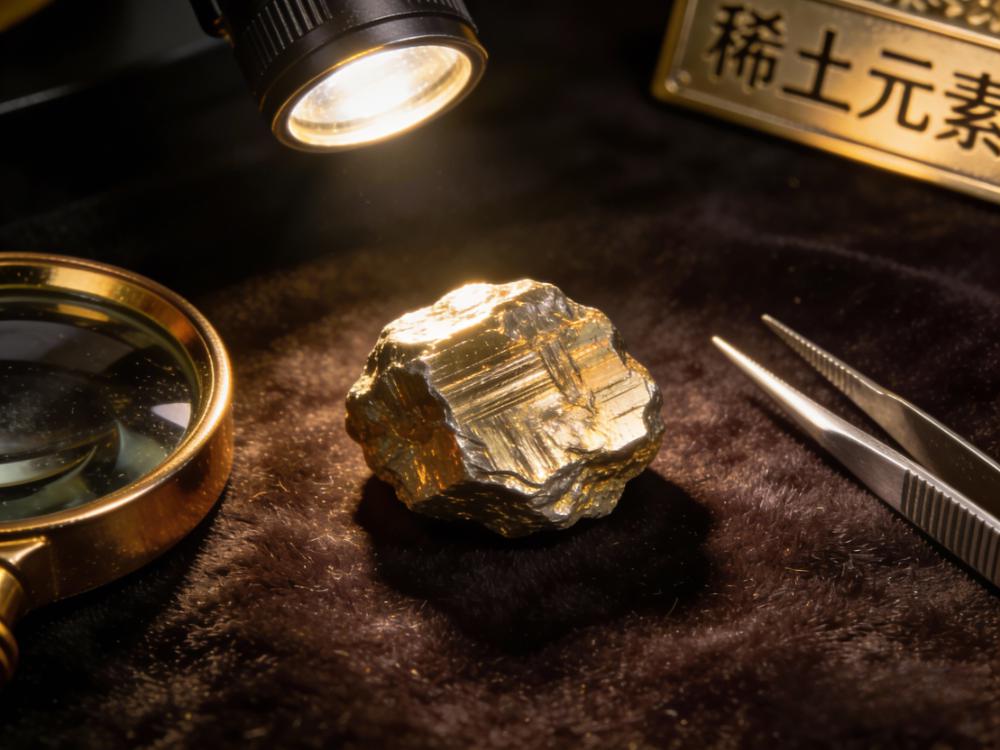
According to a report from Mining.com, the Cooperative Research & Development Agreement (CRADA) between U.S. Critical Materials Corp. (USCMC) and Idaho National Laboratory (INL) has entered its second phase, with the goal of constructing a pilot-scale processing plant capable of producing rare earths domestically.
This facility will process high-grade ore from the company's Sheep Creek deposit in Montana, which contains minerals such as strontium, niobium, praseodymium, neodymium, samarium, scandium, gadolinium, terbium, dysprosium, and yttrium.
Analysis of samples collected 125 feet underground at the Sheep Creek deposit by this private Utah-based company indicates a grade higher than any other rare earth mine in the US. Since early 2024, the first phase of the CRADA has confirmed the presence of high-grade gallium and rare earth elements in the Sheep Creek ore body.
Gallium is one of the first minerals to be processed at the Sheep Creek deposit and is of critical importance to national security.
The company states that this initiative aligns with President Trump's March executive order, which declared a national emergency due to significant reliance on hostile nations for these strategic materials.
For decades, the US has relied on foreign supply chains for rare earths. Amid geopolitical instability and escalating tariff wars, the US urgently needs to establish domestic supply chains for rare earths essential for national defense and high-tech industries.
INL is globally renowned for its expertise in advanced separation science and engineering and serves as the primary separation science R&D base for the US Department of Energy (DOE).
USCMC states that INL scientists will contribute their expertise to ensure that the pilot plant employs environmentally friendly treatment processes, facilitating further expansion to full-scale production. Currently, the pilot plant will scale up and validate INL's unique processing methods to ensure production capacity at the scale required for US national defense.
The company states that its goal is to reduce US reliance on critical minerals from hostile nations, ensure that rare earths used in defense systems are sourced from domestic supply chains, and develop mineral processing technologies vital to national security resilience.
Based on validated benchmark-scale processes, the pilot plant can process 1-2 mt of ore per day.
The pilot plant will also validate the latest mineral processing and separation technologies, acquire intellectual property rights for critical materials, and establish scalable domestic production capacity.
"There is no more pressing national security issue than ensuring the supply of rare earths and critical minerals for the United States," said Jim Hedrick, President of USCM and a former rare earth expert at the U.S. Geological Survey (USGS), in a statement.
"These materials are the cornerstone of our military, energy, and technological dominance. The pilot plant will accelerate the development of next-generation separation and refining methods to ensure that the US no longer relies on hostile nations for critical materials for national defense."
![Rare Earth Prices Continued to Rise This Week, Market Trading Activity Increased [SMM Rare Earth Weekly Review]](https://imgqn.smm.cn/usercenter/tdEqn20251217171744.jpg)