

Cập nhật SMM ngày 1 tháng 6:
Thị trường kim loại:
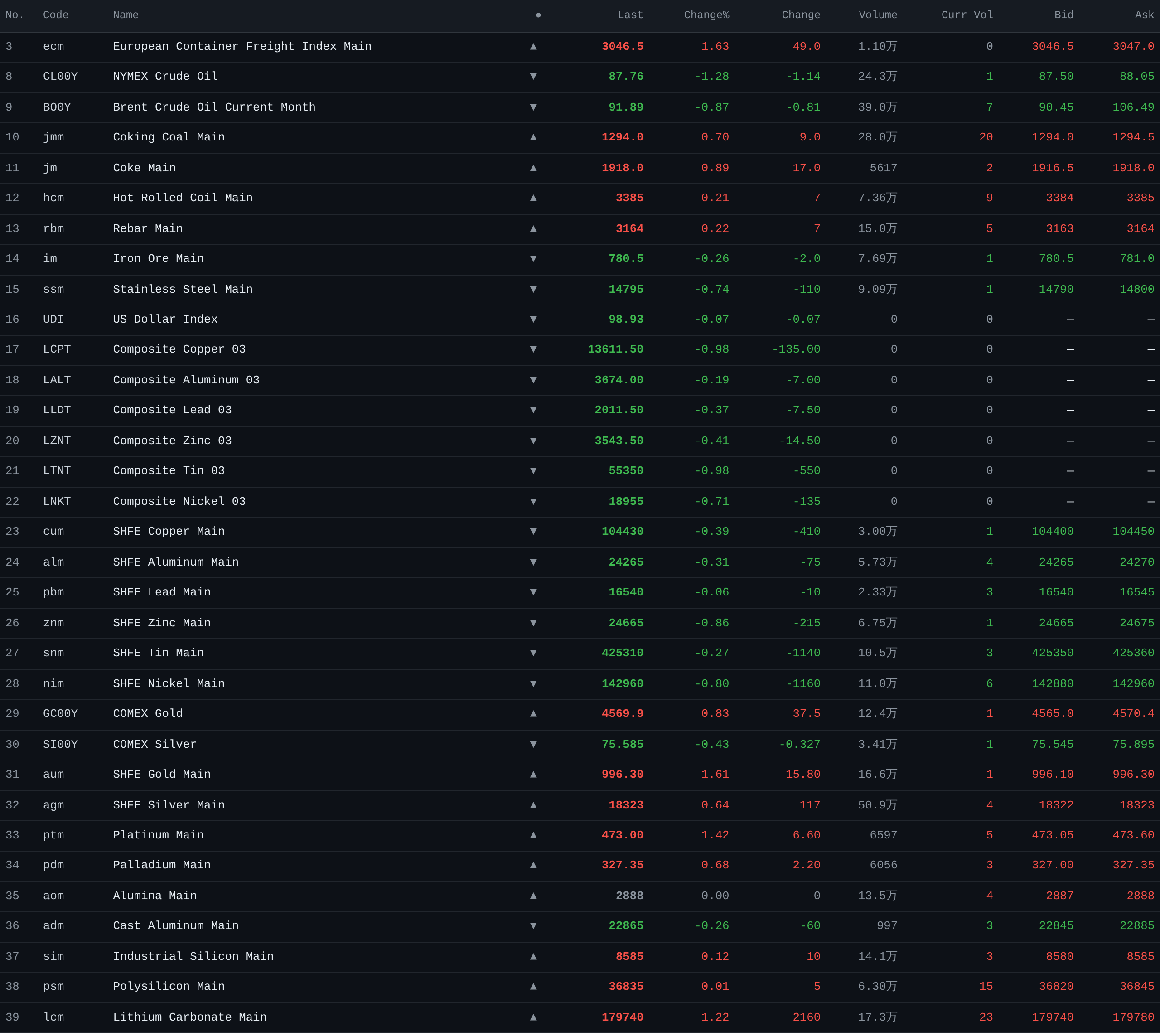
Phiên giao dịch đêm thứ Sáu tuần trước chứng kiến kim loại cơ bản đồng loạt giảm trên cả thị trường trong nước và quốc tế. Đồng LME và thiếc LME cùng dẫn đầu đà giảm với mức giảm 0,98%. Kẽm SHFE giảm 0,86%, trong khi các kim loại khác giảm tương đối nhẹ. Hợp đồng tháng gần nhất của alumina đóng cửa đi ngang ở mức 2.888 nhân dân tệ/tấn, và hợp đồng tháng gần nhất của nhôm đúc giảm 0,26%.
Phiên giao dịch đêm thứ Sáu tuần trước của kim loại đen có diễn biến trái chiều. Thép không gỉ giảm 0,74%, quặng sắt giảm 0,26%. Thép cuộn cán nóng và thép thanh vằn đều tăng khoảng 0,2%. Trong nhóm than cốc, than luyện cốc tăng 0,7% và cốc tăng 0,89%.
Phiên giao dịch đêm thứ Sáu tuần trước của kim loại quý: Vàng COMEX tăng 0,83%, tăng 1,03% trong tuần nhưng giảm 1,29% trong tháng, đánh dấu tháng giảm thứ ba liên tiếp. Bạc COMEX giảm 0,43% trong phiên đêm thứ Sáu, giảm 0,81% trong tuần nhưng tăng 2,1% trong tháng. Tại Trung Quốc, vàng SHFE tăng 1,61%, giảm 0,23% trong tuần và giảm 1,61% trong tháng, cũng ghi nhận tháng giảm thứ ba liên tiếp cùng với thị trường quốc tế. Bạc SHFE tăng 0,64% trong phiên đêm thứ Sáu, giảm 1,23% trong tuần nhưng tăng 3,08% trong tháng.
Tính đến 8:25 sáng ngày 30 tháng 5, giá đóng cửa phiên đêm thứ Sáu tuần trước:
Mặt trận vĩ mô
Trung Quốc:
Từ tháng 1 đến tháng 4, tổng doanh thu hoạt động của các doanh nghiệp nhà nước và doanh nghiệp do nhà nước nắm cổ phần chi phối trên toàn quốc giảm 0,5% so với cùng kỳ, trong khi tổng lợi nhuận tăng 1,9% so với cùng kỳ. Cụ thể, tổng doanh thu hoạt động đạt 26,27 nghìn tỷ nhân dân tệ, tổng lợi nhuận đạt 1,37 nghìn tỷ nhân dân tệ. Thuế phải nộp tăng 3,9% so với cùng kỳ, đạt 2,12 nghìn tỷ nhân dân tệ. Cuối tháng 4, tỷ lệ nợ trên tài sản của doanh nghiệp nhà nước là 65,5%, tăng 0,4 điểm phần trăm so với cùng kỳ. (Tân Hoa Xã)
Ngày 29 tháng 5, có thông tin cho biết trong quý I, xuất khẩu mạch tích hợp của Trung Quốc đạt 72,47 tỷ USD, tăng 77,5% so với cùng kỳ, trong đó xuất khẩu sản phẩm bộ nhớ đạt 45,99 tỷ USD, tăng 174,2% so với cùng kỳ. Sự tăng vọt xuất khẩu sản phẩm bộ nhớ cũng lan truyền đến các phân khúc dịch vụ chuỗi cung ứng. Người đứng đầu một công ty logistics cho biết từ đầu năm nay, đơn hàng liên quan đến xuất khẩu bộ nhớ của công ty đã tăng gấp đôi, với các đơn hàng lớn vượt 100 triệu nhân dân tệ mỗi giao dịch tăng đáng kể. Các chuyên gia trong ngành nhận định rằng sự tăng trưởng bùng nổ trong xuất khẩu sản phẩm bộ nhớ được thúc đẩy bởi cả yếu tố chu kỳ cung cầu toàn cầu thắt chặt lẫn những thay đổi cơ cấu công nghiệp bao gồm nâng cấp chuỗi ngành và gia tăng thị phần của ngành bộ nhớ nội địa Trung Quốc. Phó Tổng Thư ký Phòng Thương mại Điện tử Thâm Quyến cho biết so với tháng 3 năm ngoái, giá bộ nhớ đã tăng gần mười lần, một số thậm chí tăng hơn mười lần. Mức tăng chủ yếu do giá tăng đáng kể, đẩy tổng giá trị (xuất khẩu) lên cao. Giá thương hiệu nội địa có chênh lệch giá đáng kể so với thương hiệu ngoài Trung Quốc, tạo ra sức cạnh tranh rất lớn. (CCTV Tài chính)
[Bộ Công nghiệp và Công nghệ Thông tin cùng sáu bộ ngành khác: Khuyến khích sản xuất thiết bị trong các lĩnh vực hàng không vũ trụ, đóng tàu, ô tô, robot và các ngành khác]Ngày 29 tháng 5, Văn phòng Bộ Văn hóa và Du lịch, Văn phòng Ban Tuyên truyền Trung ương, Văn phòng Bộ Công nghiệp và Công nghệ Thông tin, Văn phòng Bộ Giáo dục, Văn phòng Ủy ban Giám sát và Quản lý Tài sản Nhà nước thuộc Quốc vụ viện, Văn phòng Cục Di sản Văn hóa Quốc gia và Văn phòng Tổng Liên đoàn Lao động Toàn Trung Quốc đã cùng ban hành thông báo về thúc đẩy văn hóa công nghiệp, bảo vệ di sản công nghiệp và phát triển du lịch công nghiệp. Thông báo đề cập đến việc làm phong phú nguồn cung sản phẩm du lịch công nghiệp. Khuyến khích tích cực phát triển du lịch di sản công nghiệp, thúc đẩy tái sinh và sử dụng các khu công nghiệp thông qua thiết kế sáng tạo, tích hợp mô hình kinh doanh mới và cải tạo mặt tiền, phát triển các kịch bản, hình thức và mô hình mới cho du lịch công nghiệp. Đẩy mạnh "tham quan nhà máy," khuyến khích các doanh nghiệp trong lĩnh vực sản xuất thiết bị như hàng không vũ trụ, đóng tàu, ô tô và robot, các ngành hàng tiêu dùng như dệt may, thủ công mỹ nghệ và chế biến thực phẩm, cũng như logistics thương mại điện tử, sáng tạo triển khai các chương trình bao gồm tham quan quy trình sản xuất, vận hành mô phỏng, trải nghiệm thực tế và tùy chỉnh sản phẩm, đồng thời đảm bảo yêu cầu an toàn sản xuất và bảo mật, để xây dựng các nhà máy tham quan theo chủ đề. Kêu gọi mở rộng có trật tự du lịch công nghiệp thông minh, hỗ trợ ứng dụng Bắc Đẩu, trí tuệ nhân tạo, video siêu nét, thực tế ảo, lái xe tự động và các công nghệ số cùng thiết bị khác để tạo ra trải nghiệm du lịch công nghiệp nhập vai và thông minh. Chính sách hỗ trợ các điểm du lịch công nghiệp phát triển thương mại theo chủ đề, trải nghiệm nhập vai, chợ đặc sản và các hình thức khác để tạo ra các kịch bản tiêu dùng "du lịch công nghiệp+". Khuyến khích các địa phương ra mắt một loạt tuyến du lịch công nghiệp và thương hiệu chất lượng cao mang đặc trưng vùng miền và ngành nghề. Khuyến khích các doanh nghiệp công nghiệp tăng cường quảng bá sản phẩm, mở rộng kênh bán hàng và xây dựng thương hiệu doanh nghiệp mạnh hơn thông qua du lịch công nghiệp.
Sàn Giao dịch Năng lượng Quốc tế Thượng Hải thông báo điều chỉnh biên độ giá hàng ngày của hợp đồng tương lai dầu thô và dầu nhiên liệu hàm lượng lưu huỳnh thấp lên 17%, tỷ lệ ký quỹ giao dịch vị thế phòng hộ lên 18%, và tỷ lệ ký quỹ giao dịch vị thế thông thường lên 19%; đồng thời điều chỉnh giới hạn giao dịch đối với các hợp đồng tương lai dầu thô và dầu nhiên liệu hàm lượng lưu huỳnh thấp liên quan.
Đô la Mỹ:
Tính đến phiên đóng cửa qua đêm thứ Sáu tuần trước, chỉ số đô la Mỹ giảm 0,07% xuống 98,93, giảm 0,39% trong tuần nhưng tăng 0,85% trong tháng. Kỳ vọng lạc quan về việc gia hạn thỏa thuận ngừng bắn giữa Mỹ và Iran đã làm giảm nhu cầu trú ẩn an toàn.
Chỉ số giá PCE tháng 4 của Mỹ tăng 3,8% so với cùng kỳ năm trước, mức cao nhất kể từ tháng 5/2023, phù hợp với kỳ vọng, so với mức trước đó là 3,5%. Chỉ số giá PCE lõi tháng 4 của Mỹ tăng 3,3% so với cùng kỳ, đạt mức cao mới kể từ tháng 11/2023, cũng phù hợp với kỳ vọng, so với mức trước đó là 3,2%. Ngoài ra, dữ liệu riêng do Cục Phân tích Kinh tế công bố cho thấy kinh tế Mỹ tăng trưởng với tốc độ hàng năm hóa 1,6% trong quý 1, thấp hơn dữ liệu sơ bộ. Ước tính ban đầu công bố tháng trước cho thấy tăng trưởng 2%. Dữ liệu cho thấy người tiêu dùng Mỹ trở nên thận trọng hơn trong bối cảnh áp lực chi phí sinh hoạt và thị trường lao động hoạt động không đồng đều. Xung đột Trung Đông đẩy giá nhiên liệu và nguyên liệu thô khác tăng cao, tác động lan truyền qua nền kinh tế rộng hơn và đưa niềm tin người tiêu dùng xuống mức thấp kỷ lục. Trong khi đó, dữ liệu lạm phát này có thể sẽ củng cố thêm cảnh báo từ một số quan chức Fed rằng Fed sẽ cần cân nhắc tăng lãi suất nếu áp lực giá cả không giảm bớt. Kevin Warsh, người vừa tuyên thệ nhậm chức Chủ tịch Fed vào ngày 22/5, có thể cần thuyết phục các quan chức khác rằng kỳ vọng lạm phát có thể được kiểm soát mà không cần tăng lãi suất. (Wallstreetcn)
Chủ tịch Fed Minneapolis Kashkari tuyên bố rằng còn quá sớm để kết luận rằng lãi suất cần phải tăng, nhưng ông tin rằng Fed nên giữ tất cả các lựa chọn chính sách trên bàn. Ông cho biết còn quá sớm để kết luận rằng cần tăng lãi suất ngay lập tức. Ông lưu ý cần tiếp tục theo dõi dữ liệu kinh tế và diễn biến xung đột Trung Đông trước khi xem xét liệu có cần điều chỉnh chính sách hay không. Kashkari chỉ ra rằng trong cả kịch bản lạc quan nhất và bi quan nhất, lạm phát có thể duy trì ở mức cao đáng kể trong thời gian dài. Ông đang theo dõi chặt chẽ rủi ro này, cũng như khả năng kỳ vọng lạm phát có thể mất neo. (Wallstreetcn)
Phó Chủ tịch Fed phụ trách Giám sát Michelle Bowman tuyên bố rằng còn quá sớm để đánh giá tác động của xung đột Iran đối với lạm phát, và các nhà hoạch định chính sách cần nhìn xuyên qua các cú sốc giá tạm thời. Bà ủng hộ các quan chức giữ nguyên ngôn ngữ trong tuyên bố sau cuộc họp chính sách tháng trước gợi ý khả năng cắt giảm lãi suất thêm. Bà cho biết khi suy nghĩ về đường hướng tương lai của chính sách tiền tệ, bà muốn hiểu rõ hơn về tác động kinh tế của xung đột Trung Đông và mức độ kéo dài của những tác động đó. Miễn là duy trì được uy tín trong cam kết đạt mục tiêu lạm phát, việc nhìn xuyên qua lạm phát tăng tạm thời chủ yếu do giá năng lượng tăng là phù hợp. Bà kỳ vọng tác động "một lần" của thuế quan do Tổng thống Mỹ Trump áp dụng sẽ giảm dần. (Wallstreetcn)
Mặt trận vĩ mô:
Tuần này, Trung Quốc dự kiến công bố dữ liệu bao gồm PMI Sản xuất RatingDog tháng 5 của Trung Quốc và PMI Dịch vụ RatingDog tháng 5 của Trung Quốc. Mỹ dự kiến công bố dữ liệu bao gồm PMI Sản xuất S&P Global tháng 5 của Mỹ (cuối cùng), PMI Sản xuất ISM tháng 5 của Mỹ, chi tiêu xây dựng tháng 4 của Mỹ so với tháng trước, số vị trí việc làm JOLTs tháng 4 của Mỹ, việc làm ADP tháng 5 của Mỹ, PMI Dịch vụ S&P Global tháng 5 của Mỹ (cuối cùng), PMI Phi sản xuất ISM tháng 5 của Mỹ, đơn đặt hàng nhà máy tháng 4 của Mỹ so với tháng trước, cắt giảm việc làm Challenger tháng 5 của Mỹ, đơn xin trợ cấp thất nghiệp lần đầu của Mỹ tuần kết thúc ngày 30/5, tỷ lệ thất nghiệp tháng 5 của Mỹ, bảng lương phi nông nghiệp điều chỉnh mùa vụ tháng 5 của Mỹ, thu nhập trung bình theo giờ tháng 5 của Mỹ so với cùng kỳ, và thu nhập trung bình theo giờ tháng 5 của Mỹ so với tháng trước. Anh dự kiến công bố dữ liệu bao gồm chỉ số giá nhà Nationwide tháng 5 của Anh so với tháng trước, PMI Sản xuất tháng 5 của Anh (cuối cùng), phê duyệt thế chấp ngân hàng trung ương tháng 4 của Anh, PMI Dịch vụ tháng 5 của Anh (cuối cùng), và chỉ số giá nhà Halifax điều chỉnh mùa vụ tháng 5 của Anh so với tháng trước. Khu vực Eurozone dự kiến công bố dữ liệu bao gồm PMI Sản xuất tháng 5 của Eurozone (cuối cùng), tỷ lệ thất nghiệp tháng 4 của Eurozone, CPI tháng 5 của Eurozone so với cùng kỳ (sơ bộ), CPI tháng 5 của Eurozone so với tháng trước (sơ bộ), PMI Dịch vụ tháng 5 của Eurozone (cuối cùng), PPI tháng 4 của Eurozone so với tháng trước, doanh số bán lẻ tháng 4 của Eurozone so với tháng trước, GDP quý 1 của Eurozone so với cùng kỳ (điều chỉnh), và việc làm điều chỉnh mùa vụ quý 1 của Eurozone so với quý trước (cuối cùng). Thụy Sĩ sẽ công bố dữ liệu bao gồm doanh số bán lẻ thực tế tháng 4 so với cùng kỳ năm trước, cán cân thương mại tháng 4, CPI tháng 5 so với tháng trước và tỷ lệ thất nghiệp điều chỉnh theo mùa tháng 5. Pháp sẽ công bố dữ liệu bao gồm PMI sản xuất tháng 5 (cuối cùng), PMI dịch vụ tháng 5 (cuối cùng), sản lượng công nghiệp tháng 4 so với tháng trước và cán cân thương mại tháng 4. Đức sẽ công bố dữ liệu bao gồm PMI sản xuất tháng 5 (cuối cùng) và PMI dịch vụ tháng 5 (cuối cùng). Ngoài ra, GDP quý 1 so với cùng kỳ năm trước của Úc và số liệu việc làm tháng 5 của Canada cũng sẽ được công bố.
Dầu thô:
Tính đến phiên đóng cửa qua đêm thứ Sáu tuần trước, giá dầu cả hai thị trường đều giảm, WTI giảm 1,28% và Brent giảm 0,87%. Tính theo tuần, giá dầu chịu tổn thất nặng nề, WTI giảm 9,15% và Brent giảm 8,3%, cả hai đều ghi nhận tuần giảm thứ hai liên tiếp và mức giảm tuần lớn nhất kể từ tháng 4. WTI giảm 16,47% trong tháng và Brent giảm 16,77% trong tháng, với WTI ghi nhận mức giảm tháng lớn nhất kể từ tháng 11/2021 và Brent ghi nhận mức giảm tháng lớn nhất kể từ tháng 3/2020. Theo Tân Hoa Xã, Tổng thống Mỹ Trump cho biết vào ngày 29 rằng Mỹ và Iran đã đạt được thỏa thuận về các vấn đề phụ ngoài chương trình hạt nhân Iran và quyền đi lại qua eo biển Hormuz, khiến giá dầu thô giảm.
Thị trường dầu mỏ tháng 5 trải qua ba giai đoạn diễn biến rõ ràng: Đầu tháng (1-6/5): Giá dầu điều chỉnh nhẹ từ mức cao gần 4 năm, nhưng Brent có lúc tăng vọt lên khoảng 114 USD sau khi OPEC+ công bố tăng sản lượng khiêm tốn và các cuộc tấn công tàu vận tải, trước khi lao dốc xuống vùng 101-106 USD sau tín hiệu giảm căng thẳng Mỹ-Iran. Giữa tháng (7-20/5): Giá dầu dao động khi các lần đổ vỡ ngừng bắn xen kẽ với tiến triển hòa giải, việc tiếp tục phong tỏa eo biển Hormuz duy trì phần bù rủi ro ở mức cao. Cuối tháng (21-29/5): Được thúc đẩy bởi các báo cáo về thỏa thuận nguyên tắc Mỹ-Iran mở lại eo biển, Brent có lúc giảm xuống vùng thấp 93-100 USD, WTI chạm 88-92 USD, và Brent đóng cửa quanh mức 92 USD. (Wallstreetcn)
Tuy nhiên, các nhà phân tích nhấn mạnh rằng cho đến khi xung đột thực sự kết thúc và eo biển hoạt động trở lại bình thường, tồn kho dầu thô toàn cầu sẽ tiếp tục bị suy giảm khoảng 10 đến 14 triệu thùng mỗi ngày, và các yếu tố cơ bản của thị trường vật chất vẫn thắt chặt. Sự giảm giá dầu do kỳ vọng ngừng bắn phản ánh nhiều hơn việc định giá phục hồi nguồn cung trong tương lai thay vì sự thay đổi căn bản trong cục diện cung-cầu hiện tại. (Wallstreetcn)
Các báo cáo gần đây cho thấy tính toán của Goldman Sachs chỉ ra tồn kho dầu thô toàn cầu có thể giảm xuống dưới mức tương đương 100 ngày nhu cầu toàn cầu sớm nhất vào cuối tháng 5. Goldman Sachs ước tính tính đến cuối tháng 4, tồn kho dầu thô toàn cầu tương đương khoảng 101 ngày nhu cầu toàn cầu và dự kiến giảm xuống 98 ngày vào cuối tháng 5. Trong đó, "tồn kho hữu hình" có thể quan sát qua vệ tinh và các phương tiện khác ước tính chỉ đạt 73 ngày nhu cầu. Các báo cáo cho biết hiện tại chỉ có một vài tàu có thể đi qua eo biển Hormuz mỗi ngày, dẫn đến nguồn cung dầu thô toàn cầu mất hơn 10 triệu thùng mỗi ngày. (Wallstreetcn)
![Dầu thô giảm hai tuần liên tiếp, kim loại thị trường nước ngoài giảm trên diện rộng, kẽm LME mất hơn 2%, chì và niken LME dẫn đầu đà giảm, bạc NY ghi nhận chuỗi giảm sáu tuần [Thị trường qua đêm]](https://imgqn.smm.cn/usercenter/BVoXk20251217171736.jpg)
![Phí xử lý tinh quặng kẽm tiếp tục giảm, giá kẽm SHFE duy trì xu hướng biến động [Bản tin ngắn Kẽm tương lai SMM]](https://imgqn.smm.cn/usercenter/oTrxc20251217171755.jpg)
![Trong ngắn hạn, kim loại đen sẽ tiếp tục chịu áp lực [Báo cáo hàng tuần chuỗi ngành thép SMM]](https://imgqn.smm.cn/usercenter/YxksS20251217171748.jpg)