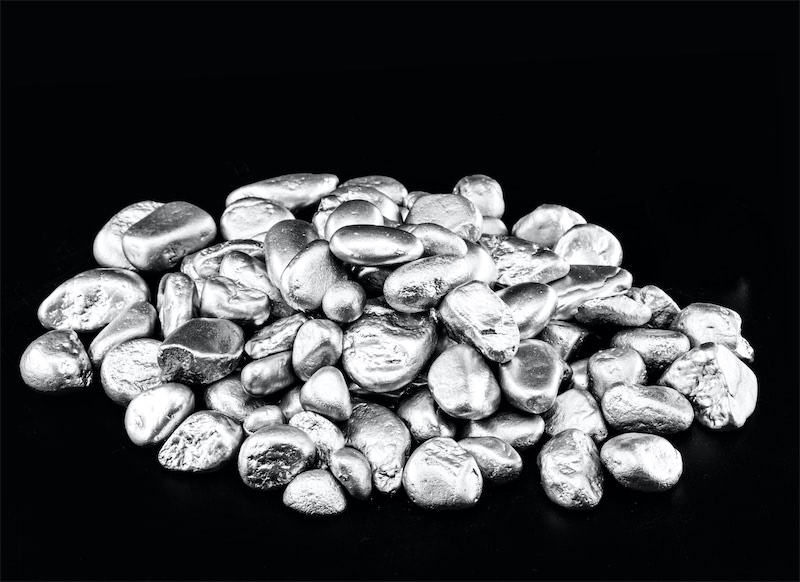
Since 2026, the Middle East geopolitical conflict has seriously hindered Indonesia's sulfur imports. The price of sulfur (CIF Indonesia) has soared from 563 yuan/ton at the beginning of the year to the current quotation of 1175 yuan/ton, an increase of more than 108%. Sulfur is the core auxiliary material for the production of MHP by Indonesian nickel hydrometallurgy (HPAL), with a unit consumption of 10-12 tons per ton of nickel. In this context, directly importing sulfuric acid to replace the acid production process has become a realistic consideration for Indonesian nickel companies.
I.China's export ban: cutting off the largest source of supply
China is the world's largest exporter of sulfuric acid. In 2025, China exported about 4.649 million tons of sulfuric acid, and About 62% of Indonesia's imported sulfuric acid comes from China. In 2025, China exported 670,000 tons of sulfuric acid to Indonesia , more than double that of 2024. Indonesia's imports from South Korea and Japan have dropped sharply by 40% and 65%, and China has actually filled the gap and consolidated its position as the largest supplier.
From January to March 2026 (before the ban), China's total exports of sulfuric acid 528,000 tons, a sharp decrease of 49.8% year-on-year; exports to Indonesia were only 103,000 tons, a significant decrease of about 76% year-on-year. The ban has already begun to warm up through quota tightening. From May 1st to December 31st, the export of ordinary industrial sulfuric acid and by-product sulfuric acid from smelting will be completely suspended. Only electronic-grade high-purity sulfuric acid can be exported in small quantities after special project approval. The core policy is to "ensure spring plowing and stable supply", with priority given to ensuring the domestic fertilizer industry.
II.Transportation and storage: significant differences in sea and land conditions
Shipping time and economy. Shipping time from major sources to Indonesia: about 5 days from Australia, about 7-8 days from India, about 9 days from Japan and South Korea, and about 10 days from China. Australia has a short distance and small quality loss in transit. There is not much difference in price. According to customs data in 2025, the CIF price from China to Indonesia is about $103/ton, and about $106/ton from Australia.
The fundamental constraint of transportation radius lies in land transportation. On the one hand, sulfuric acid has extremely strong water absorption, even if it is stored in a sealed tank, long-term transportation will still lead to a decrease in concentration; on the other hand, the unit transportation volume of land transportation is small, and the long-distance transportation cost is not economical. Therefore, ports prohibit large-scale storage of sulfuric acid tanks, which must be quickly consumed upon arrival, and enterprises must configure acid storage tanks to buffer themselves.
In terms of enterprise supporting facilities, the investment in acid storage tanks and the connection of port dispatching are the actual bottlenecks for importing sulfuric acid. In addition, Indonesia has a long history of license management for the import of sulfuric acid - it was included in the management of hazardous chemicals in 2001, became stricter in 2013, and further tightened with supplementary regulations in 2025. The license threshold itself has to some extent suppressed the import of sulfuric acid.
III. Australia: Shortest shipping radius but extremely limited supply
Australia has excellent comprehensive conditions: sea freight takes only about 5 days, the landed price is basically the same as China, and Sun Metals has a dedicated export storage tank and loading facility at the Port of Townsville. On the surface, it seems to be the most ideal alternative source.
However, the actual supply capacity of sulfuric acid in Australia is severely limited. According to SMM research, the total production capacity of sulfuric acid in Australia is about 2.90 million tons/year, mainly from: BHP Kalgoorlie nickel smelter (about 300,000 tons/year), Olympic Dam copper smelter (about 500,000 tons/year), Sun Metals zinc smelter (about 400,000 tons/year), Nyrstar Hobart zinc smelter and Port Pirie lead smelter totaling about 500,000 tons/year, Glencore Mount Isa copper smelter's Incitec Pivot sulfuric acid plant (800,000 tons/year), and about 400,000 tons/year of sulfur combustion capacity.
The most critical thing is that the above capacity is shrinking significantly: Mount Isa copper mine has been closed, smelters and refineries are surviving for a short time with government assistance, and BHP Kalgoorlie nickel smelter has suspended operations since October 2024.
Meanwhile, according to USGS data, Australia's annual sulfur production is at the level of 1 million tons, and a large amount of sulfur needs to be imported to maintain sulfuric acid production. The supply of sulfur itself is also affected by the situation in the Middle East. WitS data shows that in 2024, Australia exported a total of 17,800 tons of sulfuric acid, but imported 87,800 tons of sulfuric acid and 542,000 tons of sulfur. Under the dual constraints of shrinking smelting capacity and insufficient sulfur supply, the actual amount of sulfuric acid that Australia can export to Indonesia is extremely limited, which is not enough to make up for the gap caused by China's ban.
IV.Other Asia-Pacific sources: each has its own shortcomings
South Korea and Japan used to be important sources of supply for Indonesia. In 2025, Indonesia imported 172,000 tons and 106,000 tons from South Korea and Japan respectively, but the year-on-year decrease was 40% and 65%, mainly due to the decline in TC/RC extrusion smelter profits and operating rates. South Korea's total sulfuric acid exports in Quarter 1 of 2025 were about 583,400 tons, a year-on-year decrease of 5%. The main export destinations were Chile, India, Thailand, and Indonesia, not exclusively for Indonesia. Japan has a smaller supply scale and limited export elasticity. The total export volume of Japan and South Korea to Indonesia is about 20-300,000 tons/year, and the incremental potential is extremely limited.
In India , several sulfuric acid plants are expanding production, but the increase is mainly used to meet the needs of its own fertilizer industry and reduce import dependence. India is the world's third largest importer of sulfuric acid, with an annual import of about 2 million tons, and the export strategy is not a priority. India's export increase to Indonesia is expected to not exceed 5-100,000 tons/year.
Taiwan and the Philippines , the total volume exported to Indonesia is less than 50,000 tons/year. Among them, Taiwan's sulfuric acid is mainly electronic grade, serving the semiconductor industry, and not a large-scale export of metallurgical grade sulfuric acid. Other sources (South Africa, the Middle East, etc.) have problems such as long transportation distance or limited production capacity, which can be ignored in practice.
V.Quantification and comprehensive conclusion of supply and demand gap
Quantitative calculation. In 2025, Indonesia's total sulfuric acid imports will be about 1.08 million tons. Among them, the actual consumption of sulfuric acid imports by the MHP industry is about 220,000 tons, of which about 180,000 tons come from China.
Based on historical highs, the total upper limit of replaceable sources is about 40-600,000 tons/year (Japan and South Korea 20-300,000 tons, India 5-100,000 tons, Taiwan and the Philippines 3-50,000 tons, and Australia's theoretical potential is about 10-200,000 tons after deducting production stoppages). However, due to their own production capacity shrinkage, priority protection of domestic demand, or differences in export positioning, the actual replaceable amount is only 50% -70% of the upper limit, about 20-400,000 tons/year, which is barely close to the 300,000 ton gap but cannot achieve stable substitution.
The core constraints are: global sulfuric acid mainly comes from by-products of non-ferrous metal smelting, and production growth is limited by the expansion of non-ferrous metal production capacity; a large number of smelters in Australia have stopped production, and the operating rate in Japan and South Korea is low, reflecting the structural characteristics of "sulfuric acid-dependent smelting main business". Although sea transportation is feasible, the globally adjustable "surplus" sulfuric acid is very limited.
Conclusion
After China officially suspended the export of sulfuric acid, Indonesia can technically import sulfuric acid from Australia, Japan, South Korea, India, etc. However, global alternative sources are difficult to fill the gap in the long term. Imported sulfuric acid can serve as a short-term buffer, but it cannot fundamentally solve the problem of sulfur restriction. A more feasible long-term solution is still to expand the diversification of sulfur import sources, accelerate the construction of by-product sulfuric acid projects in Indonesia's local copper mine smelting, and promote the optimization of sulfur recovery processes.
![[SMM Stainless Steel Flash] Asian Stainless Steel Prices Hold Steady for Third Consecutive Week Amid Quiet Market](https://imgqn.smm.cn/usercenter/NHXhQ20251217171733.jpg)