1. Bối cảnh Công ty và Vị thế Ngành
- Tập đoàn BHP Limited
BHP được thành lập năm 2001 thông qua sáp nhập giữa BHP (Broken Hill Proprietary) và Billiton. Khởi đầu là hai công ty khai thác mỏ nhỏ vào giữa thế kỷ 19, tập đoàn đã phát triển thành công ty tài nguyên tích hợp hàng đầu toàn cầu. Đây là tập đoàn đa quốc gia nổi tiếng chuyên tập trung vào dầu mỏ và tài nguyên khoáng sản. Hiện BHP Billiton được chia thành ba đơn vị kinh doanh: Khoáng sản Úc và Khoáng sản Châu Mỹ (phân theo khu vực địa lý) cùng mảng Dầu khí. Các loại khoáng sản khai thác bao gồm quặng sắt, than đá, niken, đồng, chì, bạc, molypden, uranium, kẽm và vàng . . Các dự án khai thác chính của tập đoàn gồm quặng sắt tại Brazil và Australia , mỏ đồng ở Peru, Australia và Chile, dự án kali tại Canada cùng các mỏ than ở Australia, Mỹ và Colombia. Tập đoàn cũng thăm dò, khai thác và bán dầu khí tại Vịnh Mexico, Trinidad & Tobago, Algeria, Mỹ và Anh. Trụ sở chính BHP Billiton đặt tại Melbourne, bang Victoria, Australia. Theo báo cáo tài chính, hoạt động của Tập đoàn BHP được chia thành năm mảng: dầu khí, đồng, quặng sắt, than đá , cùng các nghiệp vụ tập đoàn khác. Mảng quặng sắt của BHP Billiton đứng thứ hai tại Australia sau Rio Tinto, trở thành nhà sản xuất quặng sắt lớn thứ hai Australia và thứ ba thế giới.
- . Hoạt động tại Trung Quốc
Trung Quốc là thị trường lớn nhất của BHP Billiton, chiếm 63% tổng doanh thu tập đoàn, trong khi toàn bộ thị trường châu Á chiếm 88%. Mối quan hệ giữa BHP và Trung Quốc bắt đầu từ năm 1888 khi một giám đốc công ty đến thăm. Giao dịch thương mại đầu tiên được ghi nhận vào năm 1891 khi BHP xuất khẩu chì đến Phúc Châu, Trung Quốc. Năm 1983, BHP thành lập Văn phòng Dầu khí BHP tại Quảng Châu - văn phòng đầu tiên tại Trung Quốc. Cuối năm 1997, văn phòng thị trường khoáng sản được thành lập tại Thượng Hải, với trụ sở Trung Quốc đặt tại Bắc Kinh. Hiện BHP Billiton là một trong những nhà cung cấp sản phẩm khoáng sản lớn nhất cho Trung Quốc.
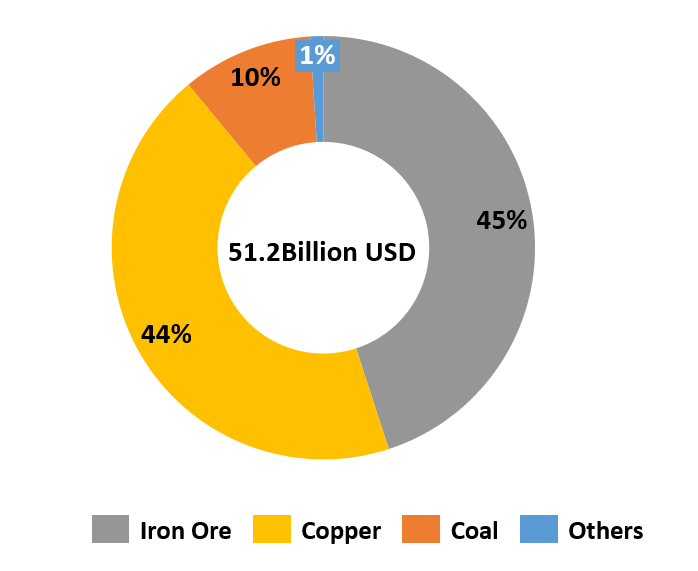
2. Sản xuất, vận chuyển và sản phẩm chính quặng sắt
Hoạt động kinh doanh quặng sắt của BHP có lịch sử lâu đời, có thể truy nguyên trước khi công ty chính thức thành lập. Mỏ bạc, chì và kẽm được phát hiện tại Broken Hill, Australia, và công ty chính thức thành lập năm 1885. Khai thác quặng sắt bắt đầu tại Newman, Pilbara, Tây Australia năm 1968. Từ đó, công ty chủ yếu tham gia phát triển, sản xuất và kinh doanh quặng sắt, đồng, kali, dầu mỏ và khí đốt tự nhiên, kim cương, bạc, chì, kẽm cùng hàng loạt tài nguyên thiên nhiên khác, đồng thời là nhà sản xuất sản phẩm thép cán.
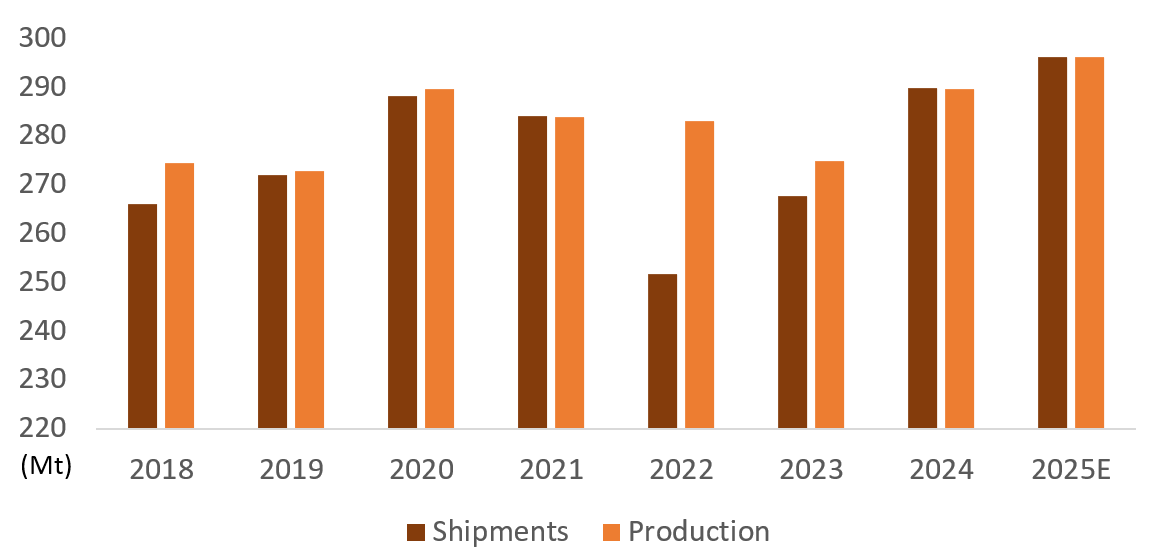
- Sản phẩm chính
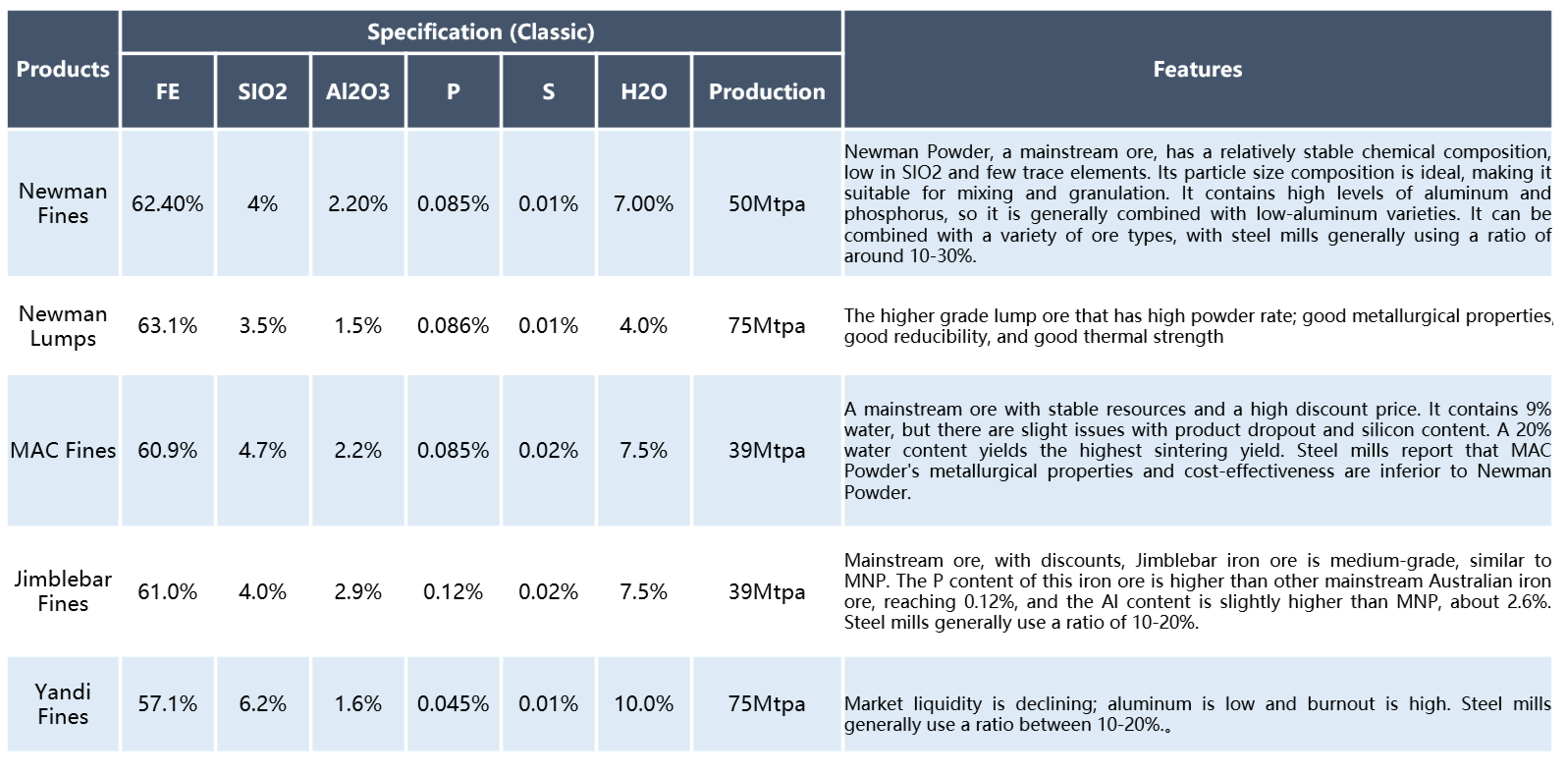
Nguồn dữ liệu: Báo cáo quý Tập đoàn BHP SMM
3. Các mỏ thuộc tập đoàn
Các mỏ trực thuộc
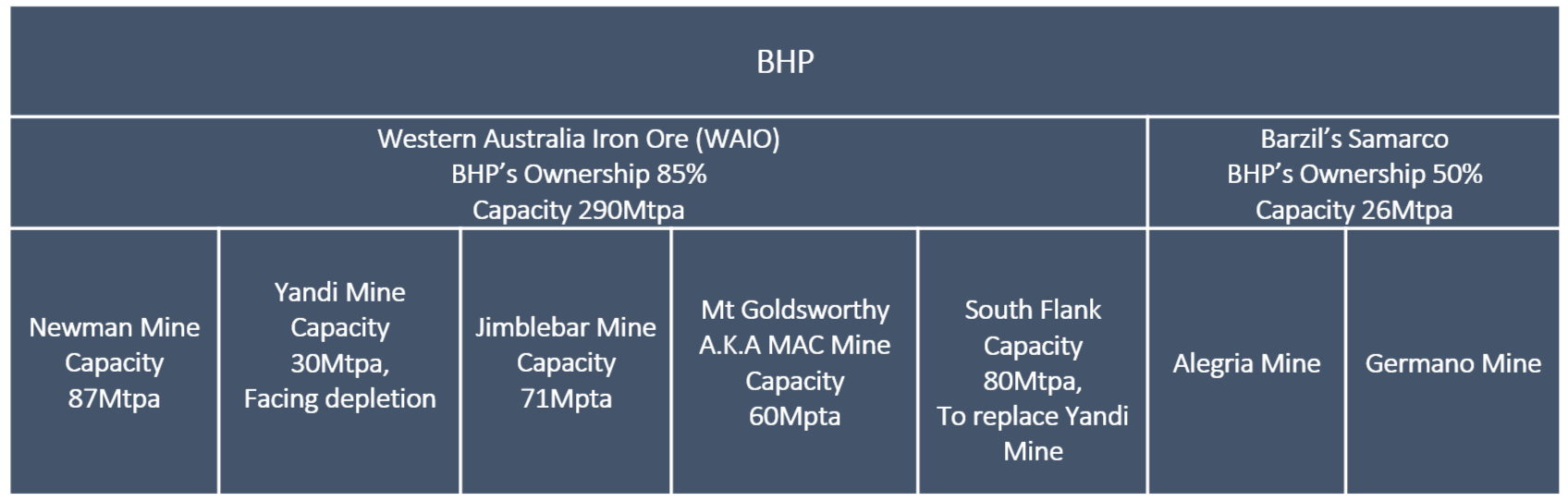
Quặng sắt Tây Australia bao gồm 5 mỏ:
Quặng sắt Tây Australia (WAIO) là hệ thống tích hợp gồm bốn trung tâm chế biến và năm mỏ, kết nối thông qua hơn 1,000 km đường sắt và cơ sở hạ tầng cảng biển trải dài khắp vùng Pilbara phía bắc Tây Australia. WAIO của BHP có bốn liên doanh chính: Newman, Yandi, Mt Goldsworthy và Jimblebar. BHP nắm giữ 85% cổ phần mỗi liên doanh, 15% còn lại thuộc về Mitsui và ITOCHU.
Mỏ sắt Samarco tại Brazil:
Công ty khai thác Samarco thành lập năm 2000 là liên doanh giữa Vale và BHP Billiton, mỗi bên nắm 50% cổ phần. Tọa lạc tại khu vực Tứ giác Sắt thuộc Minas Gerais, Brazil, gồm hai mỏ (Alegria và Germano), ba nhà máy tuyển quặng, ba đường ống vận chuyển, bốn nhà máy viên và một cảng, công suất sản xuất đạt 30 triệu tấn viên quặng/năm.
Ngày 5/11/2015, một đập chứa quặng đuôi (Fundão) của Samarco xảy ra sự cố vỡ đập, sau đó sản xuất ngưng trệ. Mãi đến 23/12/2020, Samarco mới bắt đầu hoạt động trở lại từng bước, và ngày 17/12/2024, khởi động thành công nhà máy tuyển quặng thứ hai. Tính đến tháng 6/2025, sản lượng đạt 12.8 triệu tấn/năm, khoảng 49% công suất, dự kiến khởi động lại nhà máy tuyển quặng thứ ba vào năm tài chính 2029 để phục hồi toàn bộ công suất.
Sau gần 30 năm khai thác, mỏ Yandi đang đối mặt với cạn kiệt. Theo báo cáo tài chính năm 2020 của BHP Billiton, mỏ Yandi chỉ còn trữ lượng tổng cộng 150 triệu tấn. Sản lượng tương lai dự kiến tiếp tục giảm, trong khi mỏ South Flank mới đưa vào hoạt động sẽ thay thế công suất hàng năm 80 triệu tấn đang dần suy giảm của Yandi. Mỏ South Flank bắt đầu sản xuất vào ngày 20/5/2021, với tuổi thọ dự kiến khoảng 20 năm, đạt công suất tối đa 80 triệu tấn vào năm tài chính 2025.
4. Dự án Tương lai
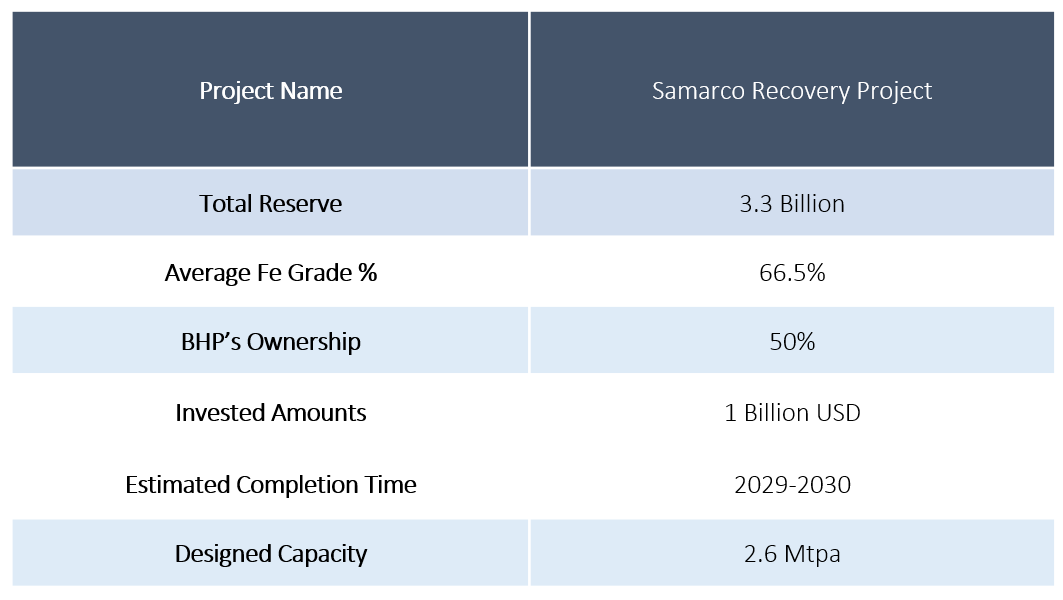
Dự án Phục hồi Mỏ Sắt Samarco
Kể từ khi được phê duyệt tiếp tục hoạt động khai thác vào năm 2020, dự án Samarco đã đầu tư nguồn vốn lớn vào khôi phục môi trường và phục hồi sản xuất.
Dự án phục hồi bao gồm tái thiết an toàn đập thải, cải thiện hệ thống xử lý chất thải, biện pháp khôi phục môi trường và bồi thường cộng đồng, cam kết loại bỏ tác động môi trường và đảm bảo hoạt động khai thác an toàn. Dự án phục hồi gồm khởi động lại ba nhà máy tuyển quặng, trong đó nhà máy thứ nhất và thứ hai đã khởi động thành công vào năm 2020 và cuối năm 2024, trong khi nhà máy thứ ba dự kiến khởi động lại vào năm tài chính 2029, khôi phục toàn bộ công suất.
![[SMM Sắt & Thép] Hàn Quốc áp thuế chống bán phá giá tạm thời lên đến 33,67% đối với thép phủ nhập khẩu từ Trung Quốc](https://imgqn.smm.cn/usercenter/JAnHq20251217171716.jpg)
![[SMM Iron & Steel] Hyundai Steel ký thỏa thuận nghiên cứu với LSU cho dự án nhà máy thép Louisiana trị giá 5,8 tỷ USD](https://imgqn.smm.cn/usercenter/crVox20251217171717.jpg)
![[SMM Iron & Steel] Chỉ số chuẩn xuất khẩu phế liệu sắt thép cao cấp đường biển xa của Mỹ sang Thổ Nhĩ Kỳ giảm 14 USD/tấn](https://imgqn.smm.cn/usercenter/vhvTQ20251217171715.jpg)