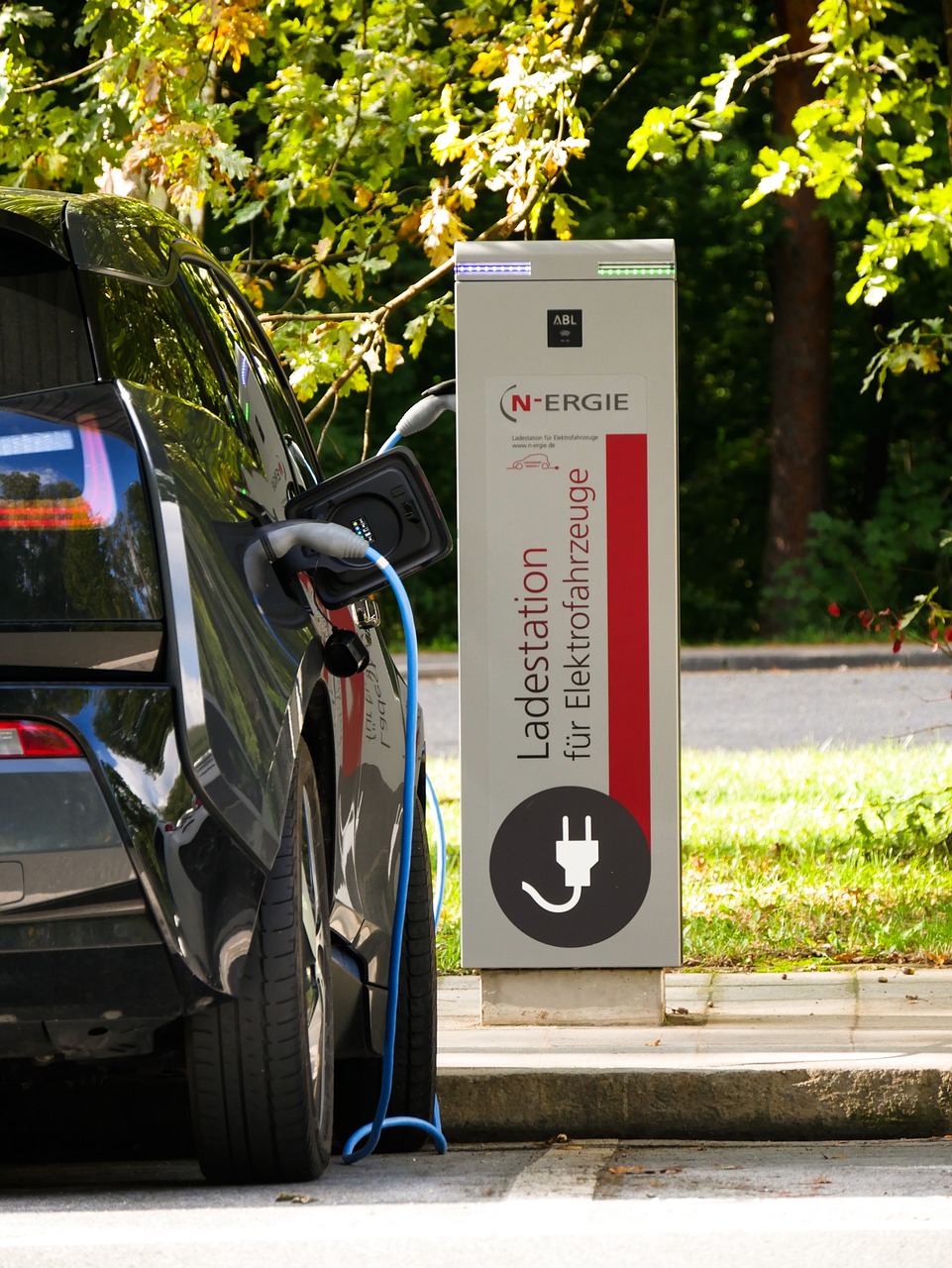
On February 19, the State Administration for Market Regulation and four other departments jointly issued the "Three-Year Action Plan for Optimizing the Consumption Environment (2025-2027)" (hereinafter referred to as the "Plan"), which has officially been implemented. As a guiding document for coordinating the expansion of domestic demand and improving people's livelihoods, the Plan explicitly proposes systematically optimizing the consumption environment through five major actions and 19 tasks. Several of its provisions directly address the long-term development challenges of the NEV industry chain and may profoundly impact the industry's structure.
The policy focuses on dual upgrades in NEV consumption scenarios and quality. In the "Action to Improve Consumption Supply Quality," the Plan clearly states that it will support the expansion and extension of NEV consumption scenarios, improve the charging and battery swapping service system, and strengthen quality, standards, and brand building in the automotive sector. This statement is seen by the market as a critical support for the NEV industry's transition from "policy-driven" to "consumption-driven" growth.
The market is paying more attention to the progress of infrastructure and standardization and may focus heavily on the three NEV-related directions outlined in the Plan:
- Expansion of the charging and battery swapping network: The document proposes "improving the NEV charging and battery swapping service system." Combined with recent charging pile construction subsidy policies introduced in multiple regions, it is expected that annual growth in charging infrastructure investment may exceed 25% from 2025 to 2027, and the application of the battery swapping model in the commercial vehicle sector may accelerate its breakthrough.
- Stricter quality supervision: In response to frequent complaints about NEVs, such as battery degradation and intelligent system failures, the Plan calls for strengthening defect product recall supervision. This may compel automakers to enhance supply chain quality control, potentially expanding the advantages of top-tier enterprises with comprehensive in-house R&D capabilities.
- Innovation in consumption scenarios: The policy encourages the creation of new-type scenarios such as digital and green consumption. NEV-related V2G (vehicle-to-grid) technology and vehicle-grid interaction business models are expected to receive more pilot support, particularly in landmark consumption regions such as the Yangtze River Delta and Pearl River Delta.
Overall, the implementation of the Plan may reshape competitive factors across three dimensions:
- Rising technological barriers: The requirement for "same production line, same standards, same quality" for domestic and international trade products may drive domestic NEV manufacturers to align with international standards, highlighting the importance of patent layouts in core technologies such as three electric systems and intelligent driving.
- Reevaluation of service value: With the implementation of provisions such as "dynamically developing 1.5 million offline units for unconditional returns and exchanges," competition in user experience within the direct sales model of NEVs will become increasingly intense, and after-sales service systems may emerge as new profit pools.
- Regional market differentiation: County-level commercial construction actions and the improvement of rural delivery logistics systems may create incremental opportunities for new brands targeting lower-tier markets with low-cost strategies. However, attention must be paid to the risks of channel restructuring brought about by addressing local protectionism.
The NEV industry is currently at a critical point of transition from "quantitative change" to "qualitative change." By optimizing the consumption environment, the Plan indirectly promotes supply-side reform, and producers with technological depth and scenario innovation capabilities are expected to gain a competitive edge in the next phase.
SMM New Energy Industry Research Department
Cong Wang 021-51666838
Xiaodan Yu 021-20707870
Rui Ma 021-51595780
Disheng Feng 021-51666714
Yujun Liu 021-20707895
Yanlin Lü 021-20707875
Zhicheng Zhou 021-51666711
Haohan Zhang 021-51666752
Zihan Wang 021-51666914
Xiaoxuan Ren 021-20707866
Yushuo Liang 021-20707892
Jie Wang 021-51595902
Yang Xu 021-51666760
Boling Chen 021-51666836
![[Geely's Gan Jiayue: Zeekr 9X to enter markets in the Middle East, Central Asia, and Europe from Q3]](https://imgqn.smm.cn/usercenter/tKgKv20251217171725.png)
![[LG Energy Solution posts Q1 operating loss of 207.8 billion won]](https://imgqn.smm.cn/usercenter/HySQT20251217171731.png)