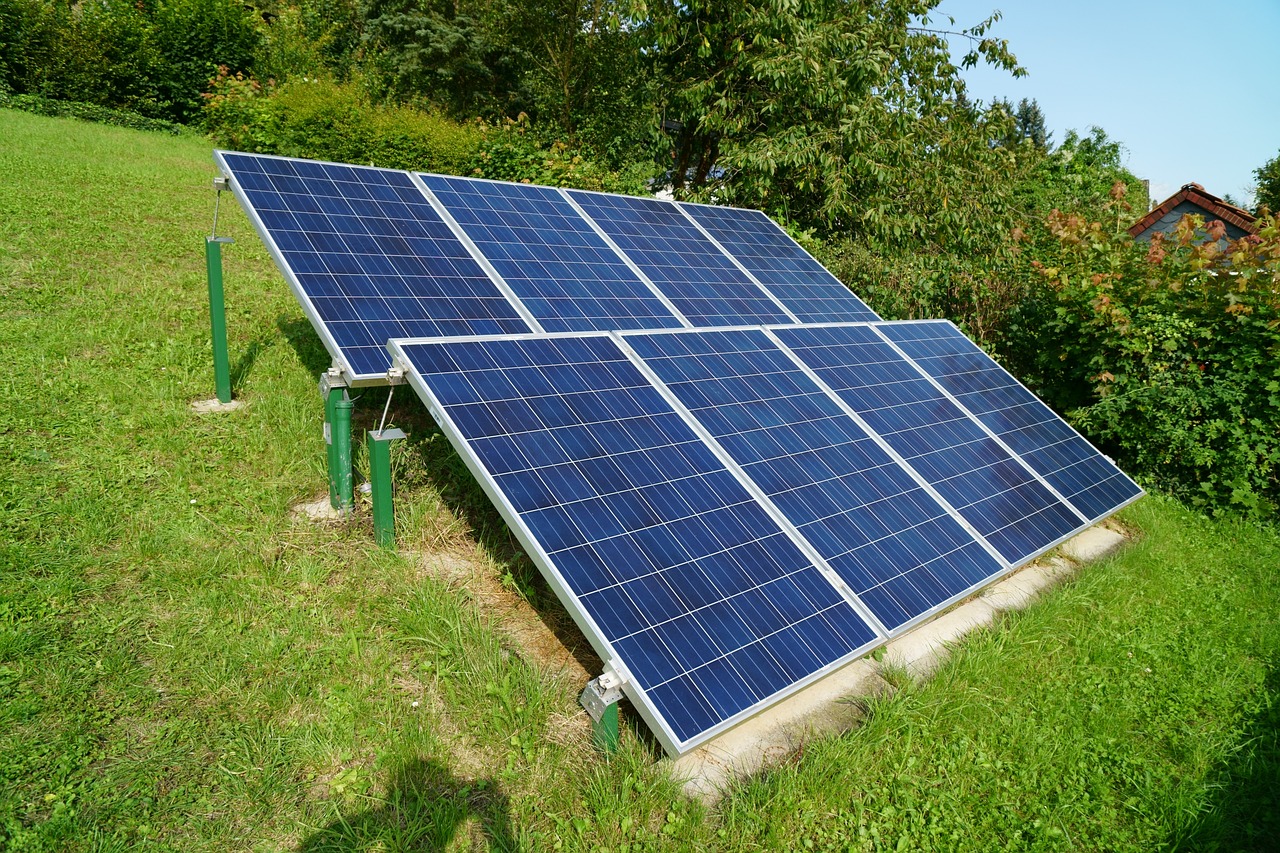
On May 21, stimulated by the news that the China Photovoltaic Industry Association organized a "High-Quality Development Symposium for the Photovoltaic Industry," the photovoltaic equipment sector surged rapidly on the morning of May 22, with the index rising over 5% at one point, ranking at the forefront among various sectors.
According to the official WeChat account of the China Photovoltaic Industry Association, the prices in China's photovoltaic industry chain have been declining recently, putting pressure on business operations and adversely affecting the high-quality development of China's photovoltaic industry. To discuss the current issues facing the photovoltaic industry, their causes, and countermeasures, and to guide the orderly development of the industry, this meeting was "born out of necessity."
The meeting pointed out that the photovoltaic industry is highly market-oriented and is more suitable for solving current industry difficulties through market-oriented means. However, the government should also play a significant role, including optimizing management policies for the photovoltaic manufacturing industry to guide capacity building, improving key technical indicators, standardizing local government investment promotion policies, establishing a unified national market, adapting to the fast iteration speed of photovoltaic technology, establishing effective intellectual property protection measures, encouraging industry mergers and acquisitions, facilitating market exit mechanisms, strengthening the crackdown on malicious competition from below-cost sales, ensuring stable growth in the domestic photovoltaic market, and exploring support for advanced technology applications through demonstration projects to change the low-price bid-winning situation.
At the same time, the meeting also mentioned that photovoltaic companies and the industry need to do their part, fully recognizing their primary responsibility in solving the current industry difficulties, avoiding malicious competition, making decisions and actions from the industry's standpoint, adhering to innovation-driven and long-term strategies, and maintaining fair competition order through cooperation and mutual benefit.
Polysilicon Prices Fall below Industry Average Cost, Multiple Companies' Q1 Performance Down YoY
Since 2024, prices of products in various segments of the photovoltaic industry chain have experienced varying degrees of decline. In terms of upstream raw material polysilicon prices, the decline that started in Q4 2023 has not stopped. For example, the price of dense polysilicon has fallen to 35-38 yuan/kg as of May 22, with an average price of 36.5 yuan/kg, already below the current industry average cost line. As a result, the Q1 performance of many domestic polysilicon-related companies has significantly declined.
Daqo New Energy's Q1 net profit was 331 million yuan, down 88.64% YoY; Tongwei Co., Ltd. had a Q1 net loss of 787 million yuan, turning from profit to loss YoY; GCL Technology's unaudited Q1 profit attributable to owners was about 33 million yuan, also down YoY. The main reason cited by most companies was the sharp drop in the average price of polysilicon in Q1.
With multiple polysilicon manufacturers undergoing maintenance in May, SMM expects polysilicon production to fall below 180,000 mt. According to an SMM survey, new manufacturers will continue to undergo maintenance in June.
In terms of inventory, China's polysilicon inventory has been increasing since February 2024, reaching about 295,000 mt as of May 17, near the high levels of recent years. According to a recent SMM survey, downstream buyers are adopting a strategy of multiple small purchases, and the supply-demand balance calculation for May still shows an accumulation of inventory.
On the demand side, downstream silicon wafer prices continue to fall, and silicon wafer companies are facing cash cost losses. However, after experiencing significant losses previously, SMM expects silicon wafer prices to gradually approach the bottom, and the decline may start to slow down. SMM expects silicon wafer production to be around 60GW in May, and with cash cost losses, production in June may continue to decline. Weekly silicon wafer inventory has also recently increased to about 40.6GW, near the high levels of recent years. With limited downstream purchasing enthusiasm, there has been no significant inventory reduction.
Therefore, overall, the polysilicon segment is still under pressure, and other segments of the photovoltaic industry chain have not escaped similar fates. In this context, low-price competition has become the main means for companies to capture customers. Although this process may promote the continuous elimination of low-end and redundant capacity, some analysts admitted that low-price competition can also affect the healthy development of the industry to some extent, limiting companies' investment in research and innovation, thereby affecting the industry's long-term competitiveness. Therefore, the meeting also indicated that it would strengthen the crackdown on malicious competition from below-cost sales. At the same time, encouraging industry mergers and acquisitions and facilitating market exit mechanisms also provided suggestions for supply-side reform in the industry.
JinkoSolar Vice President Qian Jing also stated in a media interview that this year is a significant test for companies in all segments of the supply chain. The industry's concentration is expected to further increase in 2024, with the market share of the top four companies possibly reaching or even exceeding 60%. Wanlian Securities Investment Advisor Qu Fang also stated that the entire photovoltaic industry chain has entered a stage of competition in cost, technology, and cash flow, and high-cost and technologically lagging capacities will accelerate their exit. He expects that with the implementation of relevant policies and the recovery of market demand, the industry will gradually return to a healthy development track.
But industry insiders remain confident in the long-term development of the photovoltaic industry. Tongwei Chairman Liu Hanyuan stated that in 2023, global photovoltaic industry demand grew by nearly 80% YoY. If demand grows by about 30% to 50% this year and next, even if capacity remains unchanged, the supply-demand balance in the photovoltaic industry can be restored. He expects that in the most optimistic scenario, the photovoltaic industry will show improvement in Q4 this year, but in the pessimistic scenario, it will take until Q4 2025 for the industry to see a more certain recovery.
![[Solar: New Jersey thông qua luật điện mặt trời ban công]](https://imgqn.smm.cn/usercenter/GOtTW20251217171740.jpg)
![[Solar: Solar đạt mức phát điện cao mới tại Bồ Đào Nha vào tháng 8]](https://imgqn.smm.cn/usercenter/CpbPE20251217171736.jpg)
![[Solar: Thượng viện Brazil thông qua chế độ thuế trung tâm dữ liệu gắn ưu đãi với sử dụng năng lượng tái tạo]](https://imgqn.smm.cn/usercenter/mfLxa20251217171736.jpg)