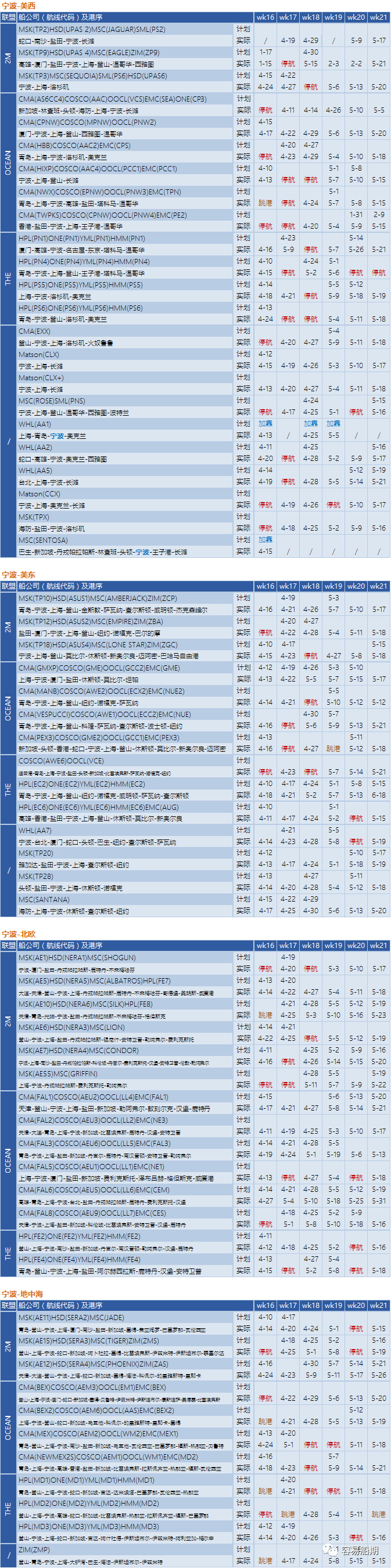
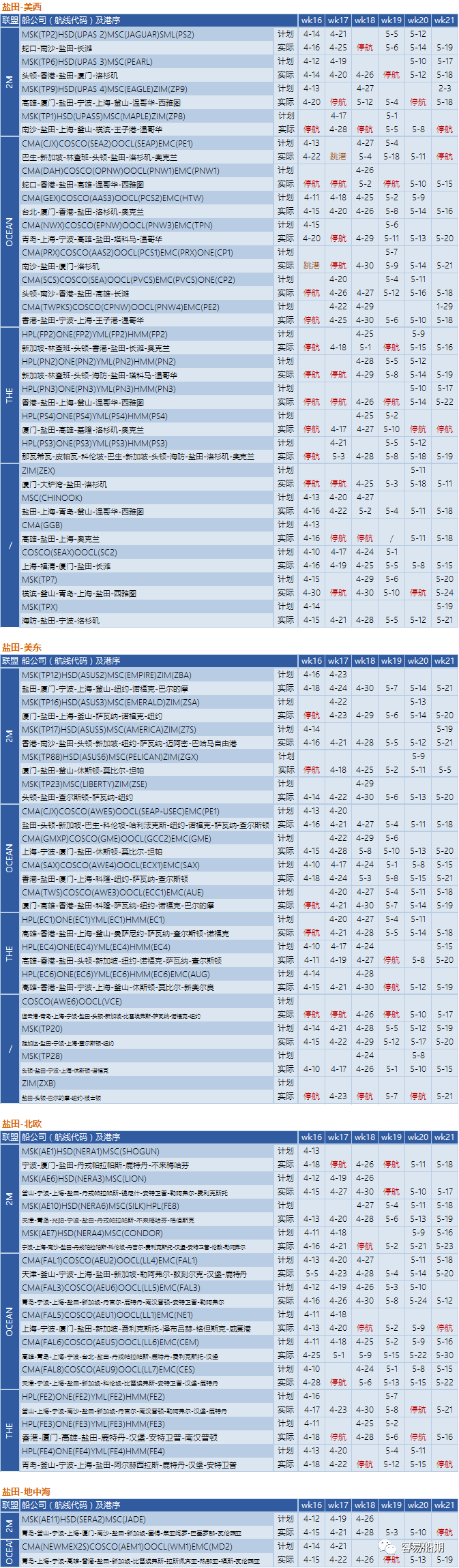
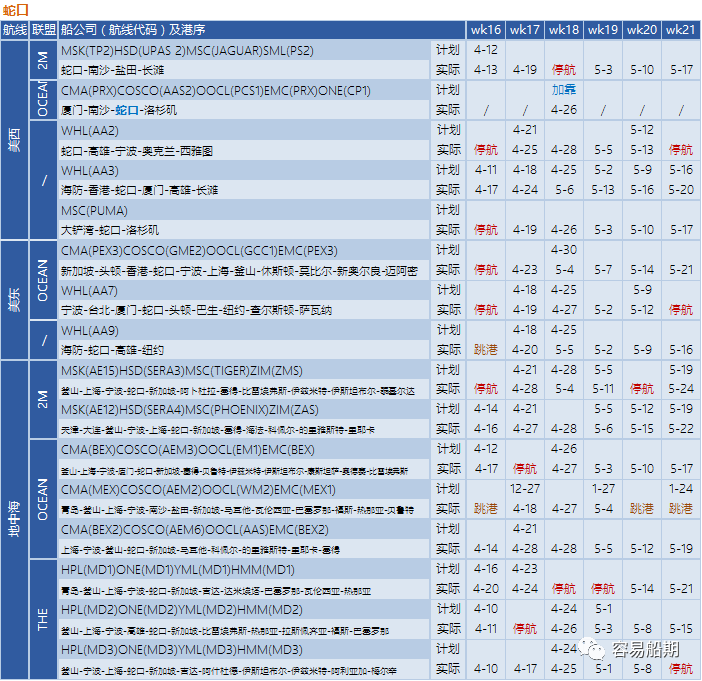
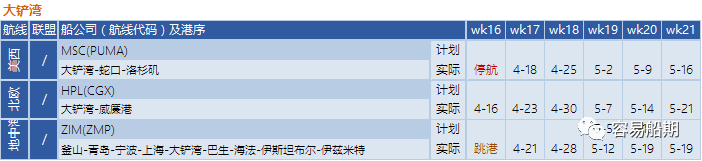
Three major leagues cancel 54 voyages! 58% of the air flights occur on trans-Pacific routes! Summary of suspension and jump into port is attached

Đã xuất bản: Apr 18, 2022 09:08 (GMT+8)
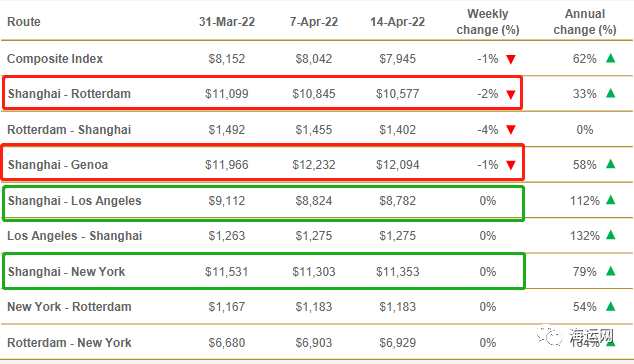
[three major leagues cancel 54 voyages! 58% of the air flights occur on trans-Pacific routes! With suspension and jump summary] Drury's latest composite world container index fell 1.2% to 7945.31 yuan per 40-foot container. It is still 62% higher than the same period last year. Drury's average WCI composite index so far this year is $9038 per 40-foot container, $5805 higher than the five-year average of $3232 per 40-foot container. The Drury index shows that freight rates have fallen for the seventh week in a row since February 24, 2022.

Drury's latest composite world container index fell 1.2 per cent to 7945.31 yuan per 40-foot container. It is still 62% higher than the same period last year. Drury's average WCI composite index so far this year is $9038 per 40-foot container, $5805 higher than the five-year average of $3232 per 40-foot container.
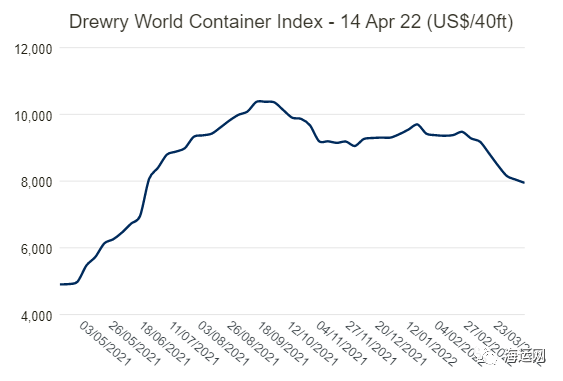
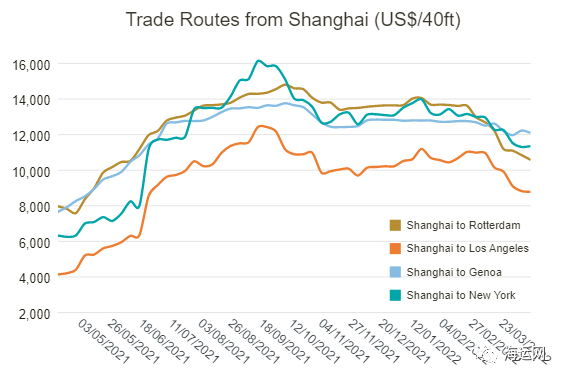
The Drury index shows that freight rates have fallen for the seventh week in a row since February 24, 2022.

1) freight from Shanghai to Rotterdam fell by 2 per cent, or US $268, to US $10577 / FEU.

2) freight rates between Shanghai and Genoa fell by 1 per cent, or $138to $12904 / FEU.

3) the freight rates of Shanghai-Los Angeles and Shanghai-New York remain basically unchanged compared with the previous period, reaching US $8782 / FEU and US $11353 / FEU respectively.

Drury expects Drury to expect spot rates to remain stable in the coming weeks.
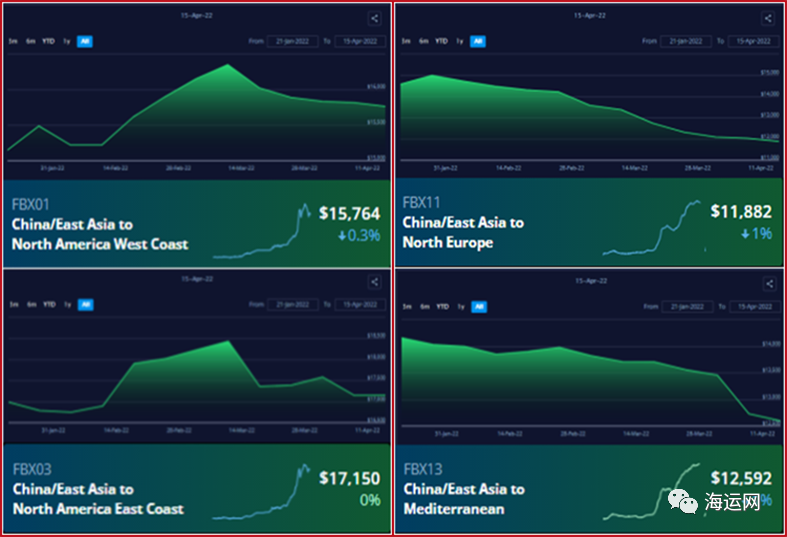
In addition, take a look at the latest Baltic Container Freight Index (FBX). The data show that:

1) the latest index from Asia to the US West fell slightly by 0.3 per cent to $15764 / FEU, the fifth consecutive week of decline since hitting a high of $16353 on March 11.

2) the latest index from Asia to the US East is basically unchanged at US $17150 / FEU, which is also a state of decline since reaching a high of US $18450 on March 11.

3) the latest Asia-Nordic index fell 1 per cent to $11882 / FEU, the 12th consecutive week of decline since hitting a high of $14999 on January 28th.

3) the latest index of Asia to the Mediterranean fell 1 per cent to $12592 / FEU, the 13th straight week of decline since hitting a high in January.
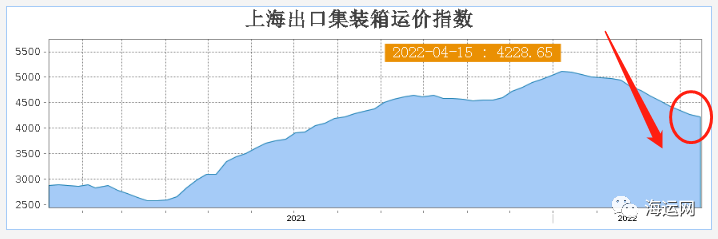
On April 15, the Shanghai Composite Container Freight Index (SCFI) released by the Shanghai Shipping Exchange closed slightly lower at 4228.65 points, down 35.01 points from the previous period of 4263.66 points.
Trends in shipping markets from Asia to North America:

With the continuous closure of Shanghai, suppliers and importers are facing increasing uncertainty. Seaborne carriers continue to assess the impact of booking. Due to the constraints of the current situation, China's export freight activity has decreased, and many carriers have turned to look for goods shipped from Southeast Asia. As the traditional peak season approaches, many importers and retailers are still in urgent need of restocking. Old problems that have not been alleviated include severe congestion, equipment imbalances, delays in cargo ships, port jumps, empty lines and higher fuel surcharges. The level of sea freight is still high compared with that before the epidemic, and the prices of a few market segments have declined. The priority transport market remains strong.

Trends in the Asian-European shipping market:

Shanghai is still under control, and some areas are likely to be unsealed in the near future. Cases have also been reported in other cities in eastern and northern China. The supply of factory production, warehouses and trucking services has been affected, although port terminals and trucking are still fully operational. All shipping alliances are available regardless of freight rates and spot freight, but carriers are still restricting transactions with long-term key customers. In response to recent changes in the situation, carriers are expected to announce port jump and air travel measures. Sea freight rates remain high, but prices as a whole show a downward trend from March to April as the market slows.

However, it is worth noting that freight rates for Southeast Asian routes have skyrocketed recently.

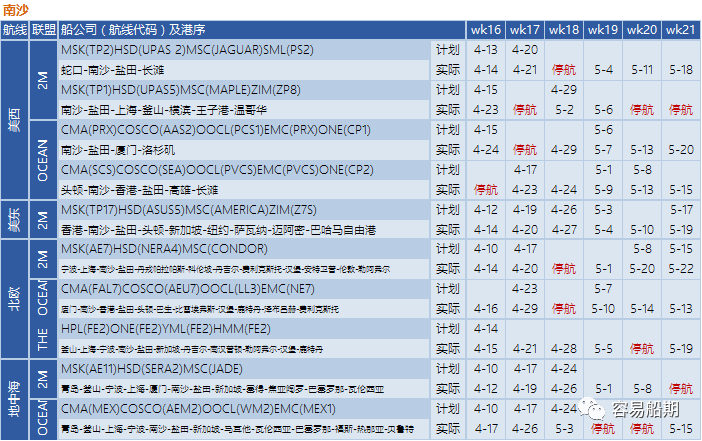
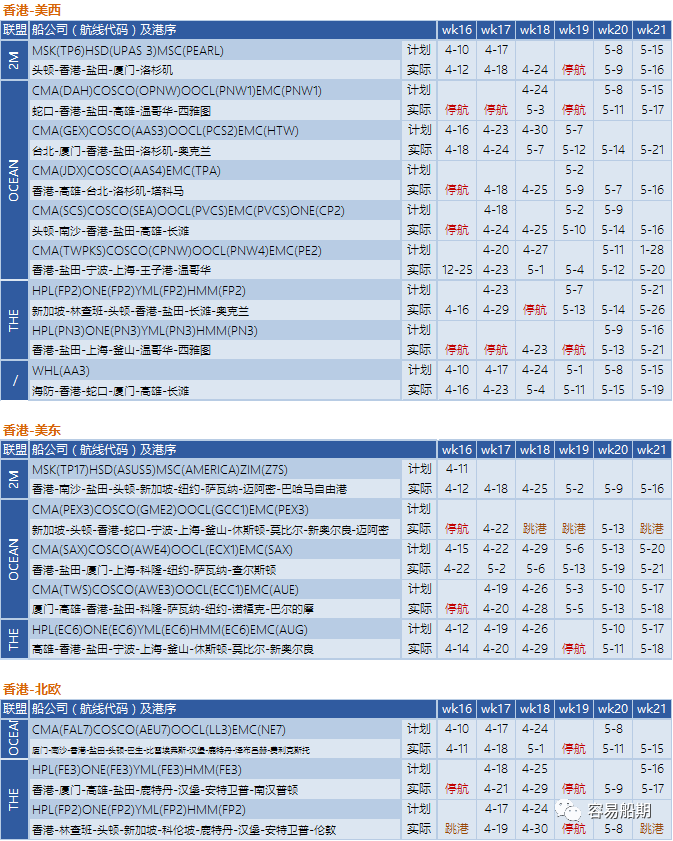
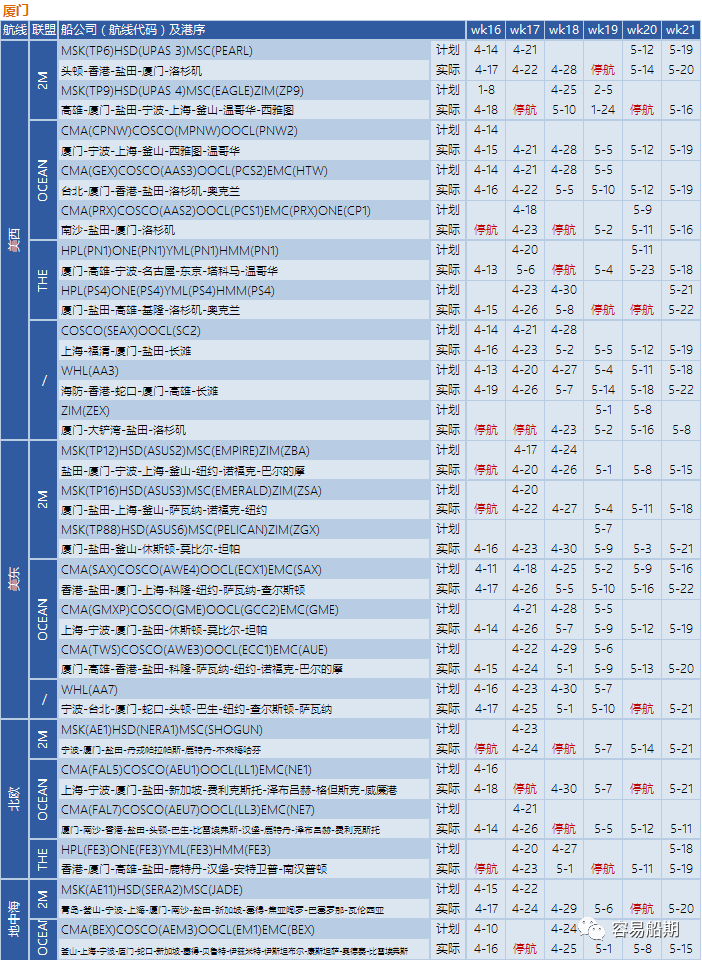
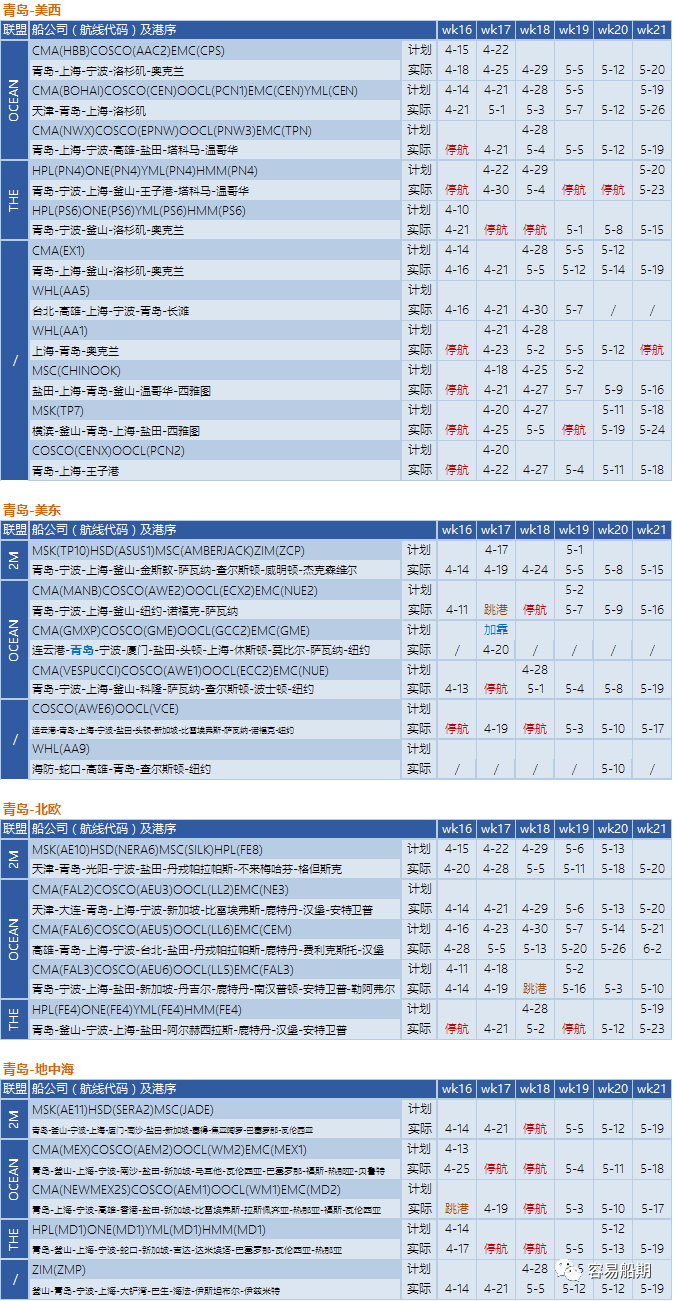
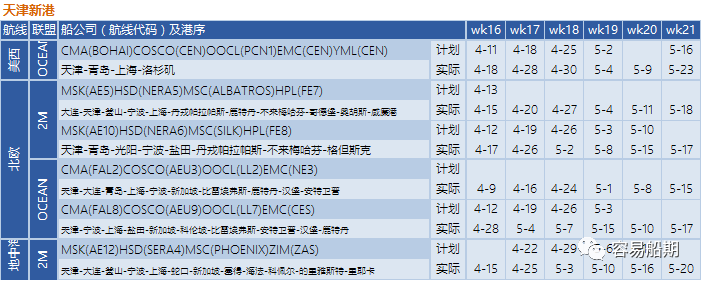
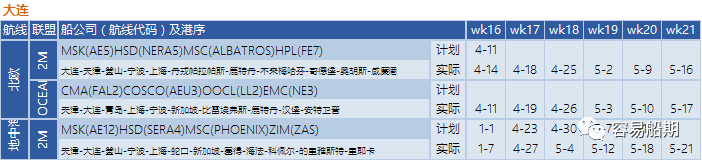
According to the latest data released by Drury a few days ago, in the following five weeks (weeks 16-20), the world's three major shipping alliances canceled a number of voyages one after another, of which the THE alliance cancelled the most 25 voyages; 2m alliance canceled 17 voyages; the least maritime alliance cancelled 12 voyages; a total of 54 voyages.
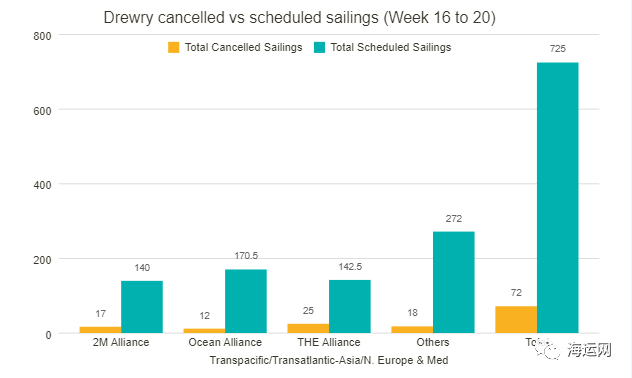
Drury said that the continued containment of the epidemic has put pressure on the already stretched supply chain, and shipping companies such as Maersk and Dafayton have begun to jump into Shanghai on some routes.

In addition, congestion at high-throughput ports has intensified again, especially in the United States, where imports have shifted from the west coast to the east coast. Many shippers are now focusing on the Gulf route and transferring goods to the port of Houston. With the ever-changing level of port productivity, it becomes more challenging to plan for shippers in a period of market uncertainty.

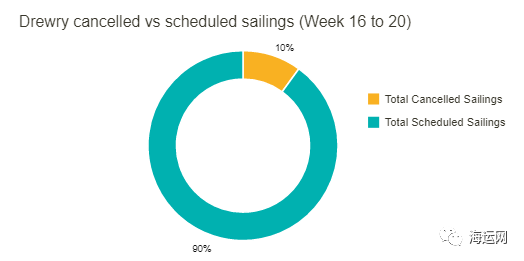
Of a total of 725 scheduled flights on major routes across the Pacific, transatlantic, Asia-Nordic and Asia-Mediterranean, 72 flights were cancelled between week 16 and the 20th week of next year, with a cancellation rate of 10 per cent. During this period, 58 per cent of blank voyages will take place on eastbound trans-Pacific trade routes, mainly to the west coast of the US, according to Drury's current data.
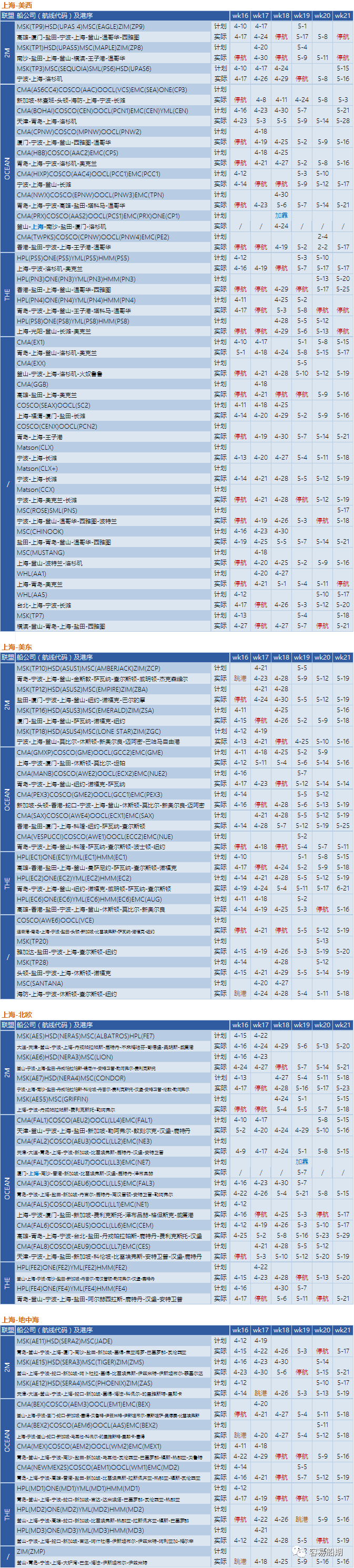
The following is a summary of easy shipping schedule statistics from Chinese mainland to North America, Europe and the Mediterranean for weeks 16-21 (from 2022-4-10 to 2022-5-21):

Summary of suspension and jump into port
Tuyên bố về Nguồn Dữ liệu: Ngoại trừ thông tin công khai, tất cả dữ liệu khác được SMM xử lý dựa trên thông tin công khai, giao tiếp thị trường và dựa trên mô hình cơ sở dữ liệu nội bộ của SMM. Chúng chỉ mang tính chất tham khảo và không cấu thành khuyến nghị ra quyết định.

Để biết thêm thông tin hoặc có thắc mắc gì, vui lòng liên hệ: lemonzhao@smm.cn
Để biết thêm thông tin về cách truy cập báo cáo nghiên cứu, vui lòng liên hệ:service.en@smm.cn
Tin Liên Quan
Dự luật Ghana đề xuất cổ phần đặc biệt của nhà nước và thời hạn khai thác mỏ ngắn hơn
11 giờ trước
Dự luật Ghana đề xuất cổ phần đặc biệt của nhà nước và thời hạn khai thác mỏ ngắn hơn
Đọc thêm
Dự luật Ghana đề xuất cổ phần đặc biệt của nhà nước và thời hạn khai thác mỏ ngắn hơn
[SMM Tin nhanh vàng] Một dự thảo luật khai khoáng được Reuters xem xét ngày 30/9 sẽ cho phép bộ trưởng khai khoáng Ghana yêu cầu các công ty phát hành cho nhà nước một cổ phần đặc biệt miễn phí kèm quyền đồng ý đối với các giao dịch lớn. Dự thảo sẽ giữ nguyên lợi ích nhà nước 10% không phải trả phí hiện hành và giới hạn thời hạn thuê mỏ ở mức 15 năm hoặc tuổi thọ dự kiến của mỏ, tùy theo thời hạn nào ngắn hơn. Dự thảo cũng sẽ cho phép các quy định trong tương lai yêu cầu chế biến tại địa phương và hạn chế xuất khẩu tinh quặng chưa qua chế biến. Chưa có đề xuất nào trong số này được ban hành; Reuters chưa xác định được thời điểm dự thảo được soạn thảo. Đối với các công ty khai thác vàng của Ghana, các quyền được đề xuất và thời hạn thuê ngắn hơn có thể ảnh hưởng đến tài chính, định giá và các quyết định gia hạn. Theo dự thảo, những người nắm giữ quyền hiện hữu muốn gia hạn sẽ được ưu tiên xem xét cấp giấy phép tương đương. Reuters đưa tin, các công ty khai khoáng kỳ vọng sẽ có thêm tham vấn trước khi quốc hội tranh luận. Nội dung cuối cùng và thời điểm vẫn chưa chắc chắn.
11 giờ trước
PGM: Các thử nghiệm độc lập thúc đẩy công nghệ pin bạch kim và paladi
11 giờ trước
PGM: Các thử nghiệm độc lập thúc đẩy công nghệ pin bạch kim và paladi
Đọc thêm
PGM: Các thử nghiệm độc lập thúc đẩy công nghệ pin bạch kim và paladi
[SMM PGM Flash] Platinum Group Metals cho biết vào ngày 1 tháng 10 rằng thử nghiệm độc lập của Battery Innovation Center đã xác nhận các điện cực dựa trên bạch kim và palladi của công ty con Lion Battery trong các tế bào lithium-lưu huỳnh nguyên mẫu. So với các tế bào không có chất xúc tác, các nguyên mẫu cho thấy dung lượng và khả năng tốc độ tốt hơn, với các công thức giàu palladi hoạt động tốt nhất về tổng thể. Platinum Group và Valterra Platinum, lần lượt sở hữu 52% và 48% Lion, đã phê duyệt tài trợ cho giai đoạn tiếp theo. Kết quả này mang lại một ứng dụng mới tiềm năng cho PGM ngoài chất xúc tác khí thải xe cộ, nhưng vẫn là một cột mốc ở giai đoạn nguyên mẫu. Lion có kế hoạch sản xuất và thử nghiệm các tế bào túi, tinh chỉnh chất xúc tác và đánh giá các ứng dụng bao gồm máy bay không người lái. Hiệu suất thương mại và nhu cầu về khối lượng PGM đáng kể vẫn chưa được xác lập. Công trình này có liên quan đến các nhà cung cấp Nam Phi: Valterra sản xuất PGM tại Nam Phi và Zimbabwe, trong khi Platinum Group đang phát triển dự án Waterberg ở Nam Phi.
11 giờ trước
Sibanye đạt thỏa thuận tiền lương tại East Boulder; cuộc đình công riêng rẽ ở Mỹ vẫn tiếp diễn
01 Oct 2026 16:45 (GMT+8)
Sibanye đạt thỏa thuận tiền lương tại East Boulder; cuộc đình công riêng rẽ ở Mỹ vẫn tiếp diễn
Đọc thêm
Sibanye đạt thỏa thuận tiền lương tại East Boulder; cuộc đình công riêng rẽ ở Mỹ vẫn tiếp diễn
[SMM PGM Flash] Sibanye-Stillwater ngày 30/9 thông báo công nhân tại mỏ bạch kim và palladium East Boulder ở Montana đã phê chuẩn thỏa ước lao động tập thể với United Steelworkers. Thỏa thuận có hiệu lực hồi tố từ 1/8/2026 đến 31/7/2029, với mức tăng lương 4,5% trong năm đầu, mức cao hơn giữa 3,5% hoặc CPI trong năm thứ hai và mức cao hơn giữa 3,0% hoặc CPI trong năm thứ ba. Công ty cho biết cuộc đình công tại mỏ Stillwater East và nhà máy luyện kim Columbus riêng biệt vẫn tiếp diễn. Thỏa thuận tại East Boulder chốt một phần lộ trình chi phí lao động cho mảng kinh doanh PGM tại Mỹ của Sibanye và hỗ trợ kế hoạch chuyển đổi sang khai thác cơ giới hóa hơn cùng các ưu đãi theo nhóm. Thỏa thuận này không giải quyết cuộc đình công còn lại cũng như không cho thấy sự phục hồi sản lượng; công ty không công bố hướng dẫn sản lượng điều chỉnh nào trong thông cáo này.
01 Oct 2026 16:45 (GMT+8)