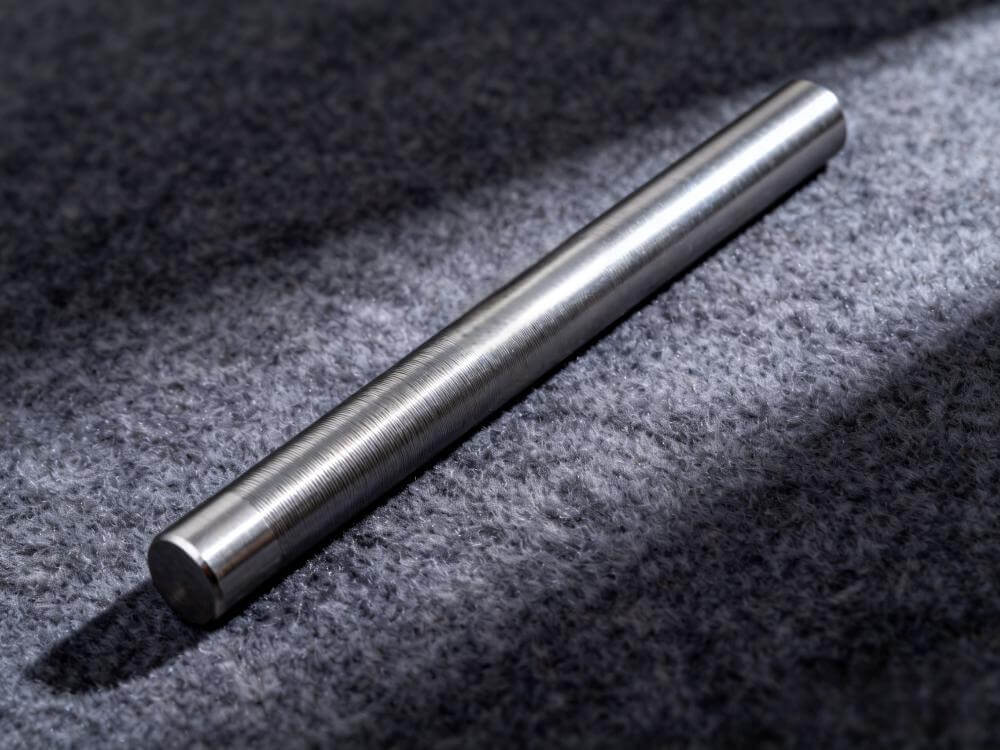
SiC Silicon Carbide: the Golden Age of industrialization has come; substrate is the Core of industrialization Breakthrough
1) the performance is superior in high-voltage and high-power application scenarios, which is suitable for high-voltage scenarios above 600V. Compared with silicon-based MOSFET of the same specification, the size of silicon carbide-based MOSFET is reduced to 1max 10, the on-resistance is reduced to 1max 100, the total energy loss is reduced by 70%, and the energy conversion efficiency is improved. Downstream application of new energy vehicles, charging piles, photovoltaic, wind power, rail transit and other fields.
2) benefiting from the outbreak of new energy vehicles, the golden era of SiC industrialization will come. Yole predicts that the market size of SiC power devices will reach US $4.5 billion in 2026 and CAGR=36% in 2020-2026. New energy vehicles are the main growth driver of silicon carbide power devices market, application side: to solve the pain point of battery life. Cost side: bicycles can save $400-800 in battery costs. Client: Tesla and other car companies have layout. At present, Tesla is only used in the main inverter, and there is room for further application and improvement in the future.
3) the performance-to-price ratio is the key to the mass use of SiC devices, and the preparation of substrate is the core of improving the performance-to-price ratio of silicon carbide. The cost of silicon carbide devices accounts for 46%, 23% and 20%, respectively. The substrate is the core of silicon carbide cost reduction and the highest link of technical barrier, which is the core key of SiC cost reduction and large-scale industrialization in the future.
SiC substrate: new energy vehicles + photovoltaic demand potential; domestic and foreign gap is gradually narrowing
1) Market space: the market demand for new energy vehicles + photovoltaic inverters is expected to reach 26.1 billion yuan in 2025 and CAGR=79% in 2021-2025. New energy vehicles: at present, the annual demand of Tesla Model3/Y alone can consume the huge capacity of global SiC wafers. The agency's analysts estimate that if the penetration rate of SiC in new energy vehicles will reach 60% in 2025, it is estimated that the demand for 6-inch SiC substrates will reach 5.87 million pieces per year, and the market space will reach 23.1 billion yuan. Photovoltaic inverter: in the era of "large components, large inverters, large series", the voltage level of photovoltaic power station is raised from 1000V to more than 1500V, and silicon carbide power devices are expected to become standard. Analysts at the agency assume that the permeability of silicon carbide will increase to 50% in 2025, corresponding to 3 billion yuan in the market for SiC substrates. The core bottleneck of the industry is the shortage of supply side.
2) Competition pattern: the gap between home and abroad is gradually narrowing, and the localization rate is expected to increase. At present, overseas leaders (Wolfspeed, II-VI occupy more than 60% of the market share) have achieved 6-inch large-scale supply and marched into 8 inches. Domestic manufacturers (Tianyue Advanced, Tian Keheda, Jingsheng Mechatronics, Lou Xiao Technology, etc.) are mainly small in size and march to 6 inches. However, it can be observed that the gap at home and abroad is narrowing, and the overall gap is smaller than that of traditional silicon-based semiconductors. The gap between domestic and foreign countries has narrowed from the past 10-15 years (4 inches) to less than 5-10 years (6 inches). It is expected that the gap is expected to narrow further in the process of marching into 8 inches in the future.
3) production process: it is much more difficult than silicon-based semiconductors, and the long crystal link is the key. Silicon carbide substrate is a technology-intensive industry. The core difficulties are that the process of crystal growth is complex (only a few types such as 4H type are required), the growth rate is slow (only 0.2-0.3mm per hour, which is nearly 100 times slower than that of traditional silicon), and the yield is low (the hardness is close to that of diamond). It is difficult to cut, grind and polish. Industry-university-research application is an important driving force for the development of silicon carbide substrates in China. Domestic universities and scientific research institutions mainly include the Institute of Physics of the Chinese Academy of Sciences, Shandong University, Shanghai silicate Institute and so on.
4) Industry trend: cost reduction is the core of industrialization, extending to large size. The current price of a 6-inch SiC substrate is $1000 per wafer, several times higher than that of conventional silicon-based semiconductors. The ways to reduce costs in the future include: increasing material utilization (large size, extending from 4 inches to 6 inches, 8 inches), reducing manufacturing costs (improving yield), and improving production efficiency (more mature growth process).
SiC substrate equipment: less different from traditional crystal silicon, process adjustment as the core barrier
Mainly include: Crystal furnace, slicer, grinder, polishing machine, cleaning equipment and so on. It has certain commonality with traditional crystal silicon equipment, but the process is more difficult. There are fewer third-party equipment manufacturers on silicon carbide substrate, and more enterprises focus on the integrated layout of equipment and manufacturing, so it is easy to keep the core process secret in their own hands. The joint research and development of equipment and technology and the formation of mutual feeding is the key.
Key recommendation: Jingsheng Mechatronics. Focus on listed companies: Tianyue Advanced, Lou Xiao Technology, San'an Optoelectronics, Tony Electronics, Tiantong shares, Phoenix Optics, Huarun Micro, Tianfu Energy and so on. Pay attention to unlisted companies: Tianke Heda, Hebei Tongguang, Shandong Scintillation, Hantiancheng, Skyfield Semiconductor, Zhongke Energy Saving, Tyco Tianrun and so on.
![[Tin nhanh | Imacec tháng 7 của Chile giảm 1,5% so với cùng kỳ năm ngoái, mức giảm theo tháng mạnh nhất kể từ năm 2022 khi ngành khai khoáng sụt giảm 9,3%]](https://imgqn.smm.cn/usercenter/yunIW20251217171723.jpeg)
![[SMM Tin nhanh Crom] Thỏa thuận tiềm năng Valterra-Northam có thể định hình lại cục diện tinh quặng crom Nam Phi](https://imgqn.smm.cn/usercenter/qbMSp20251217171722.jpeg)
![Lợi ích từ việc cắt giảm sản lượng hiện thực hóa khi xu hướng giá tương lai và giá giao ngay phân kỳ; giá silicon kim loại vẫn giằng co [Báo cáo tuần ngành silicon SMM]](https://imgqn.smm.cn/usercenter/aNMzb20251217171724.jpg)