SMM survey: what kind of metal do you like most in 2022?
After the "thousands of calls" from the majority of car owners, the exclusive commercial insurance for new energy vehicles is finally coming!
On December 14, the official website of the China Insurance Association officially released the "China Insurance Industry Association New Energy vehicle Commercial Insurance exclusive clauses (trial)" (hereinafter referred to as "New Energy vehicle Model clauses (trial)").
It is understood that the "New Energy vehicle Model clause (trial)" includes the China Insurance Industry Association New Energy vehicle Commercial Insurance Model clause (trial) and the China Insurance Industry Association New Energy vehicle driver accident injury Insurance Model Clause (trial). According to the new energy vehicle commercial insurance model clause rate switching time, all new and renewed new energy vehicles, except motorcycles, tractors and special vehicles, are uniformly covered by the New Energy vehicle Model clauses (trial). It is no longer applicable to the China Insurance Industry Association Motor vehicle Commercial Insurance Model clauses (2020 Edition). Non-new energy vehicles cannot be covered by the New Energy vehicle Model clauses (trial).
In recent years, with the explosive growth of new energy vehicles, safety accidents also emerge in endlessly. According to data released by the defective Product Management Center of the General Administration of Market Supervision, by the end of June this year, companies had recalled a total of 1.2838 million new energy defective vehicles, accounting for 22.13% of the total number of new energy vehicles at that time. Due to the different structure of new energy vehicles, new energy vehicles have some problems that do not appear in fuel vehicles, such as power battery failure, charge deflagration, spontaneous combustion, brake failure and so on. In the face of these risks, in addition to requiring automobile companies to carry out product innovation and avoid risks, they also need to upgrade personnel security and insurance services.
The Battery Network has learned that the new energy vehicles referred to in the New Energy vehicle Model clauses (trial) refer to vehicles that use new power systems and are driven entirely or mainly by new energy sources, including plug-in hybrid vehicles (including add-on vehicles), pure electric vehicles and fuel cell vehicles. It is precisely because the core technology of new energy vehicles is battery-driven, which has some additional risks compared with fuel vehicles, so this time combined with the specific use of new energy vehicles, charging and other characteristics, the development of supporting provisions.
If there is a fire, the "three electricity" can be protected.
It is reported that the "New Energy vehicle Model clause (trial)" is divided into main insurance and additional risk. The main insurance includes three independent types of insurance: new energy vehicle loss insurance, new energy vehicle third party liability insurance and new energy vehicle personnel liability insurance. Policyholders can choose to cover all types of insurance or some of them; additional risks cannot be insured independently.
Among them, in the aspect of main insurance, the insured or the driver shall be responsible for the direct loss of the following equipment of the insured new energy vehicle due to natural disasters and accidents (including fire and combustion) in the process of using the insured new energy vehicle, and it does not belong to the scope of exemption from liability of the insurer, and the insurer shall be responsible for compensation in accordance with the provisions of this insurance contract. The scope of protection includes: car body; battery and energy storage system, motor and drive system, other control systems; and all other ex-factory equipment. At the same time, the driving, parking, charging and operation of new energy vehicles are all covered by the main insurance.
The rainstorm accident in Henan this year has reduced hundreds of thousands of vehicles to water-soaked vehicles, among which new energy vehicles do not have exclusive terms and engines, insurance companies do not settle claims, and the rights and interests of car owners are not protected, which gives rise to difficulties in the settlement of claims. The inclusion of "three electricity" into the coverage of new energy vehicles in the "new energy vehicle demonstration clause (trial)" embodies the biggest feature of the exclusive clause of new energy vehicles.
The Battery Network also noted that in the insurance liability of the main insurance, the accident was marked including fire and burning, which is also a particular concern for the majority of new energy vehicle owners.
Exclusive additional insurance for a variety of new energy vehicles
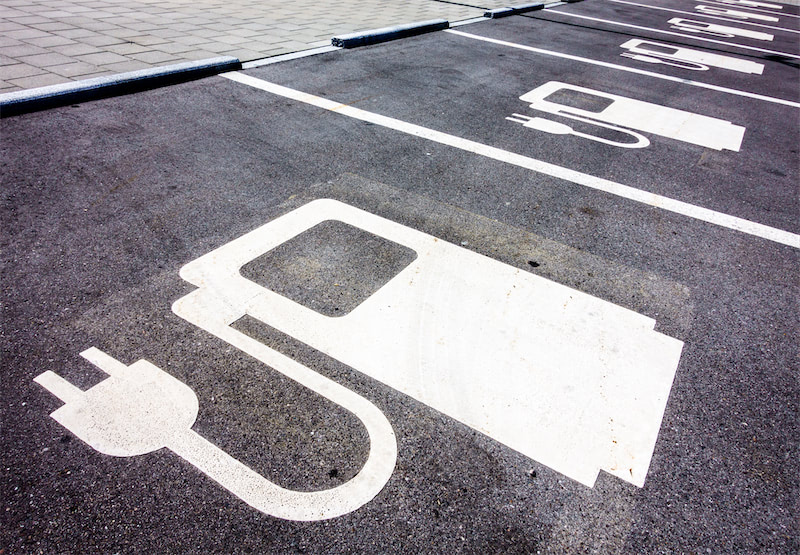
In addition, according to the use scene of new energy vehicles, for the indispensable supporting facilities of new energy vehicles-charging piles, the "New Energy vehicle Model clauses (trial)" also adds external Electroweb fault loss insurance, self-use charging column loss insurance, self-use charging column liability insurance, new energy vehicle value-added service special insurance and other new energy vehicle exclusive provisions.
According to the China Insurance Association, this is the first time in the field of auto insurance to underwrite external fixed auxiliary equipment, combined with the risks in the charging process of new energy vehicles, to cover vehicle losses caused by external Electroweb power transmission and transformation failures, current and voltage anomalies, and so on. Spread the risk through the insurance mechanism.
In recent years, the new energy vehicle industry has developed by leaps and bounds. New energy vehicles use power batteries as energy storage devices, and vehicle auxiliary equipment extends to charging facilities. in the course of vehicle use, in addition to the traditional risk of traffic accidents, major accidents caused by power battery fire and deflagration constitute new risk factors. In terms of insurance liability, the New Energy vehicle Model Clause (trial) provides protection for the "three electricity" system. It also covers the driving, parking, charging and operation of new energy vehicles. In addition, combined with the characteristics of the charging use of new energy vehicles, we develop "self-use charging pile loss insurance" and "self-use charging pile liability insurance", which not only covers the loss of the car, but also includes the loss of auxiliary equipment such as charging piles, as well as property losses and personal injuries that may be caused by the equipment itself. After the terms are issued, the launch of new energy vehicle insurance products is only a matter of time. I believe that the rights and interests of the majority of new energy vehicle owners can be protected soon.
What is worth paying attention to is that the problem of battery attenuation, which has attracted much attention from netizens before, is still not in the scope of insurance.
For new energy vehicles, battery attenuation has always been a big "knot". Although the "New Energy vehicle Model clause (trial)" does not explicitly include the issue of battery attenuation in the scope of coverage, but relevant departments, enterprises and institutions are working to improve the situation. Recently, the China Association of Automobile Manufacturers held a group standard discussion meeting on "testing methods for the attenuation of on-board power batteries of in-use electric vehicles", which aims to scientifically and effectively evaluate the capacity decline of power batteries of in-use electric vehicles and formulate relevant standards. In addition, the first equipment Industry Department of the Ministry of Industry and Information Technology also stressed recently that the decline of electric vehicle mileage in a low-temperature environment is a problem in the process of industrial development, and vehicle enterprises, battery enterprises, and research institutions should strengthen their work cooperation. strengthen technical coordination to tackle key problems, and increase investment in research and development.
Attachment: model clauses of New Energy vehicle Commercial Insurance of China Insurance Industry Association (for trial implementation)
Model clauses of accidental injury Insurance for drivers of New Energy vehicles of China Insurance Industry Association (for trial implementation)
![[SMM Analysis] Chi phí đảo ngược không ngăn được đà giảm khi giá muối coban yếu lan xuống chuỗi cung ứng](https://imgqn.smm.cn/usercenter/yZfeI20251217171727.jpg)
![Giá Magie Giảm Gần 14% Trong Hơn Nửa Năm, Chạm Đáy Năm; Nguồn Cung Giá Thấp Khó Tìm Hỗ Trợ Để Phục Hồi [Bình Luận SMM]](https://imgqn.smm.cn/usercenter/UhBXJ20251217171724.jpeg)