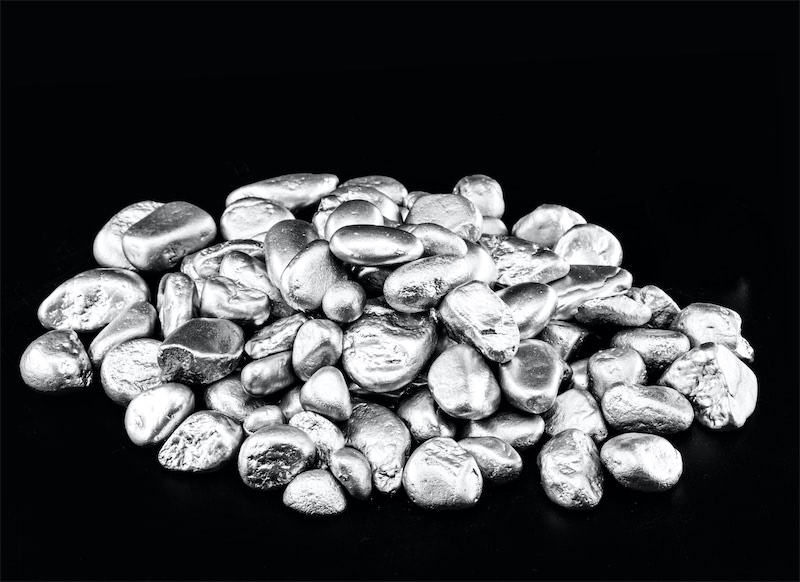
SHANGHAI, Sep 22 (SMM) - According to Bloomberg News, the Indonesian government may impose restrictions on nickel exports, restricting the export of nickel products with a content of less than 40%. The news stimulated the prices of LME nickel to exceed the $20,000/mt mark, hitting $20,200/mt, and a surge by 4.5%. However, SMM learned that the operating producers of NPI and intermediate products in Indonesia have not received such notices.
The Indonesian government's trade policy seems to be changing all the time, which has been reflected by the nickel ore industry: In 2014, the Indonesian government issued a blanket ban on the export of nickel ore; in 2017, the blanket ban was removed, and the export of nickel ore with grades above 1.7% was prohibited with certain quota; In 2020, the government reinstated the blanket ban on nickel ore exports. The ban on the export of nickel ore showed that the Indonesian government is quite determined in increasing the added value of mineral resources exports, and is inclined to produce nickel ore into NPI, stainless steel, hydrometallurgical intermediate products and even precursors, batteries and complete vehicles for export.
In mid-2021, some Indonesian government officials proposed that due to the distribution of local nickel ore resources in Indonesia, the approval of new NPI plants should be prohibited, and the focus should be put on the new energy industry which uses low-grade nickel ore. In addition, it is also proposed that the export of NPI should be banned to further increase the added value of NPI, such as processing NPI into stainless steel and downstream products for export. The original intention of the Indonesian government to ban the export of nickel ore is to increase the added value of resources, drive the development of Indonesia's local manufacturing and heavy industry as well as provide more jobs. However, it is difficult for Indonesia to realise the transformation from a resource exporting country to a resource processing country in the short term due to the low-level productivity. Therefore, the Indonesian government has attracted foreign companies to establish plants in Indonesia in order to learn the advanced smelting technology, so as to achieve full coverage of the nickel industry chain. However, this will depend on whether the technology can be effectively transferred; whether the basic industry can quickly keep up with the expectations of upstream production; and the long-term development of nickel resources. Due to the aforementioned factors, the ban on the export of nickel products with low value added is unlikely to take effect in the short term. But it does not rule out the possibility that the Indonesian government will increase export tariffs on nickel products with low nickel content to stimulate the commissioning of downstream processing plants.
Assuming that the export of nickel products with Ni content below 40% is prohibited, how much volume will be affected? Indonesian NPI companies will bear the brunt. From January to July in 2021, imports of Indonesian NPI stood at around 1.8 million mt, or 243,000 mt with metal content. In the first half of the year, China's NPI output was 265,000 mt with Ni content. Indonesia's NPI (including tradable and non-tradable) accounted for nearly a half of the Chinese market. It is almost infeasible of a complete ban on exports in the short term. If the export tariffs are increased, the competitiveness of Chinese NPI companies will increase compared with Indonesian NPI companies, which will decelerate the elimination of domestic NPI capacity. But for domestic stainless steel mills, costs will rise and pressure will increase.
In addition, the impact on the current hydrometallurgical intermediate product projects will be significant.
![[SMM Tin nhanh Niken] Cập nhật Indonesia — Ngày 9 tháng 10 năm 2026](https://imgqn.smm.cn/usercenter/KFwsY20251217171734.jpg)
![[NPI Daily Review] Giao dịch NPI giao ngay tại Trung Quốc đình trệ; phân hóa thị trường về xu hướng tương lai gia tăng](https://imgqn.smm.cn/usercenter/vcoVV20251217171732.jpeg)