On the evening of August 12, Longbai Group, the leader of titanium dioxide, threw out four investment plans to invest in the construction of lithium battery materials, artificial graphite anode materials for lithium-ion batteries, battery material-grade ferric phosphate and chlorinated titanium dioxide expansion projects, with a total investment of 5.4 billion yuan, all from self-owned and self-raised funds. The company's securities department said: "the company's investment in iron phosphate and lithium-ion battery materials projects has natural advantages, the production cost of iron phosphate is low, and the production cost of titanium dioxide can be reduced a little."
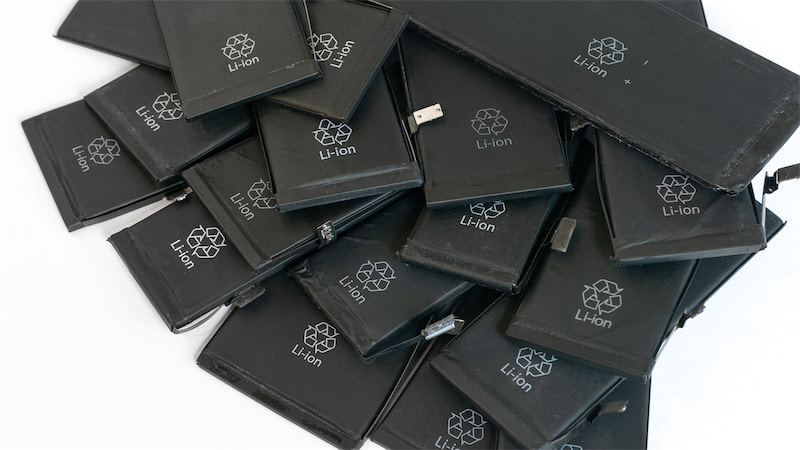
According to the announcement, Longbai Group's investment in the new energy battery material industry alone will reach 4.7 billion yuan, of which ferric phosphate and lithium-ion battery materials have a production capacity of 200000 tons respectively.
Titanium dioxide enterprises are not alone in investing in new energy battery materials industry. In recent years, titanium dioxide enterprises have "organized groups" to break into the market of lithium iron phosphate from the chemical industry. Anada began to dabble in iron phosphate production as early as 2015; in July 2020, it announced that it would invest an additional 77 million yuan to expand the iron phosphate project; and on February 3 this year, China Nuclear Titanium dioxide also announced that it will spend 12.108 billion yuan to build a large-scale lithium iron phosphate project with an annual production capacity of 500000 tons.
In addition to the titanium dioxide industry can use waste to reduce its own and iron phosphate production costs, Longbai Group also showed deeper consideration. The demand side of lithium-ion battery, as a key cross-industry in the three major industries of new energy, new materials and new energy vehicles, is gradually expanding, according to its announcement. Lithium iron phosphate has potential advantages in cycle life and material cost that other cathode materials do not have, which represents the future development direction of cathode materials for power batteries.
According to data released by the China Automotive Power Battery Industry Innovation Alliance, China's power battery production totaled 17.4 GWH in July, an increase of 185.3 percent year-on-year and 14.2 percent month-on-month. Among them, the output of ternary batteries was 8.0GWH, accounting for 46.0% of the total output, up 144.0% from the same period last year and 8.6% from the previous year; and the output of lithium iron phosphate batteries was 9.3GWH, accounting for 53.8% of the total output, up 236.2% from the same period last year and 20.0% from the previous year. The output of lithium iron phosphate battery has been higher than that of ternary battery for three months in a row. In the first seven months of this year, the total output of lithium iron phosphate batteries in the field of power batteries has also exceeded that of ternary batteries, and lithium iron phosphate batteries have developed rapidly in the field of power batteries.
In addition, because of its cost and performance advantages, lithium iron phosphate battery also has a broad prospect in base station energy storage, electric energy storage, two-wheeled electric vehicles, ships and other applications. CBC metal net cobalt lithium analyst Zhang Chao said: "Lithium iron phosphate current price is about 55000 yuan / ton, compared with the beginning of the year, the price increase of about 10%, the price advantage is more obvious, the installed capacity is growing rapidly." In addition, it can be used for energy storage battery. Taking into account the cost and technical factors, the future development trend will be faster than the ternary battery. "
According to the announcement, Henan Longbai New Materials, a subsidiary of Longbai Group, plans to invest in the industrialization project of lithium-ion battery materials with an annual output of 200000 tons, with an investment of 2 billion yuan. Henan Baili New Energy plans to invest in the construction of an annual battery material grade iron phosphate project with an annual production capacity of 200000 tons, with an investment of 1.2 billion yuan. Henan Zhongchuan New Materials, a subsidiary, plans to invest in a project with an annual output of 100000 tons of artificial graphite anode materials for lithium-ion batteries, with an investment of 1.5 billion yuan; a holding subsidiary, Henan Baililian New Materials Co., Ltd., plans to invest in the construction of an annual capacity expansion project of 100000 tons of titanium dioxide by chlorination process, with a total investment of 700 million yuan.
For such a large-scale investment by Longbai Group, some investors have expressed concern about the company's capital flow and debt ratio. "the company has plenty of money and good results in the first half of the year," the company said. At the same time, the project is built in multiple phases with a long investment cycle, such as 50, 000 tons in the first phase, 50, 000 tons in the second phase, and 100000 tons in the third phase, which is expected to be completed in three years. The investment in the project has little impact on the company's capital flows and liabilities. "
![Kỳ vọng chi phí hỗ trợ nhẹ; titan dioxit khó phục hồi nhanh [Tin tức giao ngay titan SMM]](https://imgqn.smm.cn/usercenter/uSadJ20251217171723.jpeg)
![Thị trường TiO2 vẫn ảm đạm, phân hóa nguồn cung tiếp diễn trong khi giá tăng chậm [SMM Titan Spot Express]](https://imgqn.smm.cn/usercenter/CkvAg20251217171724.jpg)