SHANGHAI, Sep 8 (SMM) – This is a roundup of China's base metals output in August 2020, from an exclusive survey of key producers by SMM analysts.
Copper
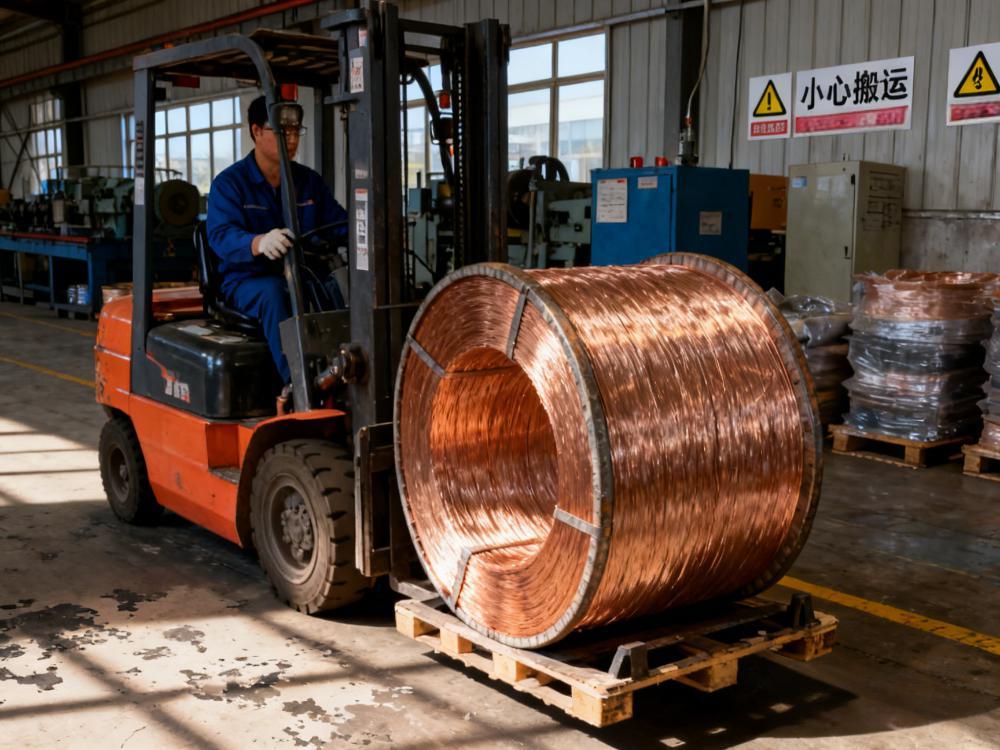
China’s copper cathode output rose sharply in August due to minimal maintenance and ample supply of copper scrap.
SMM survey showed that China produced 810,500 mt of copper cathode in August, up 8.14% from July and 5.58% from a year earlier. For the first eight months of 2020, China’s copper cathode output totalled 5.99 million mt, up 3.39% from the same period last year.
The coronavirus pandemic and shortage of raw materials have slowed down the increase of copper cathode output in the first half of 2020. This has driven smelters to increase their scheduled output in August in order to fulfill the annual production targets. It is understood that there are some new projects in the near term.
SMM expects China’s copper cathode output to rise 0.67% on the month and 7.45% on the year to 815,900 mt in September, and output for January-to-September is likely to increase 3.86% on the year to 6.81 million mt.
Alumina
China’s alumina output stood at 5.97 million mt in August. This included 5.76 million mt of metallurgical-grade alumina, with the daily output up 1% on the month and 3.41% on the year to 185,700 mt. Output of metallurgical-grade alumina over the first eight months of the year totalled 44.1 million mt, 5.35% lower on a year-on-year basis. An increase in production at a few alumina plants in Shanxi and commissioning of new capacities in south-west China contributed to the increase in output in August.
As of early September, the operating capacity of metallurgical-grade alumina stood at 68.45 million mt/year. SMM sees output of metallurgical-grade alumina at 5.63 million mt in September, with the daily output edging higher on the month to 187,500 mt.
Aluminium
China’s primary aluminium output rose 6.13% year on year to 3.19 million mt in August (31 production days), showed an SMM survey. As of the end of August, there was 37.62 million mt among 42.48 million mt per year of existing primary aluminium capacity in operation, while operating rates across Chinese primary aluminium producers stood at 88.6%. With new capacities in Yunnan and Sichuan coming online, the daily average primary aluminium output rose 2,200 mt from July to 103,000 mt in August.
During the first eight months of 2020, China’s primary aluminium increased 3.19% year on year to 24.32 million mt, while consumption rose 3% to 24.56 million mt. Social inventories of primary aluminium were little changed on the month as the supply rose slightly amid commissioning of new capacities and inflow of imported aluminium ingots, while downstream demand was moderate. New capacities in Inner Mongolia, Yunnan and Sichuan will be put into operation as scheduled in September, lifting annual operating capacity to about 37.72 million mt.
SMM expects China’s primary aluminium output to stand at 3.1 million mt in September, up 7.19% year on year, and the year-on-year increase in consumption to narrow to 4.35%.
Nickel
China’s refined nickel output declined 2.25% or 330 mt from July, but rose 12.94% from a year earlier, to 14,300 mt in August. Output at Gansu smelters shrank 3.85% on the month, while that at Lianning and Shandong smelters was little changed as they kept normal production. Output at Xinjiang smelters jumped 58.9% on the month, recovering to the level in June, as COVID-19-driven restrictions were lifted. Smelters in Tianjin have suspended production from August due to shortage of raw materials, while those in Guangxi continued to halt production.
SMM expects China’s refined nickel output to fall to 13,700 mt in September. Maintenance at a smelter in Gansu is expected to reduce output by about 1,000-2,000 mt, and scheduled production at Xinjiang smelters will shrink on the month. Smelters in Jilin and Shandong will produce as usual, while those in Tianjin and Guangxi will continue to halt production.
Nickel pig iron (NPI)
China’s NPI output rose 3.42% from July to 44,700 mt Ni in August, but was 15.88% lower than a year earlier. This included 37,400 mt Ni of high-grade NPI, up 3.67% on the month, and 7,400 mt Ni of low-grade NPI, up 2.18% month on month. Major large-scale plants stepped up production in August as high-grade NPI prices continued to rise and market supply was tight, and this, combined with commissioning of new capacities, contributed to the increase in NPI output. Increased output at #200 stainless steel mills led to the rise in low-grade NPI output.
SMM expects China’s NPI output to dip 0.09% on the month, and 15.29% on the year, to 44,680 mt Ni in September due to shorter operating rates, with high-grade NPI output inching up 0.11% on the month to 37,400 mt Ni while low-grade NPI output falling 1.12% to 7,300 mt Ni.
Nickel sulphate
China’s nickel sulphate output jumped 15.69% on the month and 18.46% on the year, to 60,500 mt or 13,300 mt in nickel content in August. This included 52,800 mt of battery-grade materials and 7,800 mt of electroplating materials. Operating rates at nickel salts plants increased as profits improved amid recovered downstream demand. In addition, new production lines at a nickel salts plant came online in August.
SMM expects China’s nickel sulphate output to rise 9.14% on the month to 14,500 mt (Ni content) in September as demand is likely to increase in the high season.
Zinc
China’s refined zinc output stood at 509,100 mt in August, rising 16,300 or up 3.3% on month and up 1.98% on year. Output totalled 3.87 million mt in the first eight months of this year, up 3.68% from the same period last year.
China’s refined zinc output in August was higher than expectations as the treatment charges (TCs) for domestic zinc concentrate (Zn 50%) rose to 5,450 yuan/mt (Zn content) from the previous month. The continued rise in zinc prices improved profits, prompting smelters to increase production. In addition, some smelters in Gansu, Hunan, Inner Mongolia and other regions resumed production after the maintenance. The reduction of refined zinc was mainly concentrated in smelters in Henan, Guangdong and Inner Mongolia which were undergoing maintenance.
Although TCs for zinc concentrate in some areas fell on a month-on-month basis, the composite TCs were still at a high level in September. High profits prompted smelters, except some in Gansu which are under maintenance, to ramp up production.
Zinc smelters produced 78,000 mt of zinc alloy in August, up 3.94% from the previous month, according to SMM survey. SMM expects refined zinc output to increase 36,900 mt to 545,900 mt in September.
Lead
SMM data showed that China produced 285,000 mt of primary lead in August, up 9.99% from July, and up 12.01% from a year ago. For January-August, output increased 4.44% from the same period last year.
SMM survey showed that smelters including Henan Jinli, Guangxi Nanfang and Western Mining undertook maintenance due to equipment breakdown in August, while other primary lead smelters maintained stable production and smelters including Henan Yuguang Yunnan Chihong recovered production from maintenance.
Lead prices surged in August, and the most-traded contract once reached a new high in the year, standing at 16,585 yuan/mt. The profit of smelters increased sharply, and silver prices also went up during the period. The improved profit drove smelters enthusiasm for production. The output was higher than expectations in August, with an increase of over 20,000 mt.
SMM expects China’s primary lead output to fall by about 10,000 mt to 274,000 mt in September.
More large-scale smelters will undertake maintenance. Western Mining will conduct maintenance from August to September, Zhongjin Lingnan will have a minor inspection of equipment, and Haicheng Chengxin will undertake maintenance from September to October. Output is expected to decline in September.
Tin
China’s refined tin output rose on a month-on-month basis in July as a large-scale smelter recovered production from maintenance at the end of July.
SMM data showed that China produced 14,210 mt of refined tin in August, up 41.3% from July. Smelters output declined slightly as lower treatment charges (TCs) for tin ore narrowed profits of smelters, with some even facing the risk of making losses. Production enthusiasm was dampened, and some smelters plan to control output. A handful of smelters increased output slightly as a result of production across nearby tin mines.
SMM learned that mining operations and transportation were affected in Myanmar as the country experienced continued rainfall over the recent months. Ore imports from Myanmar are expected to decrease from August to October due to the domestic outbreak of Covid-19. However, tin ingot imports are likely to have minimal impact in the near term due to tin ore inventories in Myanmar.
China’s refined tin output is expected to decrease slightly in September, reaching 14,000 mt.