SMM5 March 29: recently Volkswagen "gossip", earlier with Guoxuan Hi-Tech rumors one after another, and then Jianghuai Motor, and these rumors have become a reality under the constant focus of the market.
On the evening of May 28th, Guoxuan Hi-Tech, an electric car battery manufacturer, announced that it planned to raise no less than 6 billion yuan for Volkswagen China, with no more than 30 per cent of the company's total share capital before the offering.
In addition, JAC officially announced that Volkswagen will invest 1 billion euros (7.929 billion yuan) to acquire a 50% stake in Anhui Jianghuai Automobile Group Holdings Co., Ltd., the parent company of Jianghuai Automobile Group. Anhui SASAC holds the remaining 50 per cent and will still control the company. And how did Volkswagen become a "popular lover" step by step?
Volkswagen Group is one of the first international automakers to do business in China. One of the earliest automobile manufacturers to contact the Chinese government, in 1978, under the leadership of Deng Xiaoping, China began to carry out reform and opening up, introducing foreign capital and advanced science and technology, and accelerating China's modernization process. The automobile industry has become the top priority in the reform and opening up strategy, and it has also created opportunities for Volkswagen to open up new markets.
As early as 1984, this year also became the brilliant beginning of SAIC Volkswagen. In 1990, Volkswagen signed a joint venture agreement between FAW and Volkswagen in Changchun. The Volkswagen Shanghai transmission joint venture was established and put into production in January 2003, and two joint ventures to produce state-of-the-art technology engines were established in 2004, which were put into production in 2006 and 2007 respectively.
It is precisely because Volkswagen has set up Volkswagen joint ventures in Shanghai and Changchun and worked hard that it has gained a reputation as "North and South Volkswagen". In 2019, the sales volume of "North and South Volkswagen" both exceeded 2 million, occupying the first or second place in China's automobile sales list.
Volkswagen has the same strength as it is today, and there are different opinions in the market. some people think that Volkswagen entered the Chinese market earlier and has a good mass base and reputation; others think that Volkswagen has a large number of models and more options for consumers to choose from; some people think that Volkswagen has relatively new technology in the market; others think that Volkswagen is familiar with the Chinese market and provide people with products that meet their needs.
The Volkswagen Group has been built up through years of hard work and accumulation. Frank Witter, a member of the Volkswagen Group Management Committee and head of Finance and IT, said that 40 per cent of Volkswagen's deliveries in 2019 were completed in the Chinese market. Despite the challenges facing the Chinese market, Volkswagen's operating profit from its Chinese joint ventures basically reached the level of 4.4 billion euros in the previous fiscal year (compared with 4.6 billion euros in the previous fiscal year).
Although the domestic macro-economy has been in the doldrums in recent years and the auto consumer market has been declining, Volkswagen's share has increased by 1.4%, rising from 18.4% in 2018 to 19.8% in 2019.
Volkswagen encounters "emission gate" and strives for transformation and upgrading.
Although Volkswagen has performed well in the domestic market, Volkswagen's performance abroad is not satisfactory. Incidents of "recall door" and "emission door" have occurred frequently. In recent years, Volkswagen's exhaust emission problems have been investigated one after another in Europe and the United States. In 2015, Volkswagen was exposed to the "emission gate" scandal and was found to have used cheating software to fake emissions tests on diesel vehicles. In total, Volkswagen has paid more than 30 billion euros (234.4 billion yuan) in compensation over the past five years. Volkswagen Group's overall operating profit for the 2019 fiscal year was 17 billion euros, and special project expenses caused by the diesel engine emission incident were reduced to 2.3 billion euros.
With the support of various countries in the new energy vehicle industry, Volkswagen also realized the importance of new energy to the company, coupled with China's huge potential market and strong support from government policies, Volkswagen began to actively layout new energy vehicles. Immediately after the emission gate in 2015, Volkswagen invested $7 billion to develop the MEB platform. By 2018, the MEB platform was officially launched at the Dresden plant, and Volkswagen also unveiled a plan called ELECTRIC FOR ALL. According to the plan, Volkswagen will spend 6 billion euros on follow-up research and development of electric vehicles and is expected to reach its sales target of 1 million by 2025, of which 2/3 will be absorbed in the Chinese market.
Scott Keogh, chief executive of the Americas, said Volkswagen would launch 75 electric vehicles by 2030, up from 70 previously planned, and that Volkswagen plans to produce 26 million electric vehicles worldwide over the next decade, up from 22 million originally planned. The ID series of pure electric cars, the first product of the MEB platform, will also go on sale this summer.
At the same time, Volkswagen invested 17 billion yuan to build a new energy vehicle plant in Shanghai Anting with a planned annual production capacity of 300000 vehicles for the domestic listing of ID products, which will be officially put into production in October 2020.
The proportion of Volkswagen's shareholding in Jianghuai continues to increase the size of new energy sources.
In addition, Volkswagen "hunts" around the country. As early as 2016, Jianghuai Volkswagen began to make contact. In 2017, the two sides set up a joint venture company, and the NDRC approved that in order to promote the development of the new energy vehicle industry and deepen the cooperation between China and Germany in the electric vehicle industry, it was agreed to build a joint venture between JAC and Volkswagen (China) to produce pure electric passenger vehicles.
The joint venture project of Jianghuai Volkswagen New Energy vehicle started in 2017, with a total investment of 5.06 billion yuan and fixed asset investment of 2.95 billion yuan. The registered capital of the joint venture is 2 billion yuan, the share ratio of the two sides is 50 / 50, and the duration of the joint venture is 25 years. After the completion of the project, it will form an annual production capacity of 100000 pure electric passenger vehicles. Jianghuai Automobile said that by 2020, Jianghuai new energy vehicle sales accounted for more than 20% of total sales, and by 2025, Jianghuai new energy vehicle sales accounted for more than 30% of total sales. At present, the joint venture new car of Jianghuai Volkswagen has been put on the market.
On May 29th, Jianghuai Motors officially announced that it would receive an investment of 1 billion euros (about 7.929 billion yuan) from Volkswagen. On the one hand, it deepens the cooperation between Volkswagen and Jianghuai, on the other hand, it also alleviates the "illness" of Jianghuai.
In 2018, Jianghuai Motor "reaped" its first loss in nearly two decades, with a huge loss of 786 million yuan. However, only in a short period of a year, Jianghuai Motor has achieved a turnaround. According to the Jianghuai Automobile performance report in 2019, Jianghuai Automobile achieved an operating income of 47.286 billion yuan in 2019, down 5.58% from the same period last year, and a net profit of 106 million yuan, reversing losses.
In fact, the reason why Jianghuai Motor can turn losses into profits, government subsidies have played a decisive role. According to the annual report, Jianghuai Motor recorded as much as 1.117 billion yuan in government subsidies in 2019, as well as hundreds of millions of yuan in demolition and disposal funds. JAC Motor also received 602 million yuan and 1.278 billion yuan in government subsidies in 2017 and 2018, respectively.
In addition, due to the substandard utilization rate of Jianghuai's production capacity, Weilai has to bear the loss of more than 200 million yuan in the production plant built by Jianghuai in 2019. The cooperation with Weilai will directly bring a benefit to Jianghuai, but the poor performance of cooperation Fang Wei will indirectly bring risks to the operation of Jianghuai.
Jianghuai's annual car sales in 2019 were 421241, down 8.91% from the same period last year, of which 58026 were pure electric passenger cars, down 8.87% from the same period last year.
In 2020, Jianghuai Automobile plans to produce and sell 450000 to 500000 vehicles and chassis of various types, an increase of 6.83% and 18.70% over the same period last year, with an estimated operating income of 50 billion yuan to 55 billion yuan, an increase of 5.57% and 16.13% over the same period last year.
Jianghuai holding hands with Volkswagen, relying on the world's leading car companies, and cooperating with Volkswagen's domestic sales base, the cooperation between the two sides will help Jianghuai ease the current business problems.
Volkswagen has injected a large amount of money into Guoxuan's high-tech operation.
And Guoxuan Hi-Tech, as another enterprise holding hands by the public, seems to have a feeling like a spring breeze. On the evening of the 28th, Guoxuan Hi-Tech announced that it plans to raise no less than 6 billion yuan for Volkswagen China. As early as late April or even earlier, there were media reports that Volkswagen would acquire a 30% stake in Guoxuan Hi-Tech, making it the largest shareholder. And the final confirmation of this news made the market boil.
Guoxuan Hi-Tech received funds from the public in addition to bringing the aura of the masses, the key point is that after deducting the issuance fees, the net funds raised will be used for the industrialization project of Guoxuan battery 16GWh high specific energy power lithium battery, Guoxuan materials annual production of 30000 tons of high nickel ternary cathode material project and supplementary liquidity.
According to statistics, in 2019, the installed capacity of domestic power battery is about 62.38GWh. the installed capacity of Guoxuan Hi-Tech Power Battery is about 3.2GWh.It ranks third in the industry, of which the installed capacity of lithium iron phosphate battery is 2.9GWh.It ranks second in the country.
According to the results announced earlier by Guoxuan Hi-Tech in 2019, the announcement showed that the company's annual sales revenue was 4.959 billion yuan, down 3.28% from the same period last year; operating profit was-59 million yuan, down 90.79% from the same period last year; the total profit was-52 million yuan, down 91.97% from the same period last year; the net profit belonging to shareholders of listed companies was-51 million yuan, down-91.17% from the same period last year. But it can not stop the public's love for Guoxuan.
As for the reasons for the company's performance loss, Guoxuan Hi-Tech said that all expenses of the company in 2019 increased compared with the previous year, while the provision for bad debts and inventory price decline increased compared with the previous year.
From another point of view, if Guoxuan Hi-Tech reduces its expenditure on expenses, the losses of companies with proper inventory may not be like this, and now Volkswagen invests in shares, together with other Volkswagen new energy vehicle projects. it will directly solve the problems existing in the operation of Guoxuan Hi-Tech, coupled with capital inflows, Guoxuan Tech is expected to accelerate expansion, diversify battery products and reduce operational risk.
At present, Guoxuan Hi-Tech customers are mainly BAIC, SAIC, Jianghuai and other domestic auto companies. Through cooperation with Volkswagen, Guoxuan has directly jumped to a first-class supplier of international auto enterprises. whether it is the power battery demand provided by Volkswagen itself or the company continues to expand its overseas supply chain on this basis, it will bring enough space for the performance growth of Guoxuan Hi-Tech.
This time, the cooperation between the two major manufacturing enterprises in Anhui Province, Volkswagen has become a "Volkswagen lover", which has not only brought living water to Anhui's manufacturing upgrading, but also actively turned and stabilized the "lower plate" for itself as a "giant elephant".
Click to register: "2020 (Fifth) China International Nickel, Cobalt and Lithium Summit Forum"
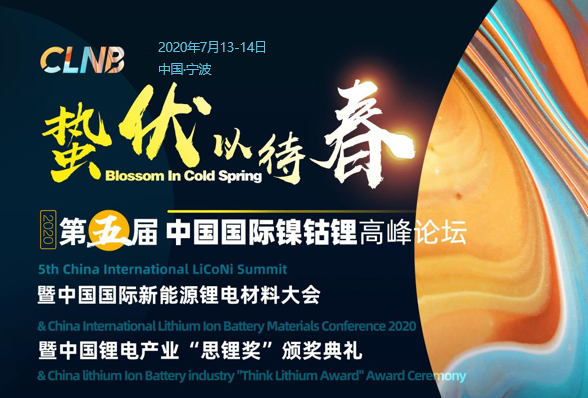
To sign up for the Nickel-Cobalt-Lithium Summit or apply to join the SMM New Energy vehicle / Cobalt-Lithium Industry Exchange Group, please scan the QR code below:
![[SMM Tin nhanh Crom] Nhập khẩu FeCr cacbon cao của Trung Quốc tháng 8/2026 tăng 18,7% so với tháng trước lên ~157.610 tấn khi Nam Phi quay trở lại](https://imgqn.smm.cn/usercenter/CIcRv20251217171725.jpg)
![Giữ giá vào mùa cao điểm gặp kháng cự; Titan dioxit duy trì cục diện cạnh tranh gay gắt [SMM Titan tin nhanh]](https://imgqn.smm.cn/usercenter/cgspx20251217171725.jpg)
![Dự trữ trước kỳ nghỉ không bù đắp được nguồn cung mạnh và nhu cầu yếu; giá magie dự kiến sẽ dao động ở mức thấp trong ngắn hạn [Báo cáo giá magie thỏi giao ngay SMM]](https://imgqn.smm.cn/usercenter/znXdm20251217171724.jpeg)