SMM, 20 มีนาคม:
การนำเข้า: ตามข้อมูลจากสำนักงานศุลกากรแห่งชาติจีน การนำเข้าอะลูมิเนียมปฐมภูมิของจีนในเดือนมกราคมอยู่ที่ประมาณ 189,000 ตัน ลดลง 0.1% จากเดือนก่อน แต่เพิ่มขึ้น 17.1% จากปีก่อน; เดือนกุมภาพันธ์ การนำเข้าอะลูมิเนียมปฐมภูมิของจีนอยู่ที่ประมาณ 202,000 ตัน เพิ่มขึ้น 6.6% จากเดือนก่อน และเพิ่มขึ้น 0.7% จากปีก่อน ในช่วงเดือนมกราคม-กุมภาพันธ์ 2026 การนำเข้าอะลูมิเนียมปฐมภูมิสะสมของจีนอยู่ที่รวมประมาณ 391,000 ตัน เพิ่มขึ้น 8.0% จากปีก่อน
การส่งออก: ตามข้อมูลจากสำนักงานศุลกากรแห่งชาติจีน การส่งออกอะลูมิเนียมปฐมภูมิของจีนในเดือนมกราคมอยู่ที่ประมาณ 13,000 ตัน ลดลง 64.6% จากเดือนก่อน แต่เพิ่มขึ้น 56.6% จากปีก่อน; เดือนกุมภาพันธ์ การส่งออกอะลูมิเนียมปฐมภูมิของจีนอยู่ที่ประมาณ 10,000 ตัน ลดลง 24.6% จากเดือนก่อน แต่เพิ่มขึ้น 187.9% จากปีก่อน ในช่วงเดือนมกราคม-กุมภาพันธ์ การส่งออกอะลูมิเนียมปฐมภูมิสะสมรวมอยู่ที่ประมาณ 23,000 ตัน เพิ่มขึ้นประมาณ 94.8% จากปีก่อน
การนำเข้าสุทธิ: ตามข้อมูลจากสำนักงานศุลกากรแห่งชาติจีน การนำเข้าอะลูมิเนียมปฐมภูมิสุทธิของจีนในเดือนมกราคมอยู่ที่ 176,000 ตัน เพิ่มขึ้น 15.9% จากเดือนก่อน และเพิ่มขึ้น 14.9% จากปีก่อน; เดือนกุมภาพันธ์ การนำเข้าอะลูมิเนียมปฐมภูมิสุทธิของจีนอยู่ที่ 192,000 ตัน เพิ่มขึ้น 9.0% จากเดือนก่อน แต่ลดลง 2.6% จากปีก่อน ในช่วงเดือนมกราคม-กุมภาพันธ์ การนำเข้าอะลูมิเนียมปฐมภูมิสุทธิสะสมของจีนอยู่ที่ประมาณ 367,000 ตัน เพิ่มขึ้น 5.0% จากปีก่อน
(ข้อมูลการนำเข้าและส่งออกข้างต้นอ้างอิงตามรหัส HS 76011090 และ 76011010)
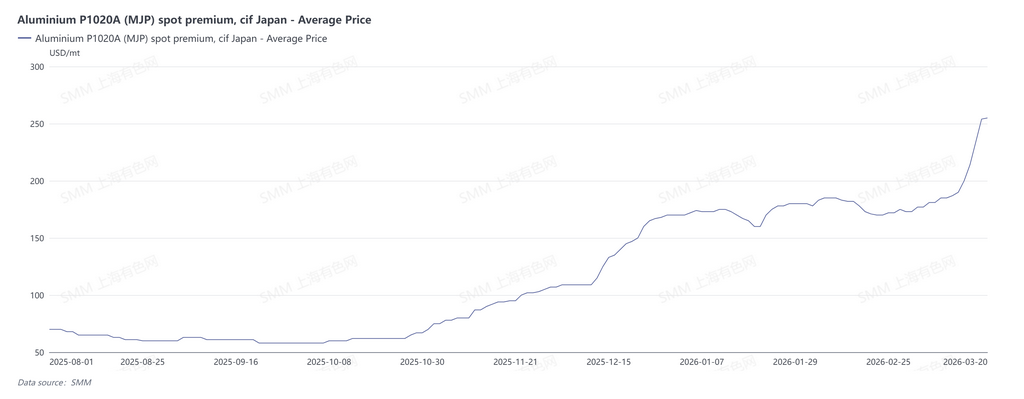
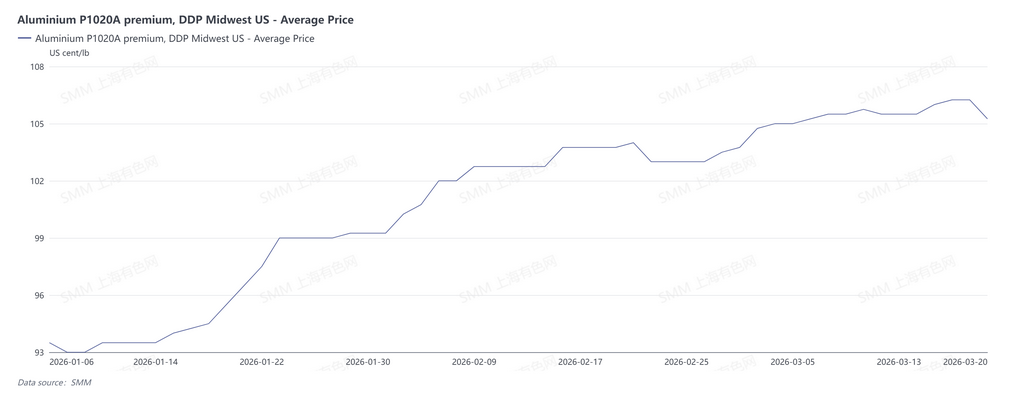
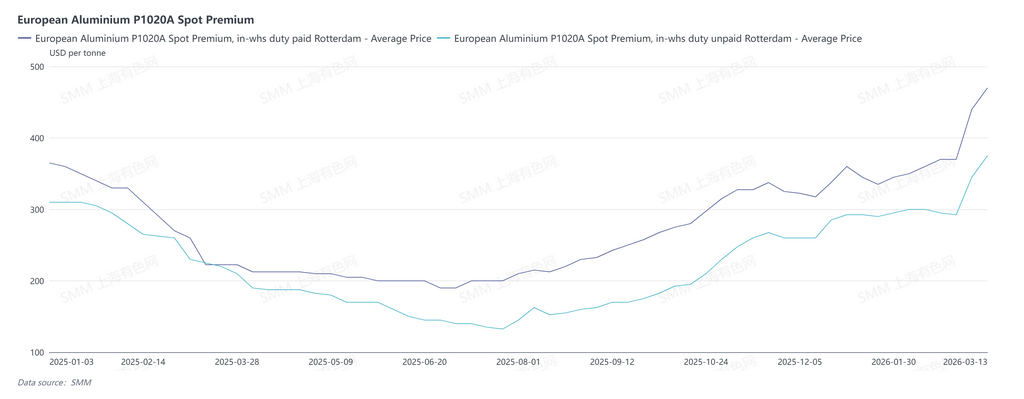
แม้ว่าการนำเข้าอะลูมิเนียมปฐมภูมิสุทธิของจีนในช่วงเดือนมกราคม-กุมภาพันธ์ 2026 ยังคงขยายตัวเป็นบวก แต่คาดการณ์การปรับขึ้นอย่างมากของค่าพรีเมียมอะลูมิเนียมในภูมิภาคนอกจีนจะเป็นปัจจัยท้าทายต่อสถานการณ์นี้ ณ วันที่ 20 มีนาคม ค่าพรีเมียมสปอตอะลูมิเนียมแท่ง Japan MJP ของ SMM อยู่ที่ 255 ดอลลาร์/ตัน เพิ่มขึ้น 45.7% จากสิ้นเดือนกุมภาพันธ์ ปัจจุบัน ผู้เข้าร่วมตลาดบางส่วนเสนอราคาค่าพรีเมียม Japan MJP CIF สำหรับไตรมาส 2 ที่ราว 350-353 ดอลลาร์/ตัน เพิ่มขึ้นประมาณ 80% จาก 195 ดอลลาร์/ตันในไตรมาส 1; ค่าพรีเมียมอะลูมิเนียม US Midwest DDP อยู่ที่ 105.25 เซนต์/ปอนด์ หรือเทียบเท่า 2,110 ดอลลาร์/ตัน ณ วันที่ 13 มีนาคม ค่าพรีเมียมอะลูมิเนียมแท่ง P1020A แบบชำระอากรแล้วในยุโรปอยู่ที่ 470 ดอลลาร์/ตัน เพิ่มขึ้นประมาณ 27.0% จากสิ้นเดือนกุมภาพันธ์ ขณะที่ค่าพรีเมียมอะลูมิเนียมแท่ง P1020A แบบยังไม่ชำระอากรในยุโรปอยู่ที่ 375 ดอลลาร์/ตัน เพิ่มขึ้น 27.2% จากสิ้นเดือนกุมภาพันธ์ การพุ่งขึ้นอย่างมากของค่าพรีเมียมอะลูมิเนียมในภูมิภาคนอกจีนคาดว่าจะดึงอะลูมิเนียมบางส่วนที่เดิมวางแผนจะไหลเข้าสู่จีนออกไป และคาดว่าการนำเข้าอะลูมิเนียมสุทธิของจีนในปี 2026 จะลดลงเมื่อเทียบกับปีก่อนสาเหตุของปรากฏการณ์นี้อยู่ที่การคาดการณ์ว่าอุปทานอะลูมิเนียมนอกจีนจะหดตัว จากการลดลงของอุปทานอะลูมิเนียมในตะวันออกกลาง ณ วันที่ 20 มีนาคม กาตาร์ อะลูมิเนียมประกาศคงอัตราการเดินเครื่องไว้ที่ 60% คิดเป็นกำลังการผลิตที่ปิดไป 260,000 ตัน ขณะที่บาห์เรน อะลูมิเนียมประกาศปิดสายการผลิต 1-3 คิดเป็นกำลังการผลิตราว 310,000 ตัน รวมแล้วกำลังการผลิตอะลูมิเนียมในตะวันออกกลางได้รับผลกระทบ 570,000 ตัน อิหร่านเป็นศูนย์กลางของความขัดแย้ง และเสถียรภาพการผลิตของประเทศกำลังเผชิญความท้าทายอย่างรุนแรง
นอกจากนี้ วัตถุดิบและวัสดุช่วยการผลิตบางส่วนในตะวันออกกลางต้องพึ่งพาการนำเข้า และความขัดแย้งทางภูมิรัฐศาสตร์ในภูมิภาคได้ส่งผลกระทบต่อการเดินเรือผ่านช่องแคบฮอร์มุซ ซึ่งบั่นทอนเสถียรภาพด้านการจัดหาวัตถุดิบของโรงถลุงอะลูมิเนียมบางแห่งในระดับหนึ่ง ปัจจุบัน โรงถลุงอะลูมิเนียมในซาอุดีอาระเบียและตุรกีได้รับการสนับสนุนจากบอกไซต์และอะลูมินาต้นน้ำภายในประเทศ จึงสามารถพึ่งพาตนเองได้และยังมีศักยภาพในการส่งออก ส่วนบาห์เรน อะลูมิเนียมและกาตาร์ อะลูมิเนียมพึ่งพาอะลูมินานำเข้าทั้งหมด ขณะที่สหรัฐอาหรับเอมิเรตส์มีกำลังการผลิตอะลูมินา 2.5 ล้านตัน แต่บอกไซต์ต้องพึ่งพาการนำเข้า 100% แม้โรงถลุงอะลูมิเนียมของโอมานจะพึ่งพาวัตถุดิบนำเข้าเช่นกัน แต่ด้วยที่ตั้งทางภูมิศาสตร์อยู่นอกช่องแคบฮอร์มุซ ระดับความเสี่ยงจึงค่อนข้างต่ำ หากเส้นทางขนส่งยังคงปิดอยู่และไม่สามารถเปิดเส้นทางใหม่ได้ คาดว่าการผลิตอะลูมิเนียมในตะวันออกกลางจะได้รับผลกระทบอย่างมีนัยสำคัญ
อย่างไรก็ดี ตามรายงานล่าสุดของสื่อต่างประเทศ บาห์เรน อะลูมิเนียมกำลังส่งออกแท่งอะลูมิเนียม 40-60% ผ่านท่าเรือเจดดาห์ของซาอุดีอาระเบีย โดยมีระยะทางขนส่งทางบกราว 1,400 กิโลเมตร และ Emirates Global Aluminium ของสหรัฐอาหรับเอมิเรตส์กำลังพยายามนำเข้าวัตถุดิบอะลูมินาผ่านท่าเรือในโอมาน หากสามารถเปิดเส้นทางขนส่งใหม่ได้ ความเสี่ยงที่โรงถลุงอะลูมิเนียมในตะวันออกกลางจะต้องลดการผลิตคาดว่าจะลดลงอย่างมาก
ในระยะต่อไป ควรติดตามพัฒนาการด้านการผลิตของโรงถลุงอะลูมิเนียมในตะวันออกกลาง สถานการณ์เส้นทางขนส่ง และแนวโน้มสินค้าคงคลังอะลูมิเนียมใน LME อย่างต่อเนื่อง