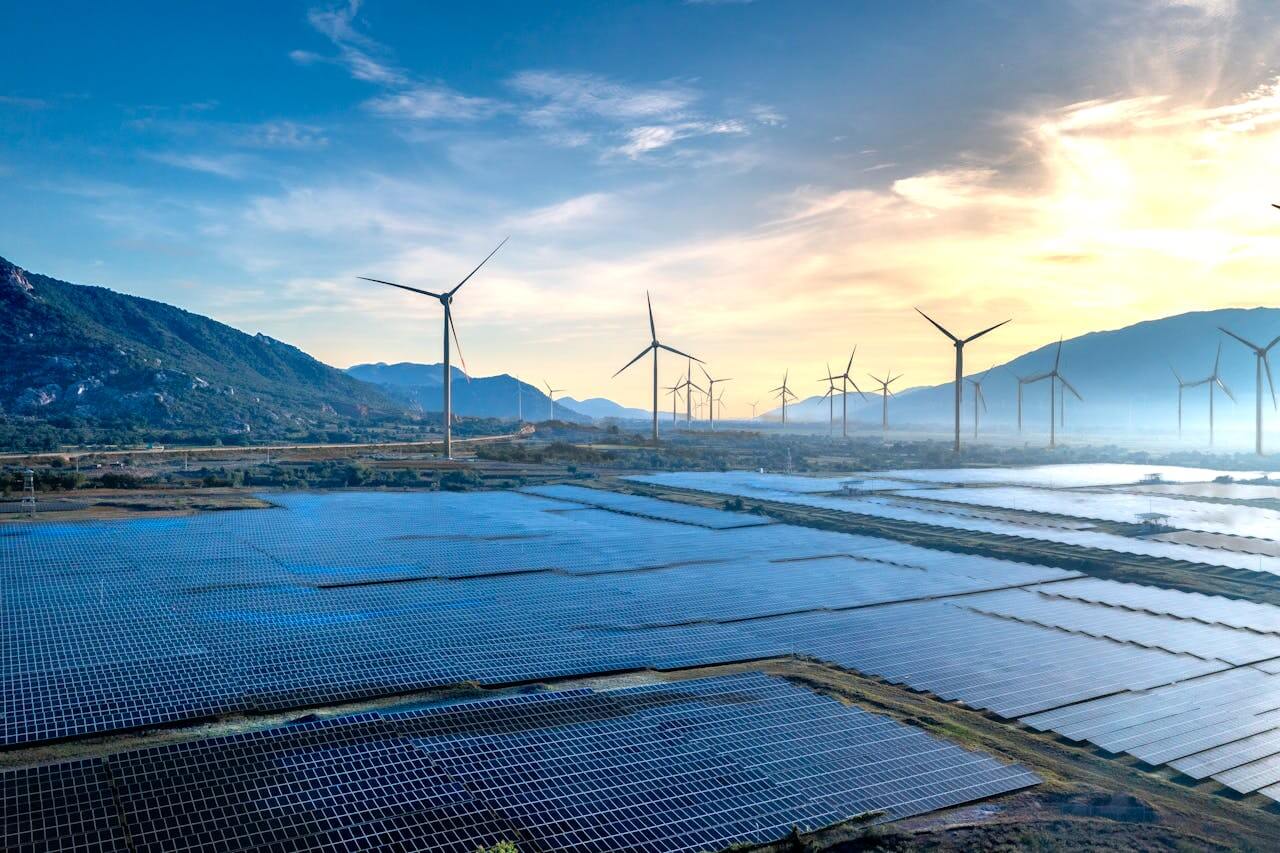
Indonesia, as a crucial emerging market in Southeast Asia, possesses massive potential for the development of the photovoltaic (PV) industry. According to assessments by the Ministry of Energy and Mineral Resources, Indonesia's potential PV power generation capacity reaches up to 207 GW. This article will provide an in-depth insight into the actual dynamics and industrial landscape of the current Indonesian PV market.
I. Market Background
By the end of 2025, Indonesia's cumulative grid-connected installed capacity had reached 1.49 GW, with approximately 546 MW of newly added capacity throughout the year. The Indonesian government has explicitly established the achievement of a 100 GW PV installed capacity as a national energy development goal. Within this ambitious target, a planned capacity of about 80 GW is focused on constructing 1 MW-level microgrids in remote villages that either lack electricity or rely on diesel power generation. In practical implementation, the government plans to prioritize 13 GW of installed capacity as the first-phase projects for deployment.
Although the Indonesian government adjusted the target proportion of renewable energy in the power mix to 17%-19% in its previously updated National Energy Policy, the actual proportion in 2025 stood at 15.75%, indicating a steady catch-up phase. Within the overall PV market, commercial and industrial ('C&I') rooftop PV became the core market growth engine in 2025, driven by enterprises' strong demand for carbon reduction. In contrast, following adjustments to the 'Net Metering' policy, the development model for residential rooftop PV is currently in a transitional phase. Furthermore, the domestic energy storage market remains in a very early stage of development, with the total national installed capacity falling below 1 MWh.

Source: IRENA, proccesed by SMM Model
II. PV Module Market Supply and Demand
Indonesia has not yet established a complete PV industry supply chain, and domestic production capacity is primarily concentrated in the manufacturing of solar cells, modules, and PV glass. At the same time, to support its massive national PV plan, Indonesia has successfully attracted approximately $1.4 billion in investments to construct a 50 GW domestic manufacturing facility. These funds have been gradually deployed since 2025, and the first phase of the manufacturing project is expected to be completed before the end of 2026. This development will significantly enhance the self-sufficiency of its domestic supply chain in the medium to long term.
On the installation demand side, as the rooftop PV market matures, demand from large-scale consumers continues to grow. In January 2026, the Indonesian government newly opened a 485 MW grid-connection quota for rooftop PV (comprising 304 MW previously waiting for coordination and 183 MW newly added) and is currently seeking an additional quota of 400 MW. However, the advancement pace of 'Utility-scale' ground-mounted power plants is influenced by the overall procurement planning and coordination of the State Electricity Company ('PLN') and is currently still in a phase of gradual release. In 2025, 'PLN' planned an additional 777 MW of centralized projects; to date, about 75 MW of these projects have been grid-connected and commissioned, while the remainder is progressing steadily. Although nearly 988.4 MW of commercial operation projects are planned for 2026, the actual implementation still possesses a certain degree of flexibility due to the adjustment cycles of procurement and bidding mechanisms. Compounded by an existing inventory backlog of approximately 50 to 60 MW within the market, current stockpiles have caused a certain delay in new procurement demands.
Regarding import and export trade, significant structural differences exist within Indonesia's PV industry. Because the upstream segments of the domestic PV supply chain are not yet fully developed, the Indonesian manufacturing sector heavily relies on raw materials and semi-finished products—such as silicon wafers, solar cells, and auxiliary materials—imported from China. In terms of finished PV module imports, Indonesia's volume was 0.76 GW in 2024 and 0.77 GW in 2025, primarily utilized to meet domestic installation demands. On the export side, influenced by the anti-dumping and countervailing duty policies imposed by the United States on four Southeast Asian countries, Indonesia has absorbed a portion of the overseas capacity transfer, emerging as a prominent manufacturing and export hub for PV products. In 2024, Indonesia's total export volume of finished PV products was 2.95 GW, which surged to 11 GW in 2025, with the United States acting as the primary target market (accounting for nearly 90%). Recently, the U.S. Department of Commerce made a preliminary countervailing duty ('CVD') ruling on Indonesian crystalline silicon solar cells and modules, with a general tax rate of 104.38% and a rate of 143.3% for certain enterprises. This tariff policy will invariably impact the pricing system of Indonesian PV products in the U.S. market. Driven dually by the external trade environment and domestic capacity expansion plans, Indonesia's PV industry is expected to accelerate its transition toward the domestic end-user application market.

Source: SMM

Source: SMM
III. Supply and Demand of Auxiliary Materials and Quartz Sand
In terms of auxiliary and raw material supply, Indonesia possesses a foundational supply of quartz sand, which is currently mainly exported to overseas markets (especially China). The estimated export volume of Indonesian quartz sand in 2025 ranges between 4 million and 5 million tons. Regarding supply-demand matching and standard formulation, certain discrepancies exist between current quartz sand export compliance standards and the quality requirements of specific downstream application markets. To comply with the corresponding export regulations, manufacturing enterprises must elevate their processing and purification standards accordingly, which to some extent drives up overall production and compliance costs at the front end of the supply chain. Furthermore, regarding industrial data coordination, regional statistical and monitoring mechanisms for upstream raw materials like quartz sand are still in a stage of gradual integration and improvement, aiming to better serve the synergistic development of the PV supply chain in the future.
IV. Current Development Challenges
The advancement of PV development in Indonesia faces multiple challenges. First, at the cost and financing level, the existing traditional energy market system and economic models somewhat undermine the relative investment appeal of renewable energy, and the green financing channels of domestic financial institutions require further broadening. Second, at the infrastructure level, Indonesia's geographical feature of numerous islands leads to a fragmented power grid. There is an urgent need for grid modernization upgrades to match the dispatching capabilities and system stability required for integrating a high proportion of renewable energy.
To balance the comprehensive integration capacity of the national power system and to ensure the economic viability and smooth transition of long-term grid operations, the government currently implements a relatively cautious quota coordination management for the grid connection of new energy sources like PV. The current quota application and approval processes demand cross-departmental and cross-regional coordination, resulting in a relatively lengthy cycle from project declaration to the final execution of a Power Purchase Agreement ('PPA'). In addition, when advancing non-grid-connected projects, complex logistical and transportation conditions between islands impose higher requirements on equipment delivery and installation schedules.
V. Conclusion
Influenced by the pace of grid-connection coordination and capital allocation, some enterprises have shifted toward developing 'Off-grid' projects and Independent Power Producer ('IPP') projects. Because the statistical system for the capacity of such projects is still undergoing continuous refinement, the true scale of the Indonesian PV market may actually be higher than current official statistics indicate. Industry experts suggest that Indonesia is likely to introduce a more flexible and open bidding framework in the future, while increasing the regular frequency of market consultations and tenders. In summary, Indonesia's PV industry is at a critical juncture of transitioning toward standardization. Continuously improving a transparent data benchmark system and optimizing investments alongside grid infrastructure will provide solid institutional support for the explosive growth of the industry.
Meanwhile, to further enhance market transparency and provide precise pricing benchmarks for the industry, 'SMM' will officially launch Indonesian PV module (Distributed: Rooftop projects) prices on March 20.
Written by: Ryan Tey Tze Yang (ryan.tey@metal.com)
![[SMM PV News] Waaree Solar Americas Invests $30M in United Solar for Traceable Polysilicon](https://imgqn.smm.cn/usercenter/AuVub20251217171738.jpg)
![[SMM PV News] California Court Upholds NEM 3.0](https://imgqn.smm.cn/usercenter/FmBvY20251217171737.jpg)
![[SMM PV News] Netherlands Generates 132 TWh in 2025](https://imgqn.smm.cn/usercenter/hDwid20251217171740.jpg)