[SMM Analysis] Operating Rates of Smelters in Yunnan and Jiangxi Continue to Decline, with Supply Continuously Shrinking in Myanmar

Published: Jun 6, 2025 12:44
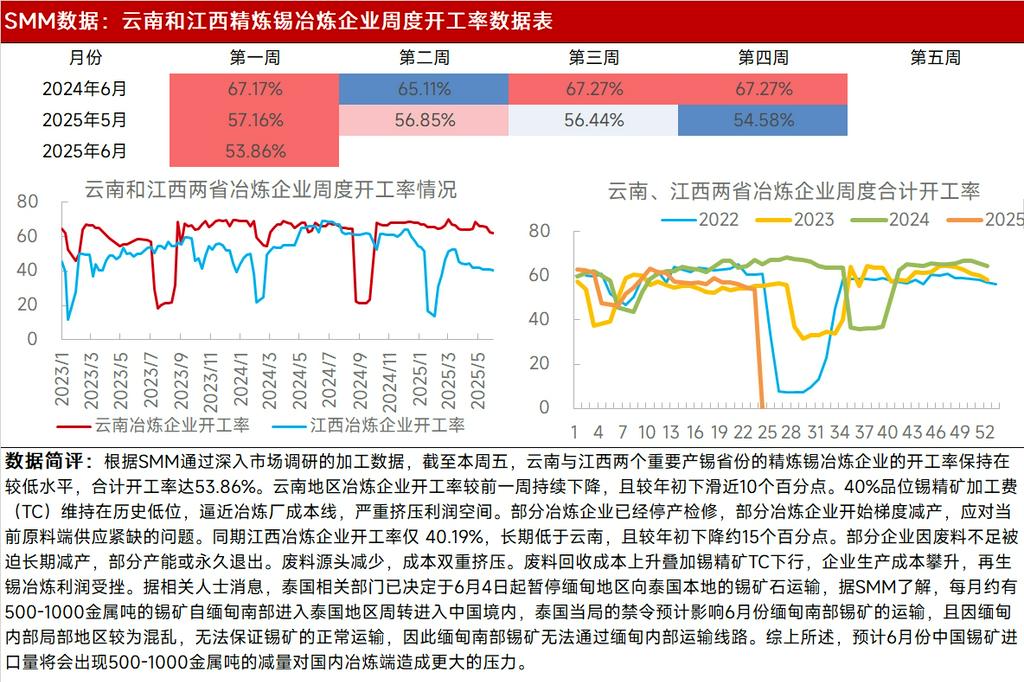
[SMM Analysis: Operating Rates of Smelters in Yunnan and Jiangxi Continue to Decline, with Supply from Myanmar Continuing to Shrink]: According to SMM's processing data obtained through in-depth market surveys, as of Friday this week, the operating rates of refined tin smelters in Yunnan and Jiangxi, two major tin-producing provinces, remained at a low level, with a combined operating rate of 53.86%. The operating rate of smelters in Yunnan continued to decline compared to the previous week and was nearly 10 percentage points lower than at the beginning of the year. The treatment charges (TCs) for tin concentrates with a 40% grade remained at historically low levels, approaching the cost line of smelters and severely squeezing profit margins. Some smelters have halted production for maintenance, while others have begun to implement phased production cuts to address the current shortage of raw material supply. During the same period, the operating rate of smelters in Jiangxi was only 40.19%, consistently lower than that in Yunnan and down by approximately 15 percentage points compared to the beginning of the year. Some enterprises have been forced to implement long-term production cuts due to insufficient scrap supply, with some capacities potentially exiting the market permanently. The reduction in scrap sources and the dual squeeze on costs have led to an increase in scrap recycling costs combined with a decline in tin concentrate TCs, driving up production costs for enterprises and undermining the profitability of refined tin recycling from scrap. According to sources, relevant Thai authorities have decided to suspend the transportation of tin ore from Myanmar to Thailand starting from June 4. SMM understands that approximately 500-1,000 mt (metal content) of tin ore is transported from southern Myanmar to Thailand each month for transit into China. The Thai authorities' ban is expected to affect the transportation of tin ore from southern Myanmar in June.

According to the processing data obtained through in-depth market surveys by SMM, as of Friday this week, the operating rates of refined tin smelters in Yunnan and Jiangxi, two major tin-producing provinces, remained at a low level, with a combined operating rate of 53.86%. The operating rate of smelters in Yunnan continued to decline from the previous week and was nearly 10 percentage points lower than at the beginning of the year. The treatment charges (TCs) for tin concentrates with a 40% grade remained at historically low levels, approaching the cost line of smelters and severely squeezing profit margins. Some smelters have halted production for maintenance, while others have begun to implement production cuts in stages to address the current shortage of raw material supply. During the same period, the operating rate of smelters in Jiangxi was only 40.19%, consistently lower than that in Yunnan and down by approximately 15 percentage points from the beginning of the year. Some enterprises have been forced to reduce production for extended periods due to insufficient scrap supply, and some capacity may be permanently withdrawn. The reduction in scrap sources and the dual squeeze on costs have led to an increase in production costs for enterprises. The rising cost of scrap recycling, coupled with the decline in TCs for tin concentrates, has eroded the profits of secondary tin smelting. According to sources, relevant Thai authorities have decided to suspend the transportation of tin ore from Myanmar to Thailand starting from June 4. SMM understands that approximately 500-1,000 mt (metal content) of tin ore is transported from southern Myanmar to Thailand each month for redistribution into China. The Thai authorities' ban is expected to affect the transportation of tin ore from southern Myanmar in June. Moreover, due to the ongoing chaos in some regions within Myanmar, the normal transportation of tin ore cannot be guaranteed. Therefore, tin ore from southern Myanmar cannot be transported through internal Myanmar routes. In summary, it is anticipated that China's tin ore imports will decrease by 500-1,000 mt (metal content) in June, placing greater pressure on the domestic smelting sector.

Data Source Statement: Except for publicly available information, all other data are processed by SMM based on publicly available information, market communication, and relying on SMM‘s internal database model. They are for reference only and do not constitute decision-making recommendations.

For any inquiries or to learn more information, please contact: lemonzhao@smm.cn
For more information on how to access our research reports, please contact:service.en@smm.cn
Related News
South Korean Economy Surges in Q1 on AI-Driven Exports, Exceeding Forecasts Amid Risks
34 mins ago
South Korean Economy Surges in Q1 on AI-Driven Exports, Exceeding Forecasts Amid Risks
Read More
South Korean Economy Surges in Q1 on AI-Driven Exports, Exceeding Forecasts Amid Risks
The Bank of Korea said on Thursday that global demand for AI technology drove export growth, and the South Korean economy rebounded strongly at the beginning of the year. GDP grew 1.7% QoQ in Q1, reversing the contraction in Q4 2025 and marking the fastest growth since Q3 2020. The figure exceeded the consensus expectations of 0.9% in institutional surveys and even surpassed the most optimistic forecasts. Data showed that chip exports were up 139.1% YoY in Q1, with the growth rate more than doubling from the previous quarter, while overall monthly export growth hit its highest level since 2021. Construction investment and equipment investment rose 2.8% and 4.8%, respectively. However, risks remain for the outlook of the South Korean economy, which has seen unsteady growth momentum in recent quarters. Consumer confidence fell to a 10-month low in March as the Iran war cast a shadow over the growth and price outlook.
34 mins ago
Tesla to Invest $3B in Texas for Chip R&D Factory with SpaceX, Intel Involved
35 mins ago
Tesla to Invest $3B in Texas for Chip R&D Factory with SpaceX, Intel Involved
Read More
Tesla to Invest $3B in Texas for Chip R&D Factory with SpaceX, Intel Involved
Tesla CEO Elon Musk said that Tesla plans to spend approximately $3 billion to build a chip R&D factory in Texas, as one of the early-stage moves in the company's effort to establish chip manufacturing capabilities at scale. The facility will be built within Tesla's Texas Gigafactory campus and will only be able to produce a few thousand chips per month, intended to serve as a testing ground for new technologies and processes. SpaceX will lead the early stages of the project, named Terafab, and Intel has signed on to support the effort, contributing its expertise in chip design, manufacturing, and packaging.
35 mins ago
The Most-Traded SHFE Tin Contract Consolidated at Highs During Night Session, Spot Market Remained Sluggish [SMM Tin Morning Brief]
49 mins ago
The Most-Traded SHFE Tin Contract Consolidated at Highs During Night Session, Spot Market Remained Sluggish [SMM Tin Morning Brief]
Read More
The Most-Traded SHFE Tin Contract Consolidated at Highs During Night Session, Spot Market Remained Sluggish [SMM Tin Morning Brief]
[SMM Tin Morning Brief: The Most-Traded SHFE Tin Contract Consolidated at Highs During the Night Session, Spot Market Remained Sluggish]
49 mins ago