Low-Priced Supplies Dwindle, Prices Rise Slightly; Supply-Demand Imbalance in Stainless Steel Market Awaits Resolution [[SMM Daily Review of Stainless Steel Spot Cargo]]

เผยแพร่แล้ว: Apr 30, 2025 16:08
[SMM Daily Review of Stainless Steel Spot Market: Prices Edge Up as Low-Priced Supplies Dwindle, Supply-Demand Imbalance in Stainless Steel Market Awaits Resolution] SMM reported on April 30 that today, SS futures continued their previous fluctuating trend in the doldrums. As the Labour Day holiday approaches, the market did not witness the expected pre-holiday stockpiling frenzy, with all parties maintaining a cautious wait-and-see attitude. Currently, transactions are mainly concentrated on low-priced warrant cargoes, with most other purchases driven by rigid demand. Notably, as stainless steel prices hit a relatively low level, further downward resistance has significantly increased. Coupled with the gradual depletion of low-priced supplies, market prices have shown signs of a slight rebound. In the futures market, the most-traded contract 2506 is operating in a fluctuating trend in the doldrums. At 10:30 a.m., SS2506 was quoted at 12,655 yuan/mt. In the spot market, the cold-rolled 201/2B coils in Wuxi and Foshan were both quoted at 8,100 yuan/mt; the cold-rolled trimmed 304/2B coils had an average price of 13,000 yuan/mt in Wuxi and 13,000 yuan/mt in Foshan. From the perspective of market fundamentals, the current stainless steel prices have led to significant losses in the stainless steel sector. Additionally, the prices of furnace charges such as nickel and chromium have remained relatively firm, highlighting the prominent cost-supporting effect. However, the overall production cuts in the industry have been insufficient, with production being maintained more through adjustments in steel grade structures, resulting in an insignificant contraction effect on the supply side. On the demand side, impacted by the US tariff policies, downstream enterprises hold a pessimistic outlook, leading to increasingly cautious purchasing behavior. Despite prices being at a low level, market transactions have not significantly improved, with weak demand remaining the core contradiction constraining the recovery of the stainless steel market.

SMM reported on April 30 that today, SS futures continued their previous fluctuating trend in the doldrums. As the Labour Day holiday approached, the market did not witness the expected pre-holiday stockpiling frenzy, with all parties maintaining a cautious wait-and-see attitude. Currently, transactions are mainly concentrated on low-priced warrant cargoes, with most other purchases driven by rigid demand. It is worth noting that as stainless steel prices reached relatively low levels, the resistance to further declines significantly increased. Coupled with the gradual depletion of low-priced cargoes, market prices have shown signs of a slight rebound.

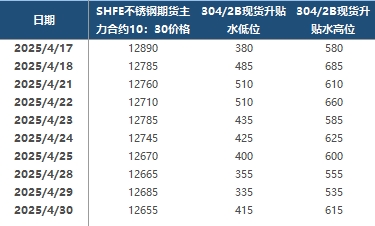
In the futures market, the most-traded 2506 contract was trading in a weak and fluctuating manner. At 10:30 a.m., SS2506 was quoted at 12,655 yuan/mt, down 30 yuan/mt from the previous trading day. In the Wuxi region, the spot premiums/discounts for 304/2B stainless steel ranged from 415 to 615 yuan/mt. In the spot market, cold-rolled 201/2B coils in both Wuxi and Foshan were quoted at 8,100 yuan/mt. For cold-rolled trimmed 304/2B coils, the average price in Wuxi was 13,000 yuan/mt, and the same in Foshan. Cold-rolled 316L/2B coils were priced at 23,750 yuan/mt in Wuxi and 23,750 yuan/mt in Foshan. Hot-rolled 316L/NO.1 coils were quoted at 22,975 yuan/mt in both regions. Cold-rolled 430/2B coils were priced at 7,500 yuan/mt in both Wuxi and Foshan.

From the perspective of market fundamentals, the current stainless steel prices have led to significant losses in the stainless steel sector. Additionally, the prices of furnace charges such as nickel and chromium have remained relatively firm, highlighting the prominent cost-supporting effect. However, the overall production cuts in the industry have been insufficient, with production being maintained more through adjustments in steel grade structures, resulting in an insignificant contraction effect on the supply side. On the demand side, impacted by the US tariff policies, downstream enterprises hold pessimistic expectations and are increasingly cautious in their procurement behaviors. Despite prices being at low levels, market transactions have not significantly improved, with weak demand remaining the core imbalance constraining the recovery of the stainless steel market.
คำชี้แจงแหล่งที่มาของข้อมูล: นอกจากข้อมูลที่เปิดเผยต่อสาธารณะแล้ว ข้อมูลอื่นๆ ทั้งหมดได้รับการประมวลผลโดย SMM จากข้อมูลสาธารณะ การสื่อสารกับตลาด และการพึ่งพาแบบจำลองฐานข้อมูลภายในของ SMMข้อมูลเหล่านี้มีไว้เพื่ออ้างอิงเท่านั้น ไม่ถือเป็นข้อเสนอแนะในการตัดสินใจ

หากมีข้อสงสัยหรือต้องการทราบข้อมูลเพิ่มเติม กรุณาติดต่อ: lemonzhao@smm.cn
หากต้องการข้อมูลเพิ่มเติมเกี่ยวกับวิธีการเข้าถึงรายงานการวิจัยของเรา โปรดติดต่อ:service.en@smm.cn
ข่าวที่เกี่ยวข้อง
[แฟลช | ดัชนี Imacec ของชิลีเดือนกรกฎาคมลดลง 1.5% เมื่อเทียบรายปี ร่วงหนักสุดรายเดือนนับตั้งแต่ปี 2022 เนื่องจากภาคเหมืองแร่ทรุดตัว 9.3%]
3 ชั่วโมงที่แล้ว
[แฟลช | ดัชนี Imacec ของชิลีเดือนกรกฎาคมลดลง 1.5% เมื่อเทียบรายปี ร่วงหนักสุดรายเดือนนับตั้งแต่ปี 2022 เนื่องจากภาคเหมืองแร่ทรุดตัว 9.3%]
อ่านเพิ่มเติม
[แฟลช | ดัชนี Imacec ของชิลีเดือนกรกฎาคมลดลง 1.5% เมื่อเทียบรายปี ร่วงหนักสุดรายเดือนนับตั้งแต่ปี 2022 เนื่องจากภาคเหมืองแร่ทรุดตัว 9.3%]
[แฟลช | ดัชนี Imacec ของชิลีเดือนกรกฎาคมลดลง 1.5% เมื่อเทียบรายปี ร่วงหนักสุดรายเดือนนับตั้งแต่ปี 2022 เนื่องจากภาคเหมืองแร่ทรุดตัว 9.3%]
ธนาคารกลางชิลีรายงานเมื่อวันที่ 1 กันยายนว่า ดัชนีกิจกรรมทางเศรษฐกิจ Imacec เดือนกรกฎาคมลดลง 1.5% เมื่อเทียบเป็นรายปีโดยไม่ปรับฤดูกาล เมื่อปรับฤดูกาลแล้ว ดัชนีลดลง 2.1% เมื่อเทียบเป็นรายปี และลดลง 1.7% เมื่อเทียบเป็นรายเดือน นับเป็นการลดลงรายเดือนที่รุนแรงที่สุดนับตั้งแต่ปี 2022 ธนาคารระบุว่าการลดลงส่วนใหญ่มาจากภาคเหมืองแร่ ซึ่งลดลงอย่างมีนัยสำคัญถึง 9.3% โดยมีสาเหตุหลักจากสภาพอากาศ ตามด้วยเกรดแร่ที่ต่ำลง และการบำรุงรักษาอุปกรณ์ที่ขัดขวางการดำเนินการผลิตตามปกติ เหมืองที่ได้รับผลกระทบหลายแห่งเป็นแหล่งแร่ทองแดง-โมลิบดีนัม เนื่องจากโมลิบดีนัมเข้มข้นถูกสกัดเป็นผลพลอยได้จากกระบวนการลอยแร่ที่ใช้ในการแปรรูปแร่ทองแดงซัลไฟด์ การหยุดชะงักของโรงงานแปรรูปจึงทำให้ผลผลิตโมลิบดีนัมลดลงด้วย
3 ชั่วโมงที่แล้ว
ข้อจำกัดด้านอุปทานที่เข้มงวดทวีความรุนแรงต่อการชักเย่อในตลาดโมลิบดีนัมช่วงต้นเดือนกันยายน 【บทวิเคราะห์โมลิบดีนัมจาก SMM】
19 ชั่วโมงที่แล้ว
ข้อจำกัดด้านอุปทานที่เข้มงวดทวีความรุนแรงต่อการชักเย่อในตลาดโมลิบดีนัมช่วงต้นเดือนกันยายน 【บทวิเคราะห์โมลิบดีนัมจาก SMM】
อ่านเพิ่มเติม
ข้อจำกัดด้านอุปทานที่เข้มงวดทวีความรุนแรงต่อการชักเย่อในตลาดโมลิบดีนัมช่วงต้นเดือนกันยายน 【บทวิเคราะห์โมลิบดีนัมจาก SMM】
【บทวิเคราะห์โมลิบดีนัมโดย SMM】ข่าว SMM วันที่ 3 กันยายน: ในเดือนสิงหาคม ตลาดโมลิบดีนัมของจีนยังคงอยู่ในภาวะสมดุลตึงตัว โดยมีอุปทานค่อนข้างจำกัดและได้รับแรงหนุนจากอุปสงค์คงที่ ราคาโดยรวมปรับตัวขึ้นก่อนแล้วจึงทรงตัวในระดับสูง หัวแร่โมลิบดีนัม 45% พุ่งขึ้นแตะ 5,455 หยวน/ตันเมตริกตันในช่วงวันที่ 19–25 สิงหาคม ยังคงยืนอยู่ในช่วงสูงสุดในรอบสามปี ขณะเดียวกันก็ผลักดันให้ราคาเฟอร์โรโมลิบดีนัม 60% สปอตปรับตัวขึ้นสู่ระดับสูงสุดรายช่วงที่ 344,000 หยวน/ตัน ในวันที่ 24–25 สิงหาคม
19 ชั่วโมงที่แล้ว
[แฟลช | ดัชนีการผลิตเหมืองแร่ของชิลีลดลง 7.2% เมื่อเทียบรายปีในเดือนกรกฎาคม เหมืองแร่โลหะลดลง 10.7%]
3 Sep 2026 10:06
[แฟลช | ดัชนีการผลิตเหมืองแร่ของชิลีลดลง 7.2% เมื่อเทียบรายปีในเดือนกรกฎาคม เหมืองแร่โลหะลดลง 10.7%]
อ่านเพิ่มเติม
[แฟลช | ดัชนีการผลิตเหมืองแร่ของชิลีลดลง 7.2% เมื่อเทียบรายปีในเดือนกรกฎาคม เหมืองแร่โลหะลดลง 10.7%]
[แฟลช | ดัชนีการผลิตเหมืองแร่ของชิลีลดลง 7.2% เมื่อเทียบรายปีในเดือนกรกฎาคม เหมืองแร่โลหะลดลง 10.7%]
เมื่อวันที่ 31 สิงหาคม สถาบันสถิติแห่งชาติชิลี (INE) รายงานว่าดัชนีการผลิตภาคอุตสาหกรรมของประเทศลดลง 5.1% เมื่อเทียบเป็นรายปีในเดือนกรกฎาคม โดยดัชนีการผลิตเหมืองแร่ (IPMin) ลดลง 7.2% โดยเหมืองแร่โลหะลดลง 10.7% ส่งผลให้ดัชนีลดลง 9.301 จุดเปอร์เซ็นต์ สาเหตุหลักมาจากการสกัดและแปรรูปทองแดงที่ลดลง ข้อมูลจาก USGS ระบุว่าชิลีมีสัดส่วนประมาณ 16% ของผลผลิตโมลิบดีนัมทั่วโลกในปี 2025 การสูญเสียผลผลิตล่าสุดที่เหมืองทองแดง-โมลิบดีนัมของชิลีกระจุกตัวอยู่ในขั้นตอนการแต่งแร่ ซึ่งส่งผลกระทบต่อโมลิบดีนัมที่เป็นผลพลอยได้รุนแรงกว่าทองแดง ดังนั้นคาดว่าอุปทานโมลิบดีนัมทั่วโลกจะได้รับผลกระทบในปี 2026
3 Sep 2026 10:06