SHANGHAI, Mar 4 (SMM) - Control of PV (photovoltaic) system manufacturing costs is the key to achieve grid parity for PV. The cost of cables accounted for 10% of the system’s total cost. And in the last two years, with the rise in the prices of copper and aluminium conductor materials, the cost of cables in the photovoltaic system has been rising instead of falling. As such, in order to ensure the normal operation of the system while maintaining safety, many companies use AA8030 series aluminium alloy as conductor for the production of new types of cable to replace part of the AC copper cable, which could greatly reduce the costs of cables.
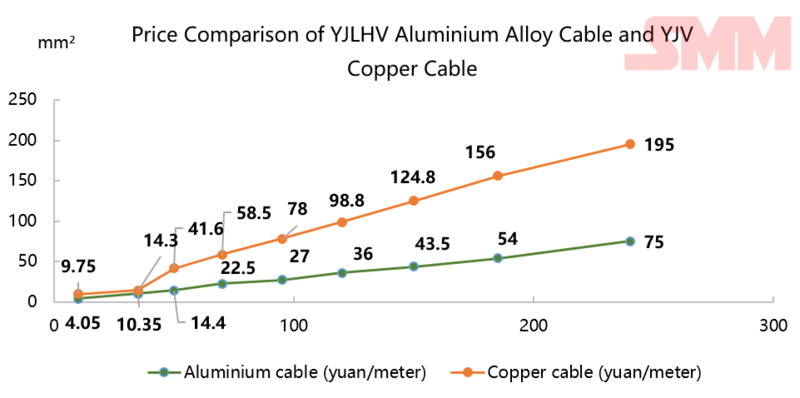
Firstly, in terms of the most important production cost, copper material is 30% more expensive than aluminium alloy material in terms of direct procurement costs. The graph below shows the price comparison between YJLHV aluminium alloy cable and YJV copper cable (vertical axis is conductor area, horizontal axis is price) at the voltage of 0.6/1kV. It can be seen that the cost of aluminium alloy cable is about 25%-60% of copper cable, hence the cost advantage of aluminium alloy cable is quite obvious.
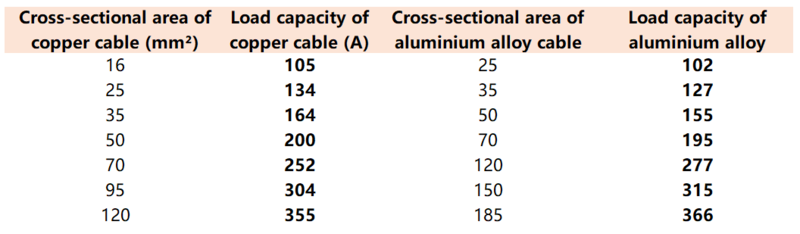
In terms of product design standards, when aluminium alloy cable’s conductor cross-sectional area is approximately 1.5 times that of copper cables after special treatment, the load capacity is comparable to that of copper cables. While the weight of aluminium alloy conductor is only 50% of that of copper under the same load capacity and length.
In terms of electricity losses, the difference in electricity loss between copper cable and aluminium alloy cable with a cross-sectional area enlarged by a factor of 1.5 is insignificant under the same running current.
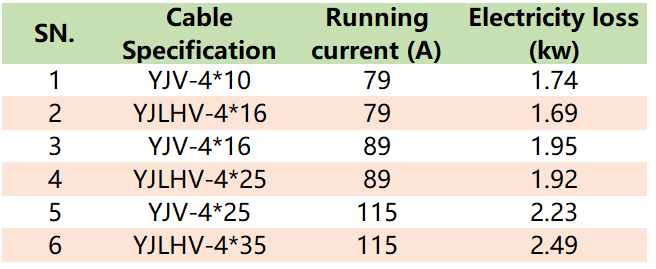
When seen from other physical properties, aluminium alloy cable is superior in terms of flexibility, resilience, and elongation. Furthermore, aluminium alloy tau chemical cross-linked polyethylene cable has a service life longer than that of copper cable polyoxyethylene by 5-10 years.
Of course there are some natural disadvantages besides the absolute superiority of reducing costs. For example aluminium alloy cable is slightly inferior in terms of conductivity and safety performance. Copper cable is less resistive and presents better performance of electricity transmitting, while reducing the risk of heat generation, combustion and short circuits. Some aluminium material can achieve the same safety performance as copper cables by way of special aluminium alloy ratios and heat treatment processes, but not all aluminium alloy cables are comparable. In addition, the residual value of aluminium alloy cables is low and much lower than that of copper cables. In the long term, the development of aluminium alloy cable is contrary to the national environmental protection and low carbon targets.
To sum up, aluminium alloy cable and copper cable deliver similar performance concerning load capacity, electricity loss, etc., even aluminium alloy cable is even more outstanding in other parameters. In the premise of ensured quality, photovoltaic with aluminium alloy cable is the current trend.
Domestic leading cable enterprises are trying to manufacture aluminium alloy cable that can serve as an alternative to copper cable through generations of technical innovation in the field of not only photovoltaic production but also automotive and wind power. Nonetheless, most domestic cable companies still focus their businesses on copper, and it requires time for the new trend to develop and evolve.