On February 20, it was reported that a new "customer No. 1" would visit BYD's Xi'an XAB factory, and "accompany customer No. 1" to visit BYD's Xi'an battery factory, including BYD Chairman and President Wang Chuanfu, and BYD Group Vice President and Fudi Battery CEO he long. "
BYD did not respond to the incident.
According to the data, Xi'an Fudi XAB Factory, which belongs to the second Division of Fudi Battery Co., Ltd., is a newly built department dedicated to high-end technology and precision production, covering an area of 87400 square meters and more than 2500 employees, mainly producing CELL/Pack products.
Earlier, it was reported that Xi'an BYD's 20GWh special blade battery project had been officially put into production in December 2021. The object of this "customer No.1" visit, including blade batteries.
This time, "customer number one" is Ford.
It is understood that since 2020, the media has repeatedly reported the relevant information of BYD's "No. 1 customer", but BYD has never responded to this. However, being called "customer number one" has three major characteristics: first, it is of a high level, such as the first person in charge of the global or Chinese market from a highly influential vehicle company in the world; second, the reception standard is high, accompanied by Wang Chuanfu or he long; third, the intention to cooperate is high, and the visit is not far from strategic cooperation.
In 2020, Daimler, Toyota and other multinational car companies successively visited the BYD battery factory as "customer number one". Subsequently, BYD and Toyota and Daimler reached cooperation in different directions.
The No. 1 customer who visited the Fudi XAB factory in Xi'an used the mask logo "Mustang", so it can be seen that the No. 1 customer is Ford.
According to the comparison of figure and other characteristics, some media further pointed out that the No. 1 customer was Chen Anning, vice president and president of Ford Motor Company in China and president and CEO of Ford Motor (China) Co., Ltd.
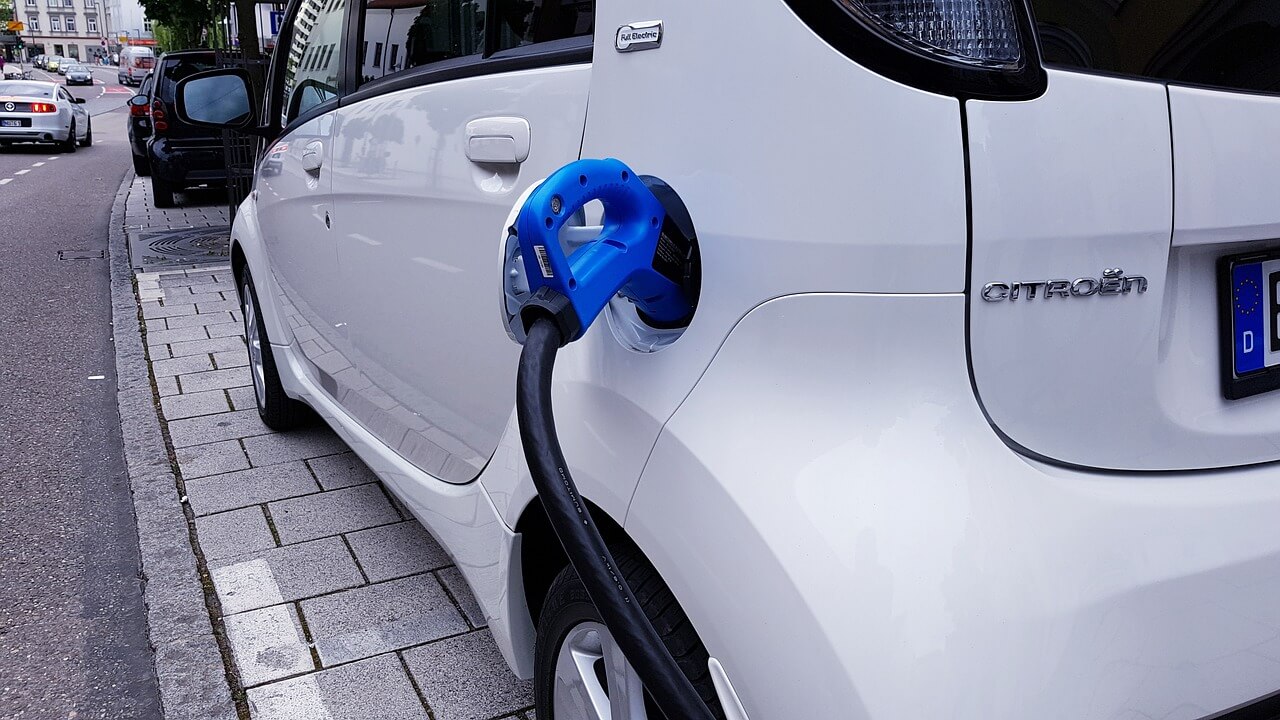
Ford's Mustang mach-E has the need to replace lithium iron phosphate batteries. It is understood that in January 2022, only 352 Ford Mustang mach-E vehicles were insured in the Chinese market. Prior to this, the Ford Mustang mach-E was selected as one of the most popular electric models by Consumer Reports, an authority on consumer culture in the United States. About 27000 of the model will be sold in the United States in 2021.
Some media pointed out that at present, BYD is the only Chinese battery supplier for Ford Mustang mach-E. The battery type is ternary high-nickel 811 battery, and the products are mainly produced by BYD's Xi'an factory.
As we all know, BYD's entire range of models have been replaced with blade batteries, and it is highly likely that Ford Mustang mach-E will also be equipped with blade batteries at a later stage.
Ford 2030 Battery demand 240GWh
At its investor conference at the end of 2021, Ford said it planned to increase its electric vehicle production capacity to 600000 vehicles a year within two years, making it the world's second-largest electric vehicle manufacturer.
"given the explosive growth in demand for the electric pickup Fmur150 Lightning, we can be optimistic about this goal." Lisa Drake, Ford's chief operating officer, said Ford would work with five battery suppliers, including BYD, Ningde Times and SK On, LG New Energy and Panasonic. "our goal is to build a global production capacity of 240 GWh by 2030."
In fact, Ford is making a full transition to electrification. According to the plan, Ford's pure electric vehicles will account for 40 per cent of its total sales by 2030 (Ford's global sales of 3.72 million vehicles in 2021, the seventh in the world).
To achieve that goal, Ford raised its electrification spending forecast to more than $30 billion (200 billion yuan) by 2025. "it is estimated that by 2025, our business revenue will increase from $27 billion (about 172.6 billion yuan) in 2019 to $45 billion (about 287.7 billion yuan)." Ford once said.
Vico Lithium noted that among the five major power battery suppliers of Ford, Chinese companies BYD and Ningde era lithium iron phosphate battery technology and capacity are excellent, South Korean enterprises LG new energy, also in the development of lithium iron phosphate battery, the new product will be in the form of soft package, is expected to trial production in 2022; SK On is also developing lithium iron phosphate battery for electric vehicles, mainly because of the interest of the whole vehicle plant.
Only Panasonic, a Japanese battery company, has not yet reported the production of lithium iron phosphate batteries.
Lithium iron phosphate battery has returned.
In the early stage of the development of new energy vehicles, lithium iron phosphate battery occupied the mainstream position because of its economy, and the proportion of installed capacity was as high as 70% from 2015 to 2016.
In December 2016, China included battery energy density in the subsidy reference index for the first time, and ternary batteries with higher energy density began to rise, surpassing lithium iron phosphate batteries for the first time in 2018, and maintained the lead in the following years. The number of ternary batteries installed in 2020 was 38.9 GWH, accounting for 61.1%.
Lithium iron phosphate battery achieved "return of king" in 2021: data show that in May 2021, lithium iron phosphate battery output exceeded three yuan, the monthly output was 8.8GWhh, accounting for 63.6% of the total output. From January to May, the cumulative output of lithium iron phosphate battery reached 29.9 GWh, accounted for 50.3%, exceeding three yuan 0.7%.
In July 2021, lithium iron phosphate batteries further exceeded ternary in the monthly load, which was 5.8GWhh, accounting for 51.3% of the total installed capacity and 2.6 percentage points higher than ternary batteries.
In the following months, lithium iron phosphate batteries further caught up and surpassed ternary for the first time in this year's cumulative load in November, subverting the cumulative advantage of ternary batteries over the past three years.
The latest January 2022 data show that in terms of production, ternary battery production is 10.8 GWH, accounting for 36.5% of the total output, and lithium iron phosphate battery output is 18.8 GWH, accounting for 63.3% of the total output. In terms of loading capacity, the ternary battery is 7.3 GWH, accounting for 45.1% of the total installed capacity, and the lithium iron phosphate battery is 8.9 GWH, accounting for 54.9% of the total installed capacity.
At present, there is a trend in the market that not only the traditional phosphorus chemical giants are vying for the "big cake" of lithium iron phosphate, but the head enterprises of ternary cathode materials are also making intensive efforts on lithium iron phosphate!
For example, since 2021, many enterprises, such as Dangsheng Technology, Huayou Cobalt Industry, Xiamen Tungsten New Energy, long-term Lithium Science and Technology, which are mainly based on ternary materials and upstream resources, have begun to lay out lithium iron phosphate materials and upstream links in depth!
Summary
It is believed that switching from ternary battery to lithium iron phosphate battery is a trend in the next three years, and the share of ternary battery will be further reduced.
Perhaps, with the expansion of the lithium iron phosphate battery market, it will not be news for a mainframe factory to use lithium iron phosphate batteries in the future, while it is news for a mainframe factory to insist on not using lithium iron phosphate batteries.
![การวิเคราะห์การผลิตลิเทียมซัลไฟด์เกรดแบตเตอรี่เดือนสิงหาคม: ไตรมาส 4 จะเห็นการพุ่งขึ้นหรือไม่? [บทวิเคราะห์ SMM]](https://imgqn.smm.cn/usercenter/mpqgn20251217171727.jpg)