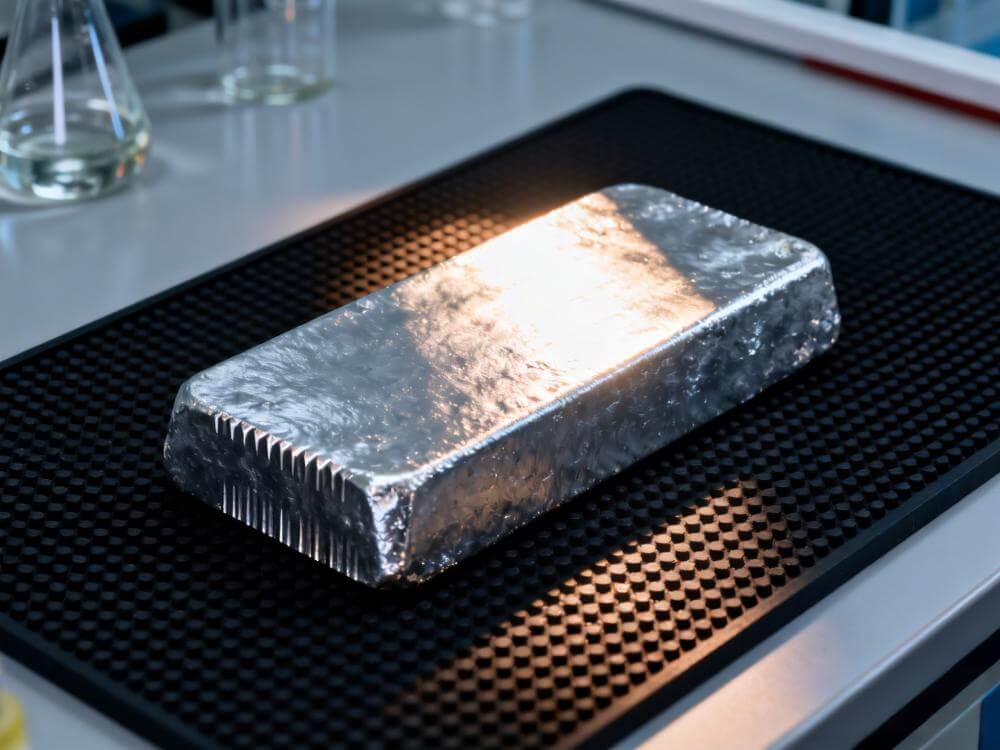
Magnesium is the lightest metal structural material, which has a broad application prospect in aerospace, transportation, electronic products, medical and other fields. However, compared with traditional metal materials, such as steel and aluminum alloy, the plastic deformation processing of magnesium is more difficult and the process cost is high, which restricts its wide application. The micro-mechanism is the internal factor that determines the macro-properties. Therefore, the research and development of highly plastic magnesium alloys need to accurately understand the micro-plastic deformation mechanism, and related research has always been the focus and focus in the field of magnesium alloys.
As we all know, metal materials generally have the phenomenon of work hardening during plastic deformation, that is, with the increase of deformation, the internal defects and damage accumulate gradually, and the flow stress increases continuously. When hardening to a certain extent, the material will not have the ability to continue plastic deformation, and eventually fracture will occur. For magnesium metal, its work hardening is very obvious when it is compressed along the crystallographic < c > axis, and the plastic deformation is generally only about 5% and 10%.
Aiming at the plastic deformation behavior and internal mechanism of magnesium, Professor Shan Zhiwei of Xi'an Jiaotong University has carried out systematic and in-depth research in recent years. It is found that for submicron magnesium single crystals, when compressed along the < c > axis, the plastic deformation dominated by cone dislocation slip first occurs (see Liu et al. for details). Science, 365 (6448), 73-75, 2019). Unexpectedly, with the intensification of work hardening, there is no fracture failure of the samples that had been thought to have been depleted of plasticity. When the flow stress increases to 1 GPa, the sample is suddenly compressed into a flat shape, and there are no cracks. In addition, the flattened sample is no longer a single crystal, but consists of several small grains with common < a > axis orientation, and there are a large number of basal and non-basal dislocations in the small grains.

Fig. 1 deformation process of submicron magnesium single crystal column under < c > axis compression. Formation and movement of; (b) dislocations in the initial (a) samples the new grains formed by; (c) in the lower right corner of the samples (white arrow); (d) new grains) produce dislocations (the white arrow); (e) samples are pressed into flat; (f) electron diffraction collected on the flat samples. (g) stress-strain curve shows three stages of deformation: elastic deformation, plastic deformation-work hardening stage, plastic deformation-strain jump stage.
Through systematic crystallographic analysis, microscopic analysis, atomic scale characterization and molecular dynamics simulation, the team proposed that new grains are formed by cone-base transition. After the formation of new grains, the already exhausted plasticity is regenerated, and the sample can continue to undergo large plastic deformation when loading continues. In this study, the process of forming new grains in the matrix grains induced by deformation is called "deformation graining (deformation transformation)". This process does not depend on diffusion and can occur rapidly at room temperature, and the new grains formed have a specific crystallographic orientation with the matrix grains. In the newly formed grains, the plastic deformation coordinated by dislocations and twins can continue to occur, so that the sample has the ability of plastic deformation again (comparable to "rejuvenation"). This study enriches the understanding of the plastic deformation mechanism and provides new inspiration for the deformation processing of magnesium: under high stress or high strain rate, a new deformation mechanism can be induced by high stress, and then the deformation processing ability of magnesium can be improved.

Fig. 2 the new grain grows under loading, shrinks when unloading, and grows again under secondary loading, reflecting the high mobility of grain boundaries.

Fig. 3 New grain and its grain boundary structure
The result is entitled "New Mechanism for Regeneration of plastic deformation ability of magnesium Metal" (Rejuvenation of plasticity via deformation graining in magnesium) published in Natural Communications (Nature Communications), Professor Liu Boyu of Xi'an Jiaotong University as the first author of this paper, Professor Shan Zhiwei of Xi'an Jiaotong University as the first author, and Professor Zhang Zhen of Hefei University of Technology as the co-first author and communication author. Professor Ma of Xi'an Jiaotong University and Professor Li Ju of Massachusetts Institute of Technology are co-authors. Also participating in the work are Liu Fei and Yang Nan, doctoral students of Xi'an Jiaotong University, Professor Li Bin of the University of Nevada, Professor Chen Peng of Jilin University, Professor Wang Yu of University of Science and Technology of China and Dr. Peng Jinhua of Jiangsu University of Science and Technology. The State key Laboratory of Metal strength of Xi'an Jiaotong University is the first communication unit. This research is supported by the National Natural Science Foundation of China, 111 Program 2.0 and the Young Top talents Program of Xi'an Jiaotong University.
In recent years, Shan Zhiwei's research team relies on the School of Materials of Xi'an Jiaotong University, the State key Laboratory of Metal material strength, the Micro / Nano Center of Xi'an Jiaotong University and the Shaanxi magnesium-based New Materials Engineering Research Center. a series of fruitful basic research, technical research and achievement transformation have been carried out. In 2014, a new mechanism of room temperature deformation in magnesium, which is different from dislocations and twins, was discovered, which was published in Natural Communication and won the Best basic Research Paper Award of the magnesium Branch of the TMS Society of the United States. the effect of the morphology of precipitates on the twinning behavior of magnesium alloys was systematically studied, and a simple criterion for judging the strength and plasticity of magnesium alloys was developed, and the results were published in Materials Science and Technology (cover recommendation, 2018). It is found that by activating carbon dioxide, the oxide layer or corrosion products on the surface of magnesium can be transformed into a dense protective film at room temperature, which can not only significantly improve the corrosion resistance, strength and toughness of magnesium and its alloys, but also greatly improve the oxidation resistance of magnesium. As a result, a new technology of green and low-cost magnesium alloy coating was invented, which was published in Natural Communications (2018) and authorized by the national invention patent. By using advanced testing and characterization techniques based on in situ electron microscopy, combined with atomic scale imaging and three-dimensional image reconstruction techniques, the structural characteristics and slip behavior of conical dislocations in magnesium are revealed. It is proved for the first time that it is an effective plastic carrier in magnesium. It is pointed out that the plasticity of magnesium can be effectively improved by promoting cone dislocation slip (which can be achieved by increasing stress and reducing grain size). The results are published in Science (2019). In view of the backwardness of original magnesium smelting process, low degree of automation and serious environmental pollution, it is put forward and verified that the original magnesium smelting which should be carried out under vacuum can be carried out at atmospheric pressure, and jointly tackle key problems with West China Energy Company. the development of an industrial plant for atmospheric production of original magnesium has been carried out. In view of the chronic illness of many kinds of impurity elements, high content and high fluctuation of original magnesium, a new technological process has been developed from the atomic mechanism, which can produce high purity magnesium with a purity of more than 99.99% directly from the material ball without significantly increasing the cost. it revolutionizes the previous understanding that the Pijiang method (silicothermic reduction method) can not directly produce high-purity raw magnesium. The promotion and application of the above achievements are expected to improve the quality and performance of magnesium-based products as a whole.
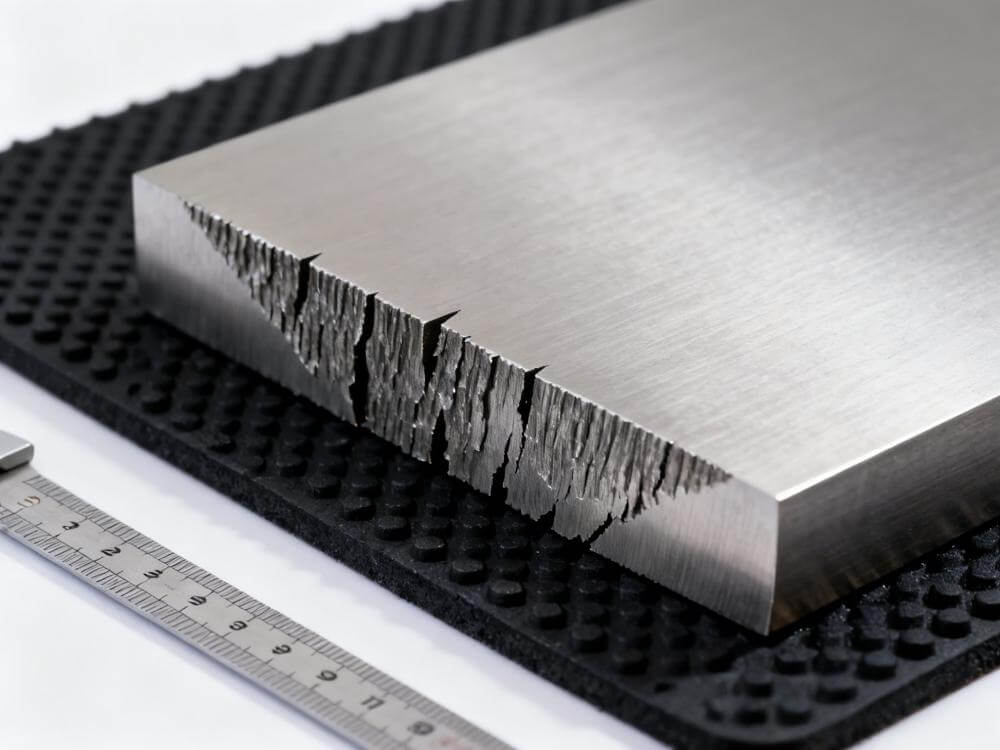
![ถ่านหินพุ่งจุดชนวนตลาดแมกนีเซียม การปรับฐานสองเดือนสิ้นสุดลง การลดกำลังการผลิตและการลดสต็อกส่งสัญญาณขาขึ้นรอบใหม่ [บทวิเคราะห์ SMM]](https://imgqn.smm.cn/usercenter/mLwgx20251217171723.jpeg)
![ต้นทุนที่สูงขึ้นดันราคาแมกนีเซียมพุ่ง แต่ดีมานด์อ่อนแอทำให้การปรับขึ้นไม่ยั่งยืน [บทวิเคราะห์แมกนีเซียมรายสัปดาห์จาก SMM]](https://imgqn.smm.cn/usercenter/rUQIB20251217171723.jpeg)